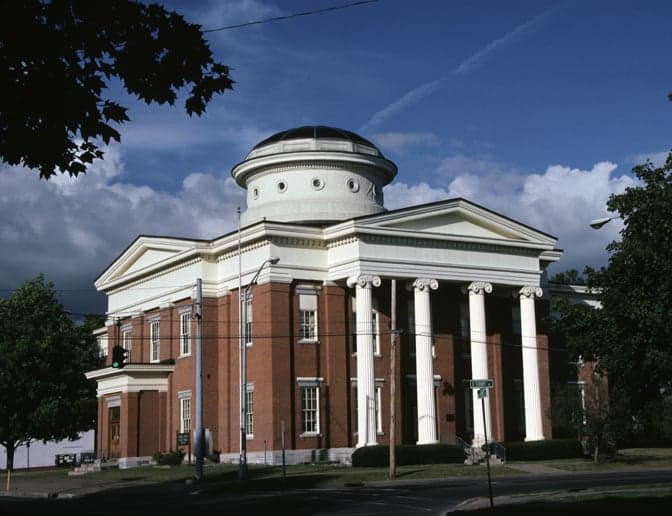
Photo: Wikipedia
Political ClimatePolitical Climate in Rome, NY
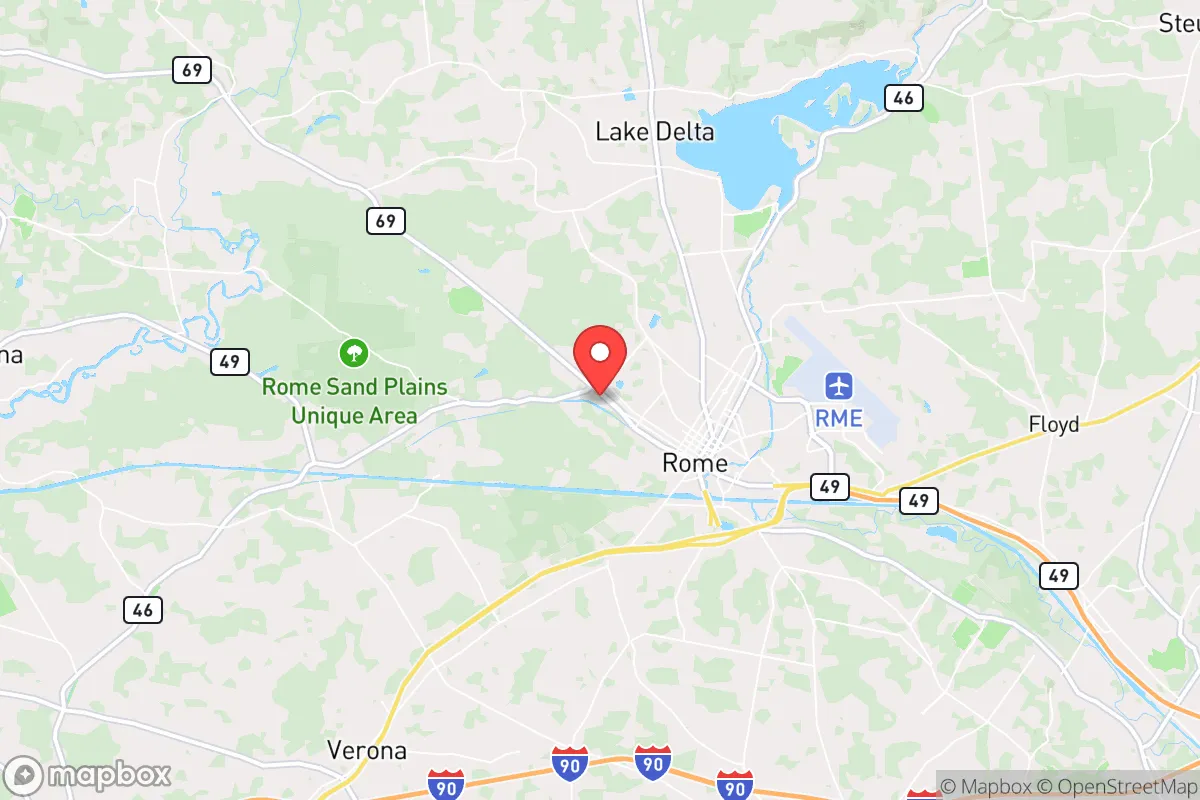
District shown is the primary district for this city’s centroid. Cities may span multiple districts.
Local Political AnalysisPolitical Analysis of Rome, NY
Rome, New York, has long been a solidly conservative stronghold in the Mohawk Valley, and that hasn't changed much. The city sits in Oneida County, which carries a Cook PVI of R+10, meaning it votes about ten points more Republican than the national average. In the 2024 presidential election, the county went for Donald Trump by a comfortable margin, and local races tend to follow suit. But if you've lived here as long as I have, you've seen the political winds shift in subtle ways, and it's worth keeping an eye on where things are headed.
How it compares
Rome is noticeably more conservative than its neighbor Utica, which has a more mixed political profile thanks to a growing refugee and immigrant population that leans Democratic in local elections. Drive twenty minutes south to Clinton or New Hartford, and you'll find similar conservative leanings, but those towns are more suburban and affluent, with a quieter, less blue-collar vibe. The real contrast is with cities like Albany or Syracuse, which are deep blue and pushing progressive policies on everything from zoning to policing. Rome feels like a different world—folks here value their Second Amendment rights, are skeptical of government overreach, and generally want lower taxes and less red tape. That said, the county's R+10 rating is a bit softer than it was a decade ago, when it was closer to R+12 or R+13. Some of that drift is from younger people moving in for jobs at the Air Force base or the hospital, and some is just the national trend of suburban areas inching left. But for now, Rome remains a place where a Republican candidate can win a local school board seat without breaking a sweat.
What this means for residents
For the average person living here, the conservative tilt means you're not constantly fighting new regulations or taxes that feel like they came from Albany. The city council and county legislature have kept property taxes relatively low compared to other parts of New York, and there's been no serious push for things like rent control or sanctuary city policies. That's a relief, because you see what happens in places like Ithaca or Buffalo when progressive agendas take hold—higher costs, more bureaucracy, and a sense that the government is running your life. The biggest concern I hear from neighbors is about the state government in Albany, which often overrides local control on issues like gun laws and energy policy. Rome can pass a resolution opposing the state's new gas stove ban or the latest round of SAFE Act restrictions, but it doesn't matter much when the governor's pen is mightier than a city council vote. That tension between local values and state overreach is the defining political reality here, and it's not going away anytime soon.
Culturally, Rome is a place where people still wave the flag and don't apologize for it. The annual Honor America Days celebration in July is a big deal, and the local VFW posts are active. You won't find many "defund the police" signs here—the Oneida County Sheriff's Office is well-supported, and the city's police department has a good reputation. The biggest policy distinction is probably the strong support for the Griffiss Business and Technology Park, which is a former Air Force base turned into a hub for defense contractors and tech firms. That's a practical, pro-jobs approach that most residents get behind. Looking ahead, the long-term trajectory depends on whether Rome can keep its conservative character while attracting new people. If the state keeps pushing mandates from Albany, more folks might just pack up and head to Texas or Florida. But for now, if you value personal freedom, low taxes, and a community that doesn't try to micromanage your life, Rome is still a solid bet.

State Political ClimatePolitical Climate in New York
State Political AnalysisPolitical Environment in the State
New York State has been a solidly Democratic stronghold for decades, with a partisan lean that has only deepened in the last 20 years. The dominant coalition is a powerful alliance of New York City’s progressive base, suburban liberal voters, and upstate union strongholds, but the state’s political trajectory has shifted sharply leftward since the 2010s. While the state voted for Hillary Clinton by 22 points in 2016 and Joe Biden by 23 points in 2020, the real story is the collapse of moderate Republicanism in the suburbs and the rise of a one-party supermajority in Albany that has pushed through a progressive agenda with little opposition.
Urban vs. rural divide
The political map of New York is a tale of two states. New York City’s five boroughs—Manhattan, Brooklyn, Queens, the Bronx, and Staten Island—are the engine of Democratic dominance, with Manhattan and Brooklyn delivering margins of 80% or more for Democratic candidates. The immediate suburbs of Long Island (Nassau and Suffolk counties) and the Hudson Valley (Westchester, Rockland, and Putnam counties) have shifted leftward over the past decade, with Nassau County flipping from a Republican stronghold to a Democratic one in the 2018 midterms. Upstate, the picture is more mixed: cities like Buffalo, Rochester, Syracuse, and Albany are reliably Democratic, while the vast rural and exurban areas—places like the Southern Tier, the North Country, and the Finger Lakes region—vote heavily Republican. However, these rural areas are losing population and political clout, while the NYC metro area continues to grow, meaning the state’s overall lean is unlikely to change anytime soon. A notable exception is Staten Island, which remains the only NYC borough that consistently votes Republican, often by double digits, reflecting its more working-class, law-and-order orientation.
Policy environment
New York’s policy environment is among the most progressive in the nation, and it has become significantly more so since Democrats gained a supermajority in the state legislature in 2019. The state has one of the highest tax burdens in the country, with a progressive income tax that tops out at 10.9% for high earners, plus some of the highest property taxes in the nation, especially in the suburbs. The regulatory posture is aggressive: New York has strict rent control laws in NYC, a statewide ban on fracking, and some of the toughest environmental regulations in the country. Education policy is dominated by the teachers’ unions, with school choice virtually nonexistent and charter schools heavily restricted. Healthcare is heavily regulated, with the state expanding Medicaid and implementing a public option for health insurance. Election laws have been dramatically loosened: New York now has no-excuse absentee voting, early voting, and same-day voter registration, which critics argue has reduced election integrity. The state also passed the “Green Light Law” in 2019, allowing undocumented immigrants to obtain driver’s licenses, and has a “sanctuary state” policy that limits cooperation with federal immigration enforcement.
Trajectory & freedom
New York has become less free over the past decade, particularly in terms of personal liberty and economic freedom. The 2019 legislative session was a watershed: the state passed the “Reproductive Health Act,” which codified abortion rights up to birth and removed restrictions on late-term abortions, and the “Gender Expression Non-Discrimination Act,” which added gender identity to hate crime laws. Gun rights have been severely curtailed: the 2013 SAFE Act, which banned assault weapons and high-capacity magazines, was followed by the 2022 “Concealed Carry Improvement Act,” which made it nearly impossible to carry a firearm in public by requiring “good moral character” and banning guns in “sensitive places” like Times Square and public transit. Parental rights have been eroded by the state’s “Child Victims Act,” which extended the statute of limitations for child sexual abuse claims, and by school policies that allow students to change their gender identity without parental consent. Property rights have been weakened by the 2019 rent control expansion, which gave tenants more power and made it harder for landlords to evict or raise rents. Medical autonomy was further restricted by the state’s strict COVID-19 mandates, which included vaccine requirements for healthcare workers and school employees, and by the continued prohibition of medical aid in dying.
Civil unrest & political movements
New York has been a flashpoint for political activism on both sides. The 2020 Black Lives Matter protests in NYC were among the largest and most destructive in the country, with widespread looting and property damage in Manhattan and Brooklyn. The state’s sanctuary policies have led to ongoing tensions with federal immigration authorities, particularly in upstate cities like Albany and Rochester, where local officials have resisted cooperation with ICE. The “Defund the Police” movement gained traction in NYC, leading to a $1 billion cut to the NYPD budget in 2020, though some of that funding was later restored. On the right, the “Second Amendment Sanctuary” movement has gained ground in rural counties like Otsego, Delaware, and Sullivan, where local sheriffs have refused to enforce the SAFE Act. There have also been secessionist murmurs: some upstate counties have floated the idea of breaking away from New York to form a new state, citing the dominance of NYC politics, though this remains a fringe movement. Election integrity has been a major concern, with the 2020 election seeing widespread use of mail-in ballots and the state’s new voting laws, leading to ongoing distrust among conservative voters.
Projection
Over the next 5-10 years, New York is likely to become more progressive and less free. Demographic trends favor the left: the NYC metro area continues to attract young, diverse, and college-educated residents, while upstate rural areas continue to lose population. The state’s tax burden and regulatory environment are driving out middle-class families and businesses, particularly to lower-tax states like Florida, Texas, and Tennessee, but the political power of the remaining population will shift further left. Expect more gun control, more rent control, more taxpayer-funded healthcare, and more restrictions on parental rights. The one-party supermajority in Albany shows no signs of weakening, and the state’s congressional delegation is increasingly dominated by progressives. For someone moving in now, the trajectory is clear: New York will continue to be a laboratory for progressive policy, with less room for conservative voices or individual freedoms.
For a conservative-leaning individual or family considering a move to New York, the bottom line is this: the state’s political climate is hostile to traditional values, high taxes, and increasingly restrictive on personal liberties. If you value gun rights, school choice, low taxes, or parental autonomy, New York is likely a poor fit. The best options for conservatives within the state are the rural upstate counties, particularly in the Southern Tier and North Country, where local governments are more aligned with conservative values, but even there, state-level policies will continue to impose progressive mandates. If you’re set on New York, look at places like Staten Island, the Finger Lakes region, or the Adirondacks, but be prepared for a constant political battle at the state level.
* Values derived from national, state, county, city and local statistics and may differ in a specific area. Last updated: 2026-05-01T08:45:07.000Z
Narrative content on this page is AI-generated and may contain mistakes. Verify any details that matter before acting on them.
ReloMaps may earn a commission from affiliate links at no extra cost to you.

