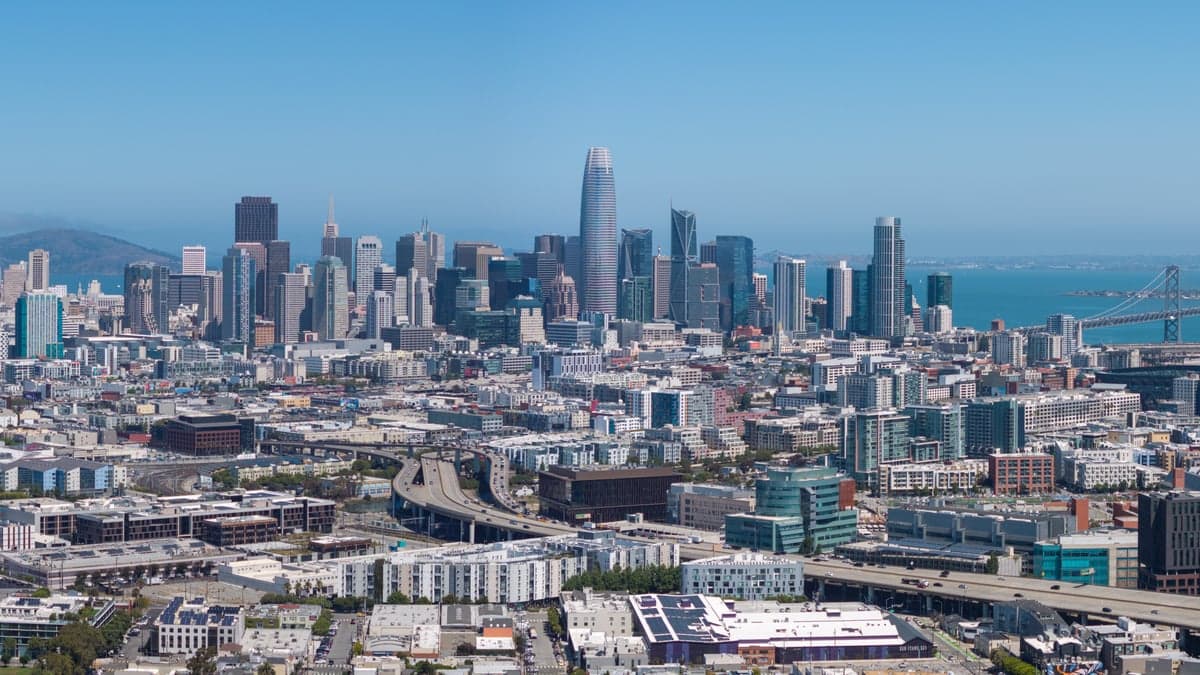
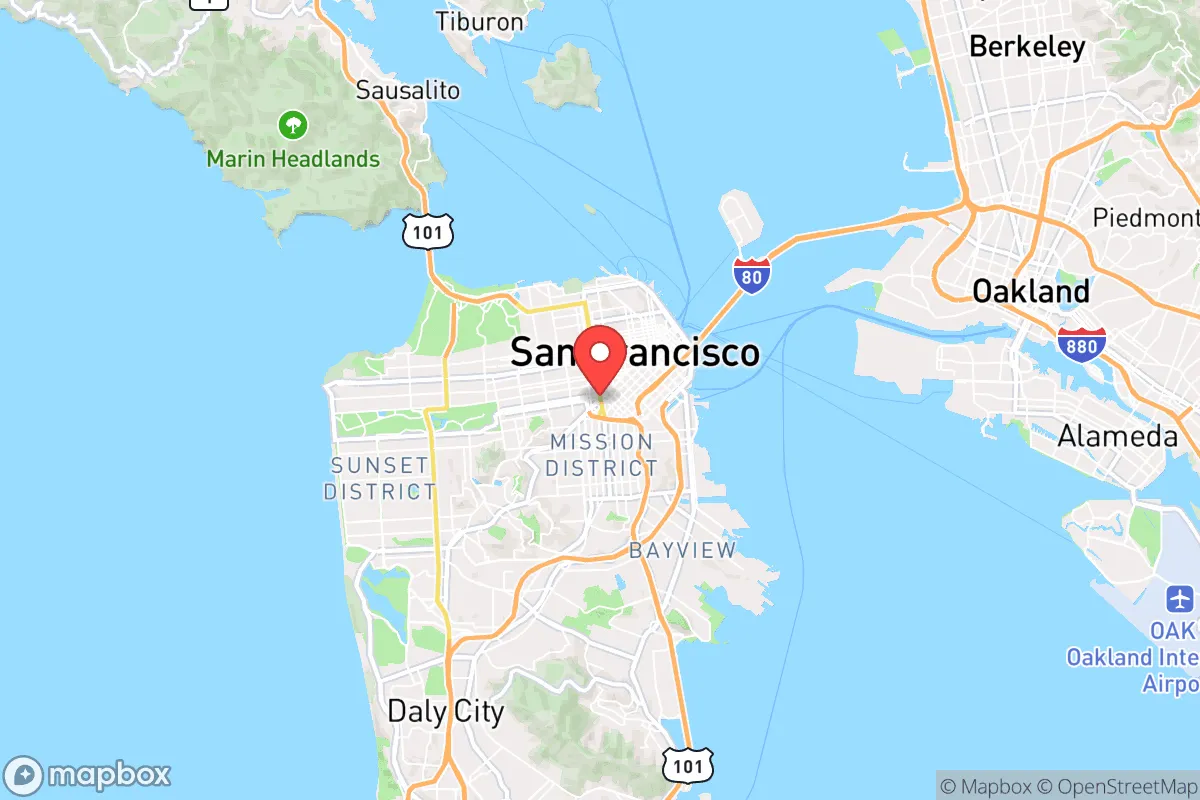
Photo: Wikipedia
Strategic Assessment of San Francisco, CA
High tactical risk. This location is likely close to major population centers, strategic targets, or sits in a high-disaster corridor. A retreat property and careful exit planning is required.
What does the Strategic Assessment tell us?
Our Strategic Assessment grades tactical survivability of an area. Major population centers, military targets, fallout zones, natural disasters, and border exposure all drive risk — lower exposure means a more defensible position in a crisis.
This is heavily inspired by Joel Skousen's Strategic Relocation book. Highly recommended you checkout the book ($)What does this tell us?
Our Strategic Assessment grades tactical survivability of an area. Major population centers, military targets, fallout zones, natural disasters, and border exposure all drive risk — lower exposure means a more defensible position in a crisis.
This is heavily inspired by Joel Skousen's Strategic Relocation book. Highly recommended you checkout the book ($)Strategic Pillars

Key Distances
Regional Safe Places
Below is our recommended "safe zones" in California and the surrounding area based on our strategic heuristics. For most people, it's unrealistic to live in a “safe zone” full-time due to work, family or other personal reasons. They tend to be more rural. However, many of these areas are perfect for second homes and retreat properties that double as a vacation home or even a short-term rental.

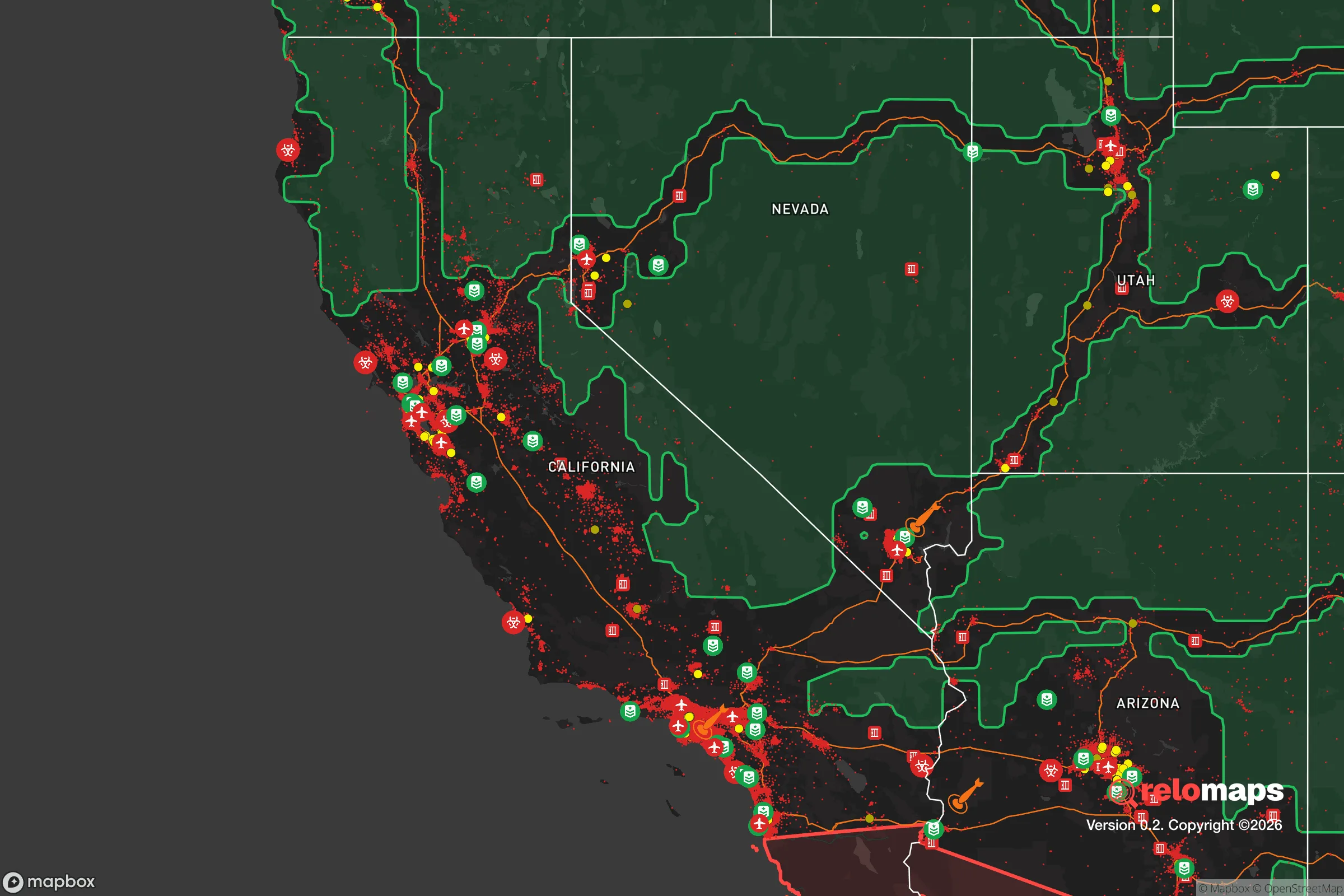


Important Note: For informational purposes only. This does not mean nothing bad ever happens in the green zones. Please use common sense. This is based on public data and modeled with AI. We tried to take a conservative approach but mistakes happen. We update this regularly as new information becomes available.
Solar Generator Recommendations
Backup power matters more here than in safer locations. We've picked three solar generators across budgets and capacity tiers — start with the budget unit if you only need a few essentials, or step up if you want to run a fridge and HVAC for days at a time.

Jackery Portable Power Station Explorer 300
Budget OptionPower on the Go: Weighing only 11 lbs, it's convenient to set up and store with book-sized foldable solar panels

BLUETTI Portable Power Station AC180
Designed for both indoor and outdoor scenarios, AC180 is highly capable as it has a robost capacity and continuous output power.

EF ECOFLOW DELTA Pro Ultra Power Station
Upgraded PickEcoFlow DELTA Pro Ultra is a whole-home energy system designed to grow with your family. Integrated with the Smart Home Panel 2, it scales to meet your evolving energy needs — keeping your home powered, intelligent, and secure through every stage of life.
We earn a commission, at no additional cost to you.
Strategic Assessment Analysis
San Francisco presents a paradox for the strategic relocator: it sits on one of the most geographically defensible peninsulas on the West Coast, yet its political and social fragility makes it one of the highest-risk urban centers in the country for a conservative-leaning prepper. The city’s natural harbor and narrow access points offer a theoretical chokepoint advantage, but the reality of its dense population, progressive governance, and proximity to multiple catastrophic failure points means that any resilience plan here must account for rapid, cascading collapse rather than slow decline. For a single individual or family looking to weather civic unrest, mass casualty events, or large-scale disasters, San Francisco is less a sanctuary and more a high-stakes gamble—one where the exit strategy is as critical as the supplies you stock.
Geographic position and natural advantages for a survival scenario
San Francisco’s location on a 46-square-mile peninsula between the Pacific Ocean and San Francisco Bay gives it a rare natural moat. The city is bounded by water on three sides, with only a narrow isthmus connecting it to the mainland at the south. In a grid-down or civil unrest scenario, this geography could theoretically be leveraged to control access: the Bay Bridge and Golden Gate Bridge are the only road links to the east and north, and both are vulnerable to sabotage or traffic collapse. The city’s hills—Nob Hill, Russian Hill, Twin Peaks—offer elevated vantage points for observation and communication, though they also create isolated neighborhoods that could become traps if lower areas flood or burn. The coastal fog and cool marine layer provide a natural temperature buffer, reducing the risk of heat-related crises, but they also complicate solar power and outdoor living. For a prepper, the key advantage is the ability to monitor all approaches from a single high point—but that advantage is nullified if you cannot secure the bridges or if the population inside the city turns hostile.
Risks, exposures, and proximity to fallout-relevant landmarks
The risks here are not subtle. San Francisco sits directly on the San Andreas Fault, with the Hayward Fault running just east of the Bay. A major earthquake—the kind seismologists call the “Big One”—would collapse unreinforced masonry buildings, rupture gas lines, and trigger fires that the fire department, already underfunded and understaffed, could not contain. The city’s water supply, delivered via the Hetch Hetchy Aqueduct from Yosemite, crosses multiple fault lines; a break would leave the city without potable water for weeks. Beyond geology, the city’s density—over 17,000 people per square mile—creates a powder keg for disease, violence, and resource competition. Proximity to high-value targets is a major concern: the Port of Oakland, the Transamerica Pyramid, the Salesforce Tower, and the Presidio (a former military base) are all potential targets for state or non-state actors. The city’s status as a global tech hub also makes it a symbolic target for cyber or physical attacks. For a conservative relocator, the political climate adds another layer: San Francisco’s defunded police force, open-air drug markets, and permissive policies toward property crime mean that even in peacetime, personal security is a daily concern. In a crisis, expect looting, arson, and organized gangs to fill the vacuum faster than any official response.
Practical resilience for a relocator: food, water, energy, and defensibility
Let’s be blunt: San Francisco is one of the worst major cities in America for long-term self-sufficiency. The city imports nearly all its food—there is no significant agricultural land within the city limits, and the few community gardens are tiny and vulnerable. The water system is a single point of failure: the Hetch Hetchy pipeline, which runs 167 miles through earthquake country, supplies 85% of the city’s water. If it breaks, you are looking at trucked-in water or desalination, neither of which is scalable for 800,000 people. Energy is equally fragile: PG&E’s grid is notorious for wildfire-induced shutoffs, and the city’s reliance on overhead lines means a single downed pole can blackout a neighborhood. Solar is possible but limited by fog and building restrictions; most preppers here rely on portable generators and stored fuel, which is a finite resource. Defensibility is the one bright spot: a well-prepared group could secure a single block or a fortified apartment building, especially in the hilly western neighborhoods (Sunset, Richmond) where streets are narrow and easily barricaded. But the cost of real estate—median home price over $1.3 million—means that most relocators cannot afford the space needed for serious prepping. For a family, the lack of backyard space, the difficulty of storing bulk supplies, and the constant threat of break-ins make San Francisco a poor choice for a permanent bug-in location. The smarter play is to use the city as a temporary base while maintaining a fully stocked retreat in a rural county like Sonoma or Nevada County, within a two-hour drive.
The overall strategic picture for San Francisco is one of high risk and low reward for the conservative prepper. The city’s natural defenses are real but irrelevant when the population density, infrastructure fragility, and political dysfunction are factored in. A single individual might survive a short-term crisis by bugging in with a well-stocked apartment and a solid network of like-minded neighbors, but a family would be better served by a location with actual land, water security, and a community that shares your values. If you must be in the Bay Area for work or family, treat San Francisco as a transient hub—not a home. Your real resilience lies in the rural fringe, where you can control your own food, water, and security. In the end, San Francisco is a beautiful place to visit, but for a strategic relocator, it is a trap waiting to spring. Plan accordingly.

* Values derived from national, state, county, city and local statistics and may differ in a specific area. Last updated: 2026-04-15T23:41:27.000Z
Narrative content on this page is AI-generated and may contain mistakes. Verify any details that matter before acting on them.
ReloMaps may earn a commission from affiliate links at no extra cost to you.

