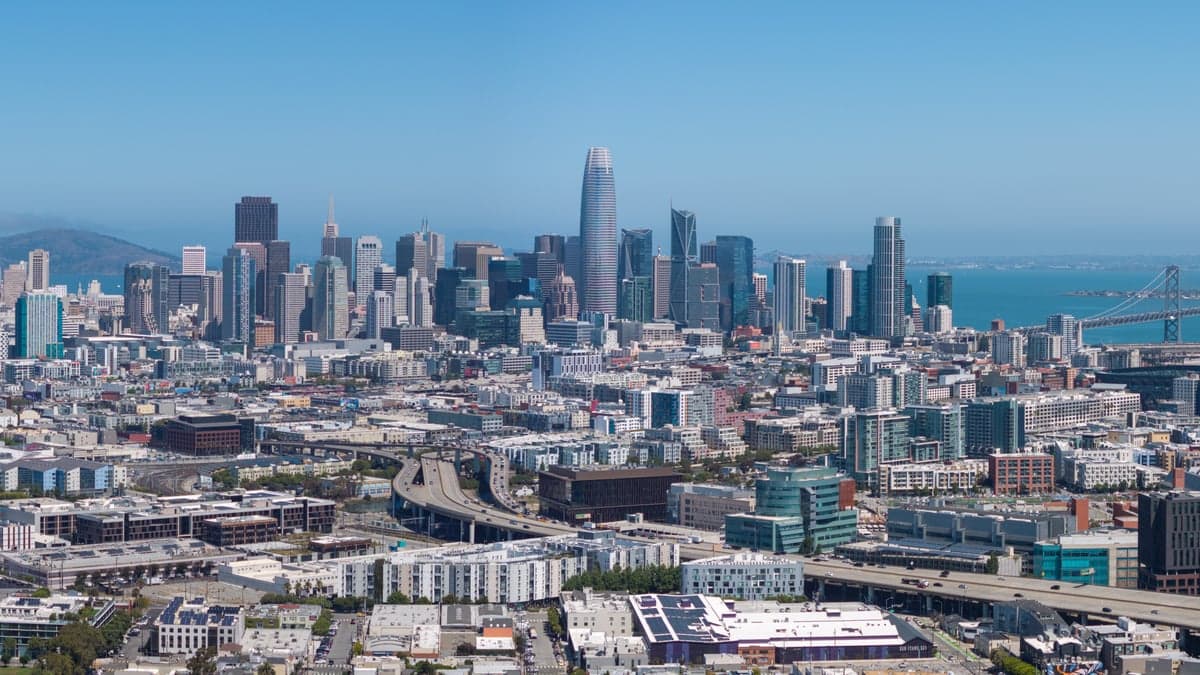
Photo: Wikipedia
Political ClimatePolitical Climate in San Francisco, CA
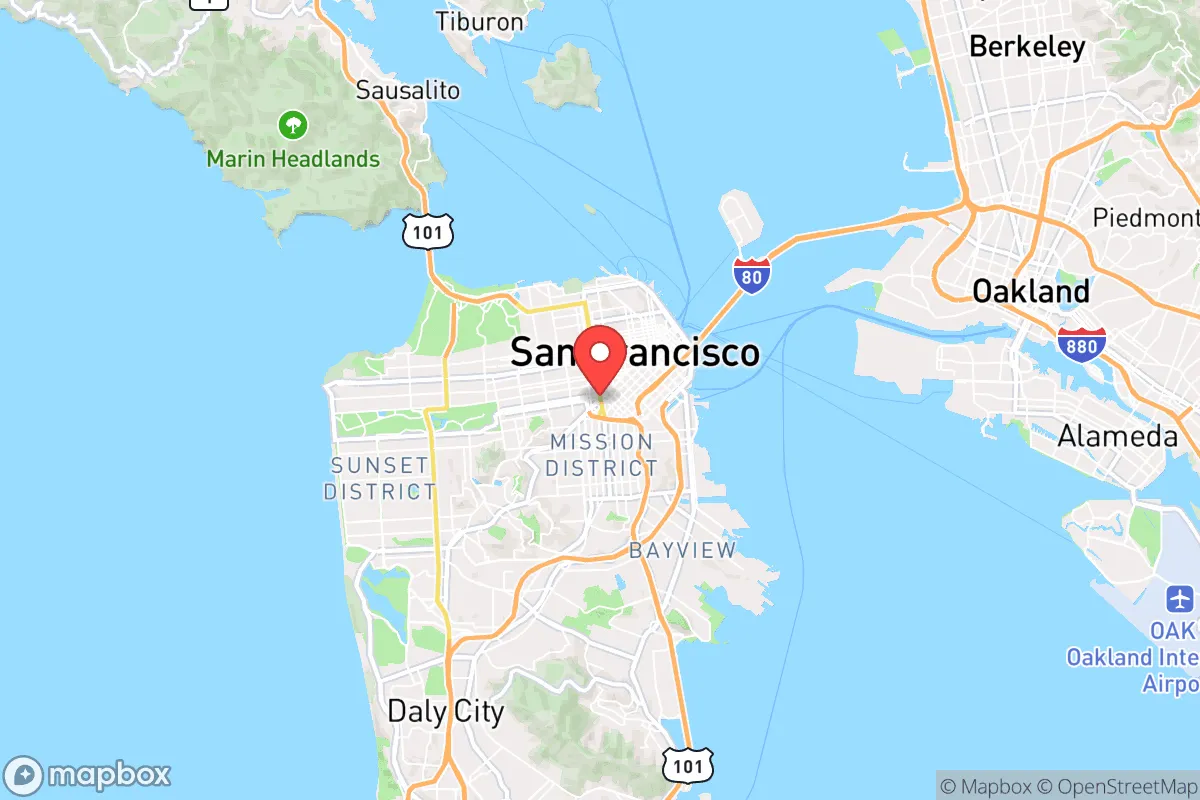
District shown is the primary district for this city’s centroid. Cities may span multiple districts.
Inherited from parent state — no local data available.
Local Political AnalysisPolitical Analysis of San Francisco, CA
San Francisco is about as deep blue as it gets in American politics, with a Cook PVI of D+36 that makes it one of the most lopsidedly Democratic cities in the country. It wasn’t always this way—back in the 1970s and 80s, you had a real mix of moderate Democrats and even some Republicans who kept things balanced, especially in neighborhoods like the Marina or Pacific Heights. But over the last 20 years, the city has shifted hard left, and not just on national issues—local elections are now dominated by candidates who push policies that many longtime residents see as government overreach into personal freedoms, from business regulations to housing mandates.
How it compares
If you drive just 30 minutes south to San Mateo or 45 minutes east to Walnut Creek, you’ll find a completely different political vibe. San Mateo County still leans blue, but it’s more of a D+15 kind of place—pragmatic, with a mix of tech workers and families who care about schools and taxes more than ideological purity. Walnut Creek in Contra Costa County is even more moderate, with a strong Republican minority that actually wins local races sometimes. Even within the Bay Area, places like South San Francisco or Daly City feel more grounded—they haven’t gone all-in on the progressive experiments that have made San Francisco a national cautionary tale. The contrast is stark: while San Francisco’s Board of Supervisors debates defunding the police or banning gas stoves, nearby cities are quietly fixing potholes and keeping their downtowns clean.
What this means for residents
For anyone living here, the political climate translates into real, daily frustrations. The city’s one-party rule means there’s almost no pushback when politicians decide to micromanage your life—like the 2022 ban on natural gas in new buildings, which forces homeowners into expensive electric retrofits, or the endless layers of permitting that make opening a small business a nightmare. Property crime has spiked since 2020, with car break-ins and shoplifting becoming routine, yet the district attorney’s office often declines to prosecute, citing progressive criminal justice reforms. If you’re a parent, you’ve probably noticed that school board meetings have turned into ideological battlegrounds over curriculum and parental rights, with little focus on basic math and reading scores. The long-term trajectory looks concerning: as more moderate families and businesses flee to the suburbs, the city’s tax base shrinks, leaving fewer resources for the services that do work—and giving politicians an excuse to push even more taxes and regulations.
Culturally, San Francisco still has its charms—the foggy mornings, the Golden Gate views, the dive bars in the Mission—but the political overreach has drained a lot of the old spirit. You used to be able to start a food truck or a pop-up shop with a handshake and a business license; now it’s a six-month slog through city hall. The city’s homelessness crisis, which has gotten worse despite billions in spending, is a direct result of policies that prioritize ideology over practical solutions, like the refusal to enforce camping bans or require treatment for addiction. If you’re thinking of moving here, just know that you’re not just buying a house—you’re buying into a political experiment that’s still unfolding, and not always in a good way.

State Political ClimatePolitical Climate in California
State Political AnalysisPolitical Environment in the State
California is a deep blue state where Democrats hold every statewide office, supermajorities in both legislative chambers, and a 2-to-1 voter registration advantage over Republicans. Over the past 20 years, the state has shifted from a competitive purple state—George W. Bush lost it by just 10 points in 2004—to a solidly one-party state where Joe Biden won by 29 points in 2020 and Kamala Harris carried it by 20 points in 2024. The dominant coalition is a mix of coastal urban professionals, union households, and a growing bloc of progressive activists who increasingly set the agenda in Sacramento, often overriding moderate Democratic voices.
Urban vs. rural divide
The political map of California is a tale of two worlds. The coastal metros—Los Angeles, San Francisco, Oakland, San Jose, and San Diego—generate the vast majority of Democratic votes. Los Angeles County alone casts more ballots than 40 states, and it votes about 70% Democratic. The San Francisco Bay Area is even more lopsided, with San Francisco County hitting 85% Democratic in 2024. Inland, the Central Valley and far northern counties are Republican strongholds. Bakersfield (Kern County) voted +16 for Trump in 2024, and Redding (Shasta County) went +35. But these red areas are losing population and political clout. The most telling shift is in Orange County, once the heart of California conservatism—Richard Nixon’s home base—which flipped from red to blue in 2018 and now votes about 55% Democratic. Suburbs like Irvine and Santa Ana are now reliably blue, while only the inland exurbs like Yorba Linda and Huntington Beach still lean Republican. The rural-urban divide is stark, but the urban centers are growing faster and dominate the legislature.
Policy environment
California’s policy environment is defined by high taxes, heavy regulation, and a progressive social agenda. The state has the highest top marginal income tax rate in the nation at 13.3%, and a 7.25% sales tax that local governments can push to over 10% in cities like Los Angeles and San Francisco. Property taxes are capped by Proposition 13, but the state’s transfer taxes and annual inflation adjustments still make homeownership expensive. The regulatory posture is aggressive: California has its own environmental review process (CEQA) that can delay any construction project for years, and it mandates net-zero emissions by 2045. In education, the state has a progressive curriculum that includes ethnic studies requirements and LGBTQ-inclusive materials, and it funds schools at about $20,000 per pupil—above the national average—but ranks near the bottom in reading and math proficiency. Healthcare is heavily regulated, with a state-run insurance exchange (Covered California) and a recent push toward single-payer, though it hasn’t passed yet. Election laws are among the most liberal: universal mail-in ballots, same-day registration, and no voter ID requirement. In 2021, the legislature passed AB 1461, which automatically registers anyone who gets a driver’s license to vote, adding millions to the rolls with minimal verification.
Trajectory & freedom
California is becoming less free by almost any measure. On gun rights, the state has some of the strictest laws in the nation: a 10-day waiting period, a ban on “assault weapons” (SB 880), a ban on high-capacity magazines, and a requirement that all ammunition purchases go through licensed dealers with background checks. In 2023, the legislature passed SB 2, which effectively bans carrying firearms in most public places, including parks, hospitals, and public transit. On parental rights, the state has moved aggressively in the opposite direction: AB 1955 (2024) prohibits school districts from requiring parental notification when a child changes their gender identity or pronouns, overriding local school board policies. On speech, California’s AB 587 (2022) requires social media companies to report their content moderation policies, which critics say is a backdoor to state censorship. On medical autonomy, the state expanded abortion access with SB 245 (2022), which eliminated out-of-pocket costs, and it passed a constitutional amendment (Prop 1) enshrining abortion rights. Property rights are weak: rent control was expanded statewide by AB 1482 (2019), capping annual rent increases at 5% plus inflation, and the state has a “builder’s remedy” that forces cities to approve housing projects if they haven’t met state housing targets. Taxation is only going up: in 2024, voters rejected a measure to repeal the recent tax increases on high earners, and the legislature is considering a wealth tax on assets over $50 million.
Civil unrest & political movements
California has been a flashpoint for political unrest for decades. The 2020 George Floyd protests in Los Angeles and Oakland turned into widespread looting and arson, with damage estimated at over $1 billion. The state’s sanctuary law (SB 54, 2017) prohibits local law enforcement from cooperating with federal immigration authorities, making California a de facto safe haven for illegal immigrants. In 2023, the legislature passed AB 1266, which allows undocumented immigrants to receive state-funded health insurance. On the right, there have been organized recall efforts—most notably the successful recall of San Francisco District Attorney Chesa Boudin in 2022, and the failed recall of Governor Gavin Newsom in 2021. Secession rhetoric is mostly a fringe movement: the “Calexit” campaign failed to get on the ballot in 2018, and the State of Jefferson movement in the far north has no real political power. Election integrity is a major concern for conservatives: the state’s universal mail-in system, combined with no voter ID and automatic registration, has led to widespread allegations of fraud, though no major prosecutions have occurred. Visible flashpoints include homeless encampments in every major city—San Francisco’s Tenderloin district is a national symbol of the crisis—and frequent protests at state capitol buildings over housing, abortion, and transgender rights.
Projection
Over the next 5-10 years, California will likely become even more progressive. Demographic trends favor the left: the state’s white population is shrinking, while Latino and Asian populations—who vote Democratic by wide margins—are growing. In-migration is overwhelmingly from blue states and countries, while out-migration to Texas, Arizona, and Nevada is disproportionately conservative. The legislature is already considering a single-payer healthcare bill (SB 770), a wealth tax, and a repeal of Proposition 13’s commercial property tax protections. The state’s housing crisis will likely force more density and rent control, further eroding property rights. On the other hand, the state’s budget is structurally dependent on high-income earners, and a recession could trigger a fiscal crisis that forces moderation. But given the supermajority dynamics, any moderation will be temporary. A new resident moving in now should expect to find, in a decade, a state with even higher taxes, stricter gun laws, more government control over healthcare and education, and a political culture that is hostile to traditional conservative values.
For a conservative-leaning individual or family considering relocation, the bottom line is clear: California offers unmatched natural beauty, economic opportunity in tech and entertainment, and a mild climate, but it comes at the cost of personal freedom, high taxes, and a political system that is actively hostile to your values. If you value gun rights, parental control over your children’s education, low taxes, and a government that stays out of your life, California is likely not the right fit. The state is on a trajectory that will only accelerate in the opposite direction, and the practical takeaway is that you should visit, enjoy the scenery, but think very carefully before making it your permanent home.
* Values derived from national, state, county, city and local statistics and may differ in a specific area. Last updated: 2026-04-15T23:41:27.000Z
Narrative content on this page is AI-generated and may contain mistakes. Verify any details that matter before acting on them.
ReloMaps may earn a commission from affiliate links at no extra cost to you.

