Photo: Wikipedia
Political ClimatePolitical Climate in Sand Springs, OK
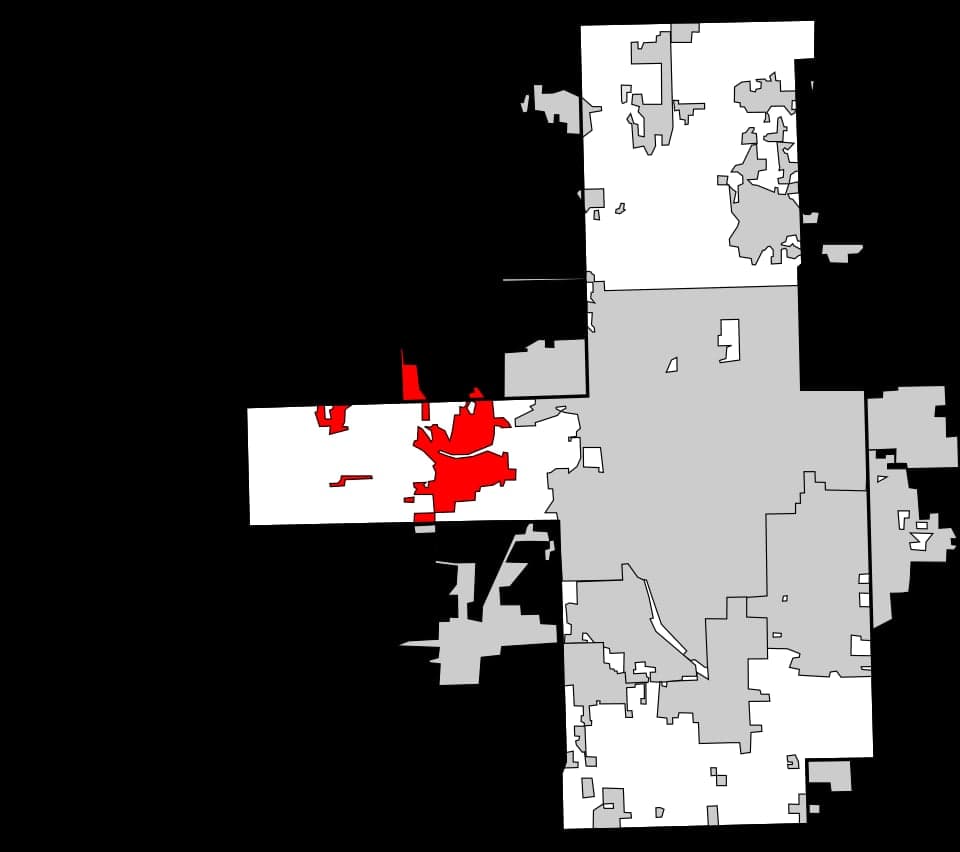
District shown is the primary district for this city’s centroid. Cities may span multiple districts.
Local Political AnalysisPolitical Analysis of Sand Springs, OK
Sand Springs has long been a solidly conservative community, and that hasn't changed much despite the broader shifts you see in some parts of the Tulsa metro. The Cook PVI of R+11 tells you the basics—this area leans Republican by a comfortable margin, and that’s been the case for as long as most folks can remember. You’ll find that the local elections, from city council to county offices, tend to reflect that same conservative bent, with a focus on limited government, lower taxes, and a general skepticism of federal overreach. If you’re looking at the trajectory, it’s steady—no dramatic swings leftward, but you do see a slow trickle of new residents from bluer states, which has introduced some tension around things like zoning and school policies. Most people here still vote their values, and those values are pretty traditional.
How it compares
Sand Springs sits in a bit of a political bubble compared to some of its neighbors. Drive east into Tulsa proper, and you’ll hit a much more mixed environment—Tulsa County as a whole is more purple, with pockets of progressive activism that can feel a world away from Sand Springs’ quiet streets. Head west or south into the rural parts of Creek or Osage counties, and you’ll find even deeper red territory, places where the R+11 of Sand Springs actually looks moderate by comparison. The real contrast, though, is with places like Broken Arrow or Jenks, which have seen more rapid growth and a younger, sometimes more libertarian-leaning crowd. Sand Springs has held its ground better than most, resisting the kind of progressive policy pushes you see in bigger cities—no talk of defunding police or radical zoning changes here. It’s a place where the local government still remembers that its job is to stay out of your way, not manage your life.
What this means for residents
For someone living here, the political climate translates into a pretty straightforward daily reality. You’re not going to see the kind of government overreach that makes headlines in places like Portland or even Austin—no mask mandates that drag on forever, no heavy-handed business closures, no school boards pushing critical theory on your kids. The local leadership tends to take a hands-off approach, trusting families and individuals to make their own choices. Property taxes stay reasonable, and there’s a general understanding that your rights—to own a firearm, to run a small business, to speak your mind—aren’t up for debate. That said, you do have to keep an eye on the long-term trends. As the Tulsa metro grows, there’s always pressure to adopt more urban-style policies, like higher density zoning or expanded public transit that comes with new regulations. So far, Sand Springs has held the line, but it’s something residents stay vigilant about.
One thing that sets Sand Springs apart is its cultural identity—it’s not just a bedroom community for Tulsa, but a town with its own history and pride. You’ll see that in things like the annual Sand Springs Rodeo and the strong support for local schools and churches. There’s a real sense that the community looks out for itself, without needing a lot of help from the state or federal government. If you’re worried about the direction of the country, this is the kind of place where you can still breathe easy. The biggest concern for the future is whether the growth pressures from Tulsa will bring in enough new voices to shift the balance. For now, though, Sand Springs remains a reliable conservative anchor in a region that’s still mostly red, and that’s something worth holding onto.

State Political ClimatePolitical Climate in Oklahoma
State Political AnalysisPolitical Environment in the State
Oklahoma has been a reliably red state for decades, with Republicans holding every statewide office and supermajorities in both legislative chambers, but the political climate here is more nuanced than a simple party label suggests. The state’s conservative lean is deep-rooted, driven by a strong evangelical presence, a robust oil and gas economy, and a cultural preference for limited government, though recent cycles have seen a slight softening in the most rural areas as in-migration from bluer states begins to shift the suburbs. Over the last 10-20 years, Oklahoma has moved from a competitive state that occasionally elected Democrats to a solidly Republican stronghold, with Donald Trump winning the state by over 33 points in 2020 and 2024, though pockets of resistance in Oklahoma City and Tulsa keep the overall picture from being monolithic.
Urban vs. rural divide
The political map of Oklahoma is a classic tale of two worlds. The major metros—Oklahoma City and Tulsa—are the only places where Democrats can reliably compete, with Oklahoma County (OKC) flipping to Biden in 2020 by a narrow margin and Tulsa County trending purple, though it still leans red. Outside these urban cores, the landscape is overwhelmingly conservative. The rural Panhandle, including towns like Guymon and Boise City, votes Republican by margins exceeding 80%, driven by agriculture and energy interests. Suburbs like Edmond and Broken Arrow are deeply red, but they’ve seen a slight uptick in moderate Republican and independent voters as younger families move in from out of state. The southeastern corner, around Hugo and Idabel, remains solidly conservative but with a populist streak that sometimes bucks the party establishment on trade and immigration. The divide isn’t just about party—it’s about culture: urban areas are more diverse and secular, while rural counties are overwhelmingly white, churchgoing, and skeptical of federal overreach.
Policy environment
Oklahoma’s policy environment is a laboratory for conservative governance, with a tax structure that’s among the most business-friendly in the nation. The state has a flat income tax of 4.75% (down from 5% in 2022), no estate tax, and a corporate tax rate of 4%, with ongoing efforts to phase out the income tax entirely. The regulatory posture is light-touch, especially for energy and agriculture, with the state actively pushing back against EPA overreach on oil and gas drilling. Education policy is a flashpoint: the state has a robust school choice program, including the Oklahoma Parental Choice Tax Credit, which provides up to $7,500 per child for private school expenses, and a growing charter school sector. However, public school funding remains a concern, with teacher pay raises in 2023 (averaging $5,000) failing to keep pace with inflation. Healthcare is a mixed bag: Oklahoma expanded Medicaid under a 2020 ballot initiative (State Question 802), which was a rare progressive win, but the state also passed strict abortion restrictions (SB 612, effectively banning the procedure after fertilization) and protects medical conscience rights for providers. Election laws are tight—voter ID is required, and the state has purged inactive voters from rolls, with no-excuse absentee voting available but early voting limited to three days. The overall posture is one of limited government, but the state’s heavy reliance on oil and gas revenue means it’s vulnerable to boom-and-bust cycles.
Trajectory & freedom
On balance, Oklahoma is becoming more free in several key areas, but not without some concerning trends. The state has been a national leader on gun rights: in 2019, it passed constitutional carry (permitless carry for adults), and in 2023, it expanded protections for firearm manufacturers against lawsuits (SB 448). Parental rights are strong, with a 2022 law (HB 1775) banning the teaching of critical race theory in public schools and requiring parental notification for any curriculum changes. Medical autonomy took a hit with the near-total abortion ban, but the state also protects alternative medicine and vaccine choice—a 2023 law (SB 658) prohibits employers from mandating COVID-19 vaccines. Property rights are solid, with no state-level rent control and strong eminent domain protections. The biggest red flag is taxation: while the income tax is low, local property taxes can be high in districts with good schools (like Edmond and Norman), and the state’s sales tax (4.5% state, plus local add-ons up to 5%) is regressive. The most concerning trend is the creeping influence of federal money—Oklahoma took billions in COVID relief, which some conservatives argue has expanded government dependency. Overall, though, the trajectory is toward more personal liberty, especially on guns, education, and vaccine mandates.
Civil unrest & political movements
Oklahoma has seen its share of political flashpoints, but they’re less dramatic than in coastal states. The most visible movement in recent years has been the “Oklahoma Freedom Caucus” in the state legislature, a group of hardline conservatives who’ve pushed for tax cuts, school choice, and immigration enforcement. They’ve clashed with more moderate Republicans over budget priorities, but their influence is growing. On the left, the “Oklahoma Poor People’s Campaign” and teachers’ unions have organized protests at the capitol, especially during the 2018 teacher walkout that shut down schools for two weeks. Immigration politics are heated but not explosive: the state passed a law (HB 4156) in 2024 requiring local law enforcement to cooperate with ICE, and there’s no sanctuary city policy anywhere in the state. Election integrity controversies flared after 2020, with the state GOP calling for an audit of the 2020 election (which found no widespread fraud), but the issue has largely subsided. The most visible flashpoint for a new resident would be the “Save Our State” rallies in Oklahoma City, which draw thousands to protest federal overreach on everything from vaccine mandates to land management. Overall, civil unrest is low—Oklahomans tend to channel their political energy into voting and legislative action rather than street protests.
Projection
Over the next 5-10 years, Oklahoma is likely to remain solidly red, but with a subtle shift toward a more suburban, moderate conservatism driven by in-migration from Texas, California, and Colorado. The fastest-growing counties are Canadian County (west of OKC) and Cleveland County (Norman), which are attracting families and remote workers who want lower taxes but may be less culturally conservative on issues like marijuana (medical use is legal, recreational is not) and LGBTQ rights. The rural areas will continue to shrink and harden in their conservatism, creating a growing cultural gap between the metros and the countryside. The biggest wildcard is the state’s budget: if oil prices stay high, the state can afford tax cuts and school choice expansion; if they crash, expect austerity and potential tax hikes. The most likely scenario is that Oklahoma becomes a “Texas-lite”—deeply conservative on economics and guns, but with a growing libertarian streak that tolerates more personal freedom on lifestyle issues. A new resident moving in now should expect to find a state that’s politically stable, with a government that mostly stays out of your business, but with a legislature that’s increasingly willing to use state power to push back against federal mandates.
For a conservative-leaning individual or family, Oklahoma offers a strong alignment with traditional values, low taxes, and a government that respects personal liberty on guns, education, and healthcare choices. The downsides are real but manageable: public schools in rural areas are underfunded, the summer heat is brutal, and the state’s reliance on oil revenue means economic uncertainty. If you’re looking for a place where your vote counts, your rights are protected, and the government isn’t constantly in your face, Oklahoma is a solid bet—just be prepared for the occasional legislative battle over how far “freedom” should go.
* Values derived from national, state, county, city and local statistics and may differ in a specific area. Last updated: 2026-04-25T13:53:20.000Z
Narrative content on this page is AI-generated and may contain mistakes. Verify any details that matter before acting on them.
ReloMaps may earn a commission from affiliate links at no extra cost to you.

