 Popular
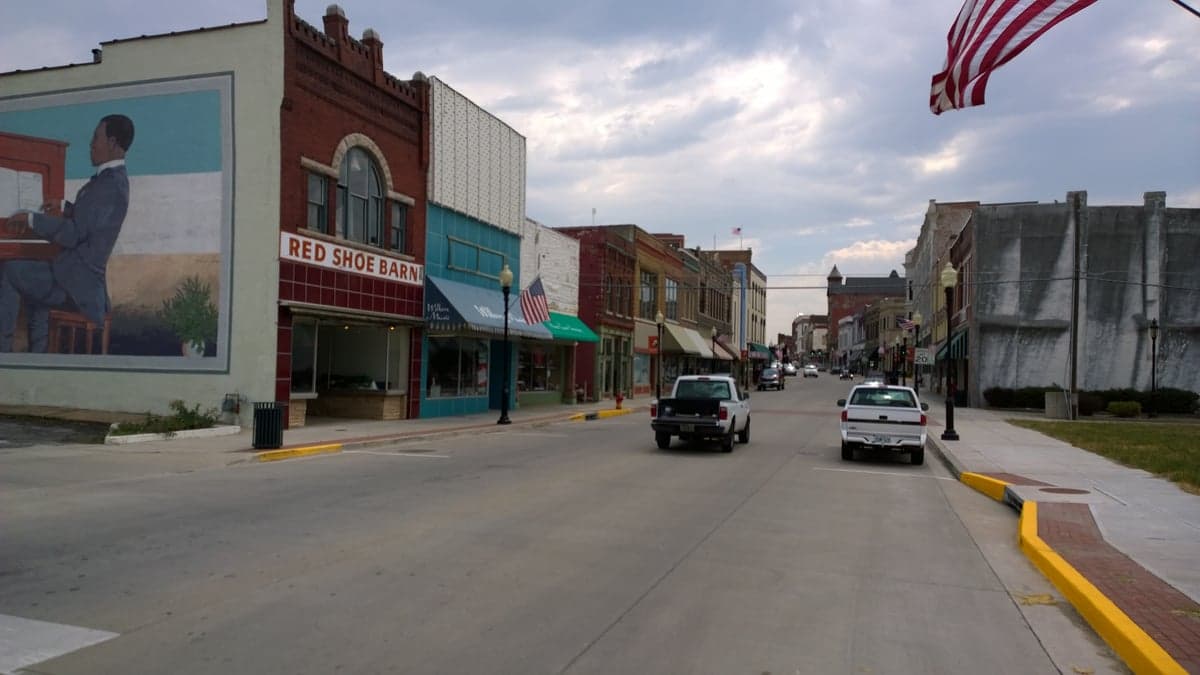
Photo: Wikipedia
Political ClimatePolitical Climate in Sedalia, MO
District shown is the primary district for this city’s centroid. Cities may span multiple districts.
Local Political AnalysisPolitical Analysis of Sedalia, MO
Sedalia, Missouri, sits deep in the heart of the Show-Me State’s conservative stronghold, and the numbers back up what most folks around here have known for generations. With a Cook Partisan Voting Index of R+21, Pettis County—where Sedalia is the county seat—leans heavily Republican, and that’s not a fluke of the last election cycle. This area has voted red in every presidential race since at least 2000, often by margins that make statewide races look like nail-biters by comparison. The political trajectory here isn’t shifting leftward; if anything, the local GOP base has only hardened over the past decade, driven by a growing distrust of federal overreach and a desire to keep government out of local schools, businesses, and family decisions.
How it compares
Drive thirty minutes east to Boonville or an hour north to Marshall, and you’ll find similar conservative leanings, but Sedalia stands out for its sheer consistency. Neighboring towns like Warrensburg, home to the University of Central Missouri, show a bit more purple—especially in student-heavy precincts—but Sedalia itself remains reliably red. Compare that to Columbia, about an hour east, where the university and state government presence push the politics solidly blue; Sedalia feels like a different world. The contrast is stark: while Columbia debates progressive zoning and police reform, Sedalia’s city council meetings are more likely to focus on property taxes, road maintenance, and keeping the local economy humming without state interference. That R+21 rating isn’t just a number—it reflects a community that consistently votes against what it sees as government overreach into personal freedoms, from gun rights to school curriculum choices.
What this means for residents
For someone living here, the political climate means a few practical things. First, you’re not going to see a lot of progressive policy experiments—no defund-the-police movements, no radical school board takeovers, no heavy-handed business mandates. The local government tends to take a hands-off approach, trusting residents and small business owners to make their own calls. That’s a relief for folks who’ve watched other Missouri towns get bogged down in red tape or ideological battles. Second, property taxes stay relatively low compared to blue-leaning areas, and there’s a general resistance to new tax hikes unless they’re tied to something concrete like a new fire station. Third, the social atmosphere is one where traditional values—church, family, hard work—still carry weight. You won’t find many people pushing for drag story hours or critical race theory in the classroom here, and that’s by design. The long-term trend? If anything, Sedalia’s conservatism is likely to deepen as more families move out of high-tax, high-regulation cities like Kansas City or St. Louis, seeking a place where they can live without constant government intrusion.
One cultural distinction worth noting: Sedalia is home to the Missouri State Fair, which brings in hundreds of thousands of visitors each August. That event reinforces the area’s agricultural roots and small-town identity, but it also highlights a tension. The fairgrounds are state-owned, meaning state politics occasionally clash with local preferences—like when state-level mask mandates or vaccine requirements were debated during the pandemic. Locals largely pushed back, viewing it as another example of government overstepping its bounds. In the near future, expect Sedalia to remain a bulwark against progressive shifts, with residents keeping a wary eye on Jefferson City and Washington D.C. alike. If you value personal liberty, low taxes, and a community that doesn’t try to micromanage your life, this is still one of the most comfortable places in Missouri to call home.

State Political ClimatePolitical Climate in Missouri
State Political AnalysisPolitical Environment in the State
Missouri has long been a bellwether state, but over the past 15 years it has shifted from a classic purple battleground to a solidly red stronghold, with Republicans now holding supermajorities in both legislative chambers and every statewide office except the governorship (which flipped back to red in 2024). The state voted for Donald Trump by roughly 18 points in 2024, a sharp rightward move from the single-digit margins of the 2000s, driven largely by a wholesale realignment of rural and exurban voters away from the Democratic Party. For a conservative considering relocation, Missouri offers a political environment that is increasingly aligned with traditional values, though the major metropolitan areas—St. Louis and Kansas City—remain deep blue islands that can feel like a different country.
Urban vs. rural divide
The political map of Missouri is a study in stark contrasts. The two major urban centers—St. Louis City and County and Kansas City (Jackson County)—vote reliably Democratic by 30-40 point margins, powered by diverse populations, union influence, and a concentration of progressive activists. Meanwhile, the vast rural and exurban expanse of the state—places like Springfield, Joplin, Cape Girardeau, and the Ozarks region—votes Republican by similar or larger margins. The real story is in the suburbs: St. Charles County (west of St. Louis) has become a conservative stronghold, flipping from purple to deep red over the last decade, while Clay County (north of Kansas City) has moved rightward but remains more competitive. The I-70 corridor from Kansas City to St. Louis is a patchwork of red and blue, with college towns like Columbia (home to the University of Missouri) leaning left but surrounded by conservative farmland. The 2020 census showed that rural population loss is accelerating, meaning the urban-rural divide is becoming more pronounced, not less.
Policy environment
Missouri’s policy environment is broadly conservative, with a low-tax, low-regulation posture that appeals to freedom-minded individuals. The state has a flat income tax rate of 4.5% (down from 5.4% in 2022, with a trigger to drop further as revenue grows), no estate tax, and a relatively low property tax burden compared to the national average. The legislature has passed right-to-work legislation (though it was repealed by ballot initiative in 2018, a rare loss for conservatives), and the state is a “shall issue” concealed carry state with no permit required for open or concealed carry. Education policy is a mixed bag: school choice advocates have made inroads with the MOScholars program (tax-credit scholarships for private school), but public school funding remains a perennial fight. On healthcare, Missouri did not expand Medicaid until 2021 via a ballot initiative, and the state maintains some of the strictest abortion laws in the nation—a near-total ban with no exceptions for rape or incest, passed as a trigger law after Dobbs. Election laws have tightened: voter ID is required, and the 2022 HB 1878 banned private funding of election administration (a response to Zuckerberg-funded 2020 operations). For a conservative, the policy environment is largely favorable, though the constant threat of ballot initiatives (like Medicaid expansion and marijuana legalization) shows that direct democracy can override the legislature.
Trajectory & freedom
Missouri is trending toward more freedom in several key areas, but with some worrying caveats. On gun rights, the 2021 Second Amendment Preservation Act (SAPA) declared federal gun laws that don’t have a Missouri equivalent to be “infringements” and prohibited state and local law enforcement from enforcing them—a bold nullification move that has been partially blocked by federal courts but remains a powerful statement of intent. On parental rights, the 2022 HB 1551 (the “Save Adolescents from Experimentation” Act) banned gender transition procedures for minors, and the 2023 HB 634 required schools to get parental consent for any sexuality or gender identity instruction. On property rights, Missouri remains a relatively easy place to build and develop, with few statewide zoning mandates. However, the state has seen a concerning expansion of government power in the name of “public safety”: Kansas City and St. Louis have both implemented local gun control ordinances (like “red flag” laws) that conflict with state preemption, leading to ongoing legal battles. The biggest freedom concern for conservatives is the growing influence of federal funding—Missouri’s budget is heavily reliant on federal dollars, which could be used to impose progressive mandates in the future. Overall, the trajectory is positive for personal liberty, but the urban-rural legal conflict is a persistent friction point.
Civil unrest & political movements
Missouri has a history of civil unrest that new residents should be aware of. The Ferguson protests of 2014 (in a suburb of St. Louis) were a national flashpoint, and the city of St. Louis saw significant property damage and looting during the 2020 BLM protests, particularly along the Delmar Loop and in the Central West End. These events have hardened political lines: rural Missourians view them as evidence of urban dysfunction, while urban activists continue to push for police reform and defunding. On the right, the Missouri Freedom Caucus has become a powerful force in the state legislature, pushing for more aggressive nullification of federal laws and opposing any compromise on gun rights or abortion. Immigration politics are relatively quiet compared to border states, but there is a growing tension in agricultural areas like southeast Missouri (the Bootheel) where immigrant labor is essential but illegal immigration is a hot-button issue. No sanctuary cities exist in Missouri—state law prohibits them—but St. Louis and Kansas City have both resisted full cooperation with ICE. Election integrity remains a live issue: the 2020 and 2022 cycles saw no major scandals, but the legislature has continued to tighten laws, and some rural counties have passed resolutions calling for a “forensic audit” of the 2020 election. For a new resident, the most visible sign of political tension is the stark difference in signage and rhetoric between urban and rural areas—you’ll see far more Trump flags and “Let’s Go Brandon” signs in the exurbs than in the cities.
Projection
Over the next 5-10 years, Missouri is likely to become more conservative at the state level, but with growing internal friction. The in-migration pattern is telling: people are moving to the Springfield and Branson areas (the Ozarks) for lower cost of living and a more traditional lifestyle, while St. Louis City continues to lose population. This demographic shift will further entrench Republican supermajorities in the legislature and likely flip the governorship permanently red. However, the urban centers will not disappear—they will become more progressive and more isolated, potentially leading to a “two Missouris” dynamic where state law and city ordinances are in constant conflict. The biggest wild card is the ballot initiative process: if progressives can successfully put abortion rights or marijuana legalization on the ballot (as they did with Medicaid expansion), they could override the legislature on key issues. The 2024 election showed that Missouri voters are willing to split tickets—they voted for Trump by 18 points but also passed a constitutional amendment to legalize recreational marijuana. For a conservative moving in, the projection is clear: the state will remain a safe haven for traditional values at the state level, but you’ll need to choose your local community carefully to avoid the progressive drift of the major cities.
Bottom line for a new resident: If you’re a conservative looking for a state that respects gun rights, keeps taxes low, and pushes back against federal overreach, Missouri is a solid choice—especially if you settle in the St. Charles, Springfield, or Joplin areas. Just be prepared for the cultural and political divide between the rural heartland and the urban islands of St. Louis and Kansas City. The state is trending in your direction, but the fight over local control and ballot initiatives means you’ll need to stay engaged to keep it that way.
* Values derived from national, state, county, city and local statistics and may differ in a specific area. Last updated: 2026-04-29T19:18:09.000Z
Narrative content on this page is AI-generated and may contain mistakes. Verify any details that matter before acting on them.
ReloMaps may earn a commission from affiliate links at no extra cost to you.

