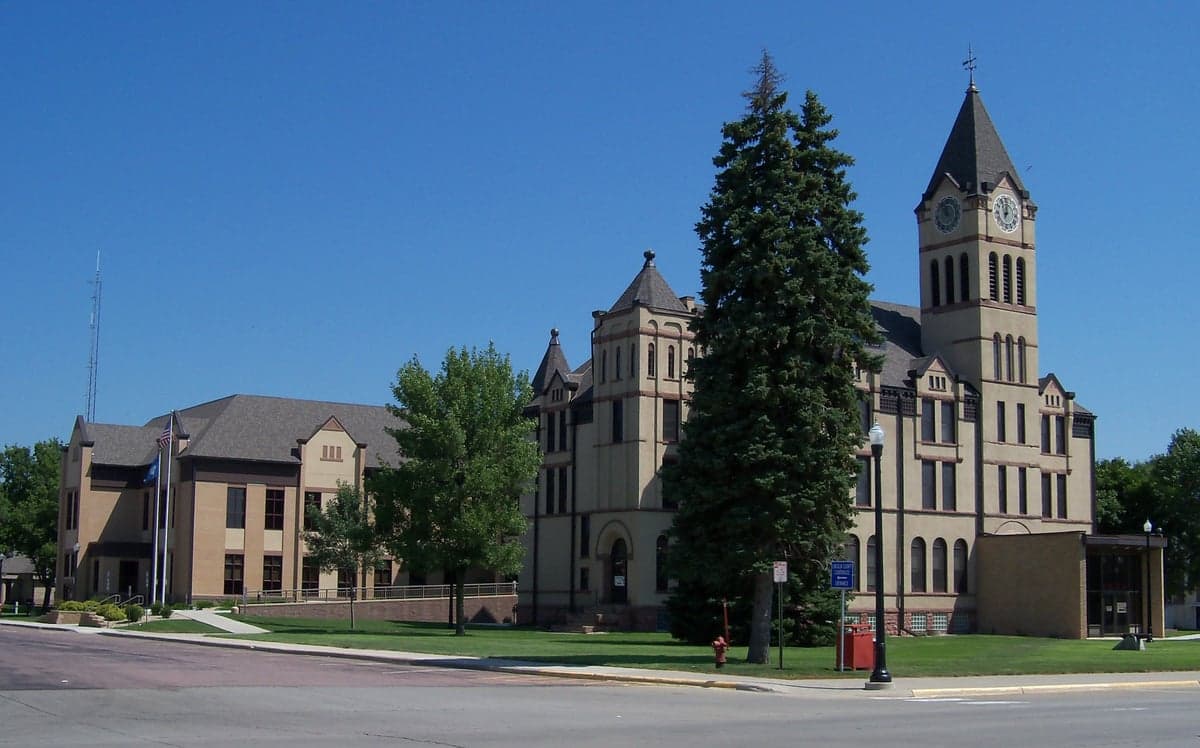
Photo: Wikipedia
Demographics of Lincoln County
Affluence Level in Lincoln County
An upper-middle-class area. Household wealth, education levels, and homeownership run ahead of national benchmarks.
People of Lincoln County
Today, Lincoln County, South Dakota is a rapidly growing, predominantly white, family-oriented county that blends small-town roots with suburban expansion driven by its proximity to Sioux Falls. With a population of 68,286, the county is 89.8% white, with a notably low foreign-born share of 2.1%, and a college-educated rate of 42.5% that reflects a workforce oriented toward professional and healthcare sectors. The county’s identity is shaped by its Dutch and German heritage, a strong agricultural foundation, and a recent wave of domestic in-migration from the Midwest and Plains states, creating a community that is culturally conservative, civically engaged, and increasingly suburban.
Settlement & growth (pre-1960)
Before American settlement, the land that is now Lincoln County was part of the traditional territory of the Sioux (Lakota and Dakota) nations, who used the area for hunting bison and seasonal camps. The first European presence came with French fur traders in the 1700s, but no permanent European settlements were established until after the 1858 Yankton Treaty, which ceded much of eastern Dakota Territory to the United States. The county was formally organized in 1867, named after President Abraham Lincoln, and the first wave of settlers were predominantly Yankees from New England and upstate New York, drawn by the 1862 Homestead Act offering 160 acres of land.
The defining settlement wave came in the 1870s and 1880s, when Dutch immigrants, fleeing economic hardship and religious persecution in the Netherlands, established tight-knit farming communities. They founded the towns of Holland (1879) and Edgerton (1880), which remain centers of Dutch Reformed church life and cultural identity. German immigrants from the Volga region and the Midwest also arrived in the 1880s, settling in Canton (the county seat, founded 1868) and Lennox (1880), where they built Lutheran churches and grain-based economies. Norwegian and Swedish families, part of the broader Scandinavian migration to the Upper Midwest, established farms around Tea (1893) and Worthing (1880). These groups were overwhelmingly white, Protestant, and agrarian, and they shaped the county’s political culture around self-reliance, local governance, and opposition to alcohol (Lincoln County was a dry county until the 1930s).
The railroad, specifically the Chicago, Milwaukee, St. Paul and Pacific line, reached Canton in 1872 and spurred the growth of grain elevators and small-town main streets. By 1900, the county’s population was about 12,000, almost entirely native-born white farmers and their families. The Dust Bowl and Great Depression of the 1930s hit the county hard, causing a population decline to around 10,000 by 1940, as some families moved to California or urban centers. World War II brought a modest recovery, with the county’s agricultural output supporting the war effort, but the population remained stable at around 11,000 through the 1950s.
Modern era (post-1965)
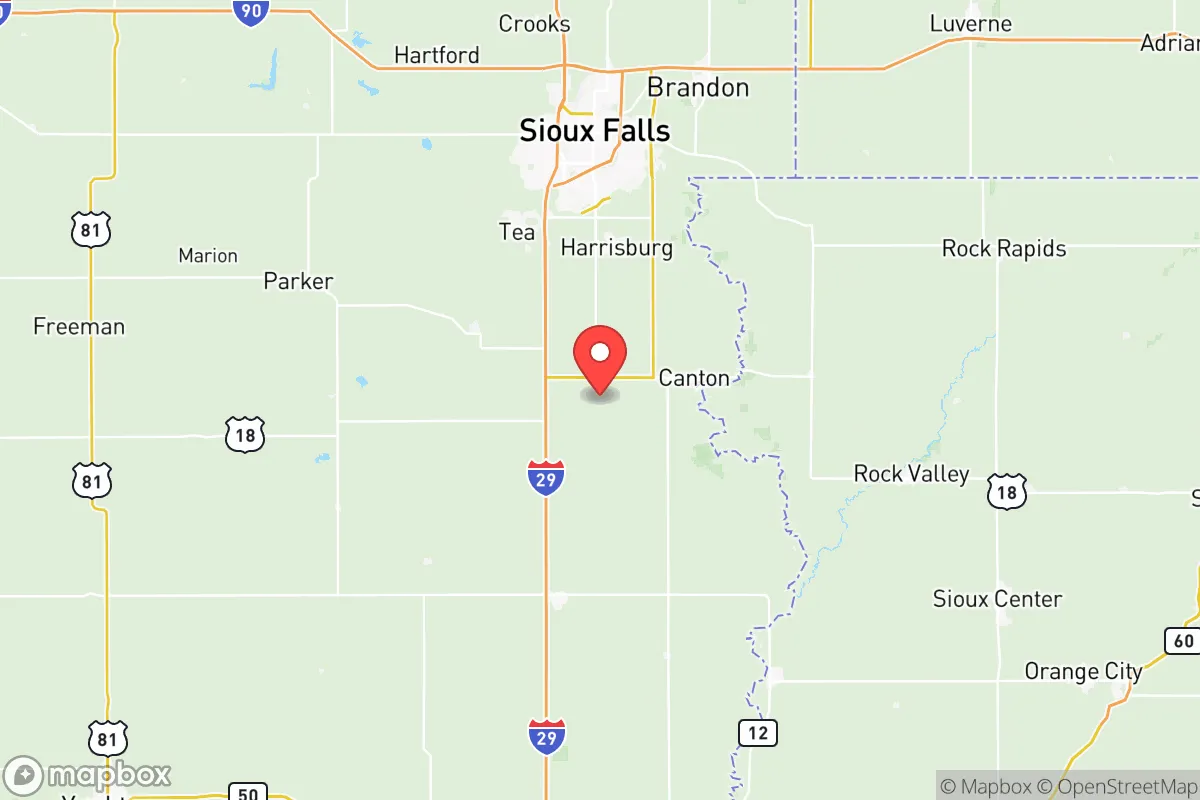
The 1965 Hart-Cellar Act had minimal direct impact on Lincoln County, as the foreign-born population remains just 2.1% today, far below the national average. Instead, the county’s modern demographic story is one of domestic migration and suburbanization. The key driver has been the expansion of Sioux Falls, which lies just north of the county line. Beginning in the 1980s, as Sioux Falls grew into a regional hub for healthcare (Sanford Health, Avera Health), finance (Citibank), and manufacturing, Lincoln County’s southern towns—especially Tea, Harrisburg (founded 1880, but boomed after 1990), and Lennox—became bedroom communities for Sioux Falls commuters. The population surged from 11,761 in 1970 to 24,131 in 2000, then to 68,286 in 2024.
This growth has been overwhelmingly white and domestic. The county’s Hispanic population is 2.9%, concentrated in Canton and Lennox, where a small number of Mexican-American families work in meatpacking and agriculture. The Black population is 2.1%, largely in Harrisburg and Tea, reflecting a modest influx of African-American professionals and military families drawn to the Sioux Falls metro area’s job market. The East/Southeast Asian population (0.6%) and Indian-subcontinent population (1.0%) are small but growing, with families settling in newer subdivisions in Tea and Harrisburg, often employed in healthcare or tech. The county’s 42.5% college-educated rate is high for rural South Dakota, driven by the professional workforce commuting to Sioux Falls.
Suburbanization has reshaped the county’s character. Harrisburg has grown from a village of 200 in 1990 to over 6,000 today, with new housing developments, a large high school, and a strip-mall commercial corridor. Tea has similarly expanded, with a population exceeding 5,000. These towns are culturally distinct from the older Dutch and German farming communities of Holland and Edgerton, which remain smaller (under 500 people each) and more ethnically homogeneous. The county’s political identity has remained conservative, with Lincoln County voting Republican by wide margins in every presidential election since 1968, reflecting the values of the original Dutch and German settlers as well as the newer suburban families.
The future
Lincoln County’s population is projected to continue growing, likely reaching 80,000–90,000 by 2035, driven by continued suburban spillover from Sioux Falls and the expansion of Interstate 29. The county is not tribalizing into distinct ethnic enclaves; rather, it is homogenizing into a predominantly white, middle-to-upper-middle-class suburban landscape. The small Hispanic and Black populations are geographically dispersed and assimilating into the broader community, with no signs of forming concentrated ethnic neighborhoods. The Indian-subcontinent and East/Southeast Asian communities are small and professional, likely to remain integrated rather than forming enclaves.
The cultural identity of the county is being reshaped by in-migration from other parts of the Midwest, particularly Minnesota, Iowa, and Nebraska, as well as from coastal states like California and Colorado, where families are seeking lower taxes, safer schools, and more space. These newcomers are largely absorbed into the existing conservative, church-going culture, though they bring a more suburban, consumer-oriented lifestyle that is slowly replacing the old agrarian ethos. The Dutch and German heritage remains visible in place names, church affiliations, and annual festivals (e.g., the Dutch Festival in Holland), but it is becoming more symbolic than defining for the majority of residents.
For someone moving in now, Lincoln County offers a stable, safe, and growing environment with strong schools, low crime, and a conservative social fabric. The county is becoming a classic Sun Belt-style suburb, but with a Midwestern, small-town feel. The population is likely to remain overwhelmingly white and native-born, with modest diversification through professional migration. The key challenge will be managing growth pressures—traffic, school crowding, and water resources—while preserving the open spaces and community ties that drew people here in the first place.

* Values derived from national, state, county, city and local statistics and may differ in a specific area. Last updated: 2026-05-12T11:00:47.000Z
Narrative content on this page is AI-generated and may contain mistakes. Verify any details that matter before acting on them.
ReloMaps may earn a commission from affiliate links at no extra cost to you.

