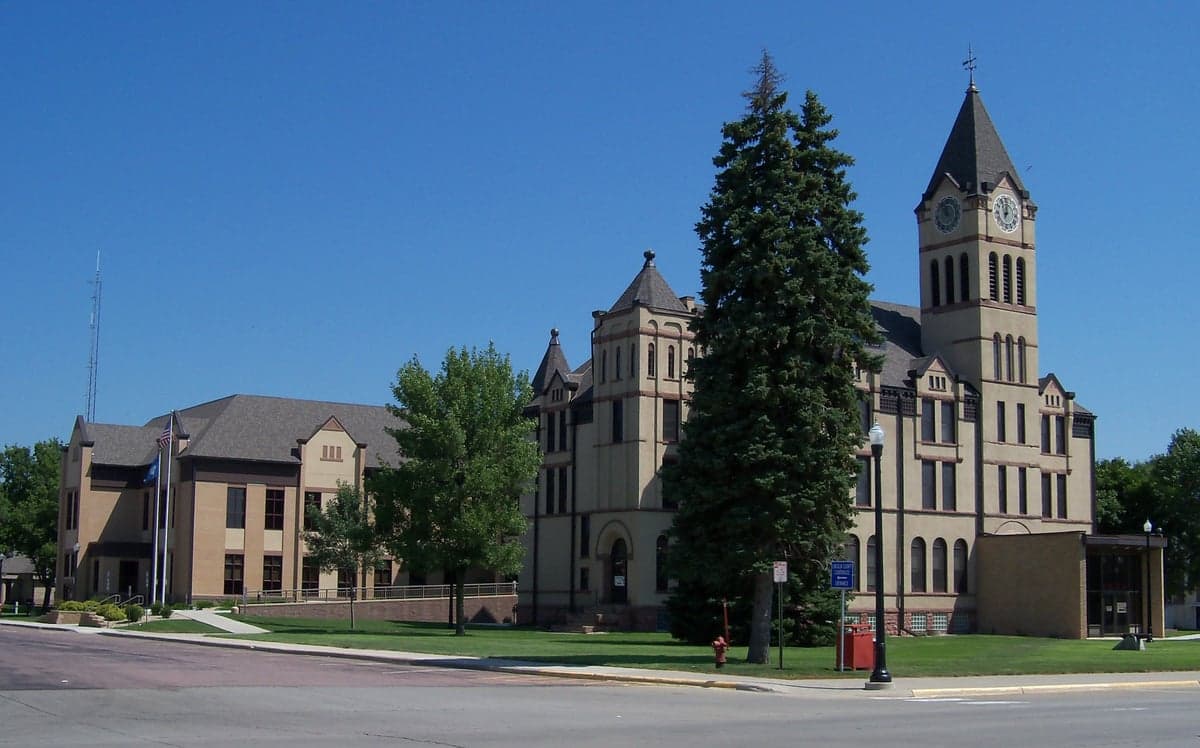
Photo: Wikipedia
Political ClimatePolitical Climate in Lincoln County
Showing state-level results — no local-only data available.
Local Political AnalysisPolitical Analysis of Lincoln County
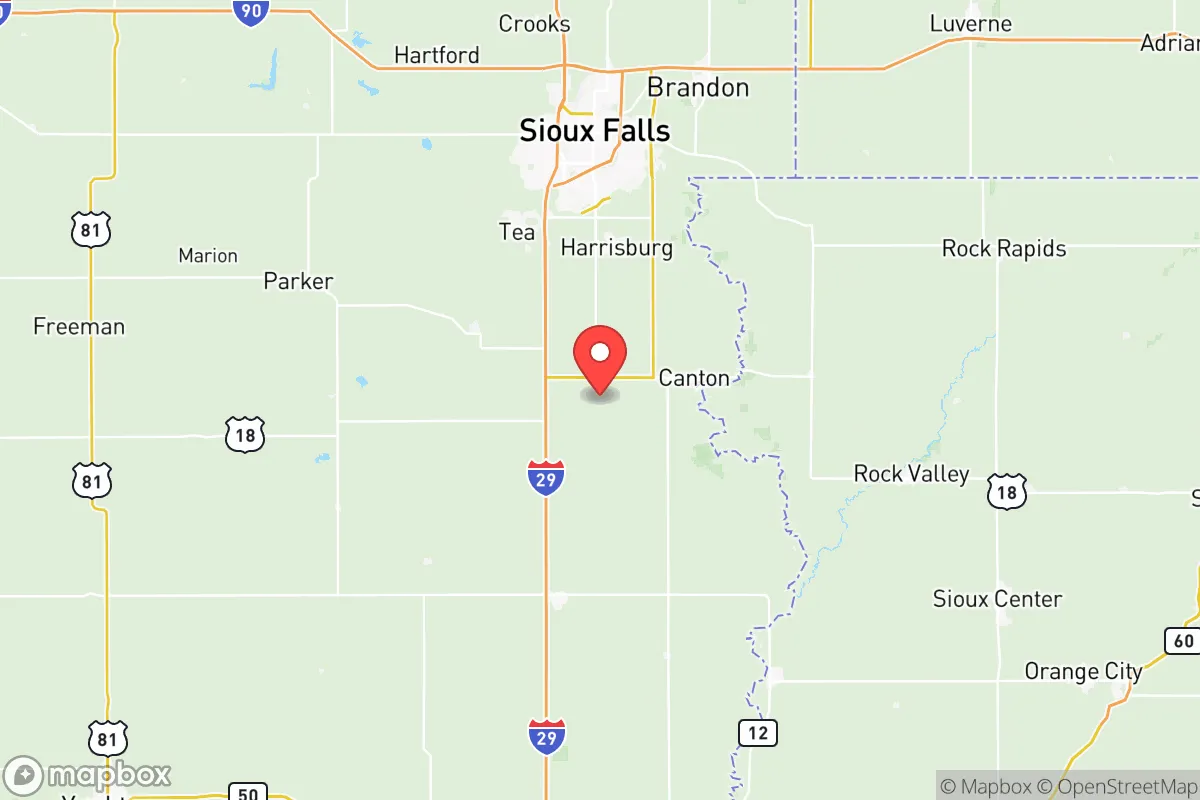
Lincoln County, South Dakota, is about as solidly conservative as they come, with a Cook PVI of R+15 that matches the state as a whole. But don't let that uniform number fool you—the county's political landscape has shifted noticeably over the past decade, and not entirely in a direction that long-time residents like myself find reassuring. The rural, agricultural towns like Canton and Lennox remain deeply red, but the explosive growth around Sioux Falls has brought a wave of newcomers to places like Harrisburg and Tea, and with them, a creeping suburban moderation that sometimes feels like a foot in the door for bigger government.
How it compares
On paper, Lincoln County and South Dakota are political twins—both R+15—but the reality on the ground is more nuanced. The state's rural counties, like Hutchinson or Turner, are reliably conservative, but Lincoln County's proximity to Sioux Falls makes it a bellwether for how suburban growth can dilute traditional values. In the 2024 election, the county still went heavily Republican, but precincts in Harrisburg and Tea showed slightly softer margins compared to the rock-solid red of Canton and Lennox. You won't find any blue strongholds here, but you will find swing precincts where the vote share for progressive candidates crept up by a few points—enough to raise an eyebrow if you're watching for government overreach. The state legislature, dominated by Republicans, generally aligns with Lincoln County's values, but the county's rapid population growth has introduced a subtle tension: newer residents often bring a "live and let live" attitude that can clash with the more traditional, community-first ethos of the old-timers.
What this means for residents
For folks living here, the political climate means a mostly hands-off approach from local government—low taxes, minimal regulation, and a general respect for personal freedoms. But the warning signs are there. As Harrisburg and Tea swell with commuters from Sioux Falls, there's been more chatter about zoning laws, school board politics, and even talk of expanding public services in ways that could lead to higher taxes and more bureaucracy. The county commission remains conservative, but the school boards in the growing towns have seen contested races where progressive-leaning candidates have made inroads. If you value your right to live without the government breathing down your neck, keep an eye on those local elections—they're where the real battles are fought. The state's constitutional carry law and low property taxes are still intact, but the cultural drift toward suburban progressivism is something to watch, especially if you moved here to escape the overreach you saw in other states.
One thing that sets Lincoln County apart from the rest of South Dakota is its economic dynamism. The growth around Sioux Falls has brought jobs and amenities, but it's also attracted people from blue states who bring different ideas about governance. In Canton, you'll still find a strong sense of community and a wariness of outside influence, while in Tea, the vibe is more "new suburbia"—convenient, but with a creeping reliance on government services. If the trend continues, Lincoln County could become a microcosm of the national struggle between traditional conservatism and a more progressive, government-centric model. For now, it's still a great place to live if you value freedom, but don't take it for granted—the fight for the county's soul is just getting started.

State Political ClimatePolitical Climate in South Dakota
State Political AnalysisPolitical Environment in the State
South Dakota is a deeply conservative state, with a Cook PVI of R+15 that has only hardened over the past two decades. The dominant coalition is a blend of rural traditionalists, libertarian-leaning ranchers, and a growing number of conservative transplants fleeing blue states. While the state has always leaned right, the shift accelerated after 2016, as in-migration from California and the Midwest brought people who actively chose South Dakota for its low taxes and limited government. The old moderate Republican establishment has been largely replaced by a more assertive, freedom-focused wing, and Democrats have been reduced to a rump presence in a handful of tribal areas and the college town of Vermillion.
Urban vs. rural divide
The political map is stark: Sioux Falls, the state's largest city, is a Republican stronghold but with a noticeable libertarian streak—think fiscal conservatism paired with a "live and let live" social attitude. Minnehaha County, which contains Sioux Falls, voted for Trump by a comfortable margin in 2024, but it's not as deep red as the rest of the state. Rapid City and Pennington County are reliably conservative, driven by a mix of military retirees, tourism workers, and ranchers. The real engine of the R+15 lean is the vast rural expanse: counties like Harding, Perkins, and Jones routinely deliver 80-90% Republican margins. The only blue dots are Brookings (home to South Dakota State University) and Vermillion (University of South Dakota), where student populations create small liberal pockets. The Pine Ridge Reservation and other tribal lands vote heavily Democratic, but turnout is low and their numbers are dwarfed by the rural white vote. The divide isn't really urban vs. rural in the national sense—it's more like "small city conservative" vs. "deep rural conservative," with the latter setting the tone for the state legislature.
Policy environment
South Dakota's policy environment is a model of what many conservatives want: no state income tax, low property taxes, and a regulatory climate that actively courts business. The state has no corporate income tax, no personal income tax, and no inheritance tax—a trifecta that has drawn companies like Poet Biorefining and Sanford Health to expand here. Education policy is dominated by school choice: the state has a robust voucher-like program through the "South Dakota Opportunity Scholarship" and a growing charter school presence, though rural districts still dominate. Healthcare is a mixed bag—the state rejected Medicaid expansion for years (only adopting it in 2023 under pressure), and the regulatory environment for telemedicine and direct-primary care is friendly. Election laws are among the most secure in the nation: voter ID is required, same-day registration is not allowed, and the state uses paper ballots. There's no mail-in voting unless you have an approved excuse. The legislature has also passed laws restricting ballot initiatives after out-of-state money tried to buy the vote on marijuana and Medicaid expansion. It's a state that trusts its elected officials more than its voters on big policy questions—a point of tension for some libertarians.
Trajectory & freedom
South Dakota has been on a clear trajectory toward more personal freedom over the past five years, particularly in areas conservatives care about. In 2021, Governor Kristi Noem signed a law banning critical race theory in public schools—one of the first in the nation. In 2022, the state passed a "Parents' Bill of Rights" that gives parents explicit authority over their children's education and medical decisions. Gun rights are expansive: constitutional carry became law in 2019, and there are no state-level restrictions on magazine capacity or firearm types. The state also passed a law in 2023 prohibiting any state or local enforcement of federal gun laws that don't exist in state statute—a nullification-style move. Medical autonomy took a hit in 2024 when the legislature banned gender transition procedures for minors, which conservatives see as protecting children from irreversible harm. Property rights are strong, with no statewide zoning mandates and a "right to farm" law that shields agricultural operations from nuisance lawsuits. The only area where freedom has contracted is on the tax front: while there's no income tax, the state has raised the gas tax and increased some fees to fund infrastructure. Overall, the trend is toward more individual liberty, not less.
Civil unrest & political movements
South Dakota has seen remarkably little civil unrest compared to other states. The most visible flashpoint in recent years was the Keystone XL pipeline protests, which drew activists from across the country but were met with a heavy law enforcement presence and a state law (2019) that criminalized trespassing on critical infrastructure. The movement fizzled after the pipeline was canceled. On the right, the "Wetlands Rebellion" in the early 2020s saw ranchers and farmers push back against federal EPA overreach on water regulations—a movement that led to state legislation asserting state control over water rights. Immigration politics are quiet: South Dakota has no sanctuary cities, and the state passed a law in 2023 requiring all employers to use E-Verify. There's a small but vocal libertarian movement centered around the Black Hills area, where some residents advocate for secession from the federal government—though it's more rhetorical than serious. Election integrity is a settled issue here: the 2020 and 2022 elections were conducted without major controversy, and the state's Republican Secretary of State has been praised for transparency. A new resident would notice that political activism is low-key—people vote, they go to church, they mind their own business. The biggest "protest" you'll see is a crowd at the county fair.
Projection
Over the next 5-10 years, South Dakota will likely become even more conservative, but with a libertarian flavor. The in-migration from California, Colorado, and Illinois is accelerating—people are coming specifically for the freedom and low taxes, and they're not bringing progressive politics with them. The Sioux Falls metro area is growing fast, but it's attracting families and remote workers who want good schools and safe neighborhoods, not urban activists. The rural areas will continue to dominate the legislature, meaning no income tax is safe for the foreseeable future. The biggest risk is a demographic one: the state's population is aging, and younger people leave for college and don't always return. But the remote work boom has reversed that trend somewhat, with Rapid City and Spearfish seeing an influx of tech workers who want mountain views and no state income tax. Expect more school choice expansion, more gun rights protections, and possibly a push for a state-level constitutional amendment to lock in the no-income-tax policy. The only wild card is the tribal nations—if they gain more political power through litigation or federal policy, they could shift the state's politics slightly left, but not enough to change the overall lean.
For someone moving here now, the bottom line is this: South Dakota is a state that respects your right to live your life as you see fit, as long as you don't hurt anyone else. The government is small, the taxes are low, and the people are friendly but not intrusive. You won't find the political drama of a swing state—just a steady, conservative consensus that values freedom over control. If you're looking for a place where your vote actually counts and your kids can grow up without being indoctrinated, this is it. Just bring a warm coat and a willingness to drive an hour for a good restaurant.
* Values derived from national, state, county, city and local statistics and may differ in a specific area. Last updated: 2026-05-12T11:00:47.000Z
Narrative content on this page is AI-generated and may contain mistakes. Verify any details that matter before acting on them.
ReloMaps may earn a commission from affiliate links at no extra cost to you.

