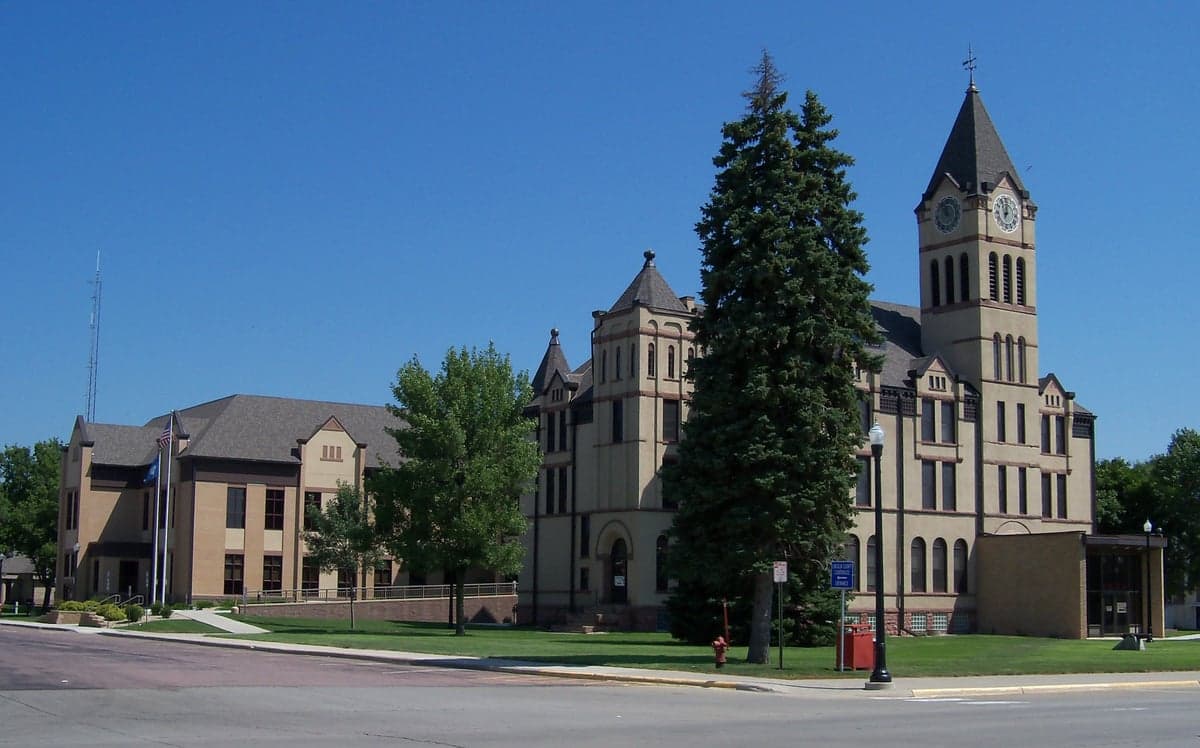
Photo: Wikipedia
Personal Sovereignty in Lincoln County
Strong independent fundamentals that actively favor personal liberty and low regulation.
What does Personal Sovereignty tell us?
Personal Sovereignty measures your capacity for self-reliance and independence with minimal government friction. Higher scores mean fewer barriers between you and the way you want to live... but it assumes you have the space you need and good neighbors.
What does this tell us?
Personal Sovereignty measures your capacity for self-reliance and independence with minimal government friction. Higher scores mean fewer barriers between you and the way you want to live... but it assumes you have the space you need and good neighbors.
State Policy
Energy independence: Importer (35% of energy produced in-state)
Personal Liberty
Homesteading

Personal Liberty Analysis
Lincoln County, South Dakota, offers one of the strongest environments for personal sovereignty in the Upper Midwest, particularly for those seeking to minimize government overreach in daily life. The county’s ethos is rooted in a deep-seated culture of self-reliance, where local governance tends to favor individual autonomy over collective mandates. For the conservative-leaning individual or parent evaluating relocation, this area presents a tangible alternative to the regulatory density found in states like California, Illinois, or even parts of eastern South Dakota. The key question is not whether freedom exists here, but how the specific towns—from the county seat of Canton to the more rural outposts of Lennox, Tea, and Harrisburg—differ in their practical application of that freedom.
Tax burden and regulatory posture: How Lincoln County compares to surrounding areas
South Dakota’s absence of a state income tax is the foundational advantage, but Lincoln County’s local tax structure and regulatory climate amplify that benefit. Property taxes in the county are moderate by national standards, with effective rates typically hovering around 1.1% to 1.3% of assessed value—significantly lower than in neighboring Minnesota or Iowa. The county government maintains a light regulatory touch: there is no county-wide building code in unincorporated areas, and zoning is minimal outside of the incorporated towns. This means that in rural stretches near Fairview or Hudson, a landowner can erect a workshop, install a septic system, or park an RV without the layers of permits common in more urbanized counties. However, the picture shifts inside town limits. Tea and Harrisburg, as fast-growing bedroom communities for Sioux Falls, have adopted more subdivision regulations and impact fees. For maximum regulatory freedom, the unincorporated areas of the county—particularly around Beresford and the western reaches near the Turner County line—offer the least government interference in land use and construction.
Self-defense and gun law specifics: What the Second Sanctuary status means for residents
Lincoln County is a Second Amendment Sanctuary county, a formal resolution passed by the commission affirming that local resources will not be used to enforce federal gun laws deemed unconstitutional. This is not symbolic; it has practical teeth. The county sheriff’s office, led by a pro-liberty sheriff, has publicly stated that no deputy will participate in federal confiscation orders or red flag laws that lack due process. South Dakota itself is a constitutional carry state—no permit is needed to carry a concealed firearm for anyone legally allowed to possess one—and Lincoln County’s culture reinforces that right. Gun ranges are plentiful: the Canton Sportsmen’s Club offers a 300-yard rifle range, and private land near Lennox is commonly used for informal shooting. The county’s proximity to Sioux Falls (15-20 minutes from Tea or Harrisburg) means access to large gun retailers and gunsmiths, but the regulatory environment remains far friendlier than in Minnehaha County, where city ordinances in Sioux Falls impose storage requirements and discharge restrictions. For the prepper-minded, the key advantage is that Lincoln County’s rural character means you can train on your own property without neighbor complaints or police visits—a liberty increasingly rare in suburban America.
Self-reliance and homesteading viability: Lot sizes, zoning, and off-grid feasibility
Homesteading viability in Lincoln County varies dramatically by location, driven by soil quality and municipal zoning rather than county-level restrictions. In unincorporated areas, minimum lot sizes are typically 2.5 acres for a single-family dwelling, though many parcels in the county’s agricultural zones are sold in 10- to 40-acre tracts. Fairview, a tiny unincorporated community, sits on prime farmland with deep topsoil, ideal for a serious garden or small-scale livestock operation. Hudson, in the county’s southeast corner, offers cheaper land—often under $3,000 per acre—with minimal deed restrictions. Off-grid living is legally feasible: South Dakota has no state law prohibiting rainwater collection, and Lincoln County does not require grid connection for new homes. Solar panels, composting toilets, and well water are all permissible without special permits, provided the well is drilled by a licensed contractor. The catch is in the towns. Tea and Harrisburg have suburban-style zoning that prohibits livestock on lots under one acre and requires connection to municipal water and sewer. For the serious homesteader, the rural townships around Beresford or the far western edge near the Clay County line offer the best combination of affordable land, loose zoning, and a neighbor culture that respects self-sufficiency.
Personal liberties: Parental rights, medical autonomy, speech, and property
Parental rights in Lincoln County are protected by both state law and local practice. South Dakota’s Parents’ Bill of Rights, enacted in 2022, gives parents explicit authority over their children’s education, medical decisions, and religious upbringing. The county’s school districts—Canton, Lennox, Tea Area, and Harrisburg—have all resisted the kind of curriculum transparency battles seen elsewhere; school board meetings are generally civil, and parents who object to materials or policies are taken seriously. Medical autonomy is more nuanced. South Dakota has no vaccine mandate for adults, and the county’s health department does not enforce mask mandates or business closures. However, the state’s abortion law is among the most restrictive in the nation, which aligns with the conservative audience’s values but is worth noting for anyone concerned about future federal preemption. Property rights are robust: Lincoln County has no county-wide rent control, no short-term rental bans outside of specific subdivisions, and no tree ordinances or aesthetic committees in unincorporated areas. Free speech is exercised openly; political signs, religious displays, and controversial opinions are common on public roads without harassment. The county’s small-town newspapers—the Canton Plain Talk and Lennox Independent—publish letters to the editor that reflect a wide range of conservative and libertarian viewpoints, a sign that the First Amendment is not merely tolerated but practiced.
In the broader context of the Great Plains, Lincoln County stands out as a sovereignty stronghold that balances rural freedom with reasonable access to urban amenities. Compared to Minnehaha County, where Sioux Falls imposes more ordinances on firearms, land use, and business operations, Lincoln County offers a lighter regulatory touch. Compared to more remote counties in western South Dakota, it provides better soil, more reliable water, and closer proximity to hospitals and supply chains. For the individual or family prioritizing personal autonomy—whether in self-defense, homesteading, or raising children free from government overreach—Lincoln County delivers a practical, livable version of the sovereign ideal, with the caveat that the towns of Tea and Harrisburg are trending toward suburban regulation while the rural townships remain the true refuge for the self-reliant.

* Values derived from national, state, county, city and local statistics and may differ in a specific area. Last updated: 2026-05-12T11:00:47.000Z
Narrative content on this page is AI-generated and may contain mistakes. Verify any details that matter before acting on them.
ReloMaps may earn a commission from affiliate links at no extra cost to you.

