
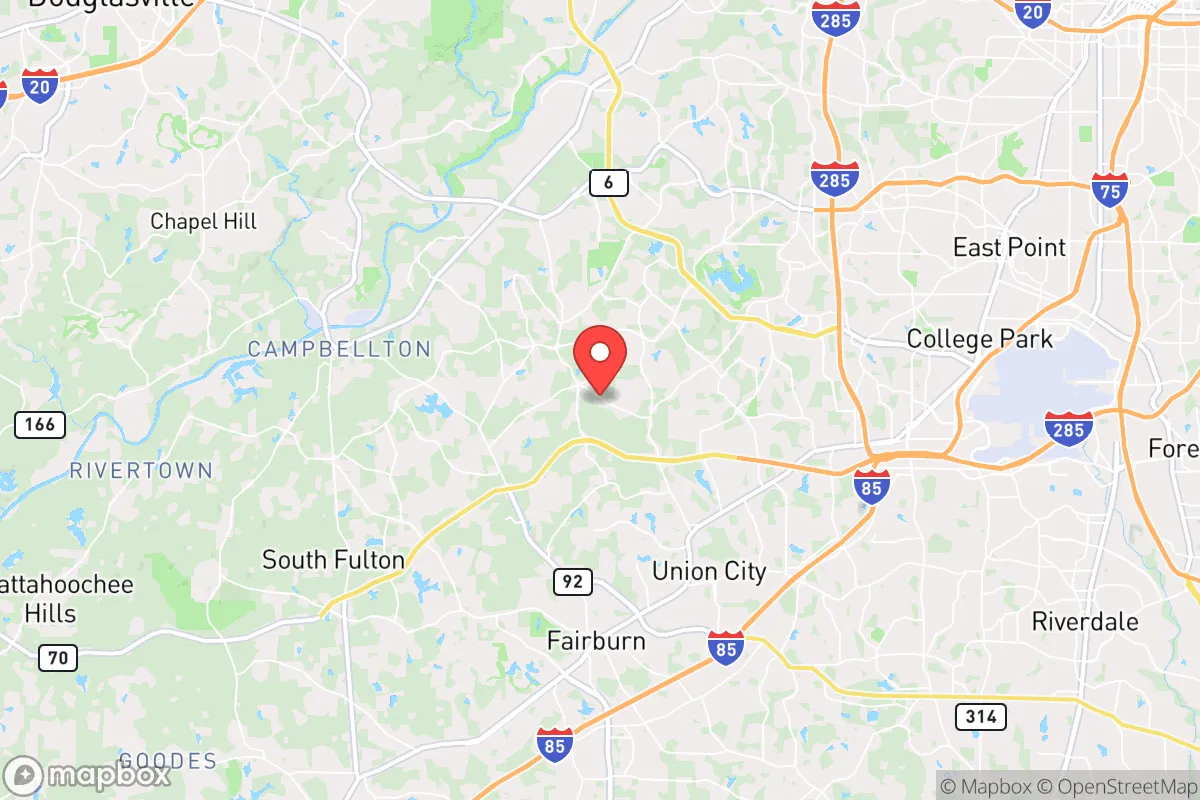
Photo: Wikipedia
Quality of Life in South Fulton, GA
A high quality of life with strong walkability, manageable living costs, healthy neighborhood signals, and solid amenity access.
What does Quality of Life tell us?
Quality of Life blends cost of living, nearby amenities, socioeconomic signals, and neighborhood character. City-level scores represent the whole municipality; individual neighborhoods can differ.
What does this tell us?
Quality of Life blends cost of living, nearby amenities, socioeconomic signals, and neighborhood character. City-level scores represent the whole municipality; individual neighborhoods can differ.
Cost of Living
21% above national average
The Real Cost of Living in South Fulton, GA for 2026
| Tier | Individual | Family (4) |
|---|---|---|
| Survival | $26k | $48k |
| Comfortable | $53k | $77k |
| Luxury | $122k+ | $189k+ |
| Elite (Top 5%) | $144k+ | $223k+ |
106%
The Area Signal
A metric tracking the socioeconomic signals of the area.
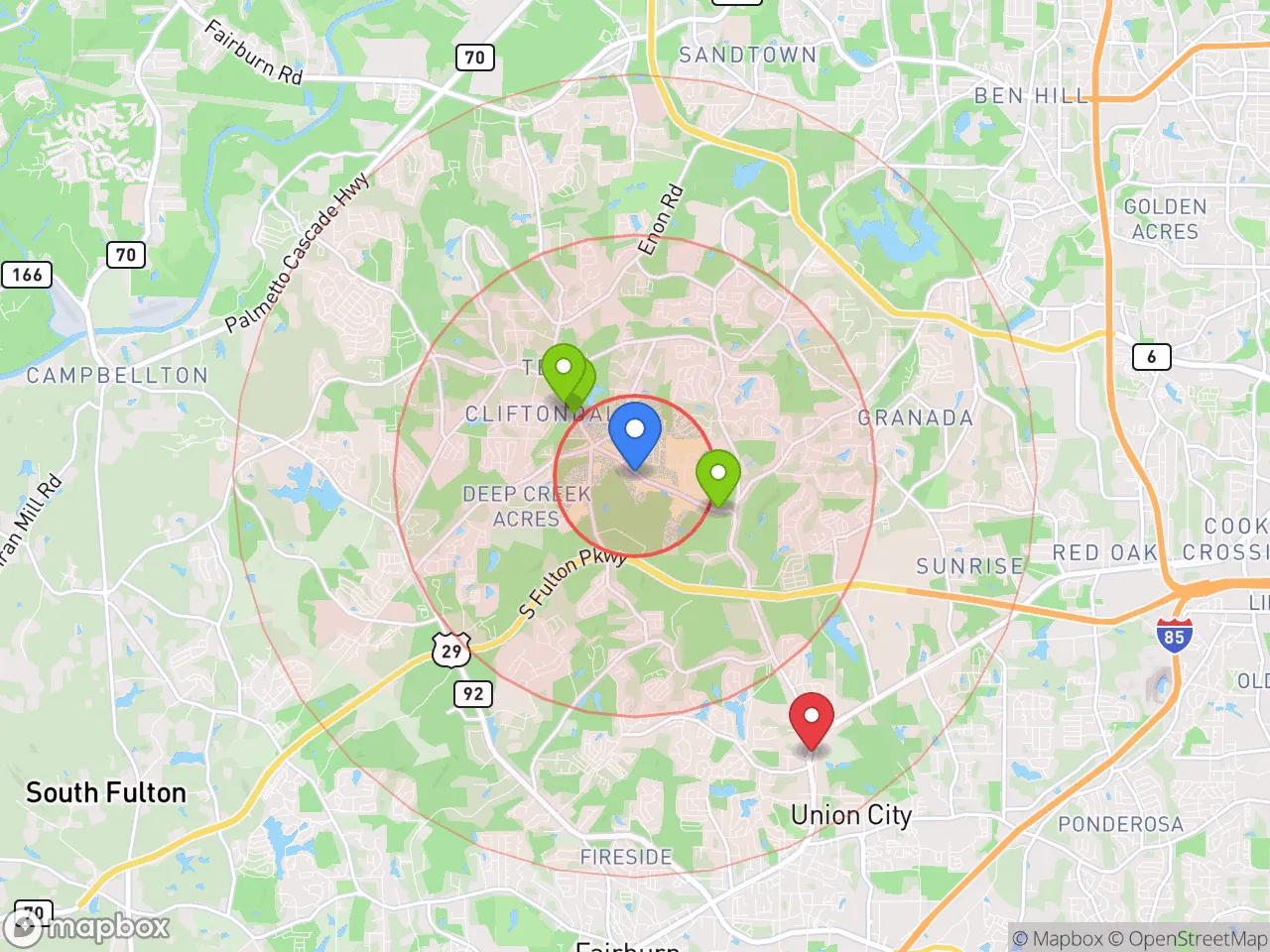
Hobbies
Explore the areaGroceries
6 within 10 miles
Gas
20 within 10 miles
Hospital
20 within 20 miles
Airport
ATL — Hartsfield–Jackson Atlanta International
Post Office
USPS — South Fulton, GA
Critical Amenities
Quality-of-Life Analysis
South Fulton, Georgia, stands as one of metro Atlanta’s most affluent majority-Black suburbs, attracting professionals, executives, and families seeking a quieter, more spacious alternative to intown neighborhoods. With a cost-of-living index of 121 (21% above the U.S. average), the city commands a premium over nearby College Park and Union City, yet remains significantly more affordable than Buckhead or Sandy Springs. The population skews toward college-educated homeowners in their 30s and 40s, drawn by new construction, large lots, and a strong sense of civic identity following incorporation in 2017.
Cost of living, housing prices, and affordability compared to nearby cities
South Fulton’s median home value of $270,600 is roughly 30% higher than the Fulton County average of $208,000, reflecting the city’s newer housing stock and lower crime rates relative to southern Fulton County. Median rent sits at $1,607, which is $200–$400 more per month than in East Point or Hapeville, but still $500–$800 less than in Midtown Atlanta. The average commute of 32.6 minutes is typical for the region, with most residents driving I-285 or I-85 into downtown Atlanta, Hartsfield-Jackson Airport, or the Cumberland/Galleria job centers. Property taxes are moderate for metro Atlanta—around 1.1% of assessed value—and no city income tax exists, though state income tax (5.49% flat) applies. For buyers, the trade-off is clear: you pay more for square footage and lot size than in neighboring College Park (median home value $195,000), but you get newer construction, lower crime, and direct city services rather than unincorporated county governance.
What daily life is like for families: schools, parks, and local amenities
Daily life in South Fulton revolves around its three major parks—Welcome All Park, Cochran Mill Park, and the 1,200-acre South Fulton Park—which offer walking trails, sports fields, and fishing lakes. The city’s public schools are part of Fulton County Schools, with the highest-rated zoned options being Langston Hughes High School (rated 7/10 on GreatSchools) and Sandtown Middle School (6/10). Several private and charter options exist, including the highly regarded KIPP South Fulton Academy. Retail is concentrated along Camp Creek Parkway, anchored by the Camp Creek Marketplace (Target, Publix, Costco) and the newer South Fulton Town Center. Dining leans toward chain restaurants and local soul-food spots like BQE Restaurant & Lounge, with limited fine-dining options. The city’s police department, established in 2018, has a response time of under 10 minutes for priority calls, and the city operates its own code enforcement and sanitation services—a notable upgrade from the unincorporated county services that preceded incorporation. Commuters rely heavily on MARTA bus routes (Route 180, Route 189) and the College Park MARTA station, though most residents drive.
South Fulton is best suited for homebuyers who prioritize space, newer construction, and a majority-Black community with strong civic leadership over walkability or nightlife. Professionals working at the airport, in south Atlanta, or along the I-285 corridor will find the commute manageable, while those seeking urban energy or top-tier public schools should look toward Decatur or North Fulton. The city’s incorporation has brought tangible improvements in public safety and infrastructure, but the trade-off is a car-dependent lifestyle with limited entertainment options. For families and executives who value a quiet, well-maintained suburb with a growing tax base and active neighborhood associations, South Fulton delivers a quality of life that justifies its premium price tag.

Crime in South Fulton, GA
Higher crime rates than 64% of comparable U.S. locations.
Violent CrimeViolent Crime Analysis
Property CrimeProperty Crime Analysis
Crime Analysis
South Fulton, Georgia, reports a violent crime rate of 476.5 incidents per 100,000 residents and a property crime rate of 1,663.7 per 100,000, placing its overall safety profile well above national averages. As a newly incorporated city within the Atlanta metropolitan area, its crime statistics reflect the challenges of a dense, urbanized environment where local criminal justice policies significantly influence public safety outcomes. Residents and prospective movers should weigh these figures against the broader context of Fulton County’s progressive prosecutorial approach, which critics argue prioritizes offender rehabilitation over strict enforcement.
Crime in context
South Fulton’s violent crime rate is roughly 27% higher than the national average of approximately 380 per 100,000, while its property crime rate exceeds the U.S. median by about 20%. These numbers place the city in a higher-risk tier compared to many suburban communities in Georgia, though they are consistent with other small cities adjacent to major metro hubs like Atlanta. The city’s proximity to a large urban core means it inherits spillover crime from the region, but local factors—particularly the influence of progressive district attorneys in Fulton County—compound the risk. Jurisdictions with liberal justice policies, such as reduced cash bail, diversion programs for repeat offenders, and lenient sentencing guidelines, have been linked to elevated recidivism rates, directly increasing the likelihood that residents will encounter repeat property criminals or violent offenders.
What residents experience
For those living in South Fulton, the daily reality involves a heightened awareness of theft, burglary, and vehicle break-ins, which dominate the property crime category. The violent crime rate, while lower than Atlanta’s core, still translates to a tangible risk of aggravated assault and robbery in certain corridors. Many residents report that the local judicial system’s focus on “restorative justice” and reduced incarceration has led to a perception that offenders face minimal consequences, emboldening criminal activity. This is particularly concerning for families and retirees who value predictable safety; the presence of progressive district attorneys in the metro area means that even minor offenses may not result in sustained detention, allowing habitual criminals to remain on the streets. Community forums often highlight frustration with slow police response times and a sense that the justice system prioritizes the rights of the accused over the security of victims.
Neighborhood-level variation is significant in South Fulton. Areas closer to the city’s northern boundary, near Camp Creek Parkway and the interstate, tend to see higher concentrations of property crime due to commercial traffic and transient populations. In contrast, established residential subdivisions like those around Bethsaida Road or Stonewall Tell report lower violent crime rates but still grapple with occasional burglaries. Prospective residents should consult local police precinct data for specific census tracts, as block-by-block differences can be stark. Overall, South Fulton demands a cautious approach: while not a high-crime outlier, its metro-area context and progressive judicial environment create conditions where vigilance is essential for personal and property safety.
* Values derived from national, state, county, city and local statistics and may differ in a specific area. Last updated: 2026-04-29T19:32:21.000Z
Narrative content on this page is AI-generated and may contain mistakes. Verify any details that matter before acting on them.
ReloMaps may earn a commission from affiliate links at no extra cost to you.

