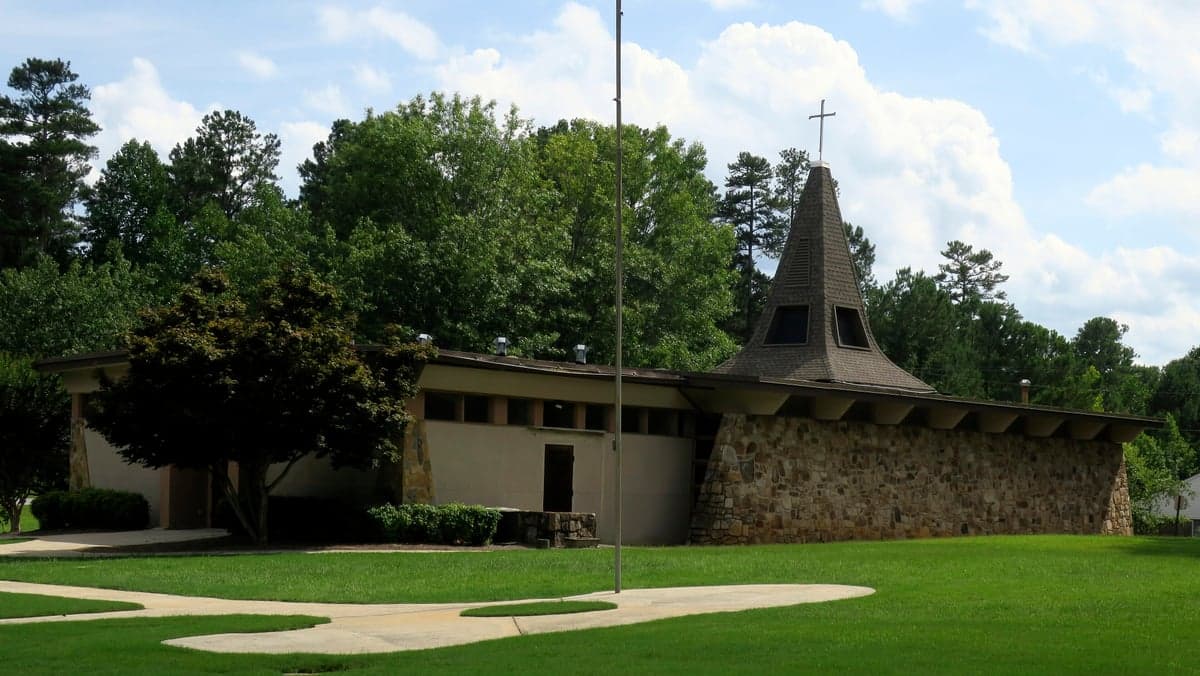
Photo: Wikipedia
Strategic Assessment of South Fulton, GA
Multiple tactical vulnerabilities. Population density, target proximity, or disaster risk are likely compounding. A retreat property and exit planning is required.
What does the Strategic Assessment tell us?
Our Strategic Assessment grades tactical survivability of an area. Major population centers, military targets, fallout zones, natural disasters, and border exposure all drive risk — lower exposure means a more defensible position in a crisis.
This is heavily inspired by Joel Skousen's Strategic Relocation book. Highly recommended you checkout the book ($)What does this tell us?
Our Strategic Assessment grades tactical survivability of an area. Major population centers, military targets, fallout zones, natural disasters, and border exposure all drive risk — lower exposure means a more defensible position in a crisis.
This is heavily inspired by Joel Skousen's Strategic Relocation book. Highly recommended you checkout the book ($)Strategic Pillars

Key Distances
Regional Safe Places
Below is our recommended "safe zones" in Georgia and the surrounding area based on our strategic heuristics. For most people, it's unrealistic to live in a “safe zone” full-time due to work, family or other personal reasons. They tend to be more rural. However, many of these areas are perfect for second homes and retreat properties that double as a vacation home or even a short-term rental.
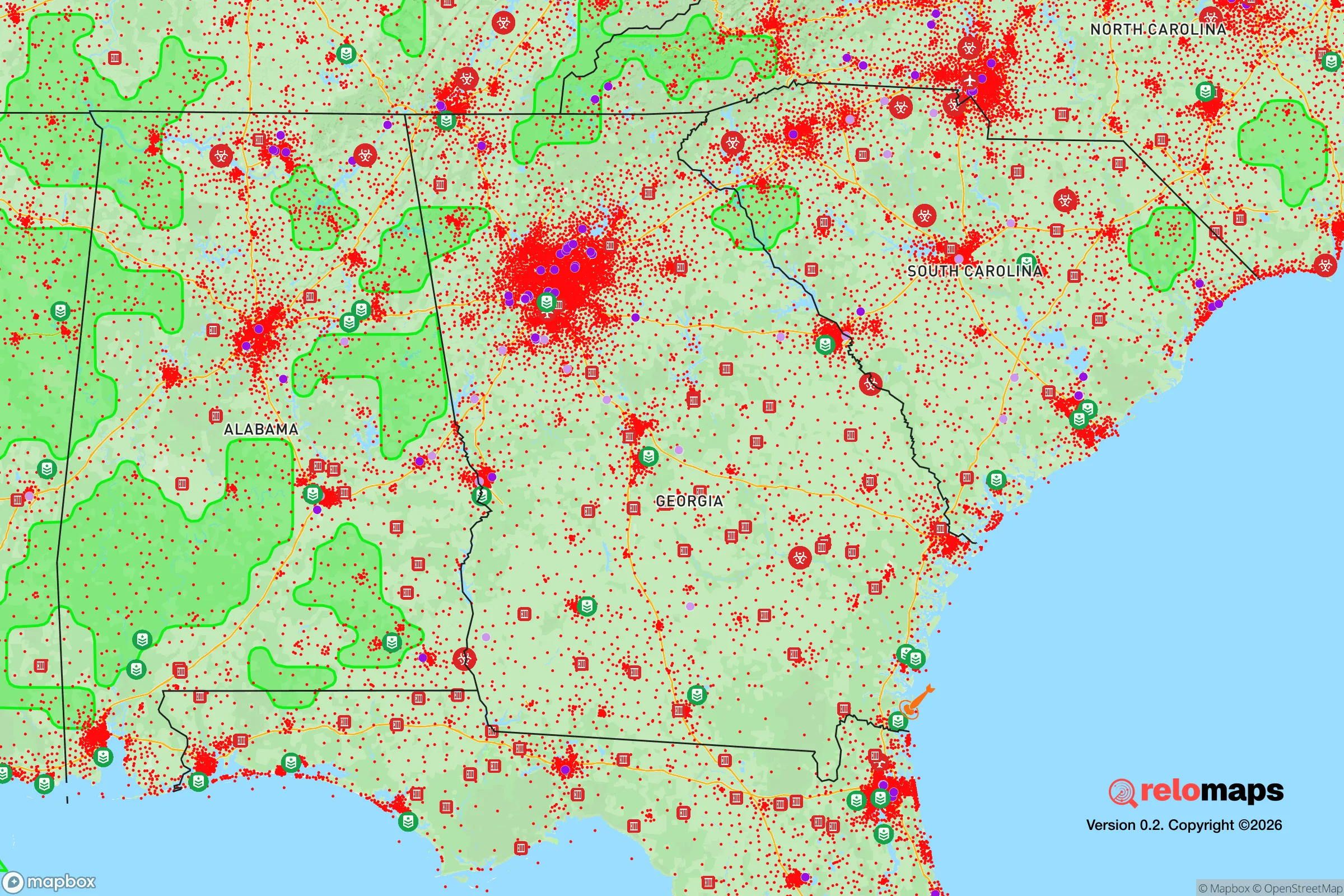
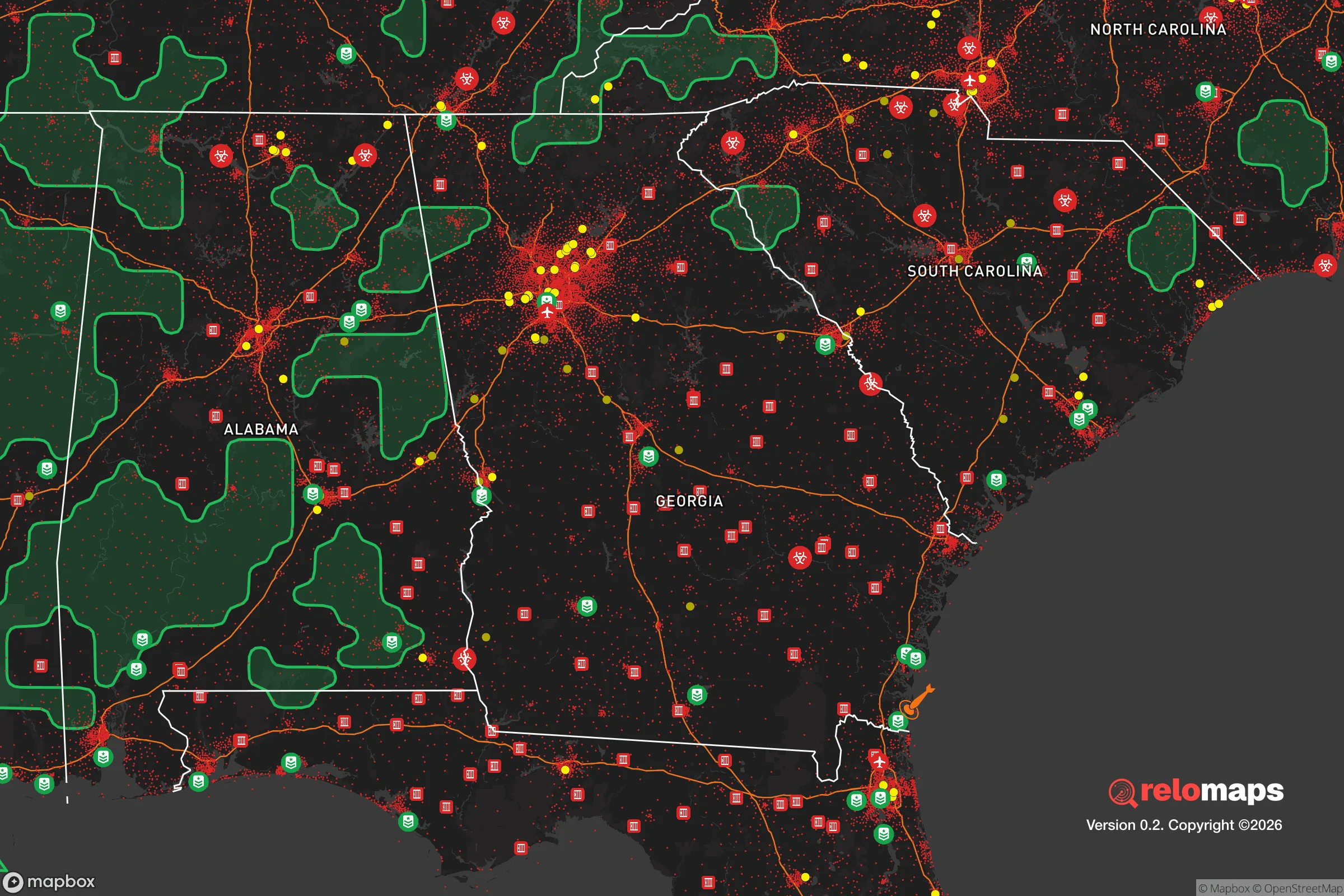


Important Note: For informational purposes only. This does not mean nothing bad ever happens in the green zones. Please use common sense. This is based on public data and modeled with AI. We tried to take a conservative approach but mistakes happen. We update this regularly as new information becomes available.
Solar Generator Recommendations
Backup power matters more here than in safer locations. We've picked three solar generators across budgets and capacity tiers — start with the budget unit if you only need a few essentials, or step up if you want to run a fridge and HVAC for days at a time.

Jackery Portable Power Station Explorer 300
Budget OptionPower on the Go: Weighing only 11 lbs, it's convenient to set up and store with book-sized foldable solar panels

BLUETTI Portable Power Station AC180
Designed for both indoor and outdoor scenarios, AC180 is highly capable as it has a robost capacity and continuous output power.

EF ECOFLOW DELTA Pro Ultra Power Station
Upgraded PickEcoFlow DELTA Pro Ultra is a whole-home energy system designed to grow with your family. Integrated with the Smart Home Panel 2, it scales to meet your evolving energy needs — keeping your home powered, intelligent, and secure through every stage of life.
We earn a commission, at no additional cost to you.
Strategic Assessment Analysis
South Fulton, Georgia, presents a mixed bag for the strategic relocator, offering genuine resilience advantages in its geography and infrastructure while carrying significant liabilities due to its proximity to Atlanta and Hartsfield-Jackson. For the conservative-minded prepper, this area is less a standalone fortress and more a forward operating base—close enough to urban resources to be useful, but far enough to require a hard-eyed assessment of its vulnerabilities. The key is understanding that South Fulton’s value lies in its position as a buffer zone, not a final redoubt, and that its strengths are contingent on active preparation, not passive safety.
Geographic position and natural advantages for long-term security
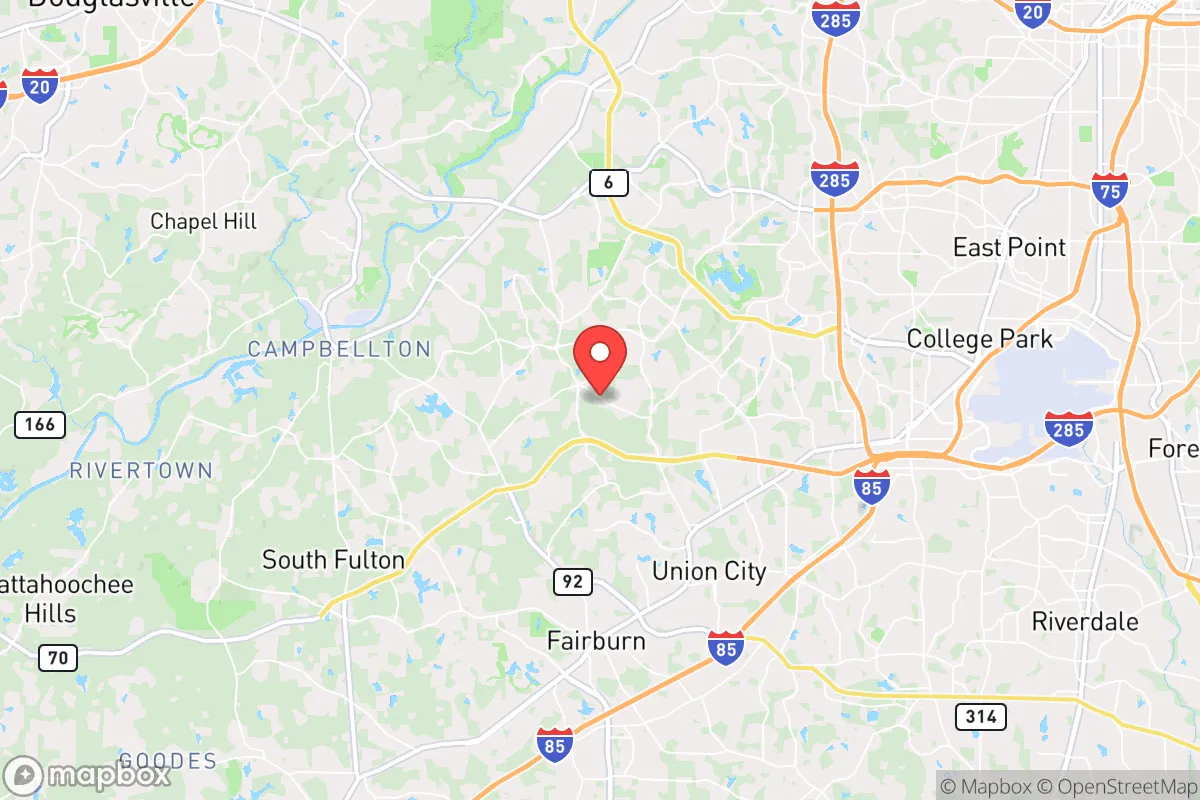
South Fulton’s primary strategic asset is its location on the southwestern edge of the Atlanta metropolitan area, straddling the Chattahoochee River and bordering rural counties like Coweta and Fayette. This places it within a 30-minute drive of downtown Atlanta and Hartsfield-Jackson, the world’s busiest airport, but also within easy reach of farmland, timberland, and water sources. The area sits on the Piedmont plateau, with rolling hills and clay soils that offer decent drainage and limited flood risk compared to coastal Georgia. The Chattahoochee River provides a reliable surface water source, though access is controlled by state parks and private property. The region’s temperate climate means no extreme cold or hurricane storm surge, reducing the need for specialized shelter or fuel reserves. For a relocator, the natural advantages are clear: defensible terrain with multiple egress routes (I-85, I-285, US-29, and GA-154), abundant local water, and a growing network of small farms and homesteads within a 20-mile radius. However, the area is not remote—it’s a suburb with 100,000+ residents, meaning competition for resources during a crisis would be intense.
Risks, exposures, and proximity to fallout-relevant landmarks
The single biggest risk for South Fulton is its proximity to Hartsfield-Jackson Atlanta International Airport, a primary target for any state-level adversary or domestic terror event. A major attack on the airport—whether via EMP, conventional bomb, or biological agent—would create a fallout zone extending miles downwind, directly affecting South Fulton’s southern and western neighborhoods. Additionally, the area sits within 15 miles of multiple rail yards, fuel pipelines, and chemical storage facilities along the I-85 corridor. A derailment or sabotage event could release toxic clouds or ignite fires that overwhelm local emergency services. Civic unrest in Atlanta—whether from political protests, economic collapse, or food shortages—would likely spill into South Fulton along major arteries like I-285 and GA-14. The city’s police force is understaffed relative to its size, and response times in the more rural southern parts of the city can exceed 20 minutes. For the prepper, this means South Fulton is a high-risk zone for any event that originates in or targets Atlanta. The only mitigating factor is the Chattahoochee River, which forms a natural barrier to the west, and the relatively low population density in the far southern reaches near Palmetto and Chattahoochee Hills.
Practical resilience for a relocator: food, water, energy, and defensibility
For a relocator serious about self-sufficiency, South Fulton offers a mixed picture. Water is the strongest suit: the Chattahoochee River is a perennial source, and the area’s groundwater is accessible via shallow wells (50-150 feet) in most neighborhoods. However, municipal water treatment plants are centralized and vulnerable to power loss or contamination. A prepper should budget for a Berkey filter or similar gravity-fed system, plus a hand pump for well access. Food is a challenge: the area has limited farmland within city limits, but the surrounding counties (Coweta, Fayette, and Carroll) have active agricultural markets. A 30-minute drive south puts you in pecan orchards, cattle pastures, and vegetable farms. Stockpiling non-perishables is essential, as grocery stores in South Fulton are typical suburban chains (Kroger, Publix) that would empty within 48 hours of a panic. Energy is a weak point: Georgia Power’s grid is aging, and the area experiences frequent summer thunderstorms that cause outages. Solar is viable (average 4.5 peak sun hours per day), but HOA restrictions in many subdivisions limit panel installation. A propane generator with a 500-gallon tank is a more realistic backup. Defensibility is the hardest factor: most homes are on standard suburban lots with open sightlines and no natural barriers. A rural property in the southern part of the city, near the Chattahoochee Hills, offers better concealment and multiple escape routes via dirt roads and state routes. For a single individual or family, the best bet is a home on at least 2-3 acres with a well, septic, and a clear line of sight to the main road. Avoid properties near major intersections or within a mile of I-285.
The overall strategic picture for South Fulton is one of calculated risk. It is not a bug-out location or a remote homestead—it is a suburban buffer zone that offers access to resources and infrastructure while demanding constant vigilance. For the conservative prepper who wants to stay close to Atlanta for work or family but maintain a credible level of preparedness, South Fulton is a viable option if you invest in water independence, energy backup, and a defensible property. The area’s biggest weakness is its proximity to high-value targets and the potential for civil unrest to spill over from the city. If you’re willing to accept that risk and build accordingly—with a well, a generator, a food stockpile, and a plan to bug out south or west if needed—South Fulton can serve as a functional base. But if your goal is true isolation and security, look further south toward Macon or west toward Alabama. South Fulton is a compromise, and in a crisis, compromises can be costly.

* Values derived from national, state, county, city and local statistics and may differ in a specific area. Last updated: 2026-04-29T19:32:21.000Z
Narrative content on this page is AI-generated and may contain mistakes. Verify any details that matter before acting on them.
ReloMaps may earn a commission from affiliate links at no extra cost to you.

