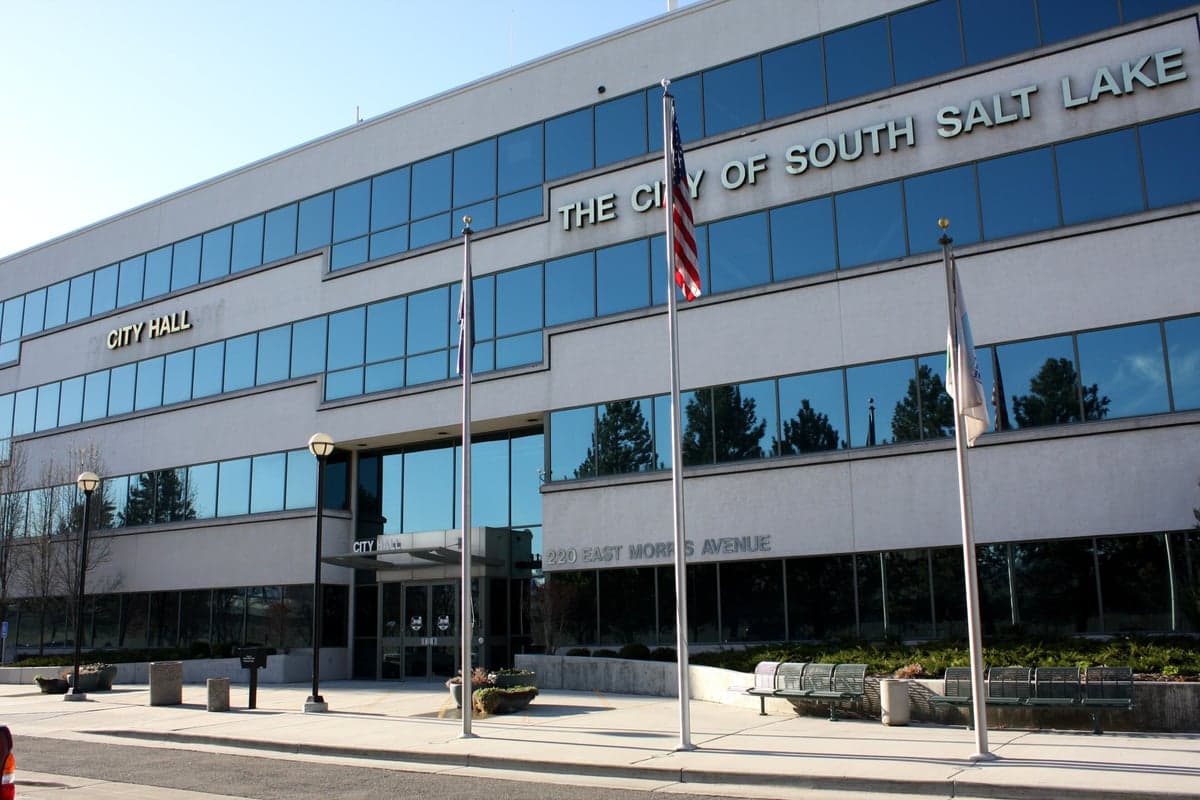
Photo: Wikipedia
Political ClimatePolitical Climate in South Salt Lake, UT
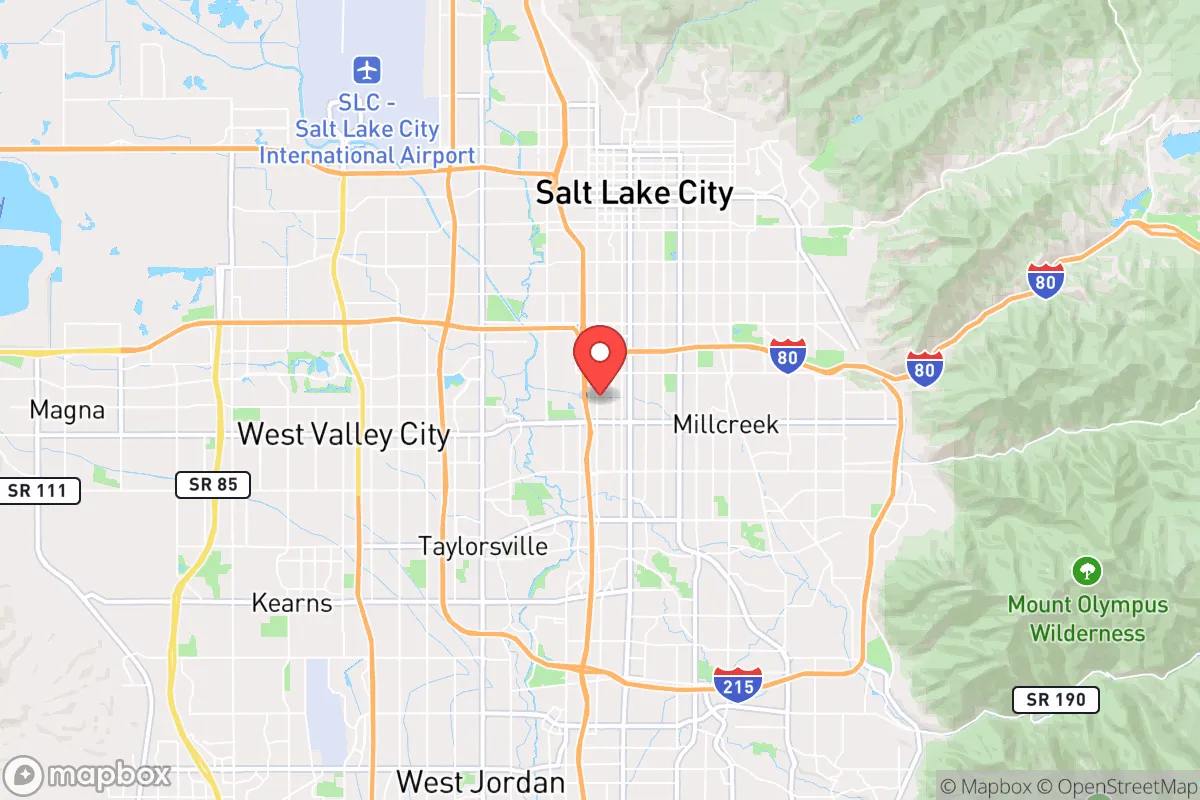
District shown is the primary district for this city’s centroid. Cities may span multiple districts.
Local Political AnalysisPolitical Analysis of South Salt Lake, UT
South Salt Lake sits in a politically interesting spot, and if you’ve been around here long enough, you’ve watched it shift from a reliably conservative, blue-collar town into something a bit more unpredictable. The area’s Cook PVI of R+10 still puts it solidly in Republican territory, but that number hides a lot of churn beneath the surface. You’ll still find plenty of folks who believe in small government, low taxes, and keeping the feds out of your business, but the closer you get to downtown Salt Lake City proper, the more you start hearing talk about zoning overlays and “equity” initiatives that make a longtime resident’s neck hairs stand up.
How it compares
Drive ten minutes north into downtown Salt Lake City, and you’re in a completely different world — that’s a deep blue island where city council meetings buzz with progressive housing mandates and climate action plans that feel like they were written by someone who’s never balanced a checkbook. Head south to Sandy or Draper, and you’re back in R+15 to R+20 country, where property rights are still respected and the local sheriff isn’t afraid to say “no” to unfunded state mandates. South Salt Lake sits right on that fault line. You get the urban density pressures from the north — more apartment complexes, more rent control talk, more “complete streets” projects that slow down your commute — but the voting base still leans conservative enough that the city council has repeatedly shot down proposals for a local income tax surcharge that neighboring towns have adopted. It’s a tug-of-war, and right now the conservative side is still holding the rope, but you can feel the pull getting stronger every election cycle.
What this means for residents
For someone who values personal freedom and wants to keep government out of their garage, their backyard, and their paycheck, South Salt Lake is still a decent bet — but you’ve got to stay engaged. The city has a history of pushing back against state-level preemption on things like short-term rental regulations and firearm storage ordinances, which is a good sign. But the school board and county commission have seen a slow creep of progressive candidates who talk about “social-emotional learning” and “restorative justice” in ways that sound an awful lot like replacing discipline with therapy. Property taxes here are moderate compared to the rest of Salt Lake County, but there’s constant pressure to raise them for transit-oriented development projects that benefit out-of-state developers more than the families who’ve lived here for decades. If you’re the kind of person who reads the city council agenda before bed, you’ll catch the warning signs early. If you tune out, you might wake up one day to find a bike lane where your parking spot used to be and a new ordinance telling you what you can plant in your front yard.
Culturally, South Salt Lake still has that old-school Utah vibe — neighbors wave, the Legion post is active, and the Fourth of July parade is still about flags and fire trucks, not rainbow banners and climate slogans. But the policy fights are real. The biggest one brewing right now is over a proposed “housing first” shelter that would bring concentrated social services into a residential zone, something that has residents worried about safety, property values, and the message it sends to families considering moving here. The city’s leadership is split on it, and that split mirrors the larger tension in the area: do we keep South Salt Lake a place where you can raise kids, park your truck, and mind your own business, or do we let it become another annex of Salt Lake City’s progressive experiment? For now, the R+10 rating gives conservatives a fighting chance, but it’s going to take showing up to every single meeting to keep it that way.

State Political ClimatePolitical Climate in Utah
State Political AnalysisPolitical Environment in the State
Utah is a deeply conservative state, with Republicans holding every statewide office and supermajorities in both legislative chambers, but the political landscape is more complex than a simple red-state label suggests. The state has voted Republican in every presidential election since 1968, with margins typically exceeding 20 points, though the Wasatch Front has shown subtle shifts toward the center in recent cycles. Over the past 10-20 years, the dominant coalition has been a blend of traditional Mormon conservatism, libertarian-leaning small-government advocates, and a growing cohort of out-of-state transplants, creating a dynamic where the state remains reliably red but increasingly contested in suburban enclaves.
Urban vs. rural divide
The political map of Utah is defined by a stark urban-rural split, with the Wasatch Front—home to over 80% of the state’s population—serving as the primary battleground. Salt Lake City and its immediate suburbs, including Salt Lake City proper and Park City, lean Democratic, with Salt Lake County voting for Joe Biden in 2020 by a narrow 51-45 margin. However, the surrounding suburbs like Draper, Sandy, and Lehi remain solidly Republican, though their margins have tightened as tech workers and out-of-state arrivals bring more moderate views. Rural Utah, including counties like San Juan and Carbon, is overwhelmingly conservative, with Trump winning some precincts by 70-80 points. The divide is most visible along the Wasatch Front, where the urban core of Salt Lake City contrasts sharply with the exurban sprawl of Utah County (home to Provo and Orem), which remains a Republican stronghold thanks to the influence of Brigham Young University and a heavily LDS population.
Policy environment
Utah’s policy environment is a mix of low-tax, limited-government principles and pragmatic conservatism, but with notable exceptions that raise concerns for those wary of government overreach. The state has a flat income tax rate of 4.65% and no inheritance tax, and its regulatory posture is generally business-friendly, with right-to-work laws and minimal zoning restrictions in many areas. Education policy is a flashpoint: the state passed a universal school choice voucher program in 2023 (HB 215), allowing parents to use public funds for private or homeschool expenses—a win for parental rights. However, the state also mandates sex education curricula that include abstinence-only components, and recent legislation (SB 16) restricts classroom discussions on sexual orientation and gender identity, which some see as protecting children but others view as government intrusion into family decisions. Healthcare policy is mixed: Utah expanded Medicaid under the Affordable Care Act in 2019, but the state also passed a trigger law banning abortion (SB 174) that went into effect after Dobbs, with exceptions only for rape, incest, and maternal health. Election laws are relatively secure: Utah requires voter ID, has automatic voter registration, and uses paper ballots with risk-limiting audits, though some conservatives have pushed for more stringent measures like signature verification requirements.
Trajectory & freedom
Utah’s trajectory on personal freedom is a mixed bag, with recent legislation expanding liberty in some areas while contracting it in others. On the positive side for conservatives, the state passed constitutional carry (HB 60) in 2021, allowing permitless carry of firearms, and has resisted federal overreach on land management, with the state suing the Bureau of Land Management over public lands access. Parental rights were strengthened with the passage of HB 243 in 2023, which requires schools to notify parents of any changes to a student’s health or well-being, including gender identity issues. However, concerns arise with the state’s aggressive approach to public health mandates during COVID-19, where Governor Spencer Cox imposed a statewide mask mandate in 2020 and later required vaccines for state employees—a move that libertarians saw as government overreach. More recently, the state passed a data privacy law (SB 227) that restricts how tech companies collect and use personal data, which is a win for privacy but also creates new regulatory burdens. The biggest red flag for freedom advocates is the state’s growing reliance on property taxes to fund rapid growth, with some counties like Summit County seeing double-digit increases in assessments, effectively pricing out long-time residents.
Civil unrest & political movements
Utah has seen relatively low levels of civil unrest compared to other states, but political movements are active and visible. The most prominent flashpoint is the ongoing debate over public lands, with the San Juan County area seeing protests from the Bears Ears Inter-Tribal Coalition and local ranchers over federal land designations. Immigration politics are less heated than in border states, but Utah passed a 2011 law (HB 497) requiring police to check immigration status of detainees, though it was later softened. The state has no sanctuary cities, but Salt Lake City has a "welcoming city" policy that limits cooperation with federal immigration enforcement, creating tension with state leaders. Election integrity controversies are minimal, but some conservative groups have raised concerns about mail-in voting, which Utah expanded in 2020. The most visible political movement is the "Utah Republican Party" factional fight between mainstream conservatives and more libertarian-leaning members, with the latter pushing for nullification of federal gun laws and marijuana prohibition. Protests have been rare, but the 2020 Black Lives Matter demonstrations in Salt Lake City drew thousands, and counter-protests from conservative groups like the "Utah Patriot Coalition" were also significant.
Projection
Over the next 5-10 years, Utah’s political trajectory will be shaped by demographic shifts and in-migration patterns that could moderate its conservatism. The state is growing rapidly, with an estimated 1.5 million new residents expected by 2035, many from California and other blue states, bringing more diverse political views. The Wasatch Front suburbs like Lehi and Draper are likely to become more competitive, potentially flipping some legislative seats to Democrats or independents. However, the rural areas and Utah County will remain deeply red, and the state’s LDS population (about 60% of residents) will continue to anchor conservative values on social issues. The biggest wildcard is the state’s water crisis: as the Great Salt Lake shrinks and drought intensifies, government intervention in water rights and development could become a major political issue, potentially alienating libertarians who oppose new regulations. For someone moving in now, expect a state that remains Republican but with growing internal divisions, where the culture war over education and parental rights will intensify, and where the cost of living—driven by housing shortages and property tax hikes—could become a defining political issue.
For a new resident, the bottom line is that Utah offers a high degree of personal freedom in many areas—low taxes, gun rights, school choice—but with a growing government footprint in public health, education mandates, and property taxes. The state is still a safe bet for conservatives, but the urban-rural divide is widening, and the influx of new residents will likely push the Wasatch Front toward the center over the next decade. If you value a strong community, outdoor access, and a business-friendly environment, Utah is a solid choice, but keep an eye on local elections and property tax trends, as those will shape your experience more than national politics.
* Values derived from national, state, county, city and local statistics and may differ in a specific area. Last updated: 2026-04-24T13:25:42.000Z
Narrative content on this page is AI-generated and may contain mistakes. Verify any details that matter before acting on them.
ReloMaps may earn a commission from affiliate links at no extra cost to you.

