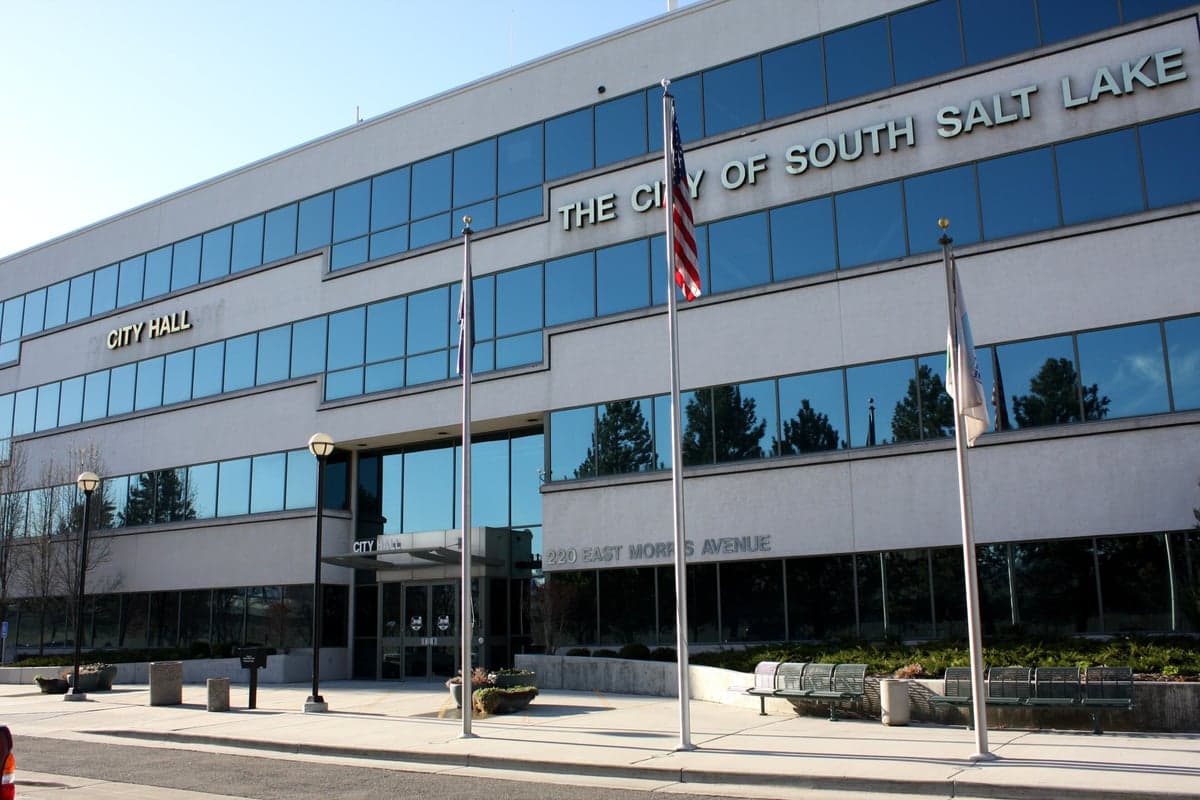
Photo: Wikipedia
Quality of Life in South Salt Lake, UT
A high quality of life with strong walkability, manageable living costs, healthy neighborhood signals, and solid amenity access.
What does Quality of Life tell us?
Quality of Life blends cost of living, nearby amenities, socioeconomic signals, and neighborhood character. City-level scores represent the whole municipality; individual neighborhoods can differ.
What does this tell us?
Quality of Life blends cost of living, nearby amenities, socioeconomic signals, and neighborhood character. City-level scores represent the whole municipality; individual neighborhoods can differ.
Cost of Living
24% above national average
The Real Cost of Living in South Salt Lake, UT for 2026
| Tier | Individual | Family (4) |
|---|---|---|
| Survival | $21k | $40k |
| Comfortable | $76k | $111k |
| Luxury | $112k+ | $173k+ |
| Elite (Top 5%) | $131k+ | $204k+ |
61%
The Area Signal
A metric tracking the socioeconomic signals of the area.
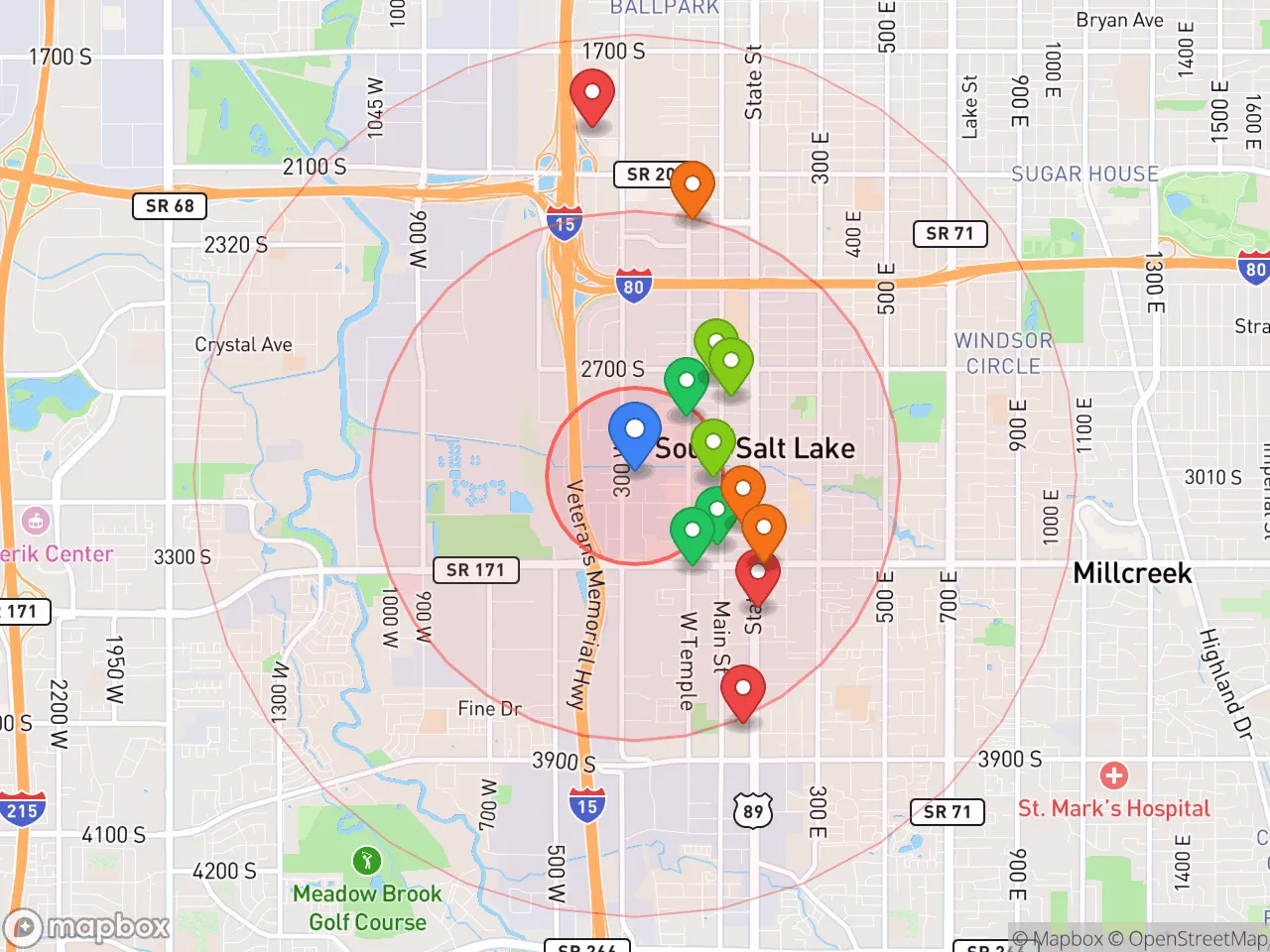
Hobbies
Explore the areaGroceries
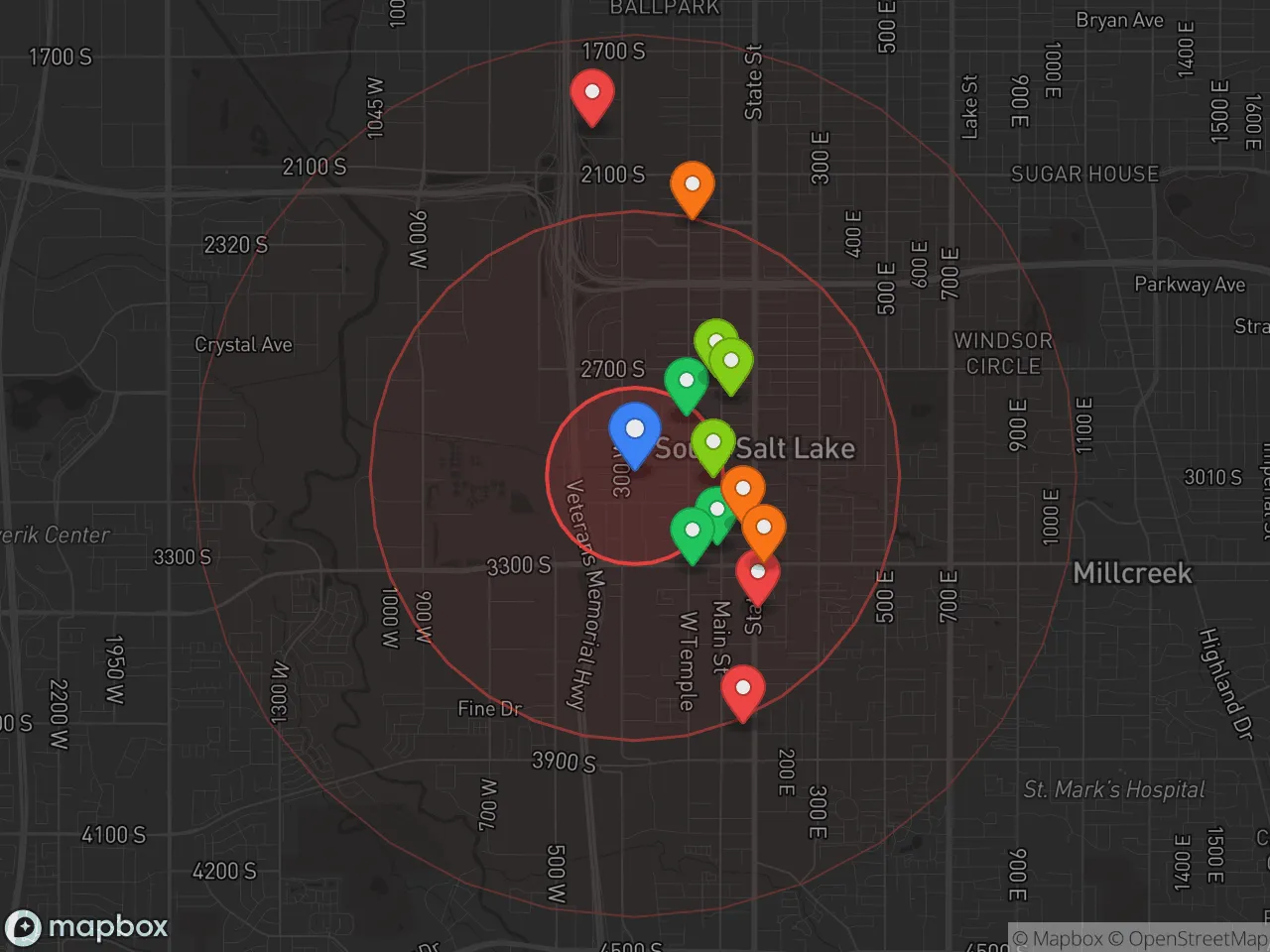
8 within 10 miles
Gas
20 within 10 miles
Hospital
20 within 20 miles
Airport
SLC — Salt Lake City International
Post Office
USPS — South Salt Lake, UT
Critical Amenities
Quality-of-Life Analysis
South Salt Lake presents a distinctive quality-of-life profile that blends urban accessibility with a more moderate cost structure than its immediate neighbors. With a cost-of-living index of 124 (24% above the national average), the city attracts a mix of young professionals, service-industry workers, and families seeking proximity to downtown Salt Lake City without the premium price tag. The median household income of roughly $55,000 reflects a working-to-middle-class population, contrasting with the higher affluence found in nearby Holladay or Cottonwood Heights.
How housing costs and affordability compare to Salt Lake City and surrounding suburbs
Housing in South Salt Lake remains notably more affordable than in the broader Salt Lake metro area, though prices have risen steadily since 2020. The median home value sits at $390,400, significantly below the Salt Lake City median of approximately $530,000 and the Utah statewide median of $490,000. Renters fare even better: the median rent of $1,329 is roughly $200–$400 less per month than comparable units in downtown Salt Lake or Sugar House. This affordability gap is the primary draw for residents who work in the core but cannot stomach the region’s escalating housing costs. The average commute of 19.7 minutes is notably short—well under the national average of 26 minutes—thanks to the city’s central location along I-15 and I-80, plus direct access to the TRAX light rail Blue and Green lines. However, property taxes in South Salt Lake run slightly higher than in some adjacent unincorporated areas, and the city’s older housing stock (much of it built in the 1950s–1970s) means buyers often face renovation costs that newer suburbs like West Jordan or Herriman do not.
What daily life is like for families: schools, parks, and local amenities
Daily life in South Salt Lake is defined by its compact, car-light layout and a growing roster of community amenities. The city is served by the Granite School District, which includes South Salt Lake’s only public high school, Cottonwood High, as well as several elementary and middle schools that have seen incremental test-score improvements since 2022. For recreation, the city maintains nine parks, including the 10-acre Fitts Park with its splash pad and sports fields, and the newly renovated Columbus Center, which houses a community pool, gym, and senior center. Dining and shopping are concentrated along State Street and 3300 South, with a mix of national chains and independent taquerias, bakeries, and Asian markets reflecting the area’s growing diversity. The city lacks a traditional downtown core, but its proximity to Sugar House’s retail corridor and downtown Salt Lake’s nightlife means most residents drive or ride TRAX 5–10 minutes for entertainment. Crime rates, particularly property crime, are higher than the Utah average—the city’s property crime rate is roughly 1.5 times the state rate—though violent crime remains low relative to similarly dense urban neighborhoods.
South Salt Lake is best suited for budget-conscious renters and first-time homebuyers who prioritize a short commute and urban access over suburban sprawl or top-tier school rankings. Young professionals working in Salt Lake City’s tech or healthcare sectors, along with families who value transit connectivity and lower housing costs, will find the city a pragmatic choice. Those seeking elite schools, large single-family lots, or a low-crime suburban environment should look to Sandy or Draper instead. For anyone willing to trade a bit of polish for affordability and a 20-minute commute, South Salt Lake delivers a functional, increasingly diverse quality of life.

Crime in South Salt Lake, UT
Significantly higher crime rates than 75% of comparable U.S. locations.
Violent CrimeViolent Crime Analysis
Property CrimeProperty Crime Analysis
Crime Analysis
South Salt Lake, Utah, reports a violent crime rate of 708.7 per 100,000 residents and a property crime rate of 4,293.7 per 100,000, figures that place it among the higher-crime communities in the Salt Lake City metropolitan area. While the city benefits from its proximity to the broader Wasatch Front economy, its crime statistics reflect challenges common to dense, transit-adjacent suburbs near a large liberal metro area. Prospective residents should weigh these numbers carefully, particularly given the progressive judicial environment in Salt Lake County, which tends to prioritize offender rehabilitation over strict punishment, potentially contributing to higher recidivism and reduced public safety.
Crime in context
South Salt Lake’s violent crime rate of 708.7 per 100,000 is roughly double the national average of 380 per 100,000 and significantly exceeds the Utah state average of about 240 per 100,000. Property crime at 4,293.7 per 100,000 is also elevated, outpacing the national rate of approximately 1,954 per 100,000 and the state rate of around 2,100 per 100,000. These disparities are partly attributable to the city’s role as a transportation hub—bisected by I-15 and I-80—and its concentration of motels, warehouses, and light industry, which attract transient populations and opportunistic theft. The Salt Lake County District Attorney’s office, under progressive leadership, has implemented diversion programs and reduced felony charges for lower-level offenses, a policy approach that critics argue emboldens repeat offenders and undermines deterrence.
What residents experience
Residents report that property crimes—particularly vehicle break-ins, package theft, and burglary—are the most common safety concerns in daily life. The city’s 4,293.7 per 100,000 property crime rate translates to roughly one property crime for every 23 residents annually, a frequency that demands vigilance. Violent incidents, while less frequent, include aggravated assaults and robberies concentrated near commercial corridors like State Street and 3300 South. Many locals avoid walking alone after dark in these areas and rely on neighborhood watch groups and private security cameras. The progressive policies of Salt Lake County’s justice system, including a 2023 policy to decline prosecution for certain drug possession and theft cases under $500, have drawn criticism from community leaders who say they reduce accountability and leave victims without recourse.
Neighborhood-level variation is notable. Areas east of I-15, closer to the residential enclaves of Millcreek, generally see lower crime rates, while the western industrial zone and the central corridor along State Street experience the highest incident density. The city’s small geographic footprint—roughly 6.5 square miles—means that even “safer” blocks are rarely more than a few minutes from higher-crime pockets. For those considering relocation, focusing on the eastern half of the city and properties with off-street parking and alarm systems is a practical mitigation strategy. Overall, South Salt Lake demands a higher level of personal security awareness than most Utah suburbs, a reality shaped by both its urban density and the lenient judicial philosophy prevailing in the county.
* Values derived from national, state, county, city and local statistics and may differ in a specific area. Last updated: 2026-04-24T13:25:42.000Z
Narrative content on this page is AI-generated and may contain mistakes. Verify any details that matter before acting on them.
ReloMaps may earn a commission from affiliate links at no extra cost to you.

