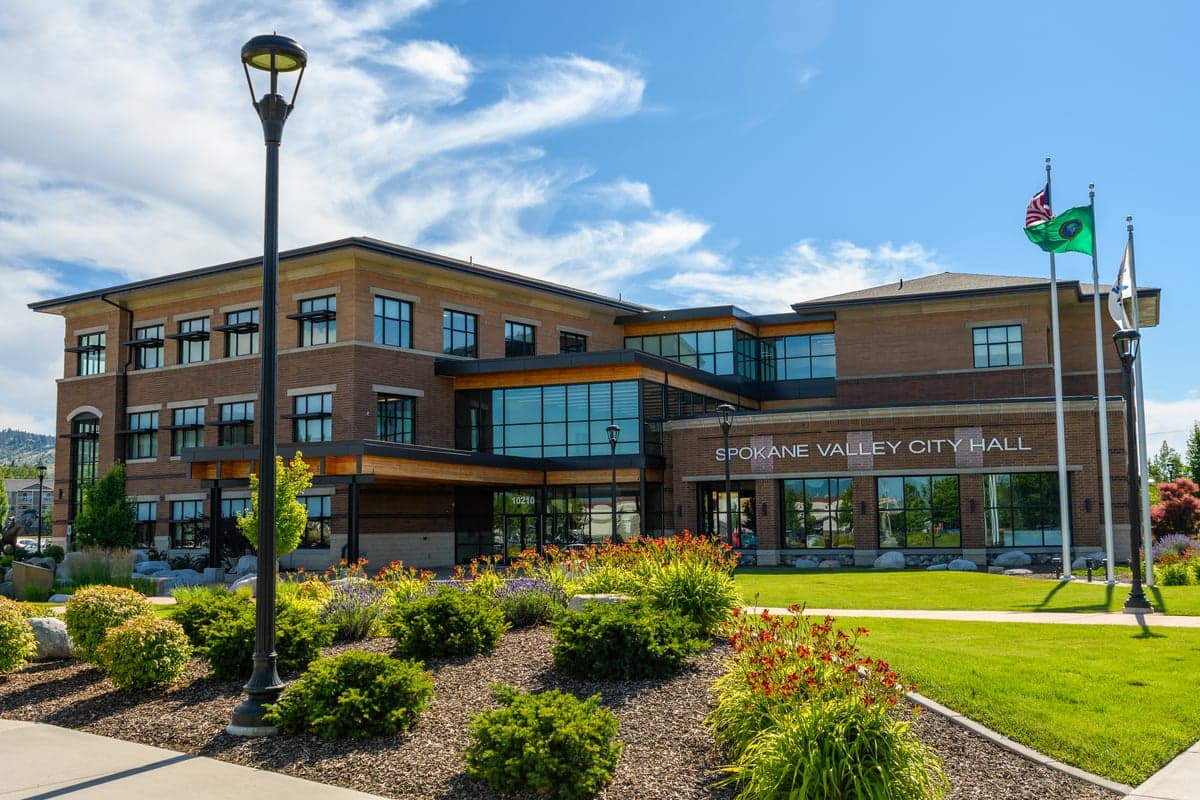
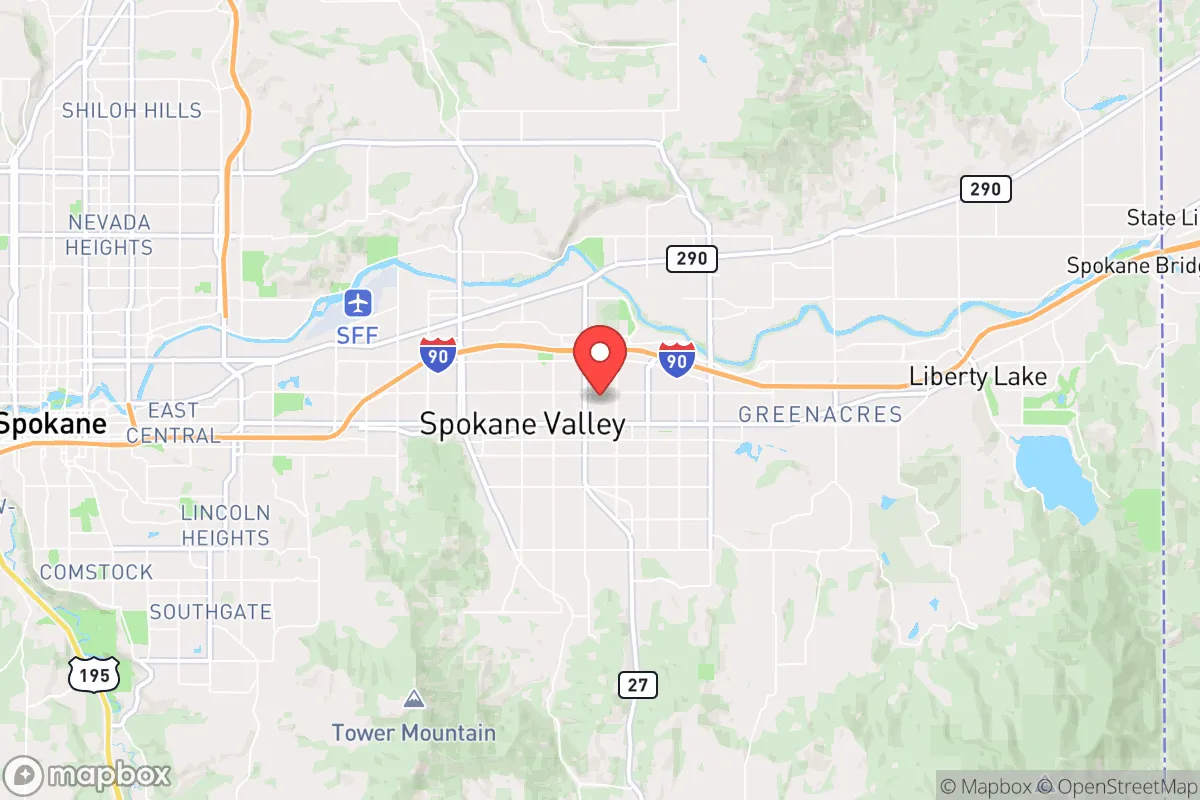
Photo: Wikipedia
Strategic Assessment of Spokane Valley, WA
Workable tactical position. Some exposure to population density or targets, but generally defensible in a crisis.
What does the Strategic Assessment tell us?
Our Strategic Assessment grades tactical survivability of an area. Major population centers, military targets, fallout zones, natural disasters, and border exposure all drive risk — lower exposure means a more defensible position in a crisis.
This is heavily inspired by Joel Skousen's Strategic Relocation book. Highly recommended you checkout the book ($)What does this tell us?
Our Strategic Assessment grades tactical survivability of an area. Major population centers, military targets, fallout zones, natural disasters, and border exposure all drive risk — lower exposure means a more defensible position in a crisis.
This is heavily inspired by Joel Skousen's Strategic Relocation book. Highly recommended you checkout the book ($)Strategic Pillars

Key Distances
Regional Safe Places
Below is our recommended "safe zones" in Washington and the surrounding area based on our strategic heuristics. For most people, it's unrealistic to live in a “safe zone” full-time due to work, family or other personal reasons. They tend to be more rural. However, many of these areas are perfect for second homes and retreat properties that double as a vacation home or even a short-term rental.
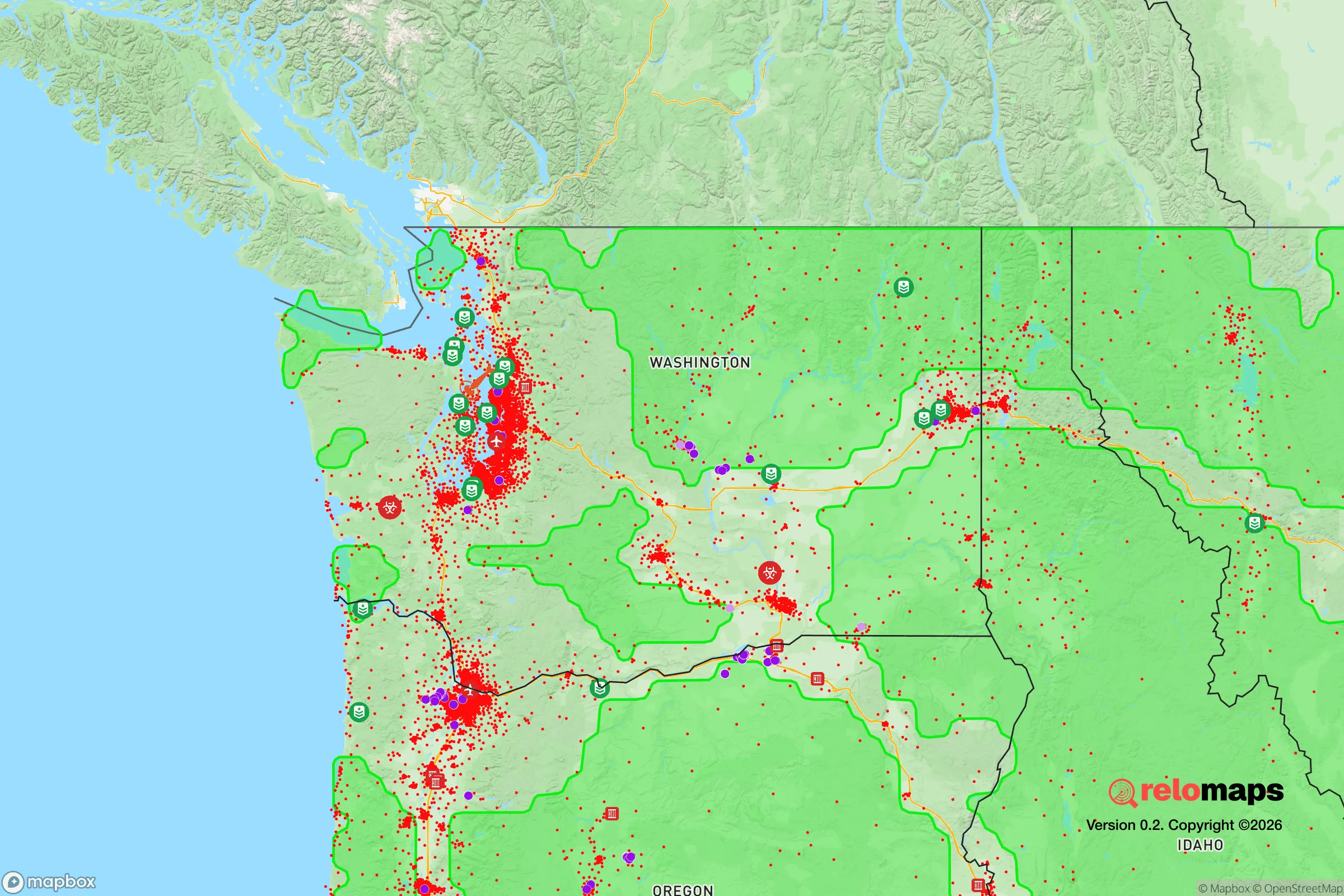
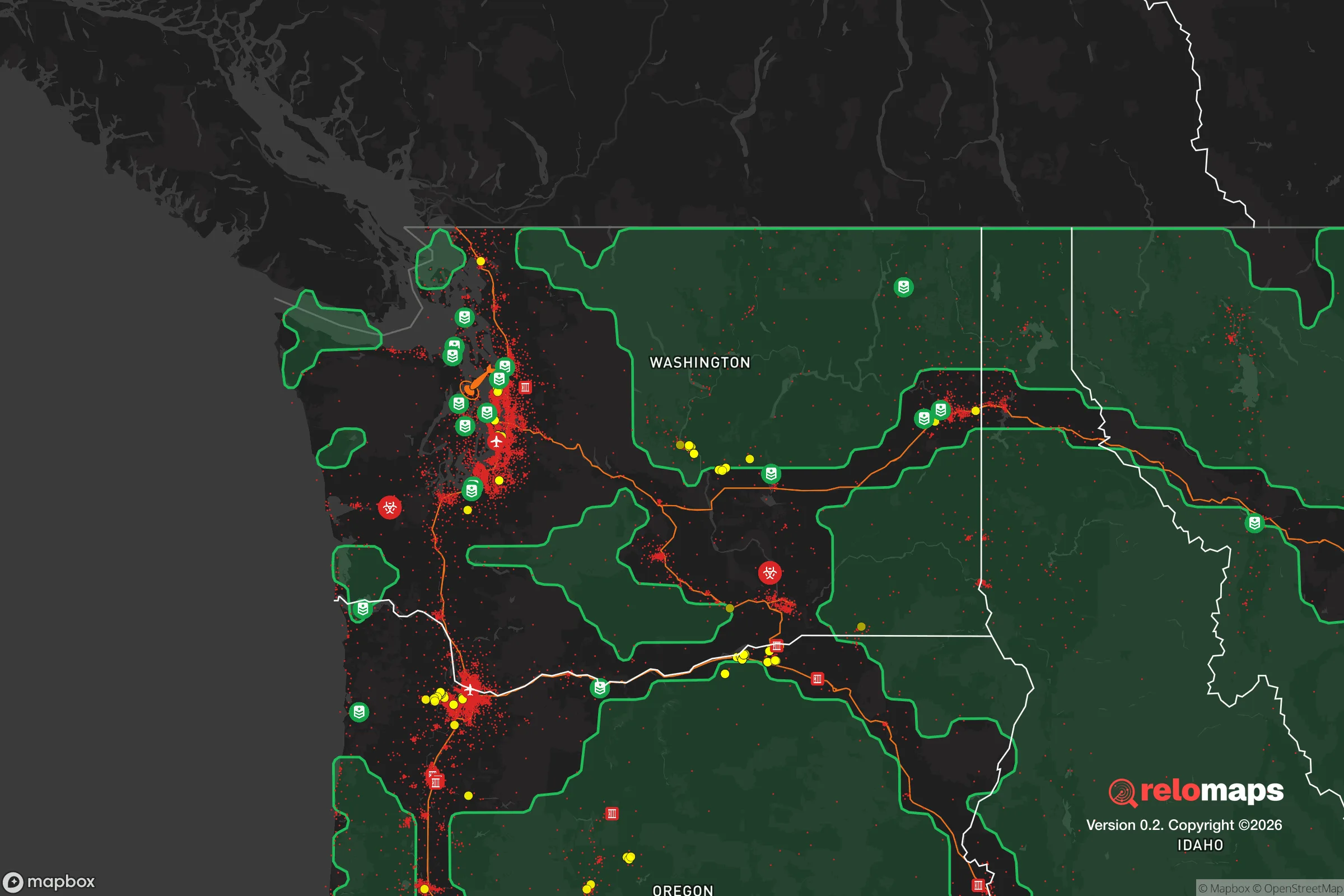


Important Note: For informational purposes only. This does not mean nothing bad ever happens in the green zones. Please use common sense. This is based on public data and modeled with AI. We tried to take a conservative approach but mistakes happen. We update this regularly as new information becomes available.
Solar Generator Recommendations
Backup power matters more here than in safer locations. We've picked three solar generators across budgets and capacity tiers — start with the budget unit if you only need a few essentials, or step up if you want to run a fridge and HVAC for days at a time.

Jackery Portable Power Station Explorer 300
Budget OptionPower on the Go: Weighing only 11 lbs, it's convenient to set up and store with book-sized foldable solar panels

BLUETTI Portable Power Station AC180
Designed for both indoor and outdoor scenarios, AC180 is highly capable as it has a robost capacity and continuous output power.

EF ECOFLOW DELTA Pro Ultra Power Station
Upgraded PickEcoFlow DELTA Pro Ultra is a whole-home energy system designed to grow with your family. Integrated with the Smart Home Panel 2, it scales to meet your evolving energy needs — keeping your home powered, intelligent, and secure through every stage of life.
We earn a commission, at no additional cost to you.
Strategic Assessment Analysis
Spokane Valley, Washington, sits in a unique strategic pocket that balances proximity to resources with a degree of geographic insulation that many preppers find compelling. While no location is a perfect fortress, this area offers a blend of defensible terrain, access to fresh water, and a lower population density than the coastal megacities, making it a serious candidate for those planning for civic unrest or large-scale disruptions. Its position east of the Cascade Range places it in a rain shadow, reducing the risk of the catastrophic earthquakes that threaten Seattle and Portland, and its inland location provides a buffer against the immediate fallout zones of coastal nuclear targets.
Geographic position and natural buffers against coastal chaos
Spokane Valley’s primary strategic advantage is its location roughly 300 miles inland from the Pacific coast, placing it well outside the primary blast and immediate fallout zones of major West Coast targets like Seattle, Portland, or the naval base at Bremerton. The Cascade Range acts as a significant physical barrier, not only for weather but also for the movement of panicked populations from the coast. Prevailing westerly winds mean that fallout from a coastal nuclear event would likely be carried eastward, but the Cascades would trap and dilute much of it before it reached Spokane Valley. The area sits in the Spokane Valley–Rathdrum Prairie aquifer, one of the largest and cleanest freshwater aquifers in the country, providing a reliable, deep groundwater source that is less vulnerable to surface contamination than river-fed systems. The surrounding terrain—a mix of forested hills, agricultural valleys, and the Selkirk Mountains to the north—offers multiple egress routes and potential retreat areas if the Valley itself becomes compromised.
Risks, exposures, and proximity to high-value targets
The most significant risk for Spokane Valley is its proximity to Fairchild Air Force Base, located just west of the city. Fairchild is home to the 92nd Air Refueling Wing and is a key strategic asset for the U.S. military, which makes it a high-priority target in a major conflict. A direct strike on Fairchild would produce a devastating blast and fallout plume that could easily reach Spokane Valley, depending on wind direction. Additionally, the Valley is only about 20 miles from the downtown Spokane core, which, while not a primary target, could become a focal point for civil unrest, resource shortages, or mass evacuation from the coast. The Interstate 90 corridor runs directly through Spokane Valley, making it a natural choke point for refugees fleeing west or east, which could lead to security issues during a collapse scenario. The area also lies in a seismically active region, though the risk of a major earthquake is lower than in western Washington; the 2020 magnitude 4.2 earthquake near Spokane was a reminder that the ground can still shake.
Practical resilience for a relocator: food, water, energy, and defensibility
For a relocator focused on self-sufficiency, Spokane Valley offers a mixed but workable picture. The aquifer provides abundant, high-quality water that can be accessed with a deep well, though drilling costs in the area can be high due to the depth of the water table in some spots. The surrounding agricultural land in the Palouse region and the Spokane Valley itself supports wheat, barley, and some livestock, meaning local food production is feasible for those with land. The area has a growing network of farmers' markets and local food co-ops, which can be leveraged for building supply chains before a crisis. Energy resilience is moderate: the region is served by Avista Utilities, which has a mix of hydro, natural gas, and some coal, but the grid is vulnerable to winter storms and wildfire-related outages. Solar potential is decent, with over 200 sunny days per year, though snow cover in winter can reduce output. Defensibility is a key consideration: Spokane Valley is a suburban sprawl with a mix of residential neighborhoods, strip malls, and industrial zones, making it less defensible than a rural homestead. However, the Valley’s layout along the Spokane River and its network of secondary roads offer multiple escape routes into the surrounding national forests (Colville, Kaniksu, and Coeur d'Alene) if needed. The local gun culture is strong, with a high rate of firearm ownership and a permissive legal environment for concealed carry, which is a practical advantage for personal security in a breakdown scenario.
The overall strategic picture for a conservative prepper
Spokane Valley is not a survivalist paradise, but it is a solid, pragmatic choice for someone who wants to be within striking distance of resources while maintaining a buffer from the most likely chaos zones. The biggest trade-off is the proximity to Fairchild AFB, which introduces a nuclear risk that cannot be ignored. For those willing to accept that risk, the area offers a strong water supply, decent agricultural potential, a like-minded community of self-reliant individuals, and a legal and cultural environment that supports preparedness. The key is to avoid the densest parts of the Valley and instead secure property on the eastern or northern edges, closer to the forested foothills and further from the I-90 corridor. If you can handle cold winters and the possibility of a military target in your backyard, Spokane Valley provides a realistic base for riding out the storm—not a fortress, but a defensible position with good lines of retreat and a community that won’t look at you sideways for having a stockpile.

* Values derived from national, state, county, city and local statistics and may differ in a specific area. Last updated: 2026-04-21T11:09:32.000Z
Narrative content on this page is AI-generated and may contain mistakes. Verify any details that matter before acting on them.
ReloMaps may earn a commission from affiliate links at no extra cost to you.

