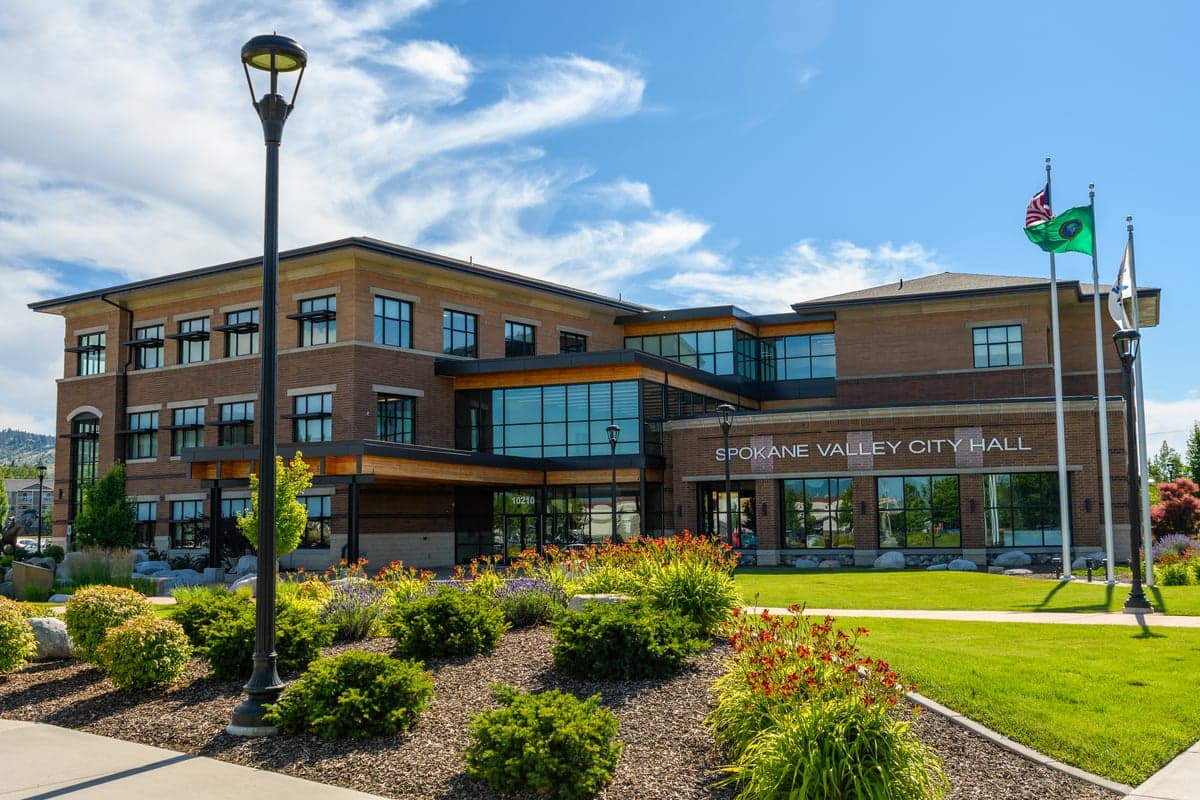
Photo: Wikipedia
Quality of Life in Spokane Valley, WA
Above-average quality of iife. The area offers a reasonable cost of living, decent mobility, and a mix of neighborhood amenities.
What does Quality of Life tell us?
Quality of Life blends cost of living, nearby amenities, socioeconomic signals, and neighborhood character. City-level scores represent the whole municipality; individual neighborhoods can differ.
What does this tell us?
Quality of Life blends cost of living, nearby amenities, socioeconomic signals, and neighborhood character. City-level scores represent the whole municipality; individual neighborhoods can differ.
Cost of Living
13% above national average
The Real Cost of Living in Spokane Valley, WA for 2026
| Tier | Individual | Family (4) |
|---|---|---|
| Survival | $20k | $37k |
| Comfortable | $67k | $98k |
| Luxury | $105k+ | $163k+ |
| Elite (Top 5%) | $124k+ | $191k+ |
72%
The Area Signal
A metric tracking the socioeconomic signals of the area.
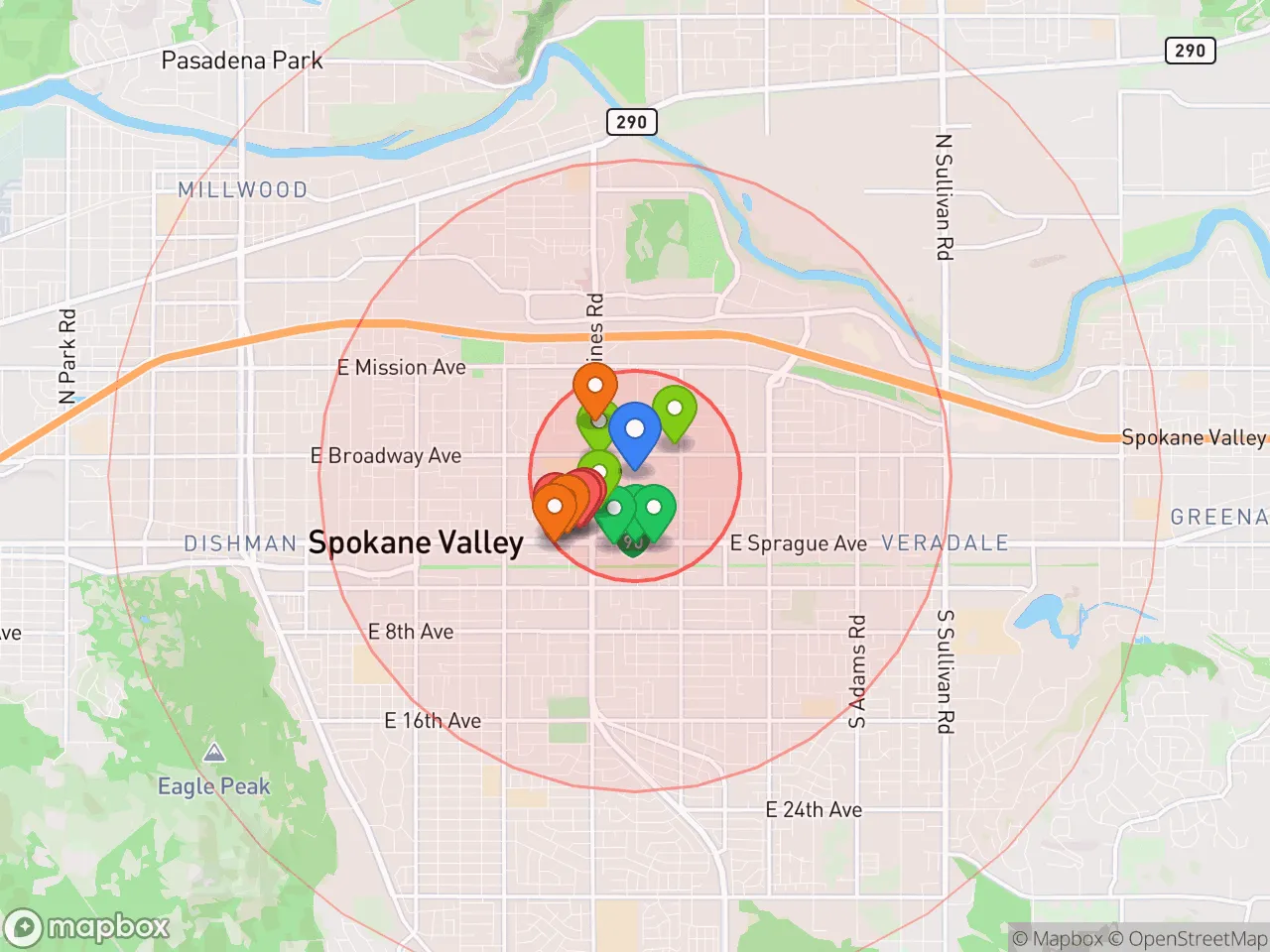
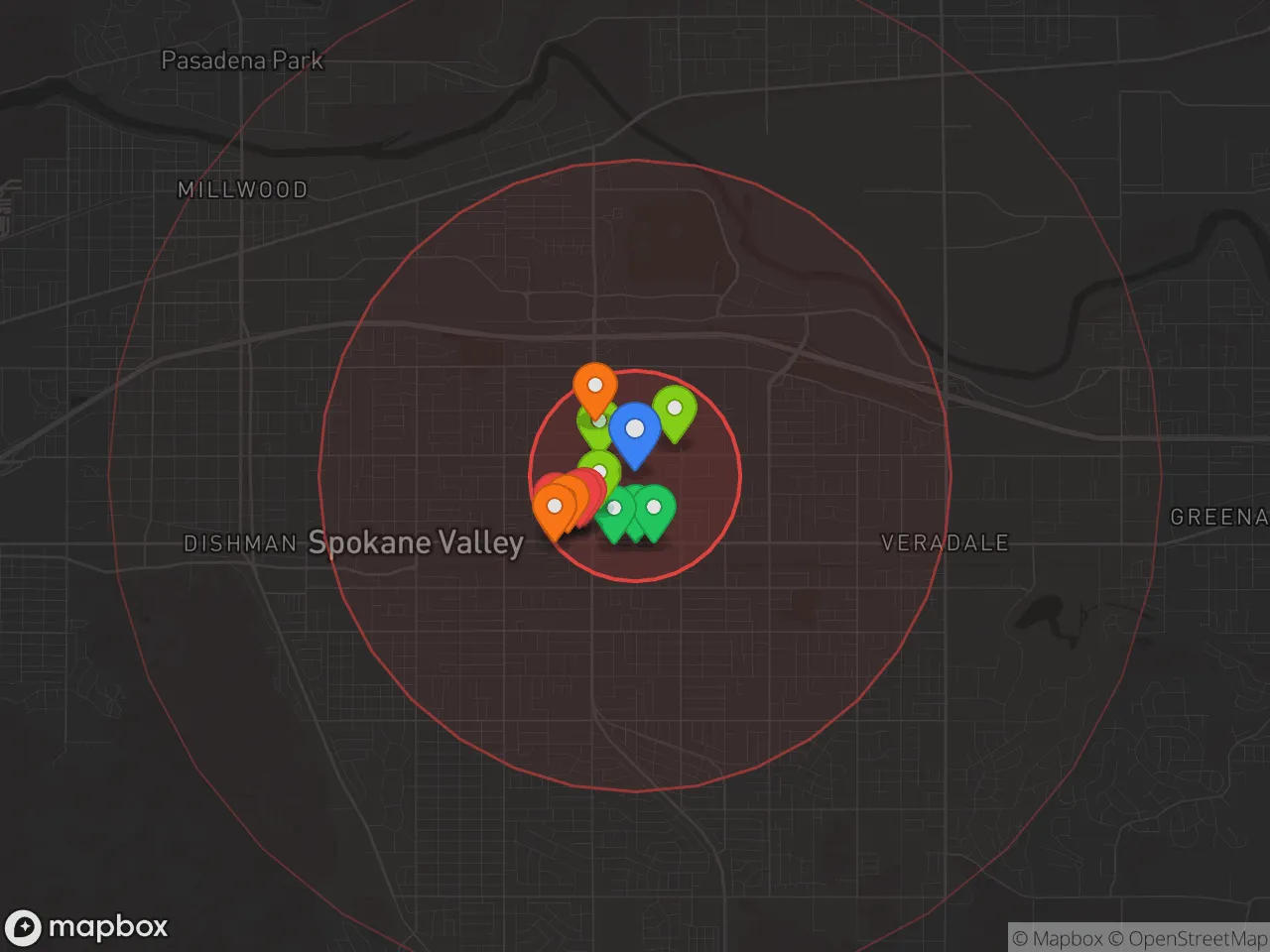
Hobbies
Explore the areaGroceries
7 within 10 miles
Gas
20 within 10 miles
Hospital
11 within 20 miles
Airport
SEA — Seattle–Tacoma International
Post Office
USPS — 11712 East Sprague Avenue, Spokane
Critical Amenities
Quality-of-Life Analysis
Spokane Valley, Washington, presents a middle-to-upper-middle-class quality of life shaped by its position as a more affordable, family-oriented alternative to downtown Spokane. The area’s 113 cost-of-living index (13% above the U.S. average) reflects a trade-off: residents pay a premium for newer housing stock and lower crime rates than the core city, while still earning wages that often lag behind Seattle or Portland. The typical resident is a homeowner in their 40s or 50s, often employed in healthcare, manufacturing, or regional logistics, who values suburban space and short commutes over urban nightlife.
Cost of living, housing affordability, and how it compares to Spokane and Coeur d'Alene
Spokane Valley’s cost of living is 13% above the national average, driven almost entirely by housing. The median home value of $344,300 is roughly 10% lower than Spokane’s citywide median and about 25% below Coeur d’Alene, Idaho, just 30 minutes east. This makes the Valley a price-sweet spot for buyers who want newer construction (many homes built after 2000) without the premium of a lakefront or downtown address. Median rent sits at $1,247, which is notably lower than the national median of roughly $1,500 and well below Seattle’s $2,200. The average commute of 20.8 minutes is a major draw—significantly shorter than the national average of 27 minutes—thanks to the Valley’s grid of arterial roads (Sprague Avenue, Sullivan Road) and easy access to Interstate 90. Property taxes in Spokane County hover around 0.9% of assessed value, lower than many parts of King County but slightly above Kootenai County, Idaho. For renters and first-time buyers, the Valley offers a rare combination of sub-30-minute commutes and home prices under $350,000—a pairing increasingly hard to find in the Inland Northwest.
What daily life is like: schools, parks, and local amenities
Daily life in Spokane Valley revolves around strip-mall convenience, public schools with solid ratings, and a network of riverfront parks. The Central Valley School District serves most of the city, with several elementary schools (e.g., Broadway Avenue Elementary) scoring 7 or 8 out of 10 on GreatSchools ratings, and University High School offering Advanced Placement and running-start programs. The Spokane Valley Mall anchors retail, while the Centennial Trail—a paved 37-mile path along the Spokane River—provides walking, biking, and fishing access that rivals any urban trail system. For groceries and errands, residents rely on chains like WinCo and Fred Meyer, with few independent grocers or farmers’ markets. Dining leans toward national chains (Olive Garden, Red Robin) and a handful of local spots like the Valley Cafe or the Blackbird. The city lacks a true downtown core; instead, life centers on the intersection of Sullivan Road and Sprague Avenue, where big-box stores, car dealerships, and medical offices cluster. The Spokane Valley Library and the Mirabeau Point Park (with its off-leash dog area and splash pad) serve as community gathering spots. For nightlife or fine dining, most residents drive 15 minutes into downtown Spokane.
Spokane Valley is best suited for families, outdoor enthusiasts, and professionals who prioritize a short commute and a quiet, low-crime environment over walkability or cultural density. Retirees on fixed incomes may find the cost-of-living index challenging, but dual-income households earning $70,000–$100,000 will find the housing-to-wage ratio comfortable. Those who thrive here are people who value a predictable, car-dependent suburban rhythm—where a 20-minute drive gets you to work, the river trail, or a Costco run—and who are willing to trade urban grit for newer infrastructure and lower crime rates. It is not a place for singles seeking nightlife or pedestrians wanting a walkable downtown, but for anyone looking to buy a home under $350,000 with a half-hour commute, it remains one of the most practical options in the Inland Northwest.

Crime in Spokane Valley, WA
Crime rates similar to the national median for U.S. locations.
Violent CrimeViolent Crime Analysis
Property CrimeProperty Crime Analysis
Crime Analysis
Spokane Valley, Washington, reports a violent crime rate of 228.4 incidents per 100,000 residents and a property crime rate of 3,269.8 per 100,000, placing it in a concerning tier for a city of its size. While not among the most dangerous cities nationally, these figures demand scrutiny, particularly given the broader regional context of lenient justice policies. The city's safety profile is shaped by its position within Spokane County, where progressive judicial philosophies have led to reduced incarceration rates and softer sentencing for repeat offenders, directly contributing to higher recidivism and more criminals on the street.
Crime in context
Spokane Valley's violent crime rate of 228.4 per 100,000 is roughly 40% higher than the national average of approximately 163 per 100,000, and significantly exceeds the Washington state average of around 200 per 100,000. The property crime rate of 3,269.8 per 100,000 is nearly double the national average of about 1,954 per 100,000, and well above the state average of roughly 2,400 per 100,000. These elevated numbers are not an anomaly but a predictable outcome of a justice system that prioritizes offender rehabilitation over public safety. Spokane County's progressive district attorney and judges have implemented policies like presumption of release without cash bail and diversion programs for repeat property offenders, which have been directly linked to a surge in auto thefts and burglaries across the Valley. Readers should be deeply concerned: these policies mean that even after an arrest, many offenders are back on the street within hours, often to re-offend.
What residents experience
For daily life in Spokane Valley, the most tangible impact is property crime. Residents report frequent vehicle break-ins, package thefts from porches, and garage burglaries. The city's layout—a mix of suburban neighborhoods and commercial corridors along Interstate 90—provides easy escape routes for criminals. While violent crime like assault and robbery is less common, it is concentrated in areas near the Sprague Avenue corridor and around the Spokane Valley Mall. The progressive justice system's focus on "alternatives to incarceration" means that repeat property offenders often face no jail time, creating a cycle where the same individuals victimize multiple households. This erodes community trust and forces residents to invest heavily in private security measures like cameras, alarms, and reinforced doors.
Neighborhood-level variation
Safety varies significantly within Spokane Valley. The southern half of the city, near the Spokane River and Liberty Lake, experiences lower crime rates, with some census tracts reporting violent crime below 100 per 100,000. In contrast, the northern areas near the intersection of I-90 and Sullivan Road see property crime rates exceeding 4,000 per 100,000. The Greenacres and Ponderosa neighborhoods are generally safer, while the Opportunity area (around Sprague and University Road) has the highest concentration of both property and violent incidents. Regardless of neighborhood, the overarching concern remains the same: a justice system that fails to hold offenders accountable, making every resident a potential victim.
* Values derived from national, state, county, city and local statistics and may differ in a specific area. Last updated: 2026-04-21T11:09:32.000Z
Narrative content on this page is AI-generated and may contain mistakes. Verify any details that matter before acting on them.
ReloMaps may earn a commission from affiliate links at no extra cost to you.

