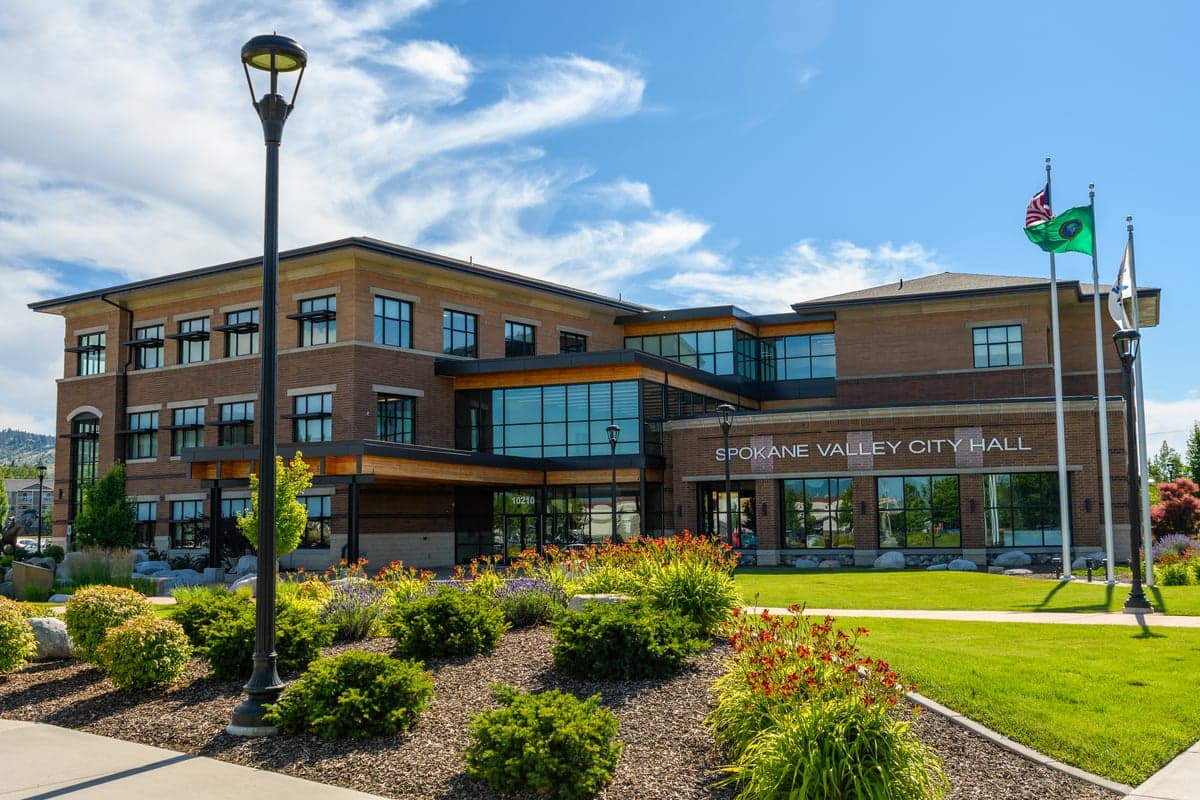
Photo: Wikipedia
Political ClimatePolitical Climate in Spokane Valley, WA
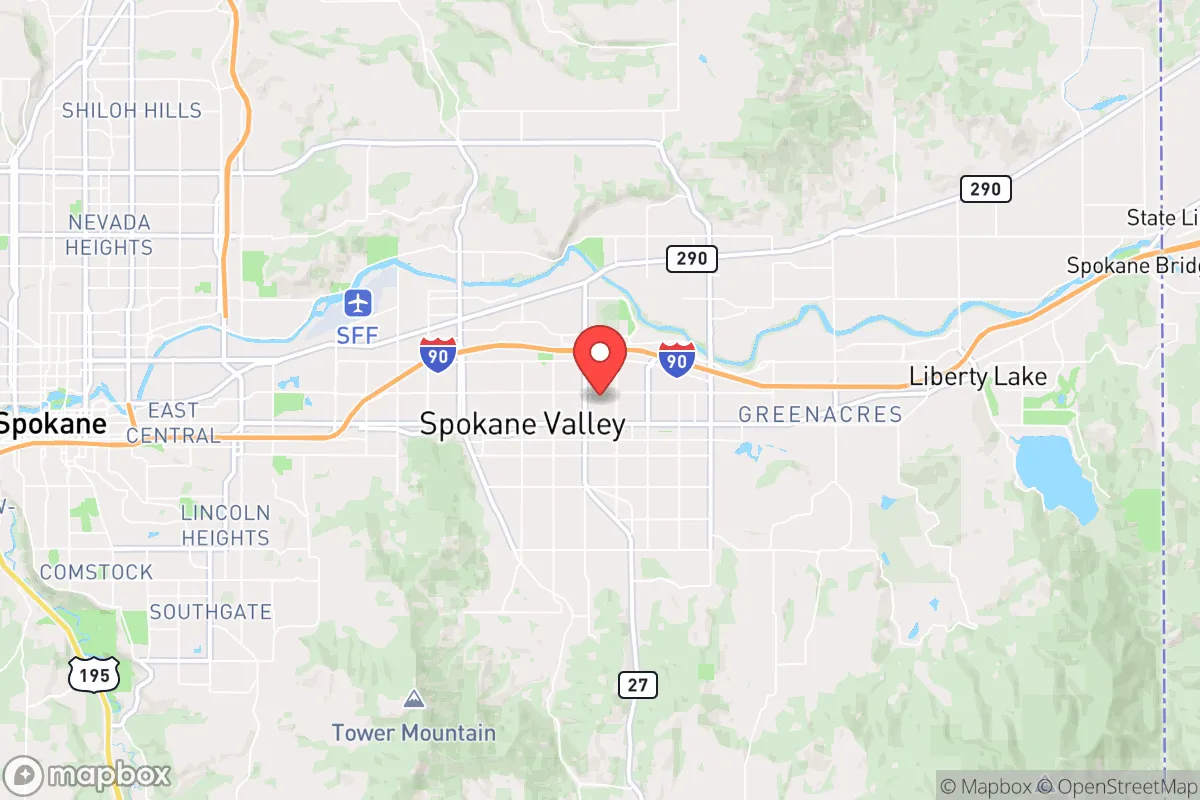
District shown is the primary district for this city’s centroid. Cities may span multiple districts.
Local Political AnalysisPolitical Analysis of Spokane Valley, WA
Spokane Valley has long been a reliably conservative stronghold in Eastern Washington, and that hasn't changed much. The Cook PVI rating of R+5 tells you the math: this area leans Republican by a solid five points more than the national average, and that's been the baseline for as long as I can remember. But what's really interesting is how the political winds are shifting around us. While the city itself stays pretty steady, you're seeing a real contrast with places like downtown Spokane, which has been drifting further left every cycle, and even Liberty Lake, which used to be a lock for conservatives but is starting to show some purple streaks. The trajectory here is one of cautious resistance—folks are digging in on local control and personal freedoms, especially as state-level policies from Olympia keep pushing harder on things like gun rights, land use, and school choice.
How it compares
If you drive ten minutes west into Spokane proper, you're in a completely different political world. The city council there has been pushing progressive priorities—things like sanctuary city policies, higher property taxes for social programs, and stricter environmental regulations that hit small businesses hard. Spokane Valley, by contrast, has kept its city council firmly conservative, with a focus on low taxes, minimal zoning interference, and a police department that actually has the resources to respond. The contrast with Liberty Lake is subtler but real: that town's newer developments have attracted a younger, more tech-oriented crowd, and you're starting to hear more talk about bike lanes and "sustainability" initiatives that would have been laughed off a decade ago. Out here in the Valley, the attitude is more "if it ain't broke, don't fix it," and that's a big reason why the political climate feels more stable and predictable.
What this means for residents
For someone living here, the practical effect is that government tends to stay out of your way. Property taxes are reasonable compared to the west side of the state, and there's no city income tax. The school board elections are where you really see the values play out—there's been a consistent push to keep curriculum decisions local and resist state mandates on things like critical race theory or gender ideology in elementary classrooms. The county sheriff's office is well-funded and takes a pro-Second Amendment stance, which matters a lot to folks who hunt or just want to feel secure in their own homes. That said, there's a growing concern about the long-term trend. As Spokane County's population grows, we're seeing more pressure from the state legislature to adopt uniform policies on housing density, environmental reviews, and even energy codes. If you value the ability to make your own choices about your property, your kids' education, and your personal safety without a bureaucrat in Olympia second-guessing you, Spokane Valley is still a good bet—but you have to stay engaged.
Culturally, the Valley has a distinct "leave us alone" vibe that sets it apart from the more activist conservatism you might find in, say, Coeur d'Alene just across the border. People here aren't looking to pick fights; they just want to live their lives without the government breathing down their necks. The biggest policy distinction you'll notice is in land use: Spokane Valley has been slow to adopt the kind of high-density zoning that's popular in progressive circles, preferring to keep neighborhoods single-family and low-key. There's also a strong local pushback against any talk of a city-wide plastic bag ban or other "feel-good" regulations that add hassle without solving real problems. If you're worried about government overreach creeping into your daily life, this is still one of the safer corners of Washington to call home—but you'd better keep an eye on the ballot box every election, because the pressure from the left isn't going away.

State Political ClimatePolitical Climate in Washington
State Political AnalysisPolitical Environment in the State
Washington State has shifted from a purple swing state to a solidly blue stronghold over the past two decades, driven by explosive growth in the Seattle metro area and a shrinking rural electorate. The Democratic Party now holds every statewide office and both U.S. Senate seats, and the state hasn’t voted for a Republican presidential candidate since 1984. For a conservative considering relocation, the key takeaway is that your vote will be drowned out by King County’s population, but your life will be shaped by a state government that increasingly views personal freedom as negotiable.
Urban vs. rural divide
The political map of Washington is a tale of two worlds. King County, home to Seattle, Bellevue, and Redmond, generates roughly one-third of the state’s population and votes about 75% Democratic. This single county decides statewide elections. The Puget Sound region—including Snohomish County (Everett) and Pierce County (Tacoma)—adds another 1.5 million reliably blue voters. Meanwhile, Eastern Washington, anchored by Spokane and the Tri-Cities (Kennewick, Pasco, Richland), votes heavily Republican, as do most rural counties west of the Cascades like Lewis, Cowlitz, and Whatcom. The divide is stark: in 2024, King County went +40 for Democrats, while Lincoln County in the east went +50 for Republicans. The suburbs are the battleground—places like Sammamish and Issaquah have trended left, while conservative strongholds like Maple Valley and Bonney Lake hold the line. If you’re looking for a red enclave, Spokane Valley or the Yakima Valley offer more like-minded neighbors, but you’ll still be governed from Olympia.
Policy environment
Washington’s policy environment is aggressively progressive, with a tax structure that hits high earners and property owners hardest. There is no state income tax, but property taxes are high (averaging 0.93% of home value) and the state sales tax is among the highest in the nation at 6.5%, with local add-ons pushing it past 10% in Seattle. The state has a capital gains tax on profits over $250,000, passed in 2021 and upheld by the state supreme court in 2023—a clear signal that Olympia will keep reaching for new revenue. Education policy is dominated by the teachers’ union; the state mandates comprehensive sex education and has a “My Health My Data” law that restricts data privacy but also creates compliance headaches for parents. Healthcare is heavily regulated, with a state-run insurance exchange and a public option law that’s slowly squeezing private plans. Election laws are among the most liberal in the country: universal mail-in voting, same-day registration, and no voter ID requirement. For a conservative, this feels like a system designed to maximize turnout in blue areas while making it harder to challenge results.
Trajectory & freedom
Washington is becoming less free by the year, especially on the issues that matter most to conservatives. The state has some of the strictest gun laws in the nation: a 2023 law banned the sale of many semi-automatic rifles, and a 2024 law requires a 10-day waiting period for all firearm purchases and mandates a permit-to-purchase system. Magazine capacity is capped at 10 rounds. Parental rights took a hit with the 2023 “Let Grow” law, which allows minors 13 and older to consent to mental health treatment without parental notification—a direct challenge to family authority. Medical autonomy is constrained by a 2022 law that requires insurance to cover gender-affirming care, effectively mandating taxpayer-funded transition treatments for minors. Property rights are under pressure from the state’s Growth Management Act, which limits development in rural areas and drives up housing costs. On the plus side, Washington has no state income tax and no business tax on gross receipts, which keeps the economy humming. But the trend line is clear: each legislative session adds new mandates, new taxes, and new restrictions on personal choice.
Civil unrest & political movements
Washington has a long history of political activism, and it’s not always peaceful. The 2020 protests in Seattle’s Capitol Hill Autonomous Zone (CHAZ) were a national flashpoint, with six weeks of occupation that the city government largely tolerated. Since then, left-wing activism has focused on climate, racial justice, and housing policy, with regular protests at the state capitol in Olympia. On the right, the Washington State Republican Party has struggled to gain traction, but grassroots movements like the “We the People” rallies and the “Moms for Liberty” chapters in suburban counties have pushed back on school board policies and vaccine mandates. Immigration politics are tense: Washington is a sanctuary state, with a 2019 law prohibiting state and local law enforcement from cooperating with federal immigration authorities. This has led to friction in border counties like Whatcom, where illegal crossings from Canada have increased. Election integrity remains a hot-button issue; the 2020 and 2022 elections saw no major scandals, but many conservatives remain skeptical of the mail-in system. The most visible flashpoint for a new resident might be the constant presence of political signage—in Seattle, it’s “Defund the Police” and “Climate Justice”; in Spokane, it’s “Trump 2024” and “Parental Rights.”
Projection
Over the next 5-10 years, Washington will likely become even more blue. In-migration is still strong, but the newcomers are overwhelmingly from California and other blue states, drawn by tech jobs and the lack of income tax. The state’s population is projected to grow by 1.5 million by 2040, with most of that growth in King, Pierce, and Snohomish counties. Rural counties will continue to lose population and political influence. The state legislature is likely to pass a state income tax within the decade, despite the political difficulty, as the need for revenue grows. Gun laws will get stricter—expect a ban on all semi-automatic firearms and mandatory buybacks. Parental rights will erode further, with bills already proposed to lower the age of consent for medical decisions to 12. The one wild card is a potential conservative exodus to Idaho or Montana, which could accelerate if the tax burden becomes unbearable. But for now, the trajectory is clear: Washington is a one-party state where conservative voices are increasingly marginalized.
For a conservative moving to Washington, the bottom line is this: you can find a community of like-minded people in the suburbs or Eastern Washington, but you will be fighting an uphill battle against a state government that sees your values as obstacles. The lack of income tax is a real benefit, but it comes with high property taxes and a regulatory environment that makes it hard to start a business, own a gun, or raise your kids without state interference. If you’re willing to be a minority voice and focus on local politics, Washington can still offer a good life. But if you want a state that respects your freedom to live as you see fit, you might want to look at Idaho or Texas instead.
* Values derived from national, state, county, city and local statistics and may differ in a specific area. Last updated: 2026-04-21T11:09:32.000Z
Narrative content on this page is AI-generated and may contain mistakes. Verify any details that matter before acting on them.
ReloMaps may earn a commission from affiliate links at no extra cost to you.

