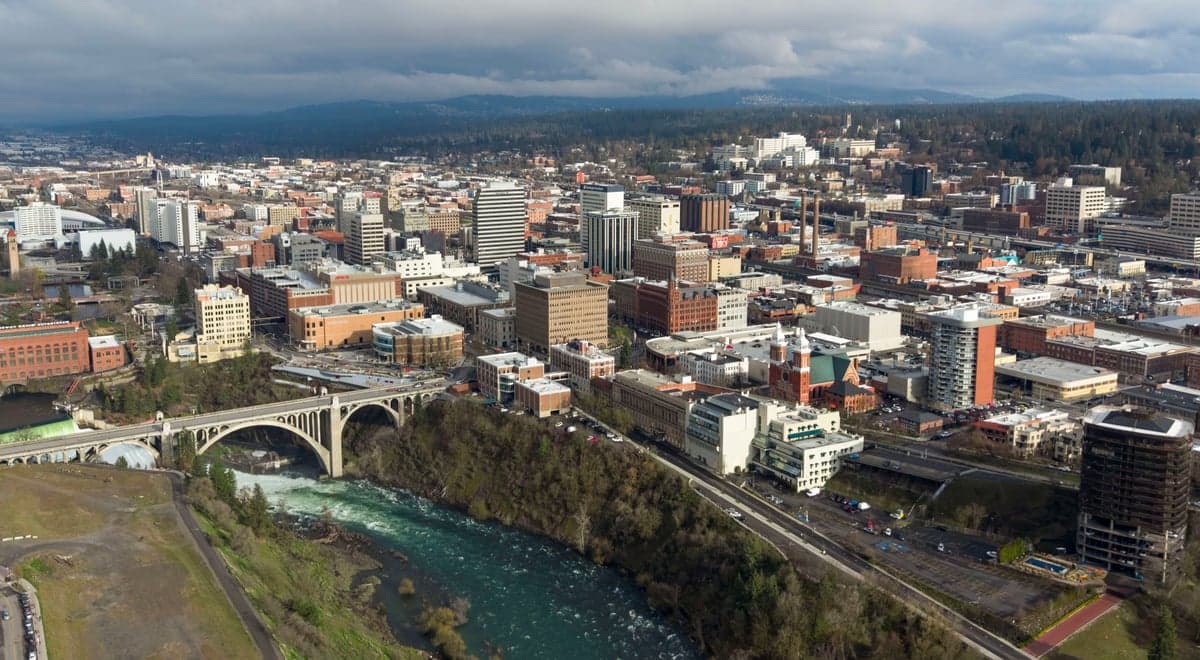
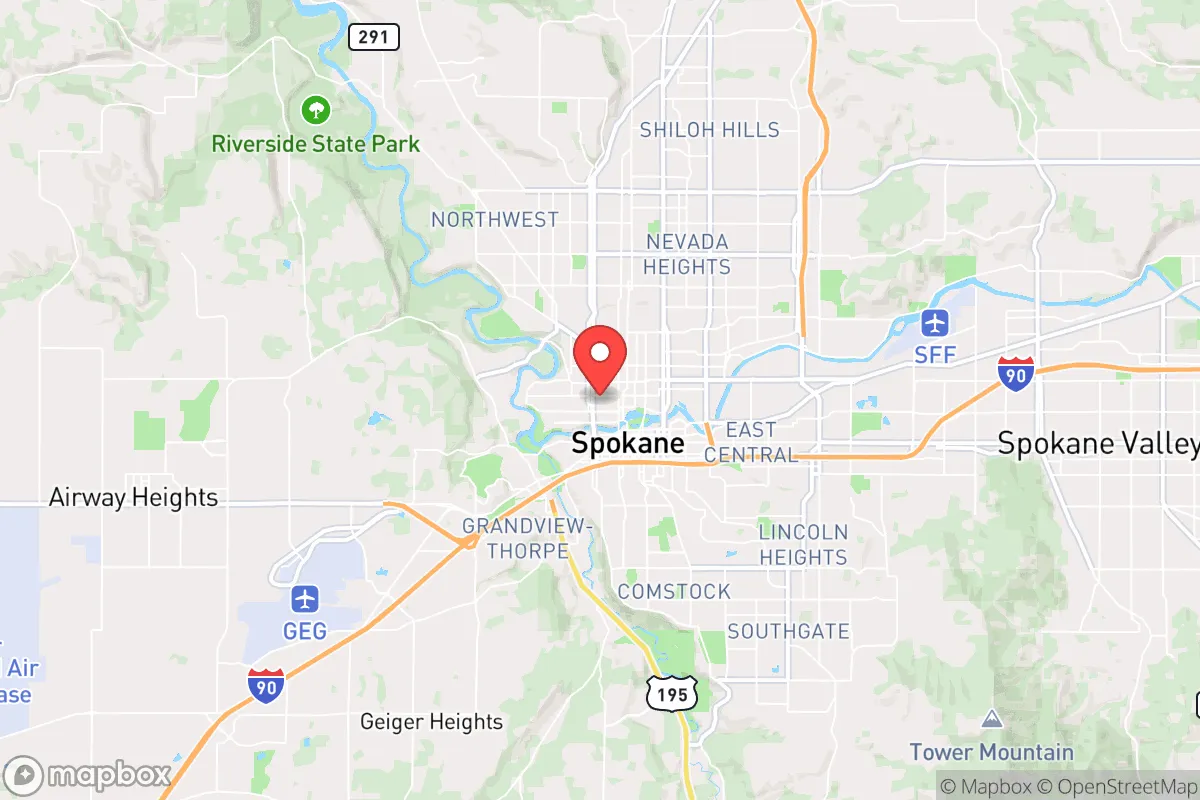
Photo: Wikipedia
Find The Best Places To Live
in Spokane
PRO TIP! You can paste a Zillow or Redfin link to get info on that property.
What It's Like Living in Spokane, WA
Spokane has a bit of a split personality: it’s a mid-sized city with a working-class backbone and a surprisingly strong outdoor-recreation culture, but it also carries a quiet, conservative-leaning sensibility that sets it apart from Seattle’s orbit. You’ll find people here who genuinely love the place—they’ll tell you about the four distinct seasons, the easy access to skiing and hiking, and the fact that you can still buy a decent house for under $350,000. But they’ll also be the first to admit that the city has some rough edges, from a higher-than-average crime rate to a downtown that can feel a little sleepy after 9 p.m.
Daily Rhythm: What People Actually Do
Most Spokane residents live in single-family homes with yards, and the rhythm of daily life revolves around work, school, and weekend adventures. The average commute is just over 21 minutes—short enough that you can actually run home for lunch—and the median household income sits at $65,745, which goes further here than in most West Coast cities. People shop at the Spokane Valley Mall or the local Yoke’s grocery chain, and they eat at places like the historic Frank’s Diner (a train car turned breakfast spot) or Durkin’s Liquor Bar for a proper cocktail. Weekends often mean a trip to Riverfront Park, a walk along the Spokane River Centennial Trail, or a drive out to Mount Spokane State Park for hiking or snowshoeing. The median age is 37.2, which tracks with a population that’s heavy on families and early-career professionals rather than retirees or college students.
Sports, Community, and What Brings People Together
Sports here are a big deal, but not in a flashy, pro-sports way. The Spokane Indians (Class A baseball) are a summer staple—cheap tickets, fireworks on Fridays, and a genuine community gathering spot. High school football and basketball games draw real crowds, especially in the fall, and Gonzaga University basketball is practically a religion. The Zags pack the McCarthy Athletic Center and have turned Spokane into a college basketball town that punches way above its weight. For entertainment beyond sports, the Spokane Arena hosts concerts and rodeos, and the Bing Crosby Theater brings in touring acts. The biggest annual event is Hoopfest, a 3-on-3 basketball tournament that takes over downtown every June and draws over 200,000 people. It’s loud, chaotic, and exactly the kind of thing that makes Spokane feel like a real community rather than just another city.
Pros and Cons of Living Here
Let’s be honest about the upsides and downsides. On the plus side, housing is still affordable—the median home value is $326,200, which is roughly half of what you’d pay in Boise or Denver. The outdoor access is legit: within an hour you can be skiing at Schweitzer Mountain Resort or fishing on Lake Coeur d’Alene. The city also has a strong sense of local identity—people are proud to be from Spokane, and that shows in the support for local businesses and the low-key, neighborly vibe. On the flip side, the violent crime rate is 606.2 per 100,000, which is notably higher than the national average and something you’ll hear about from longtime residents. The job market is improving but still leans heavily on healthcare (Kaiser, Providence), government, and education—tech and finance jobs are thin on the ground. Winters are real: expect snow from November through March, with temperatures often below freezing, and the gray skies can wear on you by February. The city’s conservative lean is a plus for some and a frustration for others—Spokane County voted solidly red in recent elections, and the local culture reflects that in everything from gun rights to school board politics.
Cultural Quirks and What You’ll Notice
One thing that stands out is the Spokane accent—locals say “creek” like “crick” and “bag” like “beg,” and you’ll hear “pop” instead of “soda.” Another quirk: the city has a surprisingly strong farm-to-table food scene for its size, with places like Wild Sage Bistro and Luna serving locally sourced menus. The Spokane Public Market is small but growing, and the Kendall Yards neighborhood feels like a mini Portland with its breweries and artisan shops. Traffic is rarely a problem—rush hour adds maybe 10 minutes to a drive—but the city’s layout can feel fragmented, with downtown separated from the South Hill and the Valley by rivers and railroad tracks. Schools are a mixed bag: some districts like Spokane Public Schools have strong programs, but parents often research specific elementary schools carefully. Overall, Spokane works best for people who want a slower pace, a lower cost of living, and a community that still feels like a small town in a city’s body—warts and all.

* Values derived from national, state, county, city and local statistics and may differ in a specific area. Last updated: 2026-04-25T13:52:35.000Z
Narrative content on this page is AI-generated and may contain mistakes. Verify any details that matter before acting on them.
ReloMaps may earn a commission from affiliate links at no extra cost to you.

