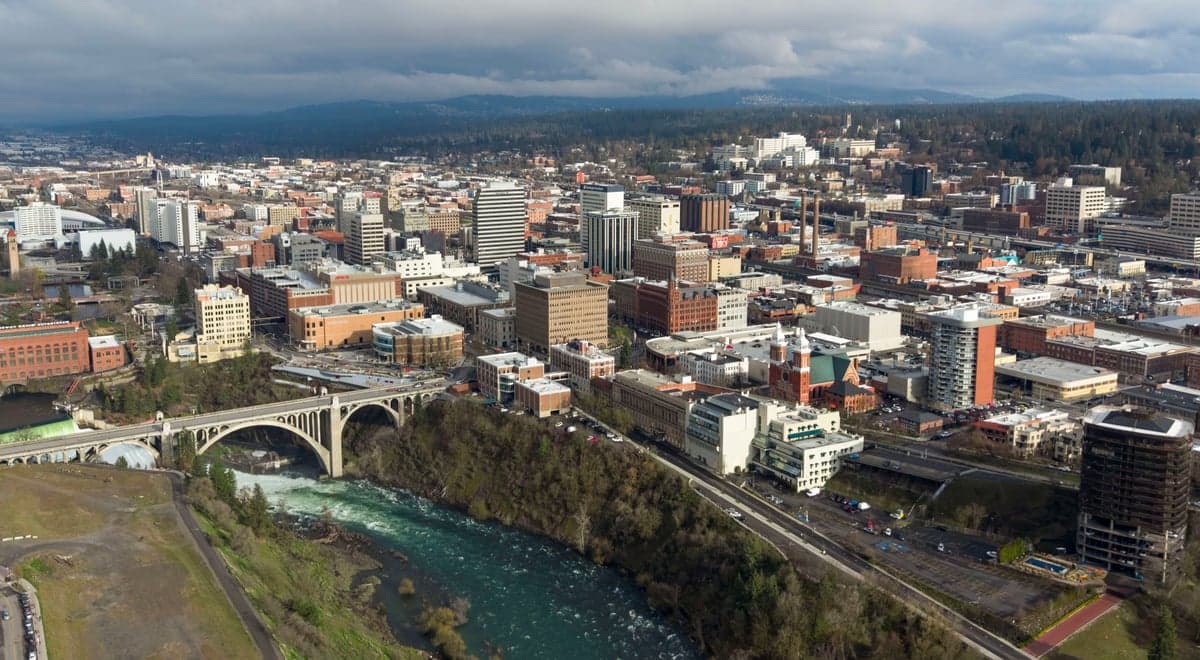

Photo: Wikipedia
Quality of Life in Spokane, WA
A high quality of life with strong walkability, manageable living costs, healthy neighborhood signals, and solid amenity access.
What does Quality of Life tell us?
Quality of Life blends cost of living, nearby amenities, socioeconomic signals, and neighborhood character. City-level scores represent the whole municipality; individual neighborhoods can differ.
What does this tell us?
Quality of Life blends cost of living, nearby amenities, socioeconomic signals, and neighborhood character. City-level scores represent the whole municipality; individual neighborhoods can differ.
Cost of Living
61% above national average
The Real Cost of Living in Spokane, WA for 2026
| Tier | Individual | Family (4) |
|---|---|---|
| Survival | $18k | $34k |
| Comfortable | $63k | $93k |
| Luxury | $119k+ | $184k+ |
| Elite (Top 5%) | $142k+ | $220k+ |
71%
The Area Signal
A metric tracking the socioeconomic signals of the area.
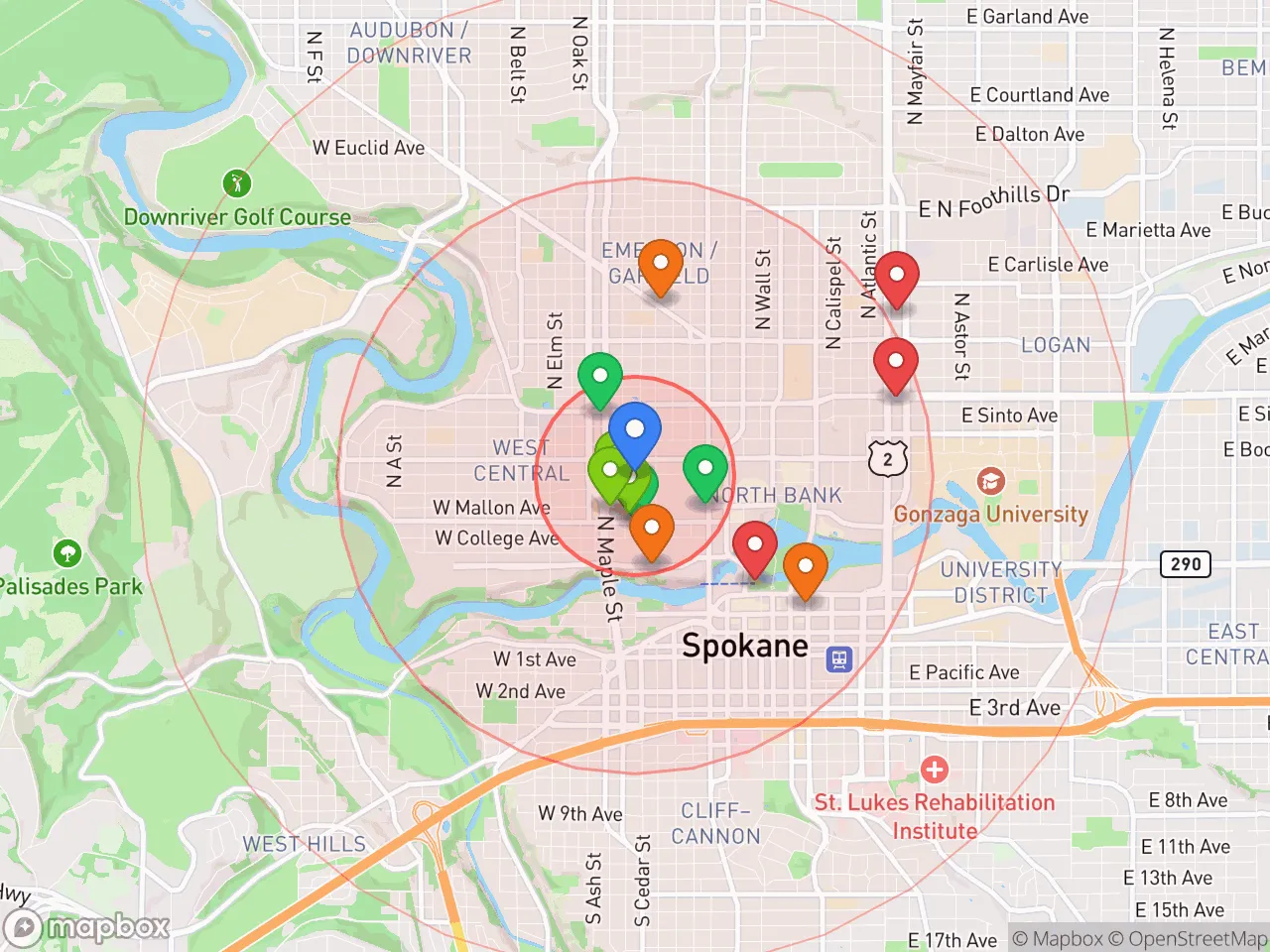
Hobbies
Explore the areaGroceries
5 within 10 miles
Gas
20 within 10 miles
Hospital
10 within 20 miles
Airport
SEA — Seattle–Tacoma International
Post Office
USPS — Spokane, WA
Critical Amenities
Quality-of-Life Analysis
Spokane, Washington, offers a quality of life defined by a middle-to-upper-middle-income demographic, with a median household income of approximately $60,000 that supports a comfortable, family-oriented lifestyle. The city attracts a mix of young professionals drawn to its growing tech and healthcare sectors, retirees seeking lower costs than Seattle or Portland, and outdoor enthusiasts who value immediate access to the Selkirk and Bitterroot mountain ranges. While not an affluent enclave like nearby Coeur d'Alene, Spokane provides a stable, blue-collar-to-professional economic base that keeps the community grounded and accessible.
Cost of living and housing affordability compared to Seattle and Coeur d'Alene
Spokane’s cost of living is roughly 8% below the national average, making it significantly more affordable than Seattle (about 50% higher) and comparable to Coeur d’Alene, though with a wider range of housing stock. The median home value sits at $326,200, which is less than half the Seattle metro median and about 15% lower than Coeur d’Alene’s median, offering buyers a tangible price advantage. Renters benefit from a median rent of $1,141, well below the national average of $1,400, and substantially cheaper than Seattle’s $2,100. The average commute of just 21.2 minutes is a standout feature—shorter than the national average of 26 minutes and dramatically less than Seattle’s 35-minute grind—allowing residents to reclaim time for family or recreation. However, home values have risen roughly 60% since 2019, pushing first-time buyers toward older homes in neighborhoods like Hillyard or the South Hill, where inventory is tighter.
Schools, amenities, and what daily life feels like for families
Daily life in Spokane revolves around a compact urban core with a strong neighborhood identity. The Spokane Public Schools district serves over 29,000 students, with standout options like Lewis and Clark High School (ranked in the top 10% of Washington schools) and the magnet-focused Spokane Public Montessori. For higher education, Gonzaga University and Washington State University Spokane anchor the east side, providing cultural events and a steady influx of young residents. Amenities include the 100-acre Riverfront Park, the Spokane Arena for concerts and minor-league hockey, and the Spokane Valley Mall for retail. The city’s 76 parks and the 37-mile Centennial Trail along the Spokane River give families year-round outdoor options, from skiing at Mount Spokane (45 minutes away) to kayaking on the river. The food scene is modest but growing, with local staples like the Mizuna Restaurant and Frank’s Diner offering farm-to-table and classic American fare. Traffic is rarely a frustration, and most errands can be done within a 15-minute drive from any neighborhood.
Spokane is best suited for people who value affordability, outdoor recreation, and a slower pace than the West Coast’s major metros. Families with school-age children will find strong public schools and safe, walkable neighborhoods like the South Hill or Perry District. Remote workers and retirees benefit from the low housing costs and short commute, while outdoor enthusiasts can ski, hike, or fish within an hour of downtown. Those seeking a vibrant nightlife or high-end dining may find Spokane limited, but for anyone prioritizing financial breathing room and access to nature, the city delivers a balanced, sustainable quality of life.

Crime in Spokane, WA
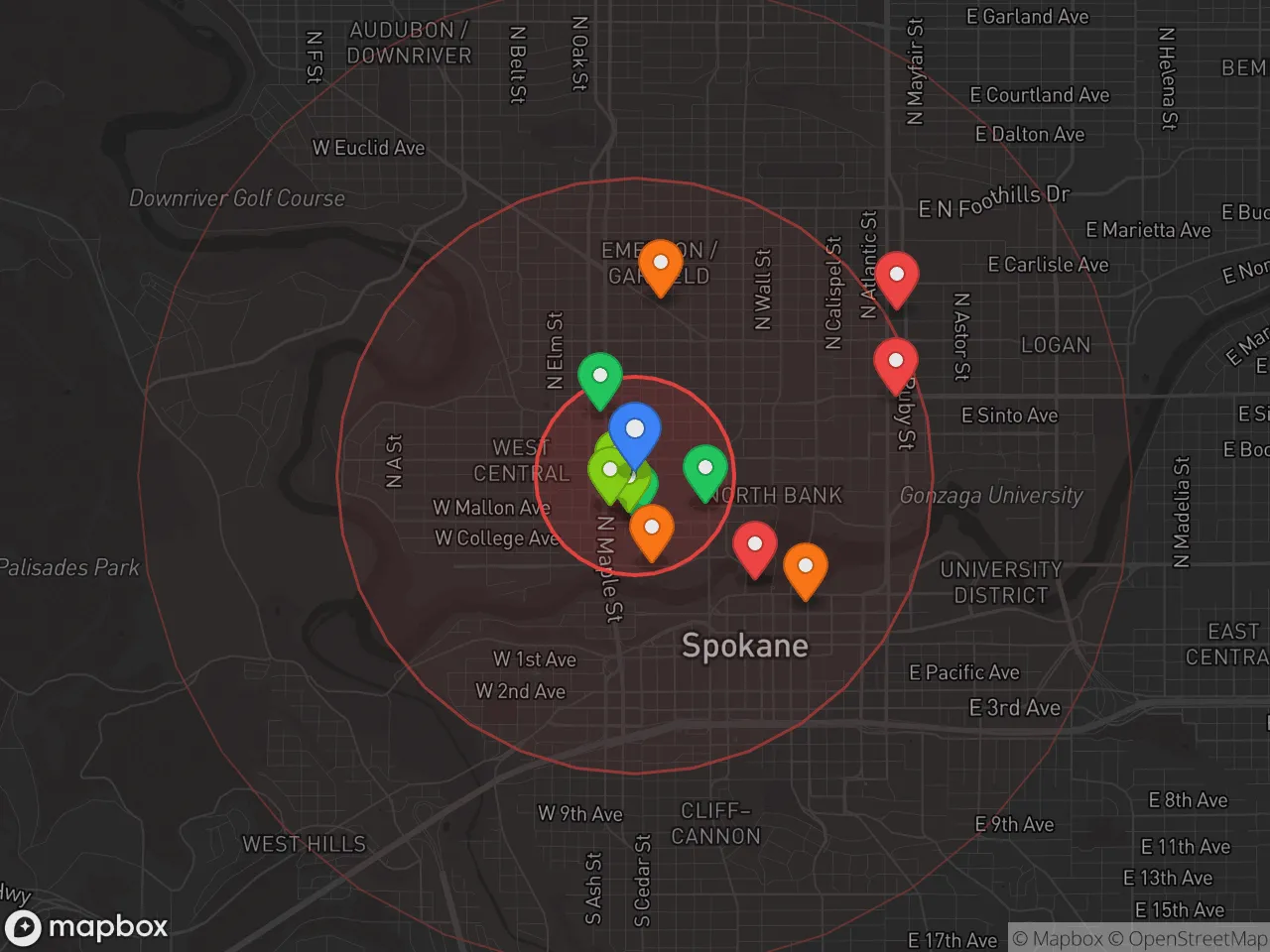
Higher crime rates than 71% of comparable U.S. locations.
Violent CrimeViolent Crime Analysis
Property CrimeProperty Crime Analysis
Crime Analysis
Spokane, Washington, faces a serious public safety challenge, with crime rates that significantly exceed both state and national averages. The city recorded a violent crime rate of 606.2 incidents per 100,000 residents and a property crime rate of 4,363.1 per 100,000 in the most recent data, placing it among the more dangerous mid-sized cities in the Pacific Northwest. These figures reflect a community grappling with the consequences of progressive criminal justice policies that prioritize offender rehabilitation over public safety, a pattern seen in many liberal-leaning jurisdictions in Washington state.
Crime in context
Spokane’s violent crime rate is roughly 60% higher than the national average and nearly double the Washington state average. The property crime rate is even more stark, exceeding the national average by approximately 80%. These numbers place Spokane in the bottom tier of U.S. cities for safety, comparable to other Western metros with similar judicial philosophies. The Spokane County Superior Court, like many in the state, operates under sentencing guidelines and bail reform measures that critics argue reduce accountability for repeat offenders. Washington’s 2021 Blake decision, which decriminalized simple drug possession, has further strained law enforcement’s ability to address property crime linked to addiction, as officers often lack tools to detain individuals for low-level offenses.
What residents experience
For residents, the high property crime rate translates into a near-constant risk of vehicle break-ins, package theft, and home burglaries, particularly in neighborhoods near downtown and along major transit corridors. Violent crime, while less frequent, is concentrated in specific areas and often involves disputes among individuals known to one another, though random assaults and robberies do occur. The Spokane Police Department has struggled with staffing shortages, leading to slower response times for non-emergency calls. Many residents report feeling unsafe walking alone after dark in central districts, and businesses routinely invest in private security and surveillance systems. The city’s homeless population, estimated at over 2,000, contributes to visible street disorder and public drug use, which further erodes the sense of safety in commercial areas like the Garland District and Browne’s Addition.
Neighborhood-level safety varies considerably. The South Hill and Moran Prairie areas generally experience lower crime rates, while the West Central, East Central, and Hillyard neighborhoods see higher concentrations of both violent and property offenses. Newcomers are advised to research specific blocks rather than relying on citywide averages, as a few blocks can separate relatively safe residential streets from high-crime corridors. The Spokane Police Department’s online crime map provides block-level data, and local real estate agents often share safety information with prospective buyers. Despite some community policing initiatives, the overall trajectory remains concerning, driven by systemic leniency in the justice system that fails to deter repeat offenders.
* Values derived from national, state, county, city and local statistics and may differ in a specific area. Last updated: 2026-04-25T13:52:35.000Z
Narrative content on this page is AI-generated and may contain mistakes. Verify any details that matter before acting on them.
ReloMaps may earn a commission from affiliate links at no extra cost to you.

