Photo: Wikipedia
Political ClimatePolitical Climate in Spokane, WA
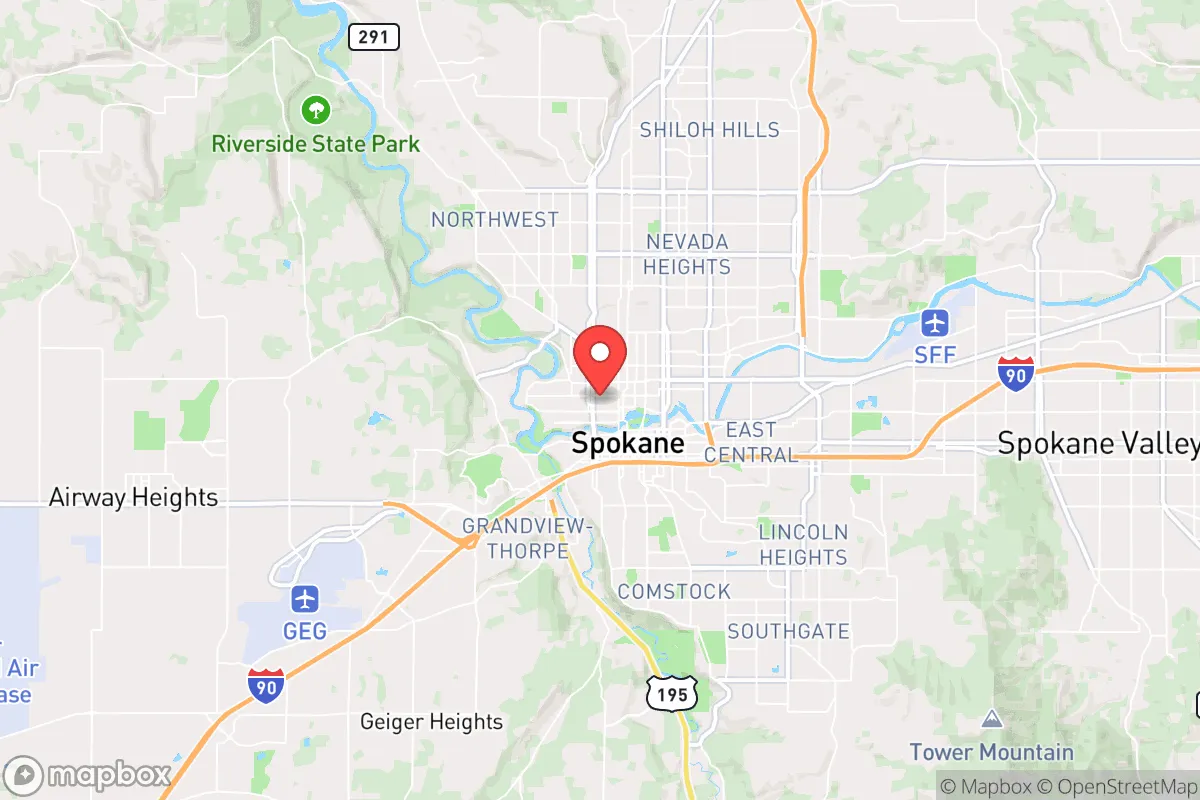
District shown is the primary district for this city’s centroid. Cities may span multiple districts.
Local Political AnalysisPolitical Analysis of Spokane, WA
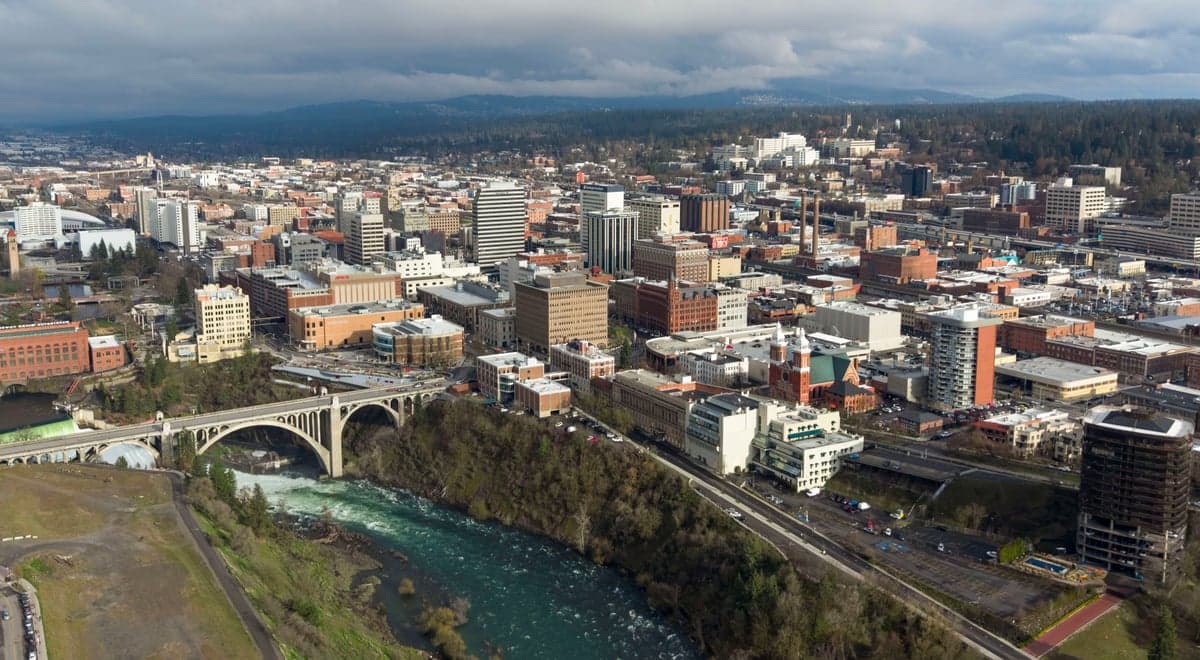
Spokane has always been a bit of a blue dot in a deep red sea, but don't let that fool you—the city's political lean is shifting, and not in a direction that sits well with folks who value personal freedoms. The Cook PVI of R+5 for the district tells you the surrounding area is solidly conservative, but Spokane proper has been trending more progressive over the last decade, and that's starting to chafe. You can feel it in the air: more city council debates about zoning and "equity" initiatives, less talk about keeping government out of your backyard.
How it compares
Drive 20 minutes north to Deer Park or head east to Coeur d'Alene, Idaho, and you're in a completely different world—places where the Second Amendment is a given and property taxes aren't being hiked for light rail studies nobody asked for. Spokane Valley, just east of the city, leans noticeably more conservative, with a stronger "live and let live" vibe. The contrast is stark: in Spokane proper, you'll see more "Hate Has No Home Here" signs than "Don't Tread on Me" flags, while the surrounding towns still fly the Gadsden with pride. It's like the city council is trying to remake Spokane into a mini-Seattle, forgetting that most of us moved here to get away from that kind of overreach.
What this means for residents
For the average resident, this shift means you're paying more attention to local elections than ever before. The city's push for things like mandatory paid sick leave and restrictive zoning changes might sound good on paper, but they come with a cost—higher rents, more red tape for small businesses, and a creeping sense that your personal choices are being managed. The school board has become a battleground, with debates over curriculum transparency and parental rights heating up. If you value the freedom to run your own life without a bureaucrat's permission, you're probably watching these meetings with a knot in your stomach. The good news? The county and state legislature still have a conservative backbone, so there's a check on the worst impulses, but it's a constant tug-of-war.
One thing that hasn't changed is the strong sense of community among folks who remember the old Spokane—the one where you could buy a house on a single income and the biggest political fight was over a pothole. There's a quiet, stubborn resistance here. You'll find it at the local gun shows, the church potlucks, and the small business owner who refuses to put up a "mask required" sign even after the mandate is gone. The trajectory is concerning, but Spokane isn't Portland yet. If you're thinking of moving here, just know that the city's politics are a mixed bag—you'll find your tribe, but you'll also have to work to keep the government from getting too cozy in your life. Keep an eye on the city council races; that's where the real fight is.

State Political ClimatePolitical Climate in Washington
State Political AnalysisPolitical Environment in the State
Washington State has shifted from a purple swing state to a solidly Democratic stronghold over the past two decades, with Democrats controlling every statewide office and both legislative chambers since 2017. The state’s overall partisan lean is roughly D+8 to D+10 in presidential elections, but that number masks a deep and growing urban-rural chasm that makes life very different depending on which side of the Cascades you land. For a conservative-leaning individual or family, the key takeaway is that your experience of freedom in Washington will depend almost entirely on which county you choose to call home.
Urban vs. rural divide
The political map of Washington is a tale of two Cascades. The western third, dominated by King County (Seattle), Snohomish County (Everett), and Pierce County (Tacoma), generates roughly 60% of the state’s vote and leans heavily Democratic. King County alone cast more votes for Joe Biden in 2020 than the entire eastern half of the state. Meanwhile, the eastern two-thirds of Washington—places like Spokane, Yakima, the Tri-Cities (Kennewick, Pasco, Richland), and the rural Okanogan and Ferry counties—vote reliably Republican. The 2024 presidential race saw King County go +38 for the Democrat, while Lincoln County in the east went +42 for the Republican. The real battlegrounds are the suburban “collar counties” like Clark County (Vancouver) and Kitsap County (Bremerton), which have been trending leftward as Seattle exurbs fill with remote workers. If you want a conservative community, look to Spokane Valley, the Tri-Cities, or the small towns of the Columbia Basin—places where the local school board still debates curriculum without state interference.
Policy environment
Washington’s policy environment is among the most progressive in the nation, and it’s been tightening fast. There is no state income tax—a rare bright spot—but property taxes and sales taxes are high, and the state recently enacted a capital gains tax (effectively a wealth tax on high earners) that survived a court challenge in 2023. The regulatory posture is aggressive: the state has a near-total ban on new natural gas hookups in buildings, a strict cap-and-trade program (the Climate Commitment Act) that drives up fuel prices, and a long-term care payroll tax (the WA Cares Fund) that workers cannot opt out of. On education, Washington mandates comprehensive sex education starting in kindergarten, and the state board has adopted “social-emotional learning” standards that many parents view as ideological. Election laws are among the most liberal: universal mail-in voting with no ID requirement, same-day voter registration, and automatic voter registration through the DMV. For a conservative family, the policy environment feels like a slow squeeze on personal choice, especially around how you heat your home, educate your kids, and manage your retirement savings.
Trajectory & freedom
Washington is becoming less free by nearly every measure, and the pace has accelerated since 2020. On gun rights, the state passed a ban on “assault weapons” (SB 5078) in 2023, a magazine capacity limit, and a 10-day waiting period—all of which are being challenged in court but remain in effect. On parental rights, the state enacted a “shield law” (SB 5599) that allows minors to receive gender-affirming care without parental consent, and it prohibits Washington from cooperating with out-of-state investigations into such care. On medical autonomy, the state has a physician-assisted suicide law (the Death with Dignity Act) and a broad abortion protection law that covers late-term procedures. On property rights, the state’s Growth Management Act heavily restricts rural development, and a 2023 law (HB 1110) effectively eliminated single-family zoning in most cities, allowing duplexes and fourplexes in neighborhoods that were previously exclusively detached homes. The trajectory is clear: more mandates, fewer opt-outs, and a state government that increasingly views local control and individual choice as obstacles to its agenda.
Civil unrest & political movements
Washington has a long history of political activism, but the flashpoints have intensified. The 2020 CHOP/CHAZ occupation in Seattle’s Capitol Hill neighborhood—a six-block autonomous zone where police withdrew and violence erupted—remains a national symbol of progressive governance gone awry. Since then, the state has seen organized protests around school board meetings (especially in suburban districts like Northshore and Lake Washington), where parents have clashed with administrators over mask mandates and curriculum. On the right, the Washington State Republican Party has struggled to gain traction, but grassroots groups like the Washington Gun Law Network and the Family Policy Institute of Washington have been active in litigation and lobbying. Immigration politics are a live wire: Washington is a “sanctuary state” (SB 5497, 2019), meaning local law enforcement cannot cooperate with federal immigration authorities, and the state has funded legal defense for undocumented residents. Election integrity remains a concern for many conservatives, given the state’s mail-in system and the fact that Washington was one of the first states to adopt automatic voter registration. A new resident will notice the political tension most acutely in the suburbs—places like Puyallup or Marysville—where the culture war over schools and public health is fought in real time.
Projection
Over the next 5-10 years, Washington will likely become more progressive, not less. The demographic trends are clear: the state is growing fastest in the urban counties (King, Snohomish, Pierce) and in Clark County, which is absorbing Portland’s overspill. The rural counties are losing population or stagnating. The state legislature has a Democratic supermajority in both chambers as of 2025, which means the party can pass tax increases and policy changes without a single Republican vote. Expect a state-level wealth tax, further restrictions on firearms, and possibly a move toward single-payer healthcare. The one wild card is the state’s housing crisis: if the cost of living in Seattle and its suburbs continues to skyrocket, some families may decamp to Idaho or Montana, which could slow the leftward shift. But for now, the political momentum is firmly in one direction. A conservative moving to Washington today should assume that the state government will continue to expand its reach into your home, your wallet, and your children’s education.
Bottom line for a new resident: If you’re a conservative individual or parent, Washington is not a lost cause—but you need to pick your county carefully. The Tri-Cities, Spokane Valley, and the small towns of the Columbia Basin offer a much higher degree of personal freedom and community alignment than Seattle or its suburbs. You’ll pay no state income tax, but you’ll face high property taxes, a cap-and-trade fuel surcharge, and a state government that is actively hostile to gun rights, parental choice, and local control. The trade-off is the natural beauty and economic opportunity of the Pacific Northwest. Just know that the political winds are blowing against you, and the state capital in Olympia shows no sign of changing course.
* Values derived from national, state, county, city and local statistics and may differ in a specific area. Last updated: 2026-04-25T13:52:35.000Z
Narrative content on this page is AI-generated and may contain mistakes. Verify any details that matter before acting on them.
ReloMaps may earn a commission from affiliate links at no extra cost to you.

