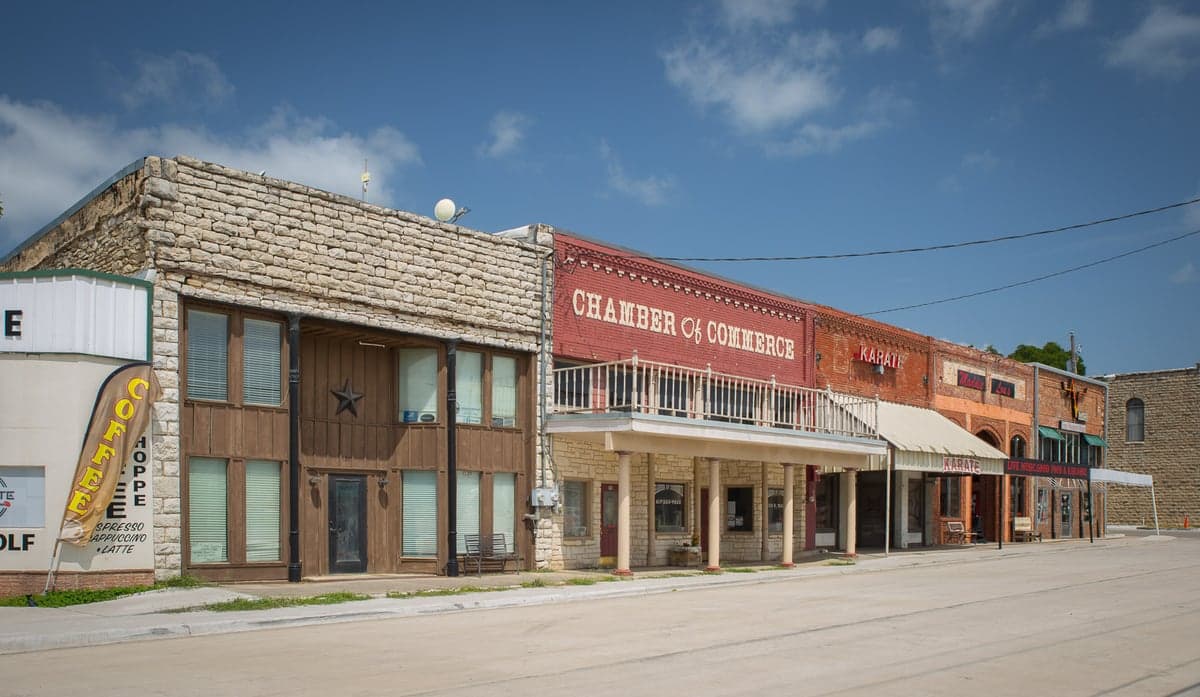
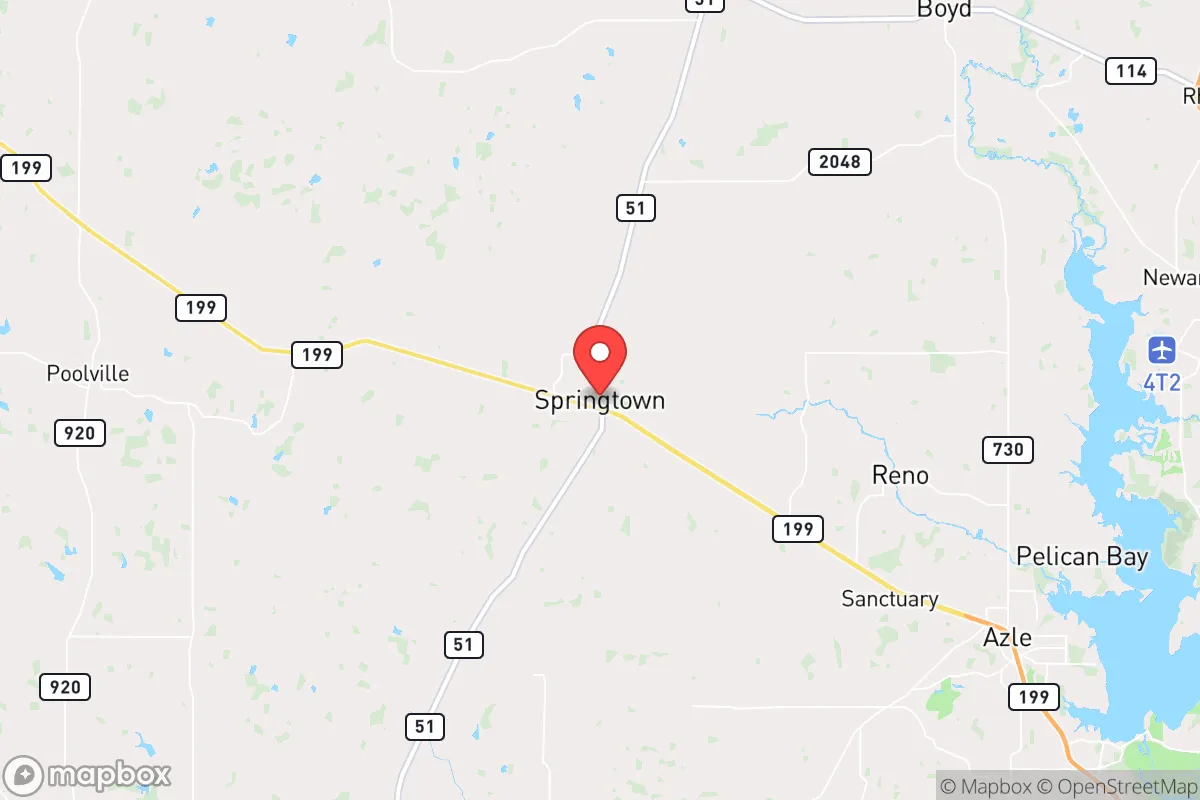
Photo: Wikipedia
Quality of Life in Springtown, TX
Above-average quality of iife. The area offers a reasonable cost of living, decent mobility, and a mix of neighborhood amenities.
What does Quality of Life tell us?
Quality of Life blends cost of living, nearby amenities, socioeconomic signals, and neighborhood character. City-level scores represent the whole municipality; individual neighborhoods can differ.
What does this tell us?
Quality of Life blends cost of living, nearby amenities, socioeconomic signals, and neighborhood character. City-level scores represent the whole municipality; individual neighborhoods can differ.
Cost of Living
1% below national average
The Real Cost of Living in Springtown, TX for 2026
| Tier | Individual | Family (4) |
|---|---|---|
| Survival | $39k | $74k |
| Comfortable | $64k | $94k |
| Luxury | $84k+ | $130k+ |
| Elite (Top 5%) | $112k+ | $173k+ |
75%
The Area Signal
A metric tracking the socioeconomic signals of the area.


Hobbies
Explore the areaGroceries
0 within 10 miles
Gas
0 within 10 miles
Hospital
3 within 20 miles
Airport
DFW — Dallas Fort Worth International
Post Office
USPS — Weatherford, TX
Critical Amenities
Quality-of-Life Analysis
Springtown, Texas, presents a quality-of-life profile that blends small-town affordability with the economic gravity of the Dallas-Fort Worth metroplex. With a cost-of-living index of 99—essentially at the national average—and a median home value of $223,600, the area attracts a mix of young families seeking starter homes, tradespeople working in nearby industrial hubs, and retirees drawn to quieter, lower-tax living. The population skews toward middle-income households, with a notable presence of commuters who trade longer drive times for more land and lower property costs than what Fort Worth proper offers.
Cost of living, housing, and affordability compared to Fort Worth and Weatherford
Springtown’s housing market remains a clear value proposition when stacked against its larger neighbors. The median home value of $223,600 sits roughly 30% below Fort Worth’s median and about 15% below Weatherford’s, making it one of the more attainable entry points in Parker County. Median rent of $1,305 aligns closely with the national figure, though it undercuts the DFW regional average by roughly $200 per month. The trade-off is a punishing average commute of 39.8 minutes—among the longest in the metroplex—as most residents drive to jobs in Fort Worth, AllianceTexas, or even Dallas. Property taxes in Parker County hover around 2.4%, which is typical for Texas but adds roughly $5,400 annually on a median-priced home. For buyers willing to accept the drive, Springtown offers a path to homeownership that is increasingly out of reach in Tarrant County’s closer-in suburbs.
What daily life is like for families: schools, amenities, and local rhythm
Daily life in Springtown revolves around the Springtown Independent School District, which serves roughly 3,200 students across five campuses. The district earns a B rating from Niche, with Springtown High School noted for its agricultural science and vocational programs—a draw for families who want hands-on career tracks alongside traditional academics. Amenities are modest but functional: the town’s downtown core features a handful of locally owned restaurants, a grocery store, and a hardware store, while most retail and medical needs require a 15-minute drive to Weatherford or a 25-minute drive to Fort Worth. The community’s rhythm is shaped by seasonal events like the Springtown Rodeo and the Parker County Frontier Days parade, which reinforce a tight-knit, rural character. Parks are limited to Springtown City Park and a few pocket green spaces, but nearby Lake Weatherford and the Brazos River provide fishing and kayaking options within 20 minutes. For families, the biggest daily friction is the commute: parents often coordinate school drop-offs and pickups around a 40-minute drive to work, making after-school activities a logistical puzzle.
The resident who will thrive in Springtown is someone who prioritizes space and affordability over urban convenience. It suits remote workers who can avoid the daily commute, tradespeople employed in the growing industrial corridor along US 287, and families who value a slower pace and lower housing costs over proximity to nightlife or high-end shopping. Retirees on fixed incomes also find the cost-of-living index of 99 and the absence of state income tax appealing, though they should factor in the limited local healthcare options—most specialist care requires a trip to Fort Worth. Springtown is not a place for those seeking walkability, cultural density, or short commutes; it is a pragmatic choice for people willing to trade time in the car for a house with a yard and a community where neighbors still know each other’s names.

Crime in Springtown, TX
Lower crime rates than 90% of comparable U.S. locations.
Violent CrimeViolent Crime Analysis
Property CrimeProperty Crime Analysis
Crime Analysis
Springtown, Texas, reports a violent crime rate of 110.7 per 100,000 residents and a property crime rate of 479.7 per 100,000, figures that place it well below both the Texas state average and national benchmarks. This small city in Parker County, roughly 30 miles northwest of Fort Worth, benefits from its location outside the direct orbit of a large, progressive metro area, where local law enforcement and judicial philosophies tend to prioritize public safety over offender-centric policies. For residents seeking a community with lower crime risk than the surrounding Dallas-Fort Worth metroplex, Springtown presents a statistically safer alternative.
Crime in context
When compared to national data, Springtown’s violent crime rate is roughly 70% lower than the U.S. average of approximately 380 per 100,000, and its property crime rate is about 40% lower than the national figure of roughly 2,500 per 100,000. The city’s violent crime rate is also significantly below the Texas average of around 450 per 100,000. This disparity is notable because many small cities near large metro areas experience spillover crime from urban centers, particularly when those centers are governed by progressive district attorneys who deprioritize prosecution of property and drug offenses. Springtown’s location in Parker County, a jurisdiction known for a more traditional, law-and-order approach to criminal justice, helps insulate it from these trends. The data suggests that the city’s low crime rates are not an anomaly but a consistent outcome of local policy and enforcement priorities.
What residents experience
Residents of Springtown typically describe a quiet, rural-suburban environment where violent confrontations are rare and property crimes like burglary and theft are infrequent but not unheard of. The most common safety concerns reported locally involve occasional vehicle break-ins and theft from unlocked sheds or garages, rather than armed robbery or assault. The city’s small population—around 3,000—means that most crime is opportunistic rather than organized. Because Springtown is not within the jurisdiction of a large, progressive prosecutor’s office, offenders who are caught face a higher likelihood of meaningful consequences, which acts as a deterrent. Daily life for families involves minimal fear of victimization, and many residents feel comfortable leaving doors unlocked during the day, a stark contrast to the experience in nearby Fort Worth or Dallas, where progressive criminal justice reforms have been linked to rising recidivism and reduced public confidence.
Neighborhood-level variation in Springtown is modest but worth noting. The older, established areas near the historic downtown square and along Highway 199 tend to have the lowest incident reports, while newer subdivisions on the outskirts occasionally see more property crime due to easier access from county roads. The city’s police department maintains a visible presence, and community watch programs are active in several residential blocks. Overall, Springtown’s safety profile is a direct reflection of its conservative judicial environment and the absence of the soft-on-crime policies that plague many larger Texas cities.
* Values derived from national, state, county, city and local statistics and may differ in a specific area. Last updated: 2026-04-14T23:47:27.000Z
Narrative content on this page is AI-generated and may contain mistakes. Verify any details that matter before acting on them.
ReloMaps may earn a commission from affiliate links at no extra cost to you.

