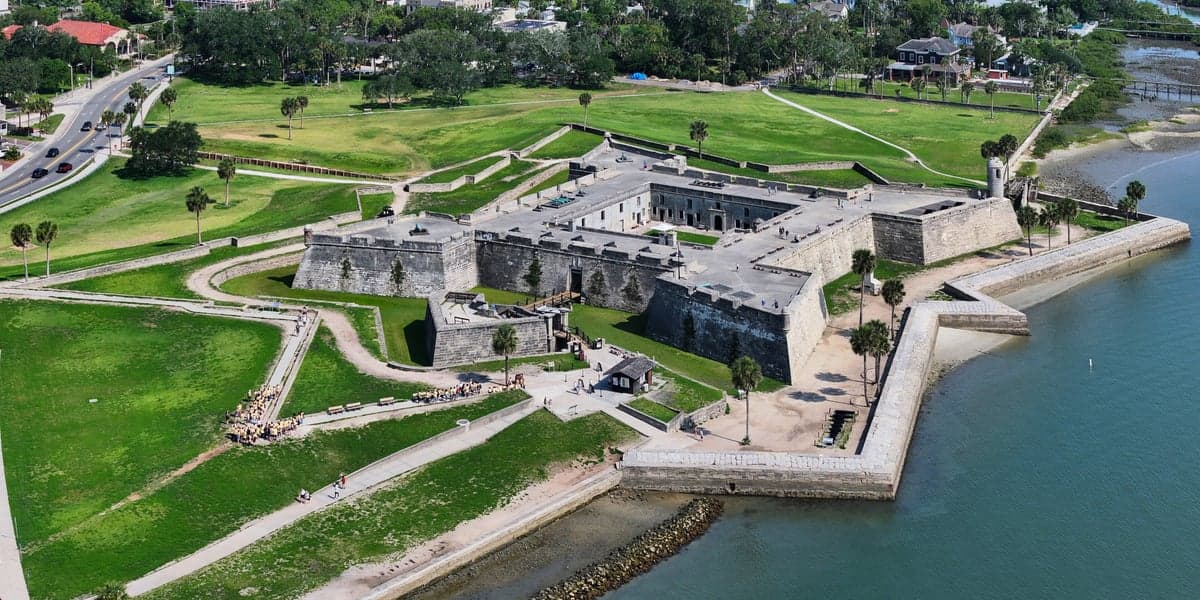
Photo: Wikipedia
Quality of Life in St. Augustine, FL
Above-average quality of iife. The area offers a reasonable cost of living, decent mobility, and a mix of neighborhood amenities.
What does Quality of Life tell us?
Quality of Life blends cost of living, nearby amenities, socioeconomic signals, and neighborhood character. City-level scores represent the whole municipality; individual neighborhoods can differ.
What does this tell us?
Quality of Life blends cost of living, nearby amenities, socioeconomic signals, and neighborhood character. City-level scores represent the whole municipality; individual neighborhoods can differ.
Cost of Living
39% above national average
The Real Cost of Living in St. Augustine, FL for 2026
| Tier | Individual | Family (4) |
|---|---|---|
| Survival | $25k | $47k |
| Comfortable | $80k | $117k |
| Luxury | $143k+ | $222k+ |
| Elite (Top 5%) | $169k+ | $261k+ |
69%
The Area Signal
A metric tracking the socioeconomic signals of the area.


Hobbies
Explore the areaGroceries
3 within 10 miles
Gas
0 within 10 miles
Hospital
3 within 20 miles
Airport
MCO — Orlando International
Post Office
USPS — St. Augustine, FL
Critical Amenities
Quality-of-Life Analysis
St. Augustine presents a quality of life defined by historic charm and coastal access, but its affluence comes at a significant premium. The city's cost of living index of 139 (39% above the national average) places it well above nearby Jacksonville (index 96) and even pricier than the Florida state average of 103. This economic reality attracts a mix of affluent retirees, remote professionals, and second-home owners, while pricing out many service-sector and younger workers who form the backbone of the local tourism economy.
Cost of living, housing affordability, and how St. Augustine compares to nearby areas
Housing is the primary driver of St. Augustine's elevated cost of living. The median home value of $409,200 is roughly 60% higher than the national median and nearly double the median in neighboring St. Johns County's less tourist-heavy areas. Renters face a median monthly cost of $1,560, which is manageable for dual-income households but strains single earners on the local median wage of roughly $45,000. By contrast, Jacksonville's median rent sits closer to $1,300, and its median home value hovers around $290,000, making it a more affordable alternative for commuters. The average commute in St. Augustine is a relatively short 20.5 minutes, reflecting the city's compact geography and the fact that many residents work locally in tourism, hospitality, or healthcare. However, those who commute to Jacksonville for higher-paying jobs face a 45- to 60-minute drive on I-95, which can erode the time savings. Property taxes in St. Johns County are moderate at roughly 0.85% of assessed value, but homeowners insurance premiums are among the highest in the nation due to hurricane risk, adding $3,000–$5,000 annually to housing costs.
What daily life is like for families, retirees, and remote workers
Daily life in St. Augustine revolves around its walkable historic district, abundant beaches, and a slower pace that appeals strongly to retirees and families with school-age children. The St. Johns County School District is consistently ranked among Florida's top five, with schools like Pedro Menendez High School and Sebastian Middle School earning A ratings. Amenities include the St. Augustine Amphitheatre for concerts, the Castillo de San Marcos for history buffs, and Anastasia State Park for outdoor recreation. Remote workers benefit from fiber-optic internet availability in newer developments, though older historic homes may lack modern wiring. The city's rhythm is heavily seasonal: summer brings crowds and traffic congestion on A1A and US-1, while winter offers quieter streets and mild weather. Healthcare access is solid, with Flagler Hospital providing comprehensive services and UF Health Jacksonville about 45 minutes north for specialized care. Dining and shopping are tourist-oriented in the historic core, but residents gravitate toward local staples like The Floridian for Southern fare and the St. Augustine Farmers Market on Saturdays.
St. Augustine is best suited for those who can absorb its high housing costs and value historic character over modern convenience. Retirees with fixed incomes from pensions or investments will find the walkable downtown and mild winters appealing, while families willing to pay a premium for top-rated schools will thrive in neighborhoods like Davis Shores or Anastasia Island. Remote workers earning national-level salaries can offset the cost of living, but those dependent on local wages—especially in retail or hospitality—will likely struggle to afford housing. For anyone seeking a more budget-friendly alternative with similar coastal access, nearby Palm Coast or St. Augustine Beach (just across the bridge) offer lower home prices and rents while keeping the historic district within a 10-minute drive.

Crime in St. Augustine, FL
Lower crime rates than 100% of comparable U.S. locations.
Violent CrimeViolent Crime Analysis
Property CrimeProperty Crime Analysis
Crime Analysis
St. Augustine, Florida, presents an exceptionally safe profile, with reported violent crime at 0 incidents per 100,000 residents and property crime at 6.1 per 100,000. These figures place the nation’s oldest city far below both state and national averages, making it one of the safest municipalities in Northeast Florida for residents and visitors alike. The data reflects a community where serious crime is virtually nonexistent, though readers should note that St. Augustine is a small, historic city within the larger Jacksonville metropolitan area—a region where progressive judicial policies in some jurisdictions have raised concerns about recidivism and public safety.
Crime in context
St. Augustine’s violent crime rate of zero per 100,000 is a statistical outlier, dramatically lower than the Florida average of roughly 380 per 100,000 and the U.S. average of about 380 per 100,000. Property crime at 6.1 per 100,000 is similarly negligible compared to the state rate of approximately 1,700 per 100,000 and the national rate of 1,954 per 100,000. These numbers are drawn from the most recent FBI Uniform Crime Reporting data and reflect the city’s effective local policing and tight-knit community structure. However, because St. Augustine sits within the broader St. Johns County and is adjacent to the Jacksonville metro area, residents should be aware that progressive prosecutorial policies in Duval County (Jacksonville) have been linked to higher recidivism and softer sentencing for property offenders, which can spill over into neighboring communities.
What residents experience
Daily life in St. Augustine is characterized by a strong sense of security. The city’s historic district, with its heavy tourist traffic and visible police presence, sees minimal street crime. Residents report that petty theft and vehicle break-ins are rare, and violent confrontations are almost unheard of. The local St. Augustine Police Department maintains a community-oriented approach, with officers regularly patrolling on foot and bicycle. For families and retirees, the low crime rates translate into peace of mind, though the proximity to Jacksonville means that occasional property crimes—such as package theft or minor vandalism—can occur, particularly in areas near major roadways. The city’s small size and active neighborhood watch programs further reinforce safety.
Neighborhood-level variation is minimal but worth noting. The historic downtown and residential areas like Anastasia Island and Lincolnville all report similarly low crime rates, with no statistically significant hotspots. The primary safety consideration is not violent crime but rather traffic-related incidents and occasional tourist-related disturbances. For those concerned about the broader metro area’s justice system, St. Augustine’s local courts and law enforcement operate independently from Jacksonville’s, maintaining a conservative, victim-centered approach that prioritizes public safety over offender leniency. This local autonomy helps insulate the city from the negative effects of progressive prosecutorial policies seen in larger urban centers.
* Values derived from national, state, county, city and local statistics and may differ in a specific area. Last updated: 2026-04-15T23:48:50.000Z
Narrative content on this page is AI-generated and may contain mistakes. Verify any details that matter before acting on them.
ReloMaps may earn a commission from affiliate links at no extra cost to you.

