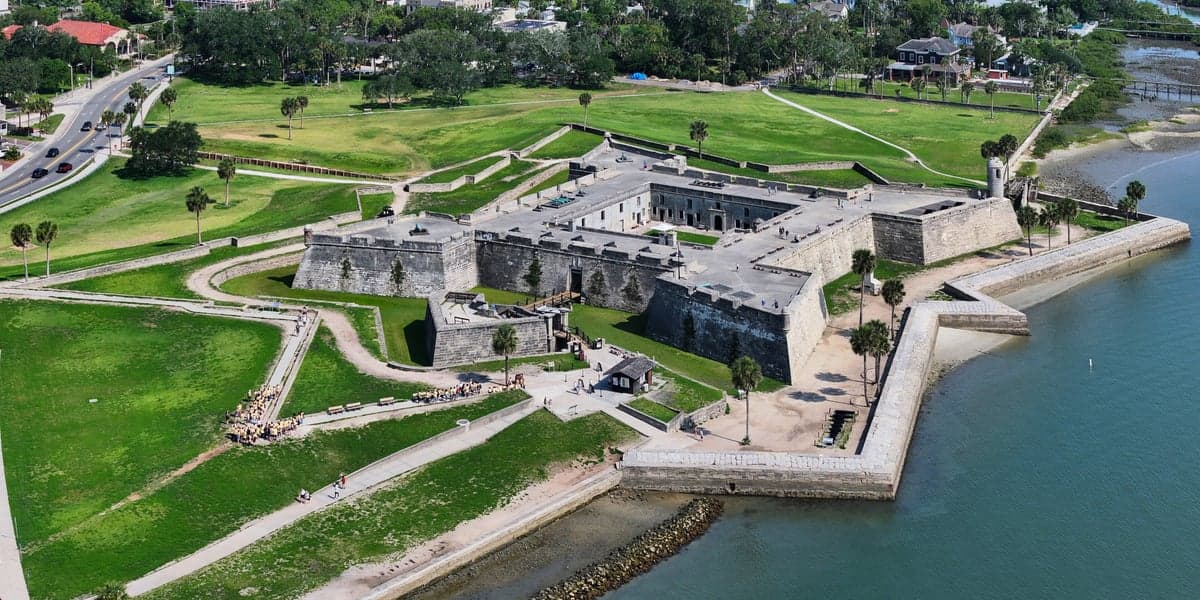
Photo: Wikipedia
Strategic Assessment of St. Augustine, FL
Multiple tactical vulnerabilities. Population density, target proximity, or disaster risk are likely compounding. A retreat property and exit planning is required.
What does the Strategic Assessment tell us?
Our Strategic Assessment grades tactical survivability of an area. Major population centers, military targets, fallout zones, natural disasters, and border exposure all drive risk — lower exposure means a more defensible position in a crisis.
This is heavily inspired by Joel Skousen's Strategic Relocation book. Highly recommended you checkout the book ($)What does this tell us?
Our Strategic Assessment grades tactical survivability of an area. Major population centers, military targets, fallout zones, natural disasters, and border exposure all drive risk — lower exposure means a more defensible position in a crisis.
This is heavily inspired by Joel Skousen's Strategic Relocation book. Highly recommended you checkout the book ($)Strategic Pillars

Key Distances
Regional Safe Places
Below is our recommended "safe zones" in Florida and the surrounding area based on our strategic heuristics. For most people, it's unrealistic to live in a “safe zone” full-time due to work, family or other personal reasons. They tend to be more rural. However, many of these areas are perfect for second homes and retreat properties that double as a vacation home or even a short-term rental.

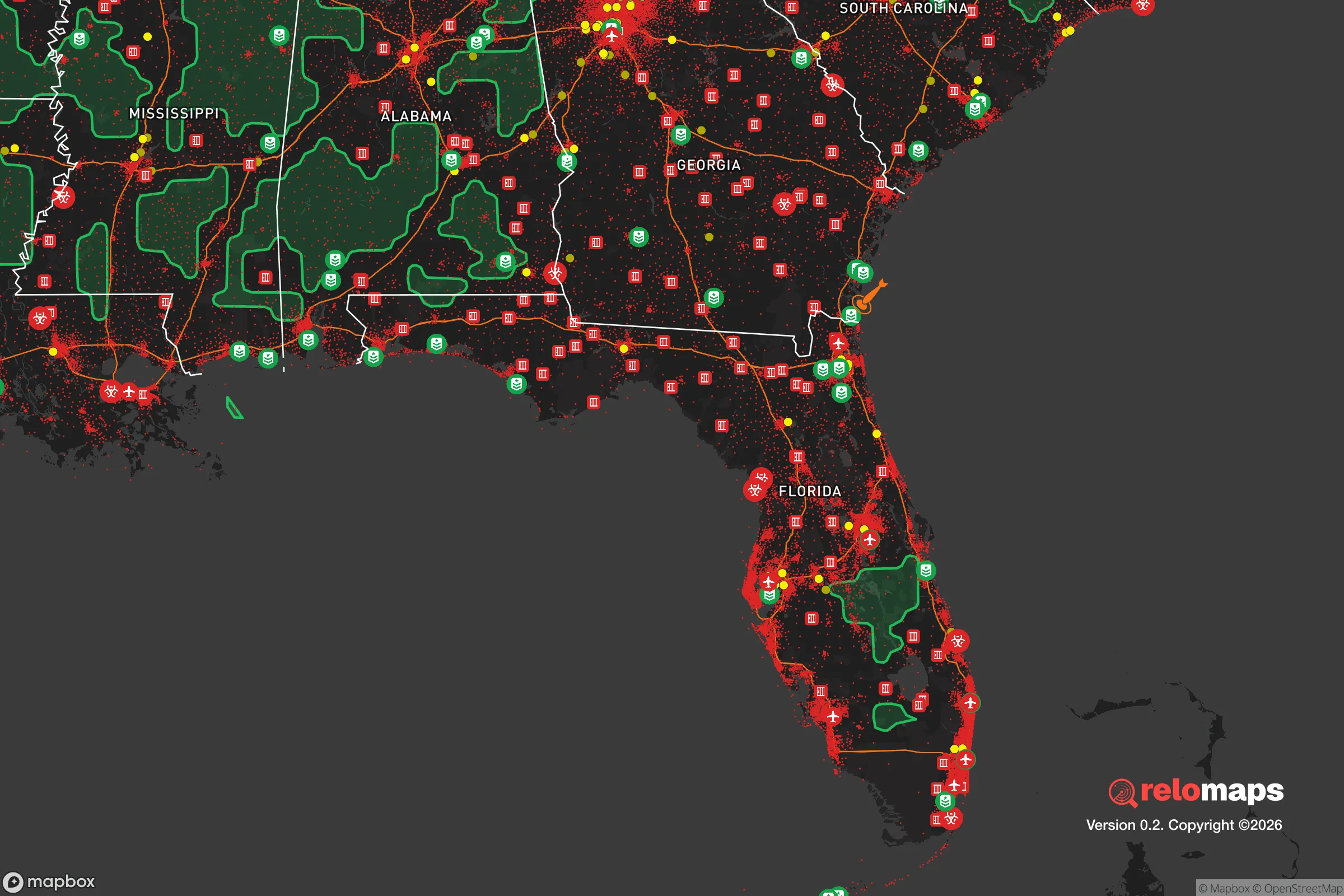


Important Note: For informational purposes only. This does not mean nothing bad ever happens in the green zones. Please use common sense. This is based on public data and modeled with AI. We tried to take a conservative approach but mistakes happen. We update this regularly as new information becomes available.
Solar Generator Recommendations
Backup power matters more here than in safer locations. We've picked three solar generators across budgets and capacity tiers — start with the budget unit if you only need a few essentials, or step up if you want to run a fridge and HVAC for days at a time.

Jackery Portable Power Station Explorer 300
Budget OptionPower on the Go: Weighing only 11 lbs, it's convenient to set up and store with book-sized foldable solar panels

BLUETTI Portable Power Station AC180
Designed for both indoor and outdoor scenarios, AC180 is highly capable as it has a robost capacity and continuous output power.

EF ECOFLOW DELTA Pro Ultra Power Station
Upgraded PickEcoFlow DELTA Pro Ultra is a whole-home energy system designed to grow with your family. Integrated with the Smart Home Panel 2, it scales to meet your evolving energy needs — keeping your home powered, intelligent, and secure through every stage of life.
We earn a commission, at no additional cost to you.
Strategic Assessment Analysis
St. Augustine offers a mixed strategic picture for the prepper-minded relocator. Its coastal position provides natural barriers and access to maritime escape routes, but its proximity to Jacksonville—a major population center and potential fallout zone—introduces significant risk. The city’s historic infrastructure and tourism-dependent economy create vulnerabilities that a survivalist must weigh carefully against its defensive advantages.
Geographic position and natural defensive advantages
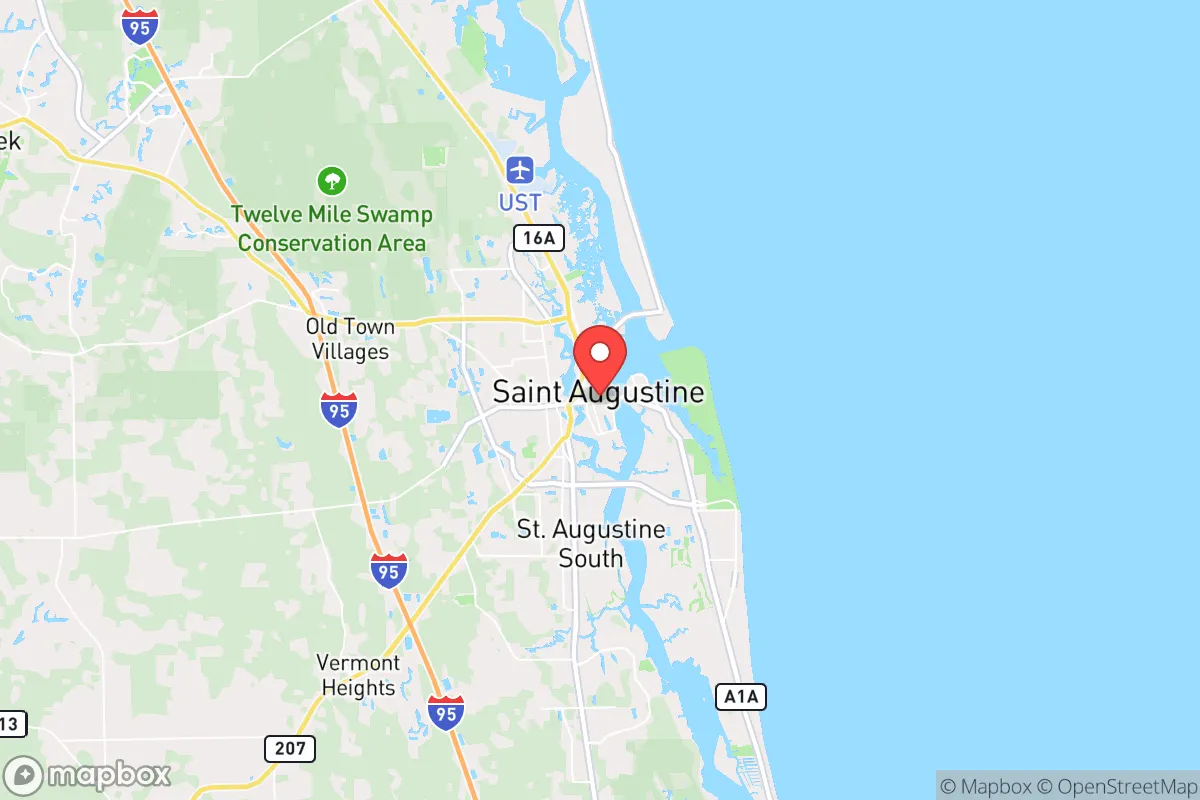
St. Augustine sits on a peninsula between the Matanzas River and the Atlantic Ocean, a layout that historically provided natural moat-like defenses. The Intracoastal Waterway runs through the area, offering a navigable escape corridor north toward Georgia or south toward Cape Canaveral. The surrounding terrain is mostly flat, with dense maritime forests and salt marshes that limit overland approach vectors. The St. Johns River, just west of the city, is a major freshwater artery that could support small-boat logistics and fishing. The area’s subtropical climate means year-round growing seasons for food production, though hurricane risk is real. The city’s elevation averages only 10–15 feet above sea level, which is a concern for storm surge but not for long-term flooding from inland rainfall. The barrier islands—Anastasia Island, Vilano Beach—provide additional buffer zones against coastal incursion, though they also create choke points that could be contested in a grid-down scenario.
Risks, exposures, and proximity to fallout-relevant landmarks
The single biggest strategic liability is St. Augustine’s proximity to Jacksonville, roughly 40 miles north. Jacksonville is home to Naval Air Station Jacksonville, Mayport Naval Station, and a major port—all high-value targets in a conflict scenario. A nuclear or conventional strike on those facilities would place St. Augustine within the fallout plume zone, depending on wind direction. The city itself has no major military installations, which reduces its direct targeting risk, but it sits within the blast radius of a large-scale event at the port or air station. Additionally, I-95 runs directly through St. Augustine, making it a natural evacuation corridor that could become a chokepoint during a mass exodus. The city’s historic downtown is dense and tourist-heavy, meaning a civil unrest event during peak season could trap thousands in a confined area with limited egress. The St. Augustine Lighthouse and the Castillo de San Marcos are iconic landmarks but offer no practical defensive value in a modern crisis—they’re more likely to become looting targets or rally points for desperate crowds.
Practical resilience for a relocator: food, water, energy, and defensibility
For a single individual or family looking to hunker down, St. Augustine’s practical resilience is a mixed bag. The area has multiple freshwater sources—the St. Johns River, the Matanzas River, and numerous artesian wells—but most are brackish or tidal, requiring filtration or desalination. The local water utility draws from the Floridan Aquifer, which is deep and generally clean, but a power outage would shut down municipal pumps. A prepper should plan for at least two weeks of stored water or a hand-pump well. Food resilience is better: the surrounding agricultural land in St. Johns County produces citrus, vegetables, and livestock, and the Atlantic provides year-round fishing. However, the local grocery supply chain is heavily dependent on trucking along I-95, which would be disrupted in a crisis. Energy-wise, the grid is vulnerable to hurricanes and cyberattacks; solar panels with battery storage are a wise investment, as the area gets over 220 sunny days per year. Defensibility is the weak point. St. Augustine’s suburban sprawl—think Palm Coast to the south, World Golf Village to the west—means most homes are in subdivisions with multiple access points. A rural property on the outskirts, like near Hastings or Elkton, would offer better standoff distance and fewer neighbors to worry about. The city’s police force is small (around 130 officers) and would be overwhelmed in a widespread event; the St. Johns County Sheriff’s Office is better resourced but covers a large area. For a relocator, the key is to avoid the tourist corridor and choose a property with a well, septic, and a defensible perimeter—preferably on a dead-end road or near a waterway for secondary egress.
The overall strategic picture for St. Augustine is one of cautious viability for the prepared relocator. Its coastal geography and historic infrastructure offer some natural defensive advantages, but the proximity to Jacksonville and the vulnerability of the tourist economy are serious drawbacks. A survivalist who secures a rural property on the outskirts, invests in off-grid water and power, and maintains a low profile could make it work—but the city itself is not a bug-out location. It’s a place to live with eyes open, not a fortress. For those willing to trade some isolation for access to maritime escape routes and a mild climate, St. Augustine is a reasonable option. But anyone expecting a safe haven from national-level chaos should look further inland, toward areas like Ocala or the Panhandle, where population density drops and strategic targets thin out.

* Values derived from national, state, county, city and local statistics and may differ in a specific area. Last updated: 2026-04-15T23:48:50.000Z
Narrative content on this page is AI-generated and may contain mistakes. Verify any details that matter before acting on them.
ReloMaps may earn a commission from affiliate links at no extra cost to you.

