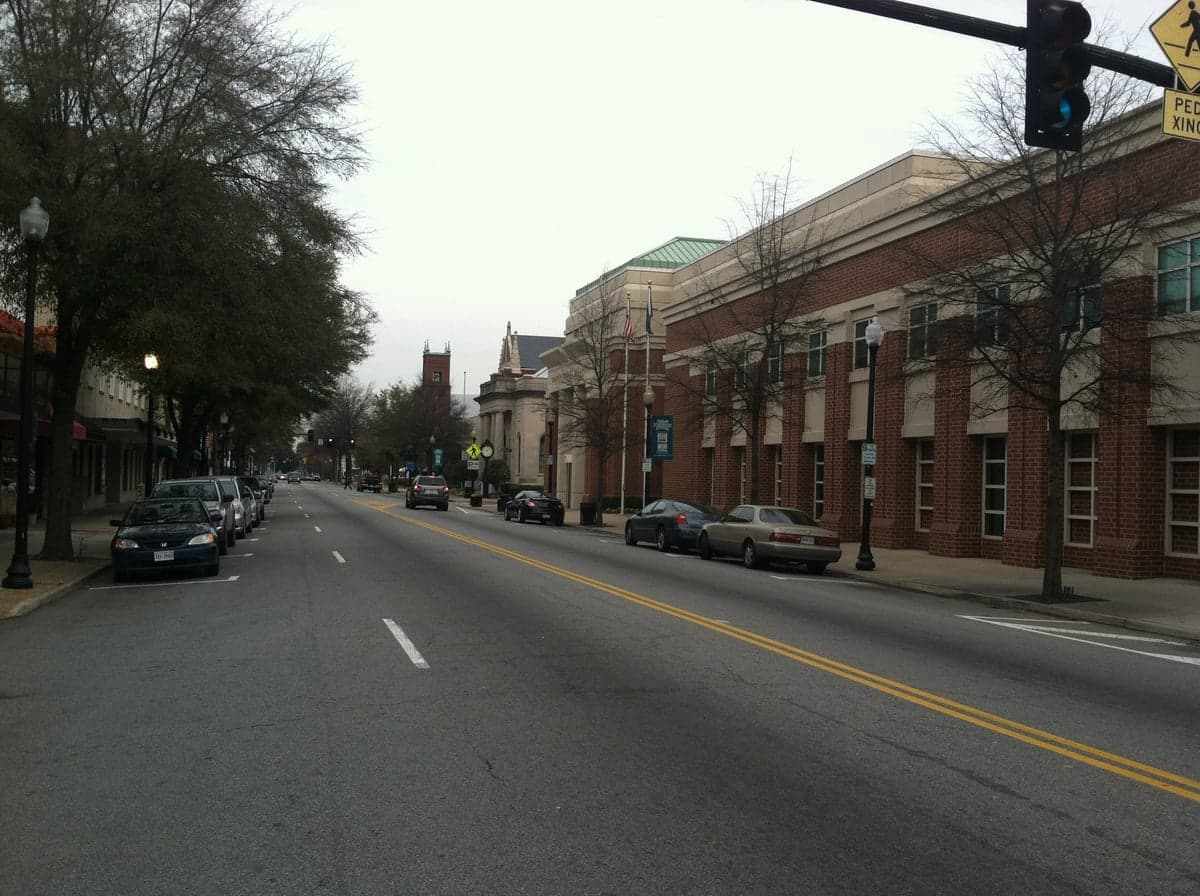
Photo: Wikipedia
Personal Sovereignty in Suffolk, VA
Viable for self-reliance. Generally workable, though some barriers may limit total independence.
What does Personal Sovereignty tell us?
Personal Sovereignty measures your capacity for self-reliance and independence with minimal government friction. Higher scores mean fewer barriers between you and the way you want to live... but it assumes you have the space you need and good neighbors.
What does this tell us?
Personal Sovereignty measures your capacity for self-reliance and independence with minimal government friction. Higher scores mean fewer barriers between you and the way you want to live... but it assumes you have the space you need and good neighbors.
State Policy
Energy independence: Importer (20% of energy produced in-state)
Personal Liberty
Homesteading

Personal Liberty Analysis
Suffolk, Virginia, offers a mixed bag for those prioritizing personal sovereignty, with the city’s rural character and lower population density providing more breathing room than much of Hampton Roads, but the commonwealth’s increasingly assertive state government imposing notable constraints. For the strategic prepper or conservative individualist, Suffolk’s appeal lies in its relative affordability and space, yet the legal and regulatory environment demands careful navigation. Virginia’s recent shift toward tighter gun laws, higher taxes, and expanded government authority means that personal autonomy here is not a given—it must be actively defended and planned around. This analysis breaks down the key sovereignty factors for single adults and families considering a relocation to Suffolk.
Tax burden and regulatory posture: How Virginia’s fiscal policies affect your autonomy
Virginia’s tax burden is moderate compared to the national average, but it is not a low-tax haven. The state income tax is a flat 5.75% on all taxable income, which hits higher earners harder than a progressive system might, and there is no standard deduction for state taxes—a quirk that reduces take-home pay for many. Property taxes in Suffolk are relatively reasonable, with a real estate tax rate of approximately $1.08 per $100 of assessed value, which is lower than neighboring Chesapeake or Virginia Beach. However, the city’s personal property tax on vehicles and boats is a recurring cost that adds up, especially for those with multiple vehicles or equipment. Sales tax is 6%, with no local option to raise it, keeping consumer costs predictable. From a regulatory standpoint, Virginia’s state government has become more interventionist in recent years, particularly in environmental and land-use policies. The Chesapeake Bay Preservation Act imposes strict buffer requirements and stormwater management rules on any development near waterways, which can limit how you use rural property. For the prepper, this means that buying a large lot does not guarantee you can build a workshop, dig a pond, or clear land without state-level permits. Suffolk’s local zoning is generally less restrictive than urban areas, but the state’s regulatory reach is a real constraint on self-sufficient land use.
Self-defense and gun law specifics: What Virginia’s restrictions mean for your rights
Virginia was once a strong Second Amendment state, but recent legislative changes have eroded that standing significantly. In 2020, the state passed a red flag law allowing courts to issue extreme risk protective orders that temporarily confiscate firearms from individuals deemed a threat, without a criminal conviction or mental health adjudication. This law relies on subjective assessments and has been used in thousands of cases, raising concerns about due process and government overreach. Additionally, Virginia now requires universal background checks on all firearm transfers, including private sales, and limits handgun purchases to one per 30 days. There is no permit required to open carry a handgun, but concealed carry requires a permit, which involves a background check and a training course. Suffolk itself is a relatively safe city, with a violent crime rate below the national average, but the surrounding region has seen property crime increases since 2020. For the survivalist, the key takeaway is that Virginia’s gun laws are trending in the wrong direction, and while Suffolk’s local enforcement is generally reasonable, the state’s legal framework is a vulnerability. Stockpiling ammunition and firearms is still legal, but the red flag law creates a pathway for confiscation that did not exist a decade ago. Those serious about self-defense should consider legal trusts, proper storage, and staying informed on legislative proposals.
Self-reliance and homesteading viability: Lot sizes, zoning, and off-grid feasibility in Suffolk
Suffolk’s rural areas offer genuine opportunities for self-reliance, but the regulatory hurdles are higher than in truly free states. Minimum lot sizes in agricultural zones are typically 1 to 3 acres, and many parcels in the northern and western parts of the city are 5 acres or larger, providing space for gardens, small livestock, and workshops. Zoning allows for chickens, goats, and even horses on sufficient acreage, though pigs and cattle may require special permits. The city’s comprehensive plan encourages agricultural use, but the Chesapeake Bay Act and local stormwater ordinances impose strict limits on impervious surfaces and require buffer zones along streams and ditches. Off-grid living is legally challenging: Virginia requires connection to the electrical grid for new construction in most areas, and solar panels must be grid-tied unless you obtain a special variance. Rainwater collection is legal but regulated, with limits on storage capacity and use. Septic systems are permitted for homes not connected to public sewer, but the health department requires regular inspections and pumping. For the prepper, the most viable path is to buy a larger parcel (10+ acres) in a remote part of Suffolk, build a conventional home with a backup generator and solar array, and use the land for food production without attempting full grid independence. The city’s water table is high in many areas, making well drilling expensive but feasible. Overall, Suffolk offers a moderate level of homesteading viability—better than suburban Virginia Beach, but far from the freedom of rural West Virginia or Tennessee.
Personal liberties: Parental rights, medical autonomy, speech, and property protections
Virginia’s record on personal liberties is mixed, with some protections and notable encroachments. Parental rights are generally respected, but the state has moved toward more centralized control over education. The Virginia Department of Education mandates certain curriculum standards, and while parents can opt their children out of specific lessons (e.g., sex education), the process requires formal requests and can be met with resistance from school administrators. Suffolk Public Schools has a conservative-leaning school board, but state-level policies on critical race theory and LGBTQ+ inclusion have created friction. Medical autonomy is under pressure: Virginia imposed one of the strictest COVID-19 vaccine mandates for state employees and healthcare workers, and the state’s health department has broad powers to issue emergency orders. The right to refuse medical treatment is legally protected, but the practical experience during the pandemic showed that government overreach can override individual choice. Free speech is protected under the First Amendment, but Virginia has hate crime laws that can be used to prosecute speech deemed threatening or harassing, and local ordinances in Suffolk prohibit disorderly conduct in ways that could be applied broadly. Property rights are relatively strong, with Virginia being a “Dillon’s Rule” state, meaning local governments only have powers explicitly granted by the state. This limits Suffolk’s ability to impose its own restrictions, but it also means that state-level preemption on issues like firearm regulation overrides local autonomy. For the conservative individualist, the overall picture is one of gradual erosion: the state is not hostile to personal sovereignty, but it is not a defender of it either.
Compared to other regions in the Southeast, Suffolk sits in a middle tier for personal sovereignty. It offers more space and lower costs than Northern Virginia or Richmond, but the state’s tax burden, gun restrictions, and regulatory complexity are worse than in Florida, Tennessee, or Texas. For the prepper or survivalist, Suffolk is a compromise: you can find affordable land, a relatively safe community, and a slower pace of life, but you must accept that the state government will limit your autonomy in key areas. The best strategy is to treat Suffolk as a base of operations—buy land, build a resilient home, and stay engaged in local politics to push back against further encroachments. If absolute freedom is your priority, look further south or west. If you need to stay in Virginia for work or family, Suffolk is one of the better options, but it requires constant vigilance and a willingness to adapt.

* Values derived from national, state, county, city and local statistics and may differ in a specific area. Last updated: 2026-05-02T02:13:14.000Z
Narrative content on this page is AI-generated and may contain mistakes. Verify any details that matter before acting on them.
ReloMaps may earn a commission from affiliate links at no extra cost to you.

