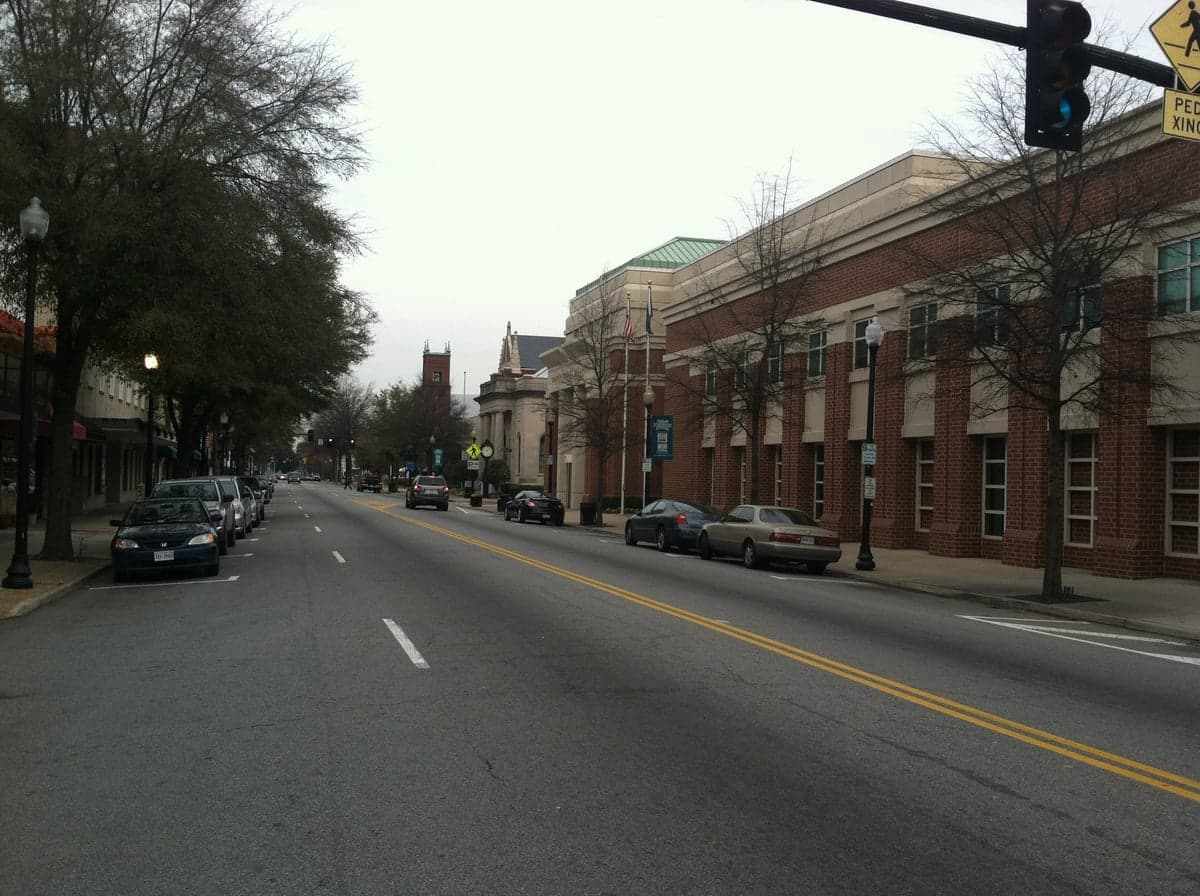
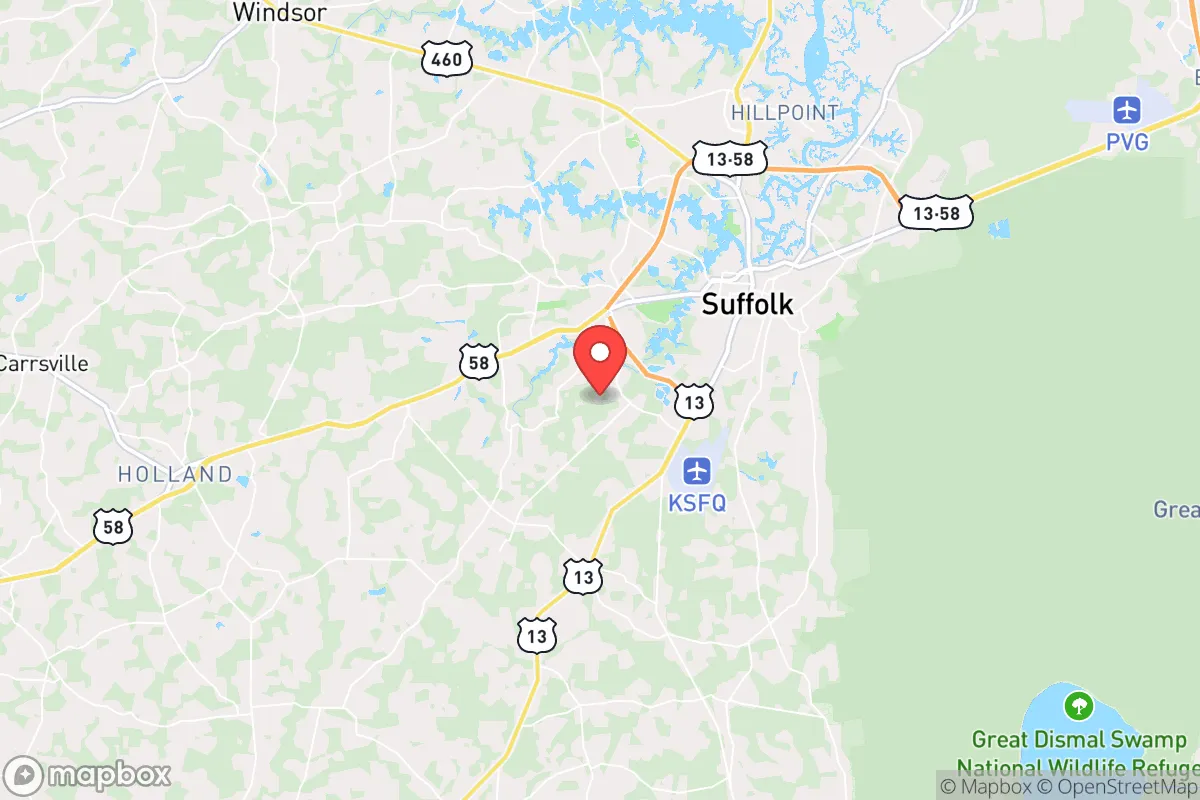
Photo: Wikipedia
Quality of Life in Suffolk, VA
A high quality of life with strong walkability, manageable living costs, healthy neighborhood signals, and solid amenity access.
What does Quality of Life tell us?
Quality of Life blends cost of living, nearby amenities, socioeconomic signals, and neighborhood character. City-level scores represent the whole municipality; individual neighborhoods can differ.
What does this tell us?
Quality of Life blends cost of living, nearby amenities, socioeconomic signals, and neighborhood character. City-level scores represent the whole municipality; individual neighborhoods can differ.
Cost of Living
23% above national average
The Real Cost of Living in Suffolk, VA for 2026
| Tier | Individual | Family (4) |
|---|---|---|
| Survival | $24k | $45k |
| Comfortable | $64k | $94k |
| Luxury | $153k+ | $237k+ |
| Elite (Top 5%) | $180k+ | $278k+ |
96%
The Area Signal
A metric tracking the socioeconomic signals of the area.
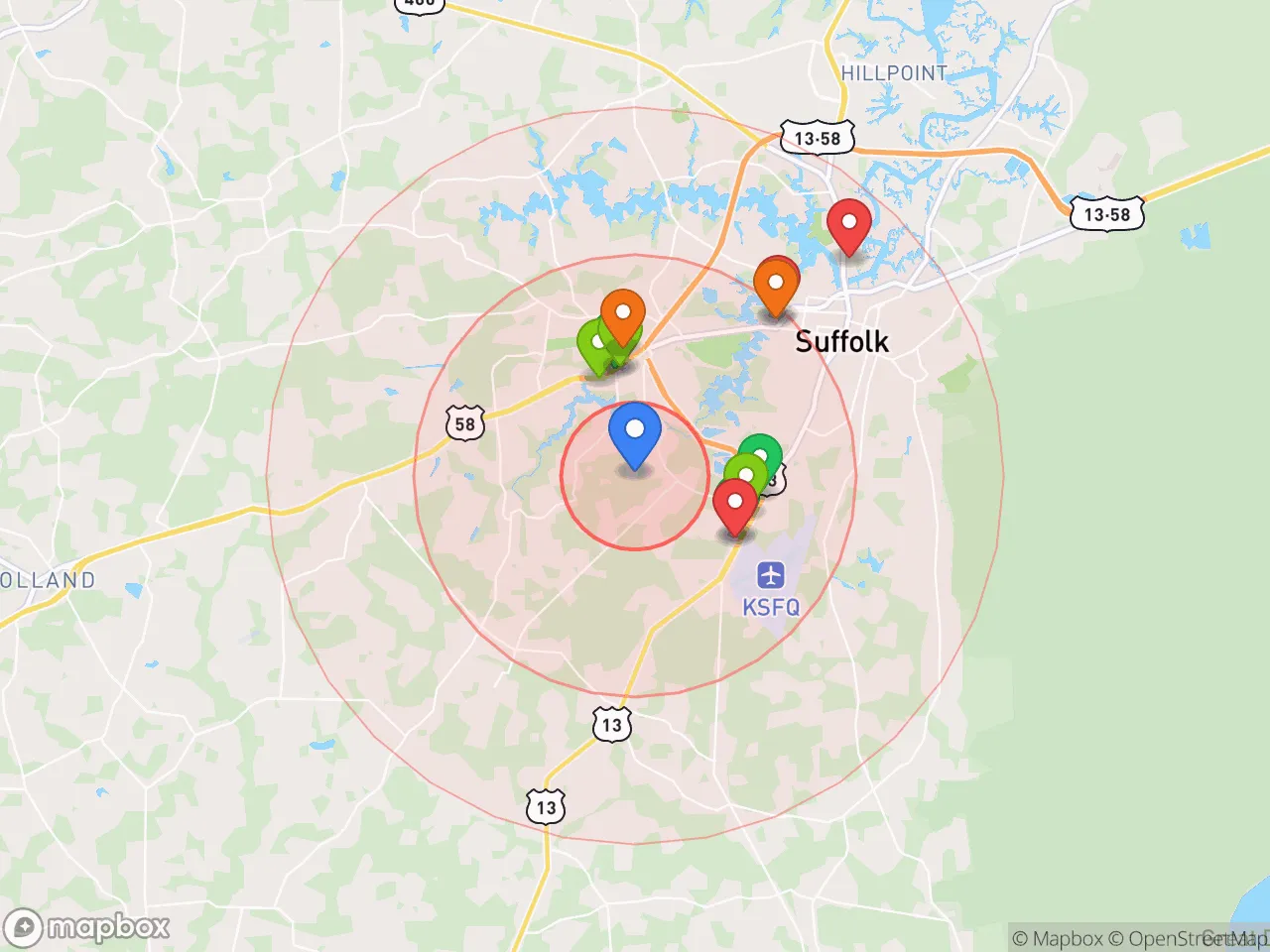
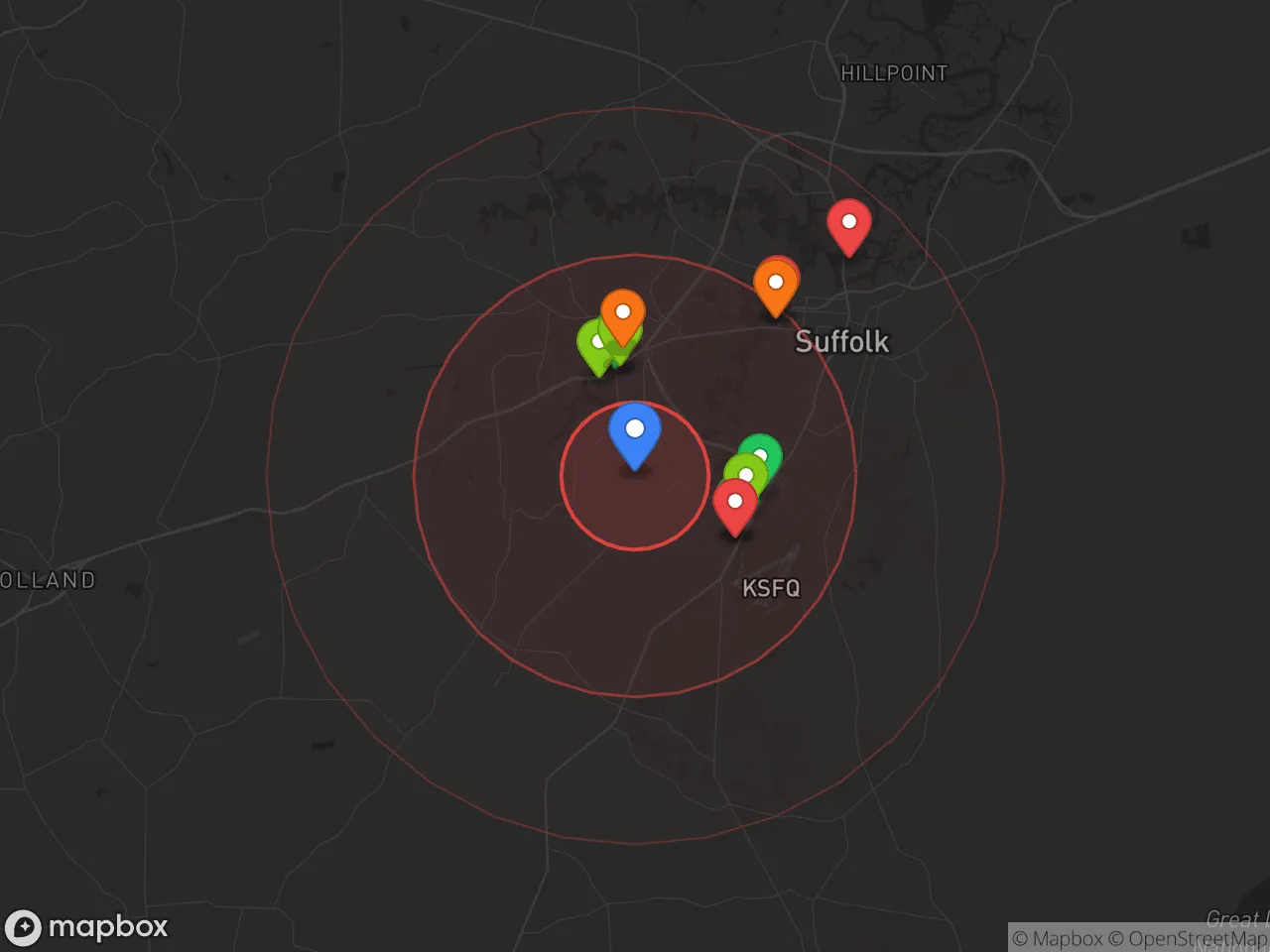
Hobbies
Explore the areaGroceries
5 within 10 miles
Gas
20 within 10 miles
Hospital
5 within 20 miles
Airport
RDU — Raleigh–Durham International
Post Office
USPS — Suffolk, VA
Critical Amenities
Quality-of-Life Analysis
Suffolk, Virginia, presents a quality-of-life profile shaped by steady growth, suburban comfort, and a cost of living that runs above the national average but below many neighboring Hampton Roads cities. With a cost-of-living index of 123 (where 100 equals the U.S. average), the city attracts a mix of military-affiliated families, commuters to Norfolk and Newport News, and professionals seeking more space and newer housing than what is available closer to the urban core. The population skews toward middle- and upper-middle-income households, with a notable presence of active-duty and retired Navy personnel drawn by Suffolk’s proximity to Naval Station Norfolk and Joint Base Langley-Eustis.
Cost of living, housing affordability, and how Suffolk compares to nearby cities
Suffolk’s cost of living is 23 percent above the national average, driven primarily by housing costs that have risen sharply since 2020. The median home value sits at $329,600, which is roughly $30,000 less than the median in Virginia Beach and about $50,000 less than in Chesapeake, making Suffolk one of the more attainable options for homebuyers in the region. Median rent is $1,484, a figure that undercuts Norfolk’s average by roughly $200 per month and offers a clear affordability edge for renters. However, the trade-off is distance: the average commute in Suffolk stretches to 29.9 minutes, notably longer than the national average of 26 minutes, as many residents drive west on U.S. 58 or north on I-664 to reach jobs in Hampton, Newport News, or the Norfolk shipyards. Property taxes in Suffolk are moderate for Virginia at a rate of $1.06 per $100 of assessed value, and the city does not levy a local meals tax, which keeps dining out slightly cheaper than in neighboring cities.
Schools, amenities, and what daily life feels like for families and professionals
Daily life in Suffolk revolves around a blend of suburban subdivisions, historic downtown pockets, and access to the Nansemond River. The city is served by Suffolk Public Schools, which operates 19 schools and has seen incremental improvements in state accreditation rates since 2022; King’s Fork High School and Nansemond River High School both offer Advanced Placement and dual-enrollment programs through Tidewater Community College. For shopping and dining, residents rely on the Harbour View area near the Chesapeake line, which features big-box retail, chain restaurants, and a multiplex cinema, while the older downtown Suffolk district offers independent coffee shops, a farmers market, and the Suffolk Seaboard Coastline Trail for walking and cycling. Healthcare access is solid: Sentara Obici Hospital provides emergency and specialty care within city limits, and the larger Sentara Norfolk General Hospital is a 30-minute drive east. Outdoor amenities include the 1,200-acre Lone Star Lakes Park, popular for fishing and kayaking, and the Great Dismal Swamp National Wildlife Refuge, which offers hiking and birding on the city’s southern edge.
Families with school-age children, military personnel stationed at nearby bases, and remote workers who can tolerate a longer commute for lower housing costs will find Suffolk a practical fit. The city’s slower pace and lower density compared to Virginia Beach or Norfolk appeal to those who prioritize yard space, newer construction, and a quieter evening environment. Retirees on fixed incomes may find the cost-of-living index challenging, but dual-income households earning above the regional median of $82,000 per year typically manage comfortably. Anyone seeking walkable urban energy or a short commute to downtown Norfolk should look elsewhere; Suffolk rewards those who value square footage and affordability over proximity and nightlife.

Crime in Suffolk, VA
Generally safer than 57% of comparable U.S. locations.
Violent CrimeViolent Crime Analysis
Property CrimeProperty Crime Analysis
Crime Analysis
Suffolk, Virginia, reports a violent crime rate of 360.9 incidents per 100,000 residents and a property crime rate of 1,238 per 100,000, placing it in a middle tier for safety within the Hampton Roads metro area. While these figures are not the highest in the region, they reflect a community where crime is a tangible concern, particularly given the influence of the broader metropolitan area's justice system. The presence of progressive prosecutors and judges in nearby large cities like Norfolk and Portsmouth, who often prioritize diversion and reduced sentencing, can lead to higher recidivism and more criminals on the street, directly impacting public safety in surrounding communities like Suffolk.
Crime in context
Suffolk's violent crime rate of 360.9 per 100,000 is notably higher than the national average of roughly 380 per 100,000, but it is significantly lower than the Virginia state average of approximately 400 per 100,000. Property crime in Suffolk, at 1,238 per 100,000, sits below both the national average (around 1,950) and the state average (about 1,500). However, these raw numbers do not tell the full story. The city is part of the Hampton Roads metro area, which includes jurisdictions with some of the most progressive criminal justice policies in Virginia. In Norfolk and Portsmouth, district attorneys have implemented policies that reduce prosecutions for certain drug and property offenses, and judges frequently impose lighter sentences. This "catch-and-release" environment in the urban core can push crime into suburban and rural areas like Suffolk, as offenders face fewer consequences and seek new targets.
What residents experience
Residents of Suffolk report that property crime—particularly vehicle break-ins, package theft, and burglary—is the most common safety issue they encounter. The city's sprawling, semi-rural layout means many neighborhoods lack the natural surveillance of denser urban areas, making them attractive to criminals. Violent crime, while less frequent, is often concentrated in specific corridors, such as areas near the downtown rail yard and along major thoroughfares like Route 58. The progressive ideology in the regional justice system means that even when arrests are made, offenders often face minimal jail time or are released on personal recognizance, eroding deterrence. For victims, this can feel like a double betrayal: the crime itself, followed by a system that seems more concerned with the offender's circumstances than with public safety or justice.
Neighborhood-level variation is significant. Safer areas include the newer developments in the northern part of the city, such as the communities around the Harbour View area, which benefit from private security and active homeowners' associations. In contrast, older neighborhoods closer to downtown and the Nansemond River tend to report higher crime rates, particularly for theft and vandalism. Prospective residents should research specific census tracts and consider that the city's overall safety is undermined by the lenient policies of the larger metro area's justice system, which can make any location in Suffolk more vulnerable than its isolated statistics suggest.
* Values derived from national, state, county, city and local statistics and may differ in a specific area. Last updated: 2026-05-02T02:13:14.000Z
Narrative content on this page is AI-generated and may contain mistakes. Verify any details that matter before acting on them.
ReloMaps may earn a commission from affiliate links at no extra cost to you.

