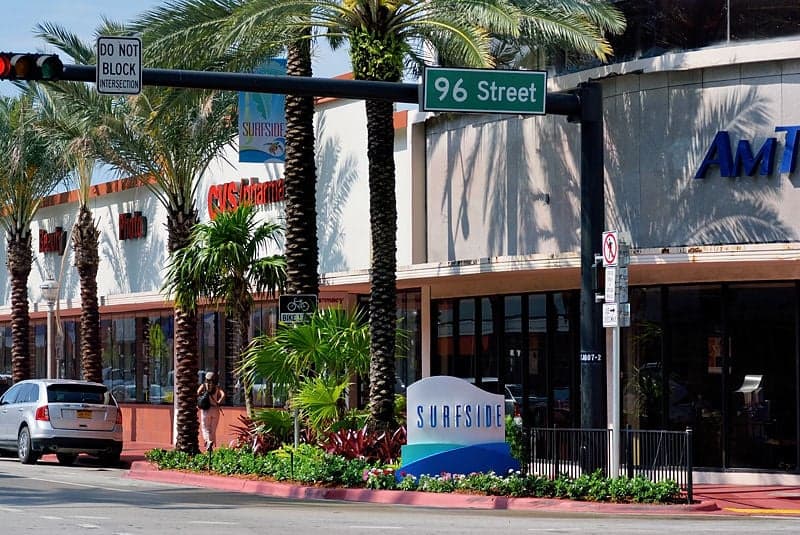
Photo: Wikipedia
Quality of Life in Surfside, FL
A high quality of life with strong walkability, manageable living costs, healthy neighborhood signals, and solid amenity access.
What does Quality of Life tell us?
Quality of Life blends cost of living, nearby amenities, socioeconomic signals, and neighborhood character. City-level scores represent the whole municipality; individual neighborhoods can differ.
What does this tell us?
Quality of Life blends cost of living, nearby amenities, socioeconomic signals, and neighborhood character. City-level scores represent the whole municipality; individual neighborhoods can differ.
Cost of Living
97% above national average
The Real Cost of Living in Surfside, FL for 2026
| Tier | Individual | Family (4) |
|---|---|---|
| Survival | $29k | $54k |
| Comfortable | $143k | $210k |
| Luxury | $161k+ | $249k+ |
| Elite (Top 5%) | $266k+ | $412k+ |
42%
The Area Signal
A metric tracking the socioeconomic signals of the area.
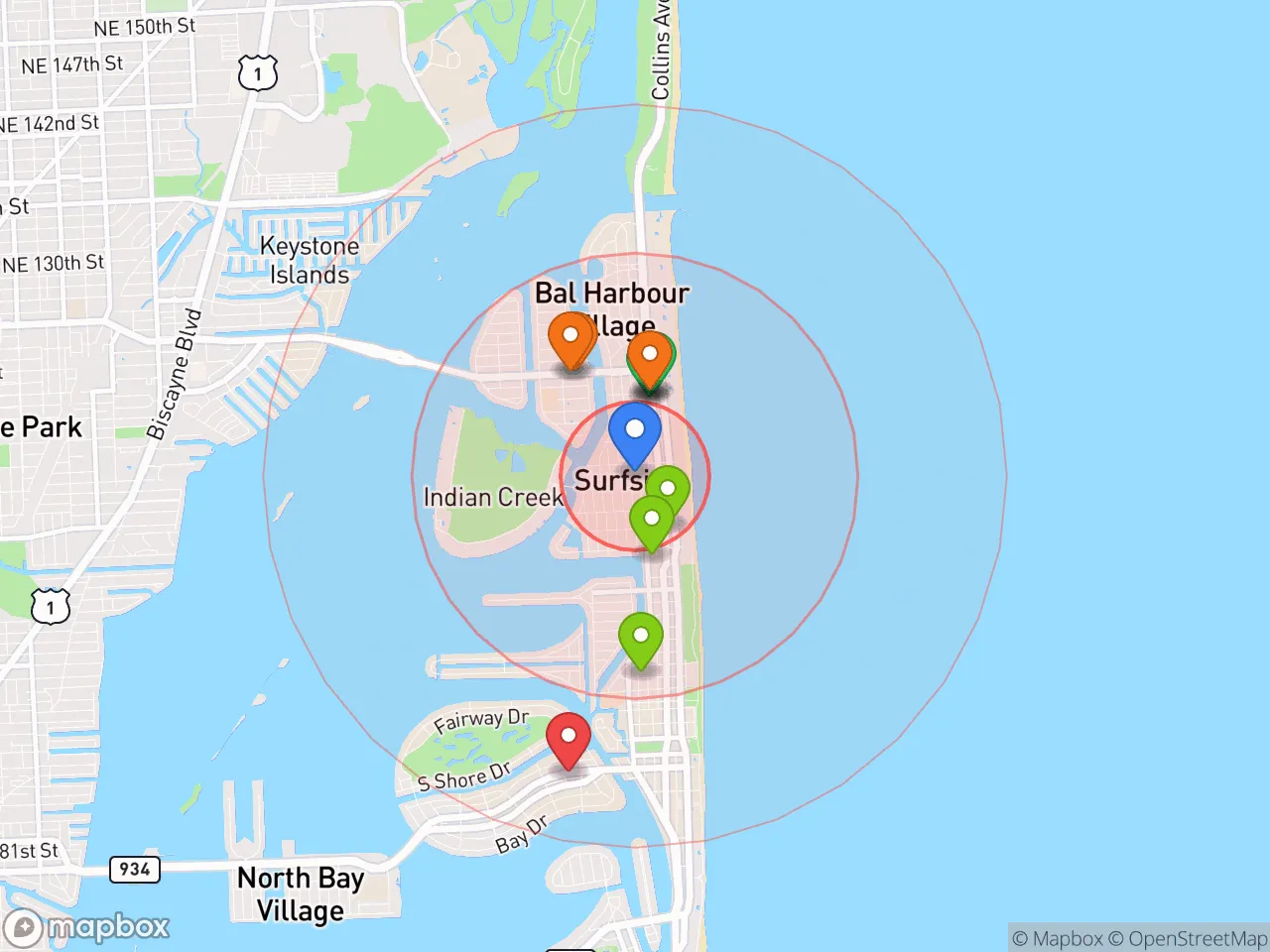
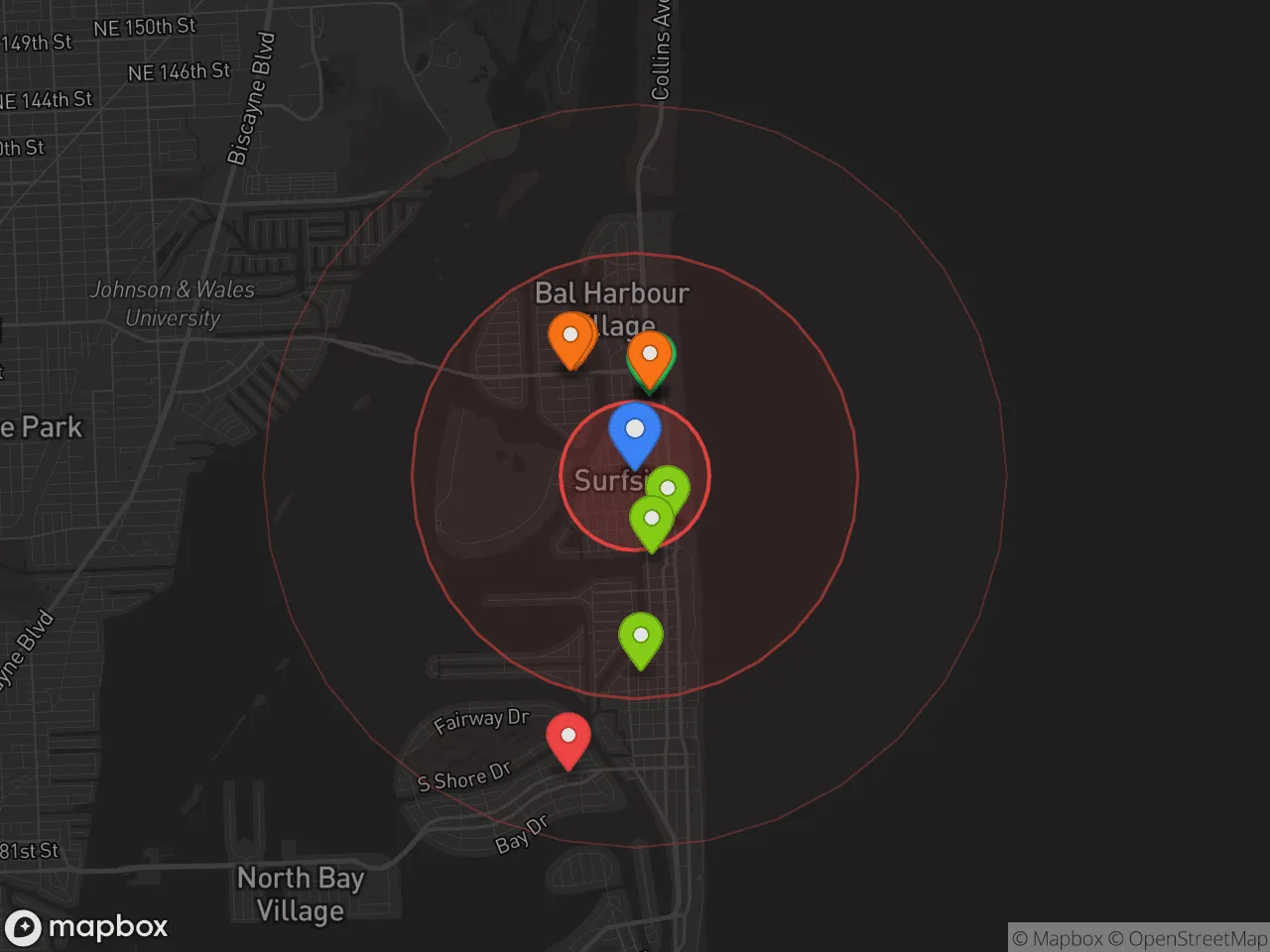
Hobbies
Explore the areaGroceries
6 within 10 miles
Gas
20 within 10 miles
Hospital
20 within 20 miles
Airport
MIA — Miami International
Post Office
USPS — Miami Beach, FL
Critical Amenities
Quality-of-Life Analysis
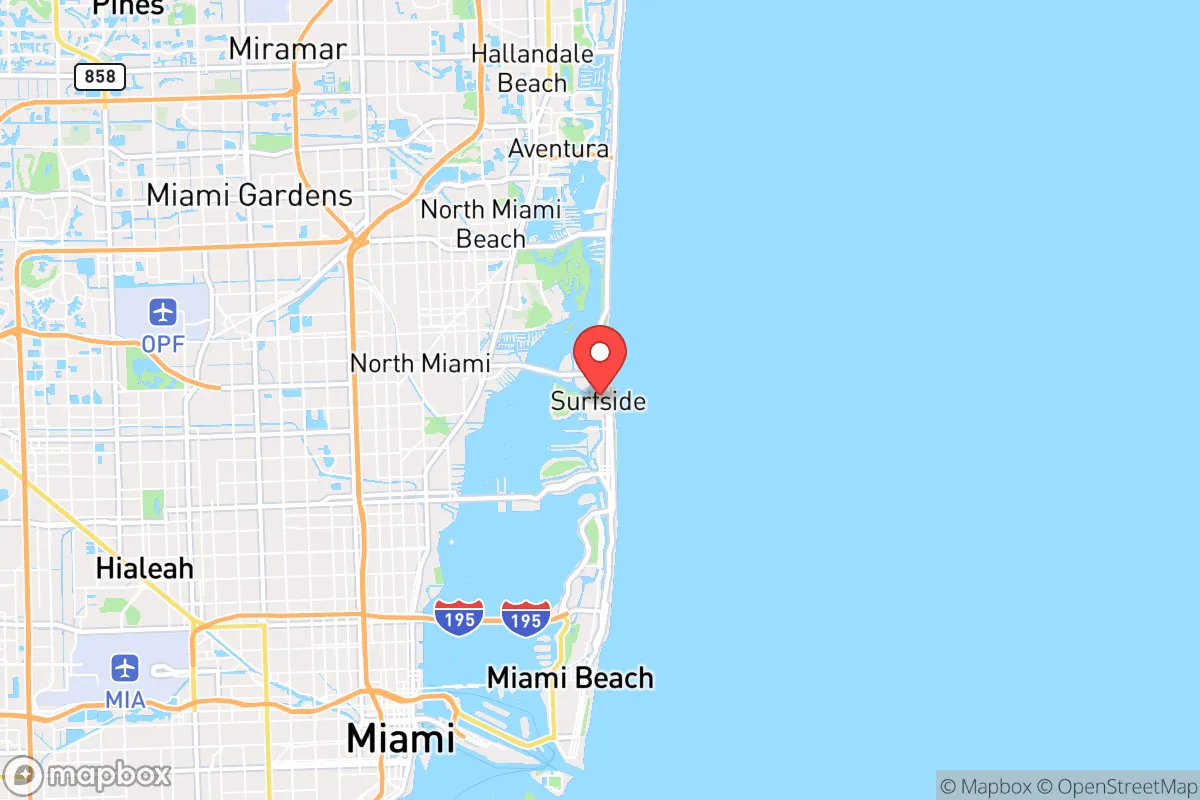
Surfside, Florida, is an affluent beachfront town of roughly 5,800 residents that attracts a mix of wealthy retirees, young professionals working in Miami, and international second-home owners drawn to its quiet, walkable streets and direct ocean access. With a cost-of-living index of 197—nearly double the U.S. average—the town sits firmly in the luxury bracket, yet its median home value of $736,800 is actually below that of neighboring Bal Harbour and Miami Beach, offering a relative value proposition for buyers seeking a less frenetic coastal lifestyle. The typical resident is a homeowner (over 70% of housing units are owner-occupied) who values privacy, proximity to Miami’s job centers, and a slower pace than the high-rise corridors to the south.
Cost of living, housing prices, and affordability compared to Miami Beach and Bal Harbour
Surfside’s cost-of-living index of 197 reflects the premium for living within a block of the Atlantic, but the numbers reveal a nuanced picture. The median home value of $736,800 is roughly 15% lower than the median in Bal Harbour (around $870,000) and about 25% lower than the median single-family home in Miami Beach, making Surfside one of the more attainable oceanfront enclaves in Miami-Dade County. Median rent sits at $1,795, which is notably below the countywide median of $2,100—though this figure is skewed by a small rental stock dominated by older, rent-controlled units in low-rise buildings. The average commute of 31.9 minutes is slightly longer than the Miami metro average (29 minutes), reflecting the fact that many residents drive south to jobs in Brickell or Coral Gables, while others commute north to Fort Lauderdale. Property taxes in Surfside are moderate for the area, with a millage rate of about 18.5 per $1,000 of assessed value, though flood insurance adds a significant ongoing cost—often $3,000–$6,000 annually for a single-family home.
Beach access, schools, and what daily life is like for families and retirees
Daily life in Surfside revolves around the town’s 1.5-mile public beachfront, which is less crowded than South Beach and features a dedicated dog park at the north end. The town’s small commercial core along Collins Avenue includes a Publix supermarket, several independent cafés, and the Surfside Community Center, which hosts yoga classes, summer camps, and senior programs. Public schools are zoned to Miami-Dade County Public Schools, with Ruth K. Broad Bay Harbor K-8 Center (rated 8/10 on GreatSchools) serving elementary and middle grades, and Miami Beach Senior High School (rated 6/10) for high school. Many families opt for nearby private options, including the Lehrman Community Day School and Carrollton School of the Sacred Heart. The town’s walk score of 72 means errands are doable on foot, and the free Surfside Trolley connects residents to Bal Harbour Shops and the Haulover Beach Marina. For dining, locals frequent La Sandwicherie for casual lunches and Il Mulino for upscale Italian, while the weekly Surfside Farmers Market (Sundays) draws a loyal crowd.
Surfside is best suited for buyers who prioritize a quiet, walkable beach town over the nightlife of South Beach, and who can absorb the high cost of living without relying on a short commute. Retirees appreciate the low crime rate (violent crime is roughly 60% below the national average) and the town’s strict building height limits (capped at 12 stories), which preserve sightlines and a small-town feel. Families with young children will find the public schools adequate but may need to budget for private tuition, while remote workers and professionals will tolerate the 30-minute commute for the trade-off of ocean views and a slower pace. Those seeking a vibrant restaurant scene or a young singles demographic should look south to Miami Beach or north to Hollywood; Surfside’s appeal is its quiet consistency.

Crime in Surfside, FL
Lower crime rates than 80% of comparable U.S. locations.
Violent CrimeViolent Crime Analysis
Property CrimeProperty Crime Analysis
Crime Analysis
Surfside, Florida, presents a notably low violent crime rate of 166.8 incidents per 100,000 residents, making it significantly safer than both the national average and many neighboring communities in Miami-Dade County. However, its property crime rate of 735.6 per 100,000 is a more pressing concern for residents and prospective homebuyers. The town’s overall safety profile is shaped by its small, affluent beachfront geography and its location within a large metro area where progressive prosecutorial policies in the justice system have raised public safety concerns.
Crime in context
Surfside’s violent crime rate is roughly 55% lower than the U.S. average of approximately 380 per 100,000, and well below the Florida state average of about 380 per 100,000. This places the town among the safest municipalities in Miami-Dade County for violent offenses. The property crime rate, while lower than the national average of roughly 1,950 per 100,000, is still a factor to monitor. The town benefits from a dedicated police force and a compact, walkable layout that aids surveillance. However, as part of the broader Miami metro area, Surfside is subject to the policies of Miami-Dade County’s state attorney and judiciary. In recent years, progressive reforms—including reduced cash bail, diversion programs for repeat offenders, and lenient sentencing guidelines—have been implemented by local district attorneys and judges. Critics argue these policies, while intended to reduce incarceration, have resulted in more property crimes and a higher likelihood of repeat offenders remaining on the streets, directly impacting public safety and victim justice.
What residents experience
For daily life in Surfside, the low violent crime rate means residents generally feel safe walking along Collins Avenue, visiting the beach, or dining in the town’s commercial core. The most common safety issues are property-related: package thefts from condo lobbies, occasional vehicle break-ins, and bicycle thefts. The town’s police department maintains a visible presence, and neighborhood watch programs are active in many of the oceanfront condominium associations. Still, residents should remain vigilant, as the town’s proximity to higher-crime areas of Miami-Dade means that transient property crime can occur. The progressive justice policies at the county level mean that even when suspects are arrested for property crimes, they may face minimal jail time or be released on low bail, a pattern that frustrates many local homeowners and business owners who feel the system prioritizes offender rehabilitation over victim protection.
Neighborhood-level variation in Surfside is minimal due to the town’s small size—roughly one square mile. The most desirable and safest blocks are those directly on the oceanfront, where high-end condos have private security and doorman services. The inland side of Collins Avenue, while still safe, sees slightly more foot traffic and transient activity. The town’s single-family home areas near 88th and 89th Streets are quiet and well-policed. Overall, Surfside is a low-crime enclave, but its safety is not immune to the broader challenges of a metro area with progressive criminal justice policies that critics say embolden property criminals and undermine deterrence.
* Values derived from national, state, county, city and local statistics and may differ in a specific area. Last updated: 2026-05-14T02:03:57.000Z
Narrative content on this page is AI-generated and may contain mistakes. Verify any details that matter before acting on them.
ReloMaps may earn a commission from affiliate links at no extra cost to you.

