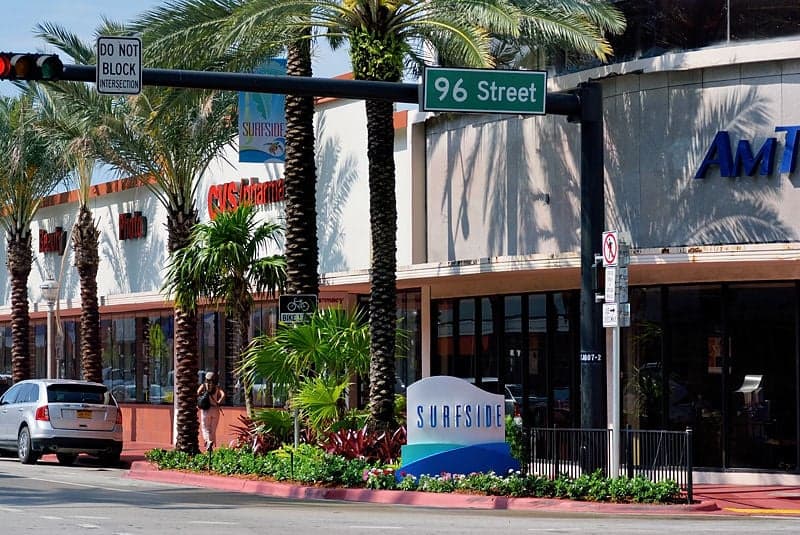
Photo: Wikipedia
Political ClimatePolitical Climate in Surfside, FL
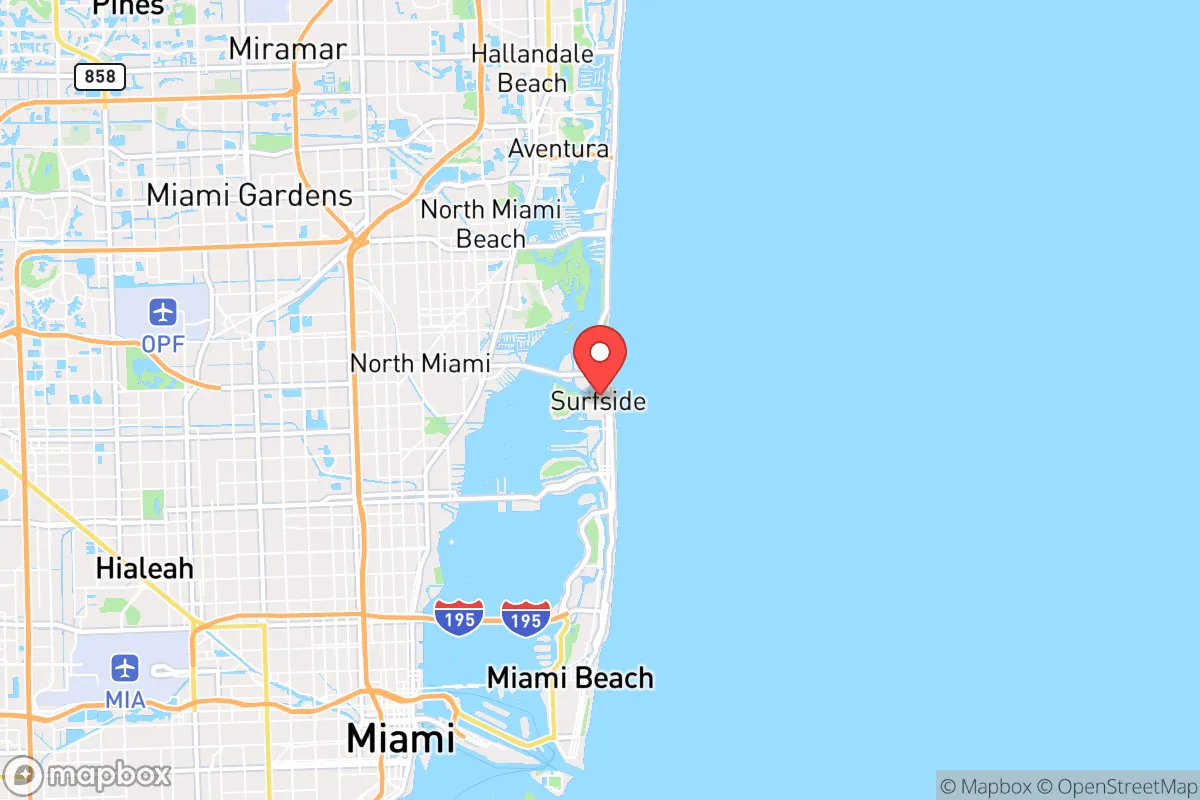
District shown is the primary district for this city’s centroid. Cities may span multiple districts.
Local Political AnalysisPolitical Analysis of Surfside, FL
Look, I’ve been around Surfside long enough to remember when this town was a quiet, family-oriented slice of the coast where folks mostly kept to themselves and the biggest political debate was whether to repave the parking lot. Today, the numbers tell a stark story: Surfside’s Cook PVI is D+18, meaning it’s one of the most reliably Democratic enclaves in the state. That’s a hard shift from the more moderate, live-and-let-live vibe we used to have. The trajectory has been steadily leftward over the last decade, driven by an influx of out-of-state transplants and a younger, more progressive crowd. It’s a far cry from the surrounding state of Florida, which sits at R+5 overall—a solidly purple-to-red balance that still values individual liberty and limited government interference.
How it compares
When you stack Surfside against the rest of Florida, the contrast is night and day. Drive ten minutes north to Bal Harbour or south to Miami Beach, and you’ll find similar D+ leanings, but head inland to places like Hialeah or Kendall, and you’re in R+ territory where people are more skeptical of government overreach. The state as a whole has trended redder in recent cycles, with voters pushing back on mandates, high taxes, and progressive social experiments. Surfside, however, has gone the opposite direction—embracing policies that feel more like a city council experiment than common-sense governance. For example, while the state legislature has been fighting to protect parental rights and Second Amendment freedoms, Surfside’s local leadership has been more eager to impose restrictions on short-term rentals and public gatherings, which feels like a slow creep of control over how you use your own property.
What this means for residents
For those of us who’ve lived here a while, the biggest concern is how this political tilt affects daily life. You’re seeing more regulations on everything from beach access to building permits, and there’s a growing sense that the town government thinks it knows better than you do about your own home. The D+18 voting bloc means local elections are often decided in primaries, where the most progressive candidates win, and then you’re stuck with policies that prioritize collective goals over individual rights. If you value personal freedom—like the ability to run a small business from your condo or decide how to raise your kids without a dozen new ordinances—this shift is worrying. The state’s R+5 lean offers some buffer, but local control is real, and Surfside’s leadership is increasingly out of step with the broader Florida ethos of “leave me alone.”
On the cultural front, Surfside has become a bit of an island—literally and figuratively. The town’s strong Jewish community has historically been more moderate, but the younger generation is pushing for progressive policies that sometimes clash with traditional values. You’ll see more pride flags than American flags on Collins Avenue these days, and the local discourse is heavy on climate activism and social justice language. It’s not the same Surfside where neighbors waved from their porches and minded their own business. Looking ahead, if the trend continues, I’d expect more friction between residents who want to preserve the old character and newcomers who see the town as a blank slate for progressive change. My advice? Keep an eye on local elections—that’s where the real fight for your freedoms will play out.

State Political ClimatePolitical Climate in Florida
State Political AnalysisPolitical Environment in the State
Florida is a solidly Republican state with a Cook PVI of R+5, but don’t let that single number fool you—it’s a battleground of shifting coalitions. Over the last 20 years, the state has moved from a classic purple swing state to a reliably red one, driven by a massive influx of conservative-leaning transplants from the Northeast and Midwest, plus a growing Hispanic electorate that’s breaking right. The 2022 and 2024 cycles saw Governor Ron DeSantis win by double digits, and the GOP now holds supermajorities in both legislative chambers. But the real story is the internal tension: booming blue metros versus sprawling red suburbs and exurbs, with a policy environment that’s become a national model for conservative governance.
Urban vs. rural divide
The political map of Florida is a tale of three regions. The deep-blue strongholds are Miami-Dade County (which flipped from blue to red-leaning in 2024, with Trump winning it by 11 points), Broward County (Fort Lauderdale), and Palm Beach County—the traditional Democratic bastions of South Florida. But even here, the trend is shifting: Miami-Dade’s Cuban-American and Venezuelan communities have moved hard right, while the coastal condos of Palm Beach are seeing more GOP snowbirds. The I-4 corridor—Orlando, Tampa, and St. Petersburg—remains the classic swing zone, with Orange County (Orlando) still blue but Hillsborough County (Tampa) trending redder. The real Republican engine is the Florida Panhandle (think Pensacola, Panama City, and Tallahassee’s surrounding counties) and the sprawling exurbs of Ocala, The Villages, and Naples. Rural counties like Liberty and Lafayette routinely vote 80%+ Republican. The divide isn’t just urban vs. rural—it’s coastal vs. interior, with the interior and Gulf Coast growing faster and more conservative.
Policy environment
Florida’s policy environment is a conservative’s dream, and it’s been deliberately engineered that way. There is no state income tax, which is the single biggest draw for relocating families and businesses. Property taxes are moderate (around 0.8% of assessed value), and the state has a homestead exemption that caps annual increases. The regulatory posture is aggressively pro-business: Florida is a right-to-work state, with minimal labor union influence and fast-track permitting for development. Education policy has been a flashpoint: the state passed the Parental Rights in Education Act (HB 1557, the “Don’t Say Gay” law) in 2022, expanded school choice via the Family Empowerment Scholarship program, and banned DEI initiatives in public universities. Healthcare is mixed—Florida did not expand Medicaid under the ACA, and the state has a robust private insurance market. Election laws were tightened after 2020: SB 90 (2021) added voter ID requirements, limited drop boxes, and restricted mail-in ballot requests. The state also passed a 15-week abortion ban (HB 5) in 2023, later extended to six weeks in 2024. For a conservative, this is a state that actively protects parental rights, fiscal freedom, and election integrity.
Trajectory & freedom
Florida is becoming more free by almost any conservative measure, and the trend is accelerating. The state has been a national leader on gun rights: in 2023, it passed constitutional carry (HB 543), allowing permitless concealed carry for adults. Property rights were strengthened with the Live Local Act (2023), which preempts local zoning to allow more housing density near job centers—a move that’s been controversial among NIMBYs but is a net win for freedom of movement. On medical autonomy, Florida banned COVID-19 vaccine mandates for private employers (2023) and prohibited mask mandates in schools. The state also passed the Individual Freedom Act (the “Stop WOKE Act”) in 2022, which restricts critical race theory in workplace training and schools. However, there are red flags for libertarians: the state has aggressively used its power to punish businesses (like Disney) for political speech, and DeSantis’s “war on woke” has included state-level book bans and university restructuring. The net trajectory is toward more personal liberty on guns, education, and taxes, but with a heavy-handed government enforcing cultural conservatism.
Civil unrest & political movements
Florida has seen its share of political flashpoints, but they’ve been more about organized activism than widespread unrest. The 2020 George Floyd protests in Miami, Orlando, and Tampa were large but largely peaceful, with some looting in downtown Miami. The state’s response was swift: DeSantis signed the Combating Public Disorder Act (HB 1) in 2021, which enhanced penalties for rioting, blocking roads, and defunding police—a model for other red states. Immigration politics are front and center: Florida passed SB 1718 (2023), the toughest anti-illegal immigration law in the country, requiring E-Verify for employers and banning local “sanctuary” policies. This has led to protests from immigrant rights groups, especially in Miami and Immokalee. Election integrity remains a hot topic: the 2022 midterms saw record turnout with zero major issues, but activists on both sides continue to litigate voting access. The most visible movement is the Moms for Liberty network, which has chapters in nearly every county and has been instrumental in school board races and book challenges. A new resident will notice that political bumper stickers and yard signs are common, but actual civil unrest is rare—Florida’s politics are passionate but orderly.
Projection
Over the next 5-10 years, Florida will likely become more Republican, but the character of that conservatism will shift. The biggest demographic driver is the continued influx of conservative-leaning retirees and remote workers from California, New York, and Illinois—places like Naples, Sarasota, and Palm Coast are growing fast. The Hispanic vote, especially in Miami-Dade and Kissimmee, is trending right, and younger voters in the suburbs are more culturally conservative than their coastal peers. However, the state’s rapid growth is also bringing infrastructure strain, rising housing costs, and a more diverse population that may eventually moderate some policies. Expect the GOP to maintain supermajorities through 2030, but internal fights will intensify: between pro-growth developers and environmentalists, between libertarian-leaning gun owners and social conservatives on book bans, and between the DeSantis wing and the Trump wing. The biggest wildcard is climate change—rising sea levels and hurricane risk could eventually slow coastal migration, but for now, the state’s political trajectory is firmly red.
Bottom line for a new resident: If you’re a conservative looking for low taxes, strong parental rights, gun freedom, and a government that actively pushes back against progressive ideology, Florida is the best bet in the country right now. You’ll find a state that’s culturally aligned with your values, with a policy environment that’s been deliberately crafted to protect those freedoms. But be prepared for a government that’s not shy about using its power—whether it’s against Disney or local school boards—and a cost of living that’s rising fast in the desirable metros. The trade-off is worth it for most, but don’t expect a libertarian paradise; expect a muscular, conservative state that knows what it wants and isn’t afraid to enforce it.
* Values derived from national, state, county, city and local statistics and may differ in a specific area. Last updated: 2026-05-14T02:03:57.000Z
Narrative content on this page is AI-generated and may contain mistakes. Verify any details that matter before acting on them.
ReloMaps may earn a commission from affiliate links at no extra cost to you.

