Photo: Wikipedia
Demographics of Surfside, FL
Affluence Level in Surfside, FL
An upper-middle-class area. Household wealth, education levels, and homeownership run ahead of national benchmarks.
People of Surfside, FL
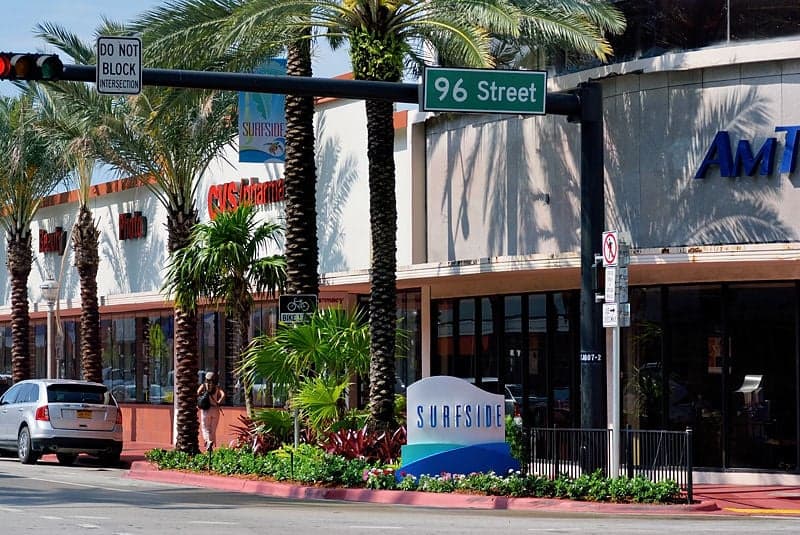
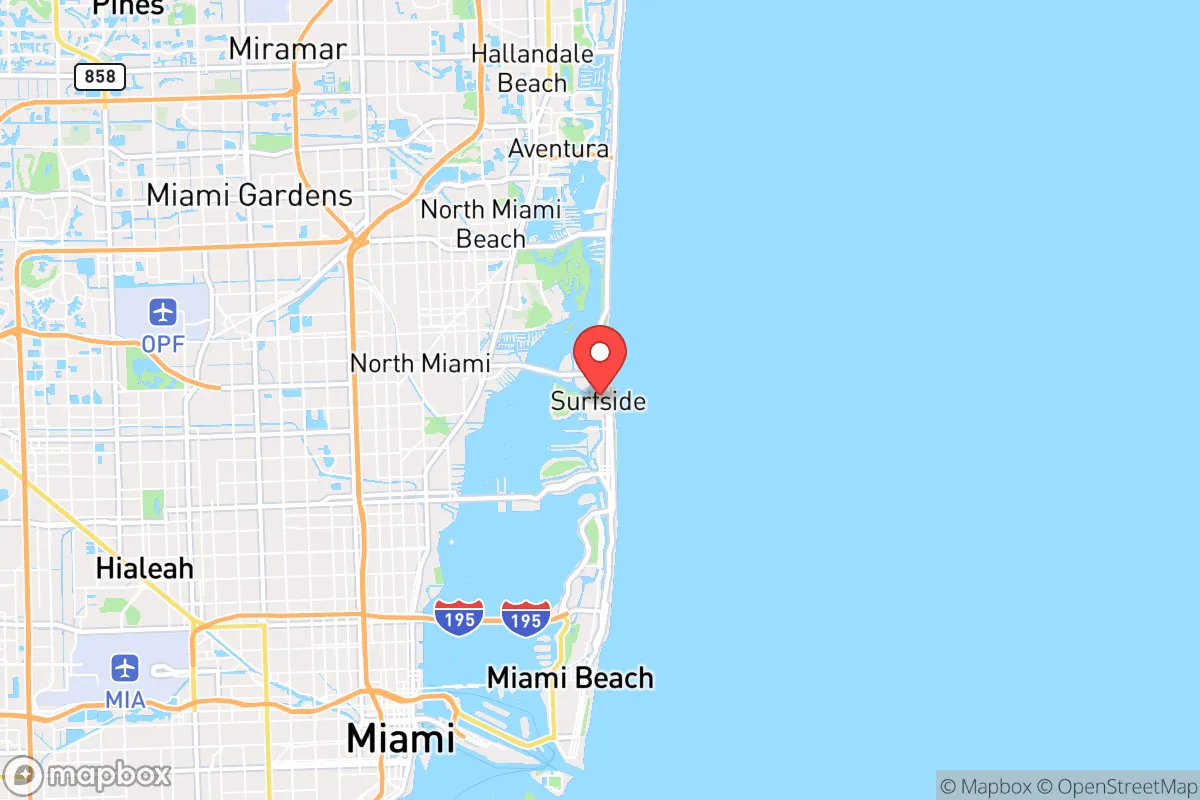
Surfside, Florida, is a compact, densely built oceanfront town of 5,566 residents where a distinctive blend of long-standing Jewish-American families, a growing Hispanic majority, and a small but stable Orthodox Jewish community shapes daily life. The city’s character is defined by its walkable beachside blocks, a high proportion of college-educated adults (57.3%), and a population that is 57.5% White, 34.1% Hispanic, and 4.7% Black. Surfside is neither a transient tourist hub nor a sprawling suburb; it is a tight-knit, multi-generational residential enclave where property values and cultural traditions anchor a community that is slowly diversifying while retaining its historic core.
How the city was settled and grew
Surfside was incorporated in 1935, a latecomer even by South Florida standards, on land that was largely undeveloped mangrove swamp and beachfront. The original settlers were middle-class Jewish families from the Northeast—primarily New York and New Jersey—who were drawn by affordable oceanfront lots and the promise of a quiet, family-oriented alternative to the crowded hotels of Miami Beach. These early residents built modest single-family homes and small apartment buildings in what is now the Surfside Beach District, the area directly along Collins Avenue between 88th and 96th Streets. By the 1940s and 1950s, a second wave of Jewish retirees and young families arrived, establishing the Harding Avenue corridor as the commercial and social spine of the town, lined with kosher markets, delis, and synagogues. The city’s population remained overwhelmingly White and Jewish through the 1960s, with a small number of Italian-American and Irish-American families settling in the Bayview Park neighborhood, the inland side of Collins Avenue near 90th Street.
Modern era (post-1965)
The 1965 Hart-Cellar Immigration Act opened the door for new waves of immigrants, but Surfside’s transformation was gradual. Through the 1970s and 1980s, the town remained predominantly Jewish, though the demographic began shifting as second- and third-generation families moved north to Broward County. The most significant change came in the 1990s and 2000s, when Hispanic families—primarily Cuban, Venezuelan, and Colombian—began purchasing condos and single-family homes in the Surfside Gardens area, a quieter residential pocket near 93rd Street and Collins Avenue. Today, the Hispanic share of the population stands at 34.1%, making it the largest minority group and a growing presence in local schools and businesses. The Orthodox Jewish community, meanwhile, has concentrated in the Surfside Shul district around 95th Street, where several synagogues and yeshivas anchor a tight-knit enclave. The Black population (4.7%) is small but stable, with families primarily living in the Bayview Park neighborhood and working in service roles in the town’s hotels and restaurants. East/Southeast Asian residents (1.3%) and Indian-subcontinent residents (0.7%) are present in very small numbers, mostly in professional households in the newer condominium towers along Collins Avenue.
The future
Surfside’s population is trending toward a more Hispanic and more Orthodox Jewish composition, with the two groups growing in parallel rather than blending into a single melting pot. The Hispanic share is likely to continue rising as younger families move in from Miami Beach and Hialeah, drawn by Surfside’s strong public schools and relatively lower crime rates. The Orthodox Jewish community is also expanding, driven by the construction of new synagogues and the opening of a Chabad-affiliated school in 2023. The White non-Hispanic population, while still a majority at 57.5%, is aging and slowly declining as older residents sell their homes to younger families of diverse backgrounds. The town is not homogenizing; rather, it is tribalizing into distinct enclaves—Orthodox Jewish families cluster near the shuls on 95th Street, Hispanic families concentrate in Surfside Gardens and the eastern blocks of Harding Avenue, and long-term Jewish-American retirees remain in the original beach district. The Asian and Indian populations are too small to form distinct neighborhoods and are likely to remain a minor presence. Over the next 10–20 years, Surfside will likely become a majority-minority town, with Hispanics and Orthodox Jews each comprising roughly a third of the population, while the historic Jewish-American core continues to shrink.
For someone moving in now, Surfside offers a stable, safe, and culturally layered community where the beach is a daily backdrop and the town’s small size (less than one square mile) ensures that neighbors know each other. The trade-off is high housing costs and a social landscape that can feel segmented by religion and ethnicity. New residents will find a place where tradition and change coexist—where a kosher bakery sits next to a Venezuelan arepa stand, and where the next block may speak Spanish, Hebrew, or English with a New York accent.

* Values derived from national, state, county, city and local statistics and may differ in a specific area. Last updated: 2026-05-14T02:03:57.000Z
Narrative content on this page is AI-generated and may contain mistakes. Verify any details that matter before acting on them.
ReloMaps may earn a commission from affiliate links at no extra cost to you.

