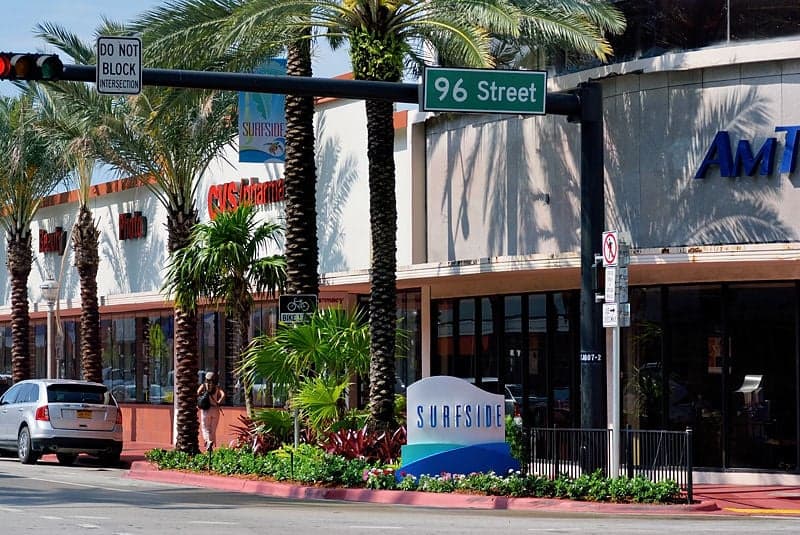
Photo: Wikipedia
Strategic Assessment of Surfside, FL
High tactical risk. This location is likely close to major population centers, strategic targets, or sits in a high-disaster corridor. A retreat property and careful exit planning is required.
What does the Strategic Assessment tell us?
Our Strategic Assessment grades tactical survivability of an area. Major population centers, military targets, fallout zones, natural disasters, and border exposure all drive risk — lower exposure means a more defensible position in a crisis.
This is heavily inspired by Joel Skousen's Strategic Relocation book. Highly recommended you checkout the book ($)What does this tell us?
Our Strategic Assessment grades tactical survivability of an area. Major population centers, military targets, fallout zones, natural disasters, and border exposure all drive risk — lower exposure means a more defensible position in a crisis.
This is heavily inspired by Joel Skousen's Strategic Relocation book. Highly recommended you checkout the book ($)Strategic Pillars

Key Distances
Regional Safe Places
Below is our recommended "safe zones" in Florida and the surrounding area based on our strategic heuristics. For most people, it's unrealistic to live in a “safe zone” full-time due to work, family or other personal reasons. They tend to be more rural. However, many of these areas are perfect for second homes and retreat properties that double as a vacation home or even a short-term rental.

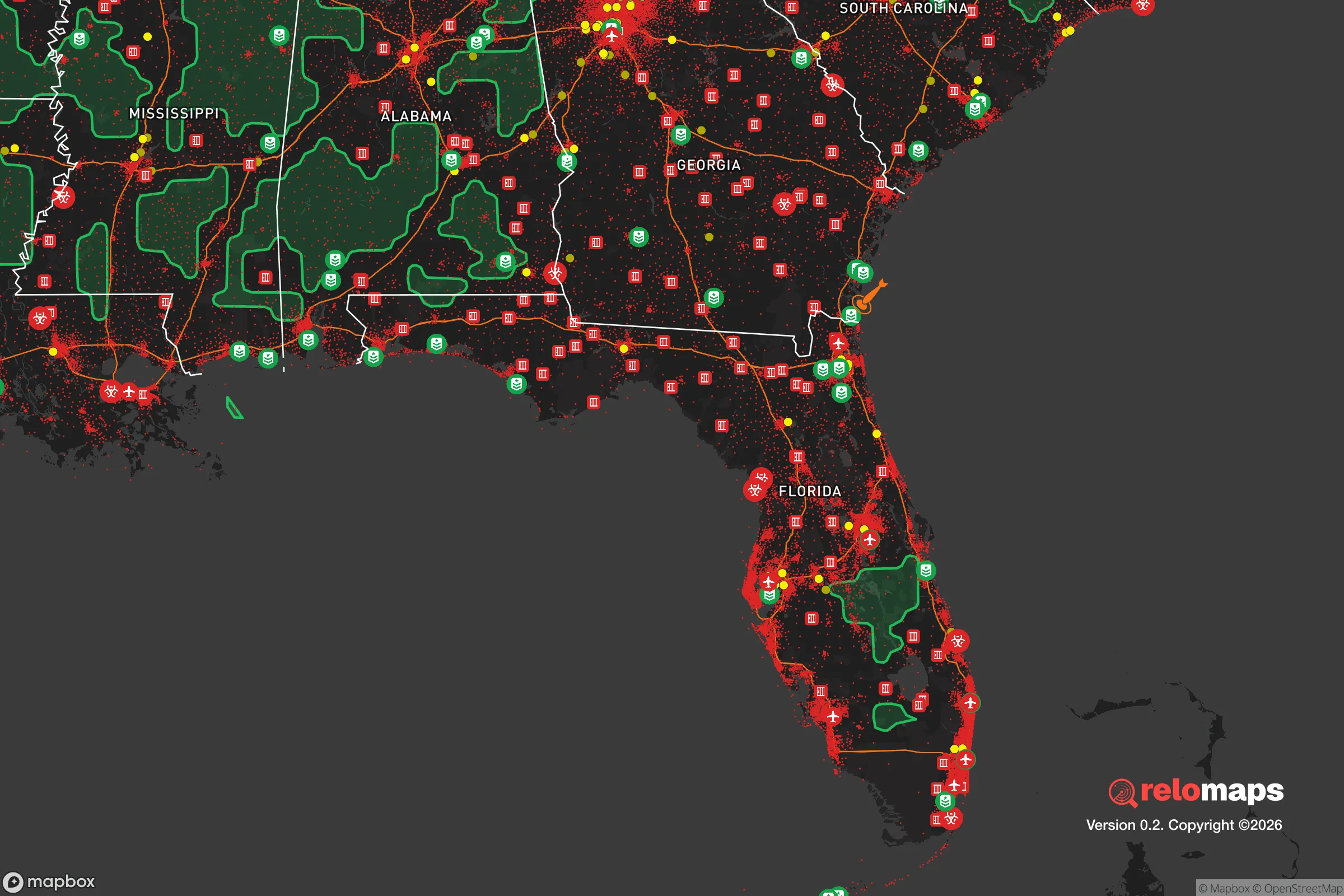


Important Note: For informational purposes only. This does not mean nothing bad ever happens in the green zones. Please use common sense. This is based on public data and modeled with AI. We tried to take a conservative approach but mistakes happen. We update this regularly as new information becomes available.
Solar Generator Recommendations
Backup power matters more here than in safer locations. We've picked three solar generators across budgets and capacity tiers — start with the budget unit if you only need a few essentials, or step up if you want to run a fridge and HVAC for days at a time.

Jackery Portable Power Station Explorer 300
Budget OptionPower on the Go: Weighing only 11 lbs, it's convenient to set up and store with book-sized foldable solar panels

BLUETTI Portable Power Station AC180
Designed for both indoor and outdoor scenarios, AC180 is highly capable as it has a robost capacity and continuous output power.

EF ECOFLOW DELTA Pro Ultra Power Station
Upgraded PickEcoFlow DELTA Pro Ultra is a whole-home energy system designed to grow with your family. Integrated with the Smart Home Panel 2, it scales to meet your evolving energy needs — keeping your home powered, intelligent, and secure through every stage of life.
We earn a commission, at no additional cost to you.
Strategic Assessment Analysis
Surfside, Florida, presents a paradox for the strategic relocator: it offers a high degree of natural resilience against many common threats, yet its location on a barrier island introduces unique vulnerabilities that demand serious consideration. For those prioritizing self-reliance and a buffer from the chaos of major urban centers, this small town of roughly 6,000 residents sits in a sweet spot—close enough to Miami for critical resources, but far enough to avoid being a primary target or a flashpoint for civil unrest. The key is understanding that this is a coastal fortress, not a bunker; its strength is its isolation and its weakness is its exposure.
Geographic position and natural advantages for a strategic relocation
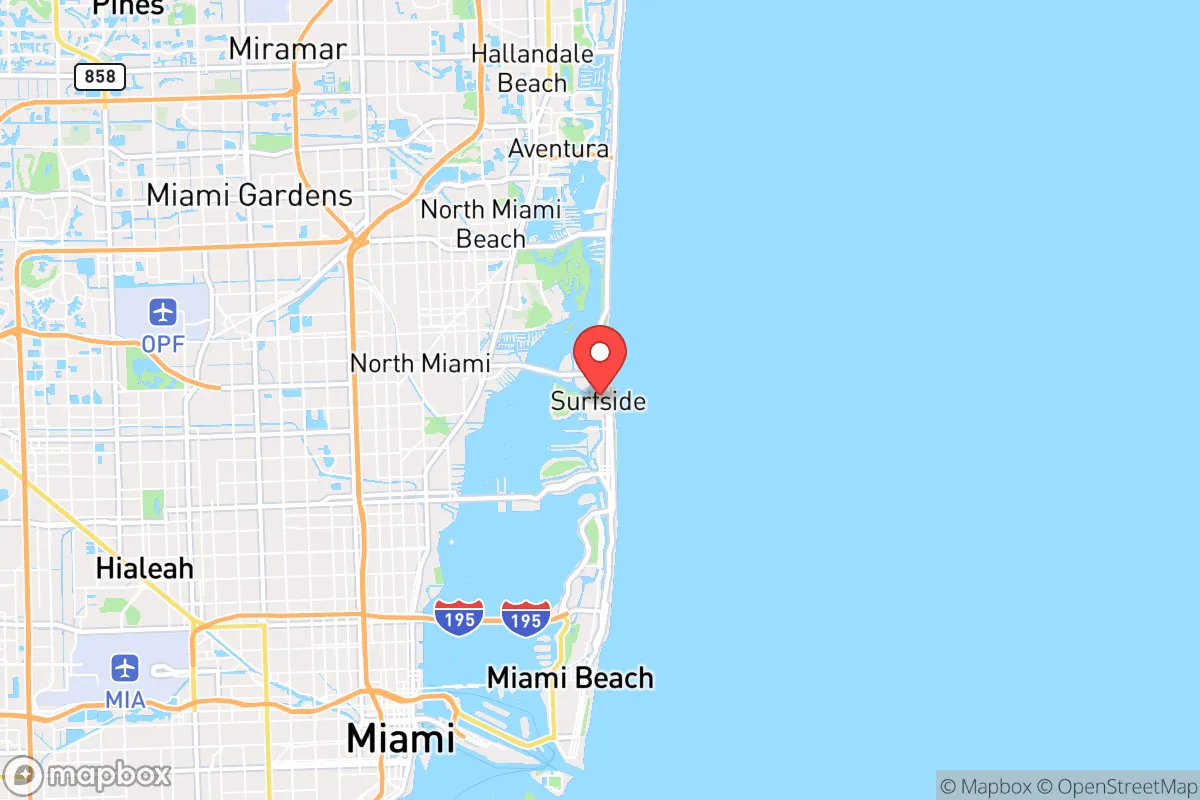
Surfside occupies a narrow strip of land between the Atlantic Ocean and the Indian Creek Waterway, roughly 15 miles north of downtown Miami. This position offers a distinct strategic advantage: it is a literal dead-end for unwanted traffic. The only road access is via the 96th Street Causeway or the Collins Avenue corridor, both of which can be effectively monitored and, if necessary, controlled. For a prepper, this chokepoint geography is a double-edged sword—it limits your own egress but also makes the area highly defensible against large-scale incursions. The town’s small footprint means a tight-knit community where neighbors know each other, which is invaluable for mutual aid during a crisis. The natural barrier of the ocean to the east and the waterway to the west provides a physical buffer that most inland suburbs lack. Furthermore, the subtropical climate means no winter heating fuel dependency, and the year-round growing season allows for small-scale food production, even on a balcony or small yard. The proximity to the Gulf Stream also moderates temperature extremes, reducing the risk of heat-related infrastructure failures that plague inland cities.
Risks, exposures, and proximity to fallout-relevant landmarks
No strategic analysis is honest without confronting the hard truths. Surfside’s primary vulnerability is its coastal exposure. Hurricane risk is real and recurring; the town was directly in the path of Hurricane Irma in 2017 and has faced numerous near-misses. Storm surge is the existential threat—the entire town sits at sea level, and a Category 3+ storm could inundate the area completely. For the prepper, this means a mandatory evacuation plan is non-negotiable, and you must have a bug-out location pre-staged inland (think Homestead or even the Lake Okeechobee region). The 2021 Champlain Towers South collapse is a grim reminder that infrastructure can fail catastrophically without warning, and that building age and maintenance are life-or-death concerns. From a civil unrest perspective, Surfside’s isolation is a strength, but its proximity to Miami (15 miles) and Fort Lauderdale (20 miles) means that any large-scale urban unrest could spill over. The town is also within a 30-mile radius of the Port of Miami, a major international shipping hub that could be a target for maritime terrorism or a chokepoint in a supply chain disruption. Additionally, the nearby Homestead Air Reserve Base and the Turkey Point Nuclear Power Plant (about 25 miles south) are potential fallout-relevant landmarks. A nuclear incident at Turkey Point—whether accident or attack—would make Surfside a downwind hazard zone, requiring a rapid eastward evacuation (into the ocean) or a pre-planned inland route. The presence of these assets means you are not in a remote, off-grid location; you are in a high-value coastal zone that could be a secondary target or a refugee destination.
Practical resilience for a relocator: food, water, energy, and defensibility
For the individual or family serious about self-reliance, Surfside requires a layered approach. Water is the first critical issue. The town’s municipal water comes from the Biscayne Aquifer, which is vulnerable to saltwater intrusion during storm surge and to contamination from flooding. A prepper should install a whole-house reverse osmosis system and store at least two weeks of potable water per person. Rainwater collection is feasible but limited by roof space and the risk of salt spray. Food security is moderate. The year-round growing season allows for container gardening of tomatoes, peppers, and leafy greens, but the sandy soil and salt air make traditional gardening difficult. A hydroponic setup in a garage or spare room is a better bet. Local grocery stores (Publix, Whole Foods) are within a 5-minute drive, but supply chains can break during hurricane season or civil unrest. Stockpiling non-perishables is essential. Energy resilience is a bright spot. Florida’s abundant sunshine makes solar panels a no-brainer. Many homes in Surfside already have rooftop solar, and battery storage (Tesla Powerwall or similar) can keep critical loads running for days. The town’s electrical grid is underground in many areas, reducing storm-related outages, but it is still tied to FPL’s regional grid, which can fail. A backup generator (natural gas or propane) is a wise investment. Defensibility is the area’s strongest card. The single road access point means you can monitor who comes and goes. The town has its own police department (not county sheriff), which is responsive and community-oriented. For a prepper, this means you can build relationships with local law enforcement and neighbors. However, the high density of condos and apartments means you must be aware of your neighbors’ intentions. A single-family home with a fenced yard is ideal; a high-rise condo is a vulnerability (elevator failure, stairwell chokepoints, shared ventilation). If you choose a condo, pick a unit below the 5th floor (for stairwell access) and above the 2nd (to avoid storm surge). The beach itself is a natural barrier but also a potential avenue for maritime threats; a boat or jet ski stored nearby could be a critical escape route.
The overall strategic picture for Surfside is one of calculated trade-offs. It is not a bug-out location for a total collapse scenario—you are too close to major population centers and too exposed to coastal hazards. But for the relocator who wants a high-quality daily life with a strong baseline of preparedness, it offers a defensible, community-oriented environment with excellent climate advantages and manageable risks. The key is to treat it as a forward operating base: maintain a fully stocked bug-out vehicle, have a pre-planned inland retreat, and invest in building-level resilience (solar, water filtration, food storage). If you can accept the hurricane risk and the proximity to Miami’s potential unrest, Surfside provides a rare combination of coastal living and strategic defensibility that few other Florida locations can match. Just don’t expect to ride out a Category 5 storm or a nuclear event on the beach—have your exit plan locked and loaded before you unpack.

* Values derived from national, state, county, city and local statistics and may differ in a specific area. Last updated: 2026-05-14T02:03:57.000Z
Narrative content on this page is AI-generated and may contain mistakes. Verify any details that matter before acting on them.
ReloMaps may earn a commission from affiliate links at no extra cost to you.

