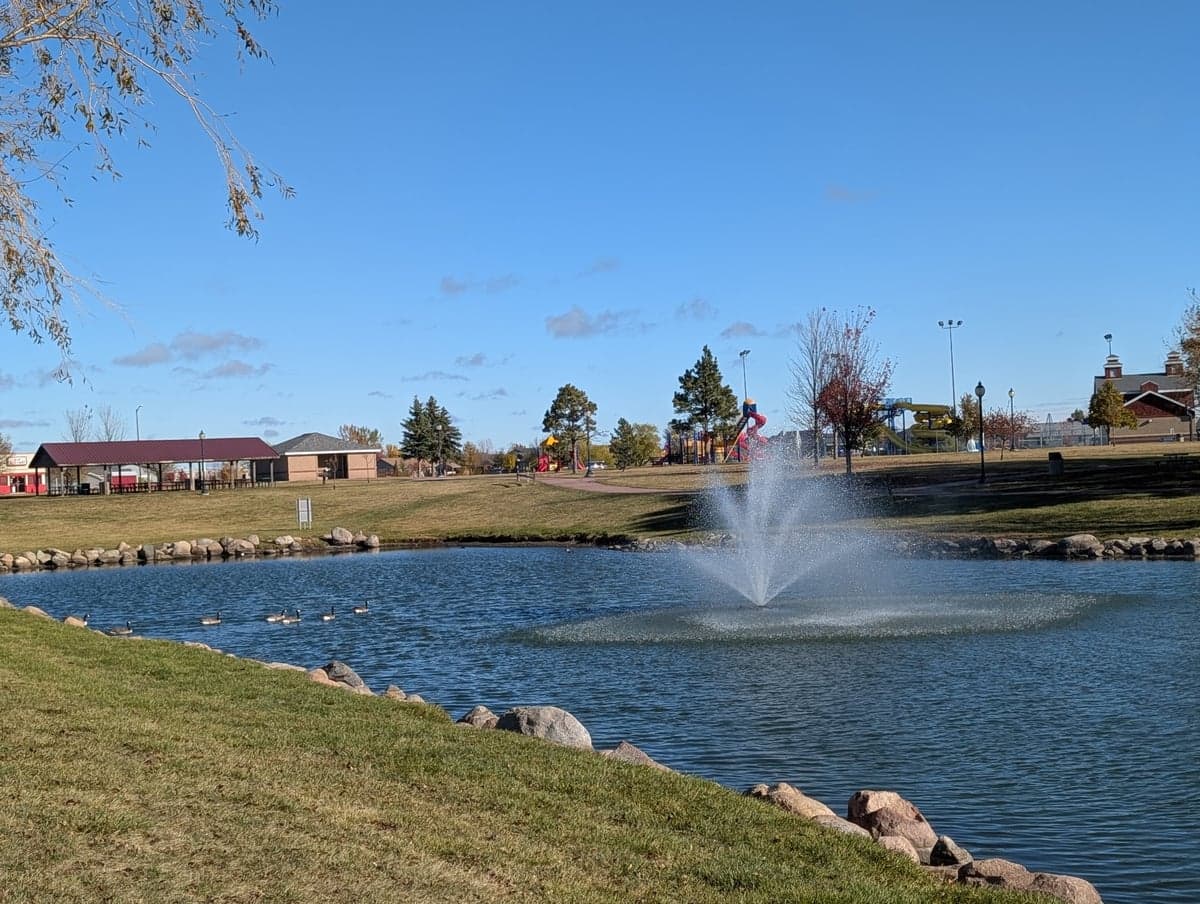
Photo: Wikipedia
Personal Sovereignty in Tea, SD
Viable for self-reliance. Generally workable, though some barriers may limit total independence.
What does Personal Sovereignty tell us?
Personal Sovereignty measures your capacity for self-reliance and independence with minimal government friction. Higher scores mean fewer barriers between you and the way you want to live... but it assumes you have the space you need and good neighbors.
What does this tell us?
Personal Sovereignty measures your capacity for self-reliance and independence with minimal government friction. Higher scores mean fewer barriers between you and the way you want to live... but it assumes you have the space you need and good neighbors.
State Policy
Energy independence: Importer (35% of energy produced in-state)
Personal Liberty
Homesteading

Personal Liberty Analysis
Tea, South Dakota, offers a notably high degree of personal sovereignty compared to most of the United States, functioning as a pocket of relative autonomy within a state that already ranks among the most freedom-oriented in the nation. For the strategic relocator—whether a single individual or a family—this small town near Sioux Falls provides a legal and cultural environment where the presumption leans toward individual liberty rather than government permission. The combination of a light regulatory touch, strong property rights, and a community ethos of self-reliance makes Tea a serious consideration for those who view expanding state power as a threat to personal and family security.
Tax burden and regulatory posture: how South Dakota’s framework protects your income and property
South Dakota’s absence of a state income tax is the cornerstone of its sovereignty appeal, and Tea residents benefit directly. No state-level tax on wages, salaries, or retirement income means every dollar earned stays under your control, not funneled into a state bureaucracy. The state sales tax sits at 4.5%, with Tea adding a local option of 2% for a combined 6.5%—moderate by national standards and far lower than neighboring Minnesota or Iowa. Property taxes in Lincoln County, where Tea is located, average around 1.2% of assessed value, which is competitive for the region. More importantly, South Dakota has no estate tax, no inheritance tax, and no tax on Social Security benefits. For the prepper or survivalist, this fiscal posture means fewer resources extracted to fund programs you may not support, and more capital retained for land, supplies, and infrastructure. The regulatory environment mirrors this philosophy: South Dakota consistently ranks in the top five states for business freedom, with minimal occupational licensing burdens and no state-level red flag law or universal background check requirement. The state legislature has actively resisted federal overreach, passing resolutions asserting state sovereignty under the Tenth Amendment. For someone concerned about creeping federal control, this is not symbolic—it translates into real legal barriers against federal mandates on firearms, land use, and health mandates.
Self-defense and gun law specifics: what the Second Sanctuary status means for your rights
South Dakota is a constitutional carry state, meaning no permit is required to carry a concealed firearm for anyone legally allowed to possess one. Tea, like the rest of the state, operates under preemption laws that prevent local municipalities from enacting their own gun control ordinances—so the city council cannot ban carry in parks or impose magazine limits. The state has also designated itself a Second Amendment Sanctuary, with a 2021 law prohibiting state resources from being used to enforce any federal gun ban, registration scheme, or confiscation order. For the survivalist, this is the critical detail: if federal authorities attempt to enforce a national gun ban, South Dakota law directs state and local law enforcement to refuse cooperation. Stand-your-ground laws are fully in place, with no duty to retreat in any place where you have a legal right to be. Castle doctrine protections extend to occupied vehicles and workplaces, not just homes. The state also allows the use of deadly force to prevent the commission of a forcible felony, including home invasion or carjacking. For parents, this means the legal framework supports your right to defend your family without fear of prosecution, provided the use of force is reasonable under the circumstances. The only notable restriction is that firearm possession is prohibited on school grounds without a special permit, but South Dakota law does allow for secure storage in vehicles on school property—a practical compromise for those who carry during drop-off and pickup.
Self-reliance and homesteading viability: lot sizes, zoning, and off-grid feasibility in Tea
Tea’s zoning code is more permissive than most suburban communities, but it is not a free-for-all. Residential lots in the town proper typically range from one-quarter to one-half acre, with some newer subdivisions offering larger parcels up to one acre. For serious homesteading—think chickens, a large garden, or a small orchard—you will want to look at the unincorporated areas of Lincoln County just outside Tea’s city limits. There, zoning is minimal, and lot sizes of two to five acres are common and affordable, with prices ranging from $30,000 to $80,000 depending on proximity to utilities. Off-grid living is legally feasible in the county: there is no county-wide building code that mandates grid connection, though you will need to comply with state health department rules for septic systems and well water. Solar panels, rainwater catchment, and composting toilets are all permitted, provided they meet basic safety standards. The city of Tea does require connection to municipal water and sewer for properties within its jurisdiction, so true off-grid independence requires being outside the city limits. Livestock regulations in the county are lenient: you can keep horses, cattle, goats, and poultry on parcels of two acres or more without a special permit. For the prepper focused on food security, the growing season in this part of South Dakota runs about 150 days, with fertile glacial till soil that supports corn, beans, squash, and root vegetables. The local extension office offers soil testing and canning workshops, reflecting a community culture that still values traditional self-sufficiency skills.
Personal liberties: parental rights, medical autonomy, speech, and property protections
South Dakota has some of the strongest parental rights laws in the country. The Parents’ Bill of Rights, enacted in 2022, guarantees that parents have the fundamental right to direct the upbringing, education, and healthcare of their children. This includes the right to opt out of any school curriculum or activity, to access all educational records, and to be notified of any medical or mental health services provided to their child at school. The state has also banned the use of mask mandates and vaccine passports in public schools, and it prohibits any entity receiving state funds from requiring COVID-19 vaccination. Medical autonomy extends to adults as well: South Dakota has no state-level vaccine mandate for employment or public accommodation, and the state legislature has passed laws protecting healthcare providers who decline to participate in procedures they find morally objectionable. Freedom of speech is robust, with no hate speech laws or social media censorship mandates at the state level. Property rights are protected by a strong eminent domain statute that requires just compensation and limits the use of eminent domain for economic development—meaning the government cannot seize your land to give to a private developer. For the survivalist, the most relevant property protection is the state’s recognition of the right to use your land as you see fit, within reasonable health and safety limits. There are no state-level restrictions on building a bunker, storing food and water, or keeping a private armory on your property, provided you do not create a public nuisance.
In the broader landscape of American sovereignty, Tea, South Dakota, represents a strategic outpost for those who prioritize personal autonomy over collective conformity. The combination of no income tax, constitutional carry, strong parental rights, and permissive land use creates an environment where the individual—not the state—remains the primary decision-maker. Compared to the Pacific Northwest or the Northeast, where regulatory density and cultural hostility to firearms and self-reliance are the norm, Tea offers a legal and social climate that aligns with a prepper or survivalist worldview. It is not a libertarian utopia—there are still property taxes, zoning rules, and state sales tax—but it is a place where the default answer from government is “yes” rather than “maybe” or “no.” For the single individual or family looking to build a life with maximum personal sovereignty and minimum government interference, Tea deserves a serious look.

* Values derived from national, state, county, city and local statistics and may differ in a specific area. Last updated: 2026-04-19T08:07:44.000Z
Narrative content on this page is AI-generated and may contain mistakes. Verify any details that matter before acting on them.
ReloMaps may earn a commission from affiliate links at no extra cost to you.

