
Photo: Wikipedia
Quality of Life in Tea, SD
Above-average quality of iife. The area offers a reasonable cost of living, decent mobility, and a mix of neighborhood amenities.
What does Quality of Life tell us?
Quality of Life blends cost of living, nearby amenities, socioeconomic signals, and neighborhood character. City-level scores represent the whole municipality; individual neighborhoods can differ.
What does this tell us?
Quality of Life blends cost of living, nearby amenities, socioeconomic signals, and neighborhood character. City-level scores represent the whole municipality; individual neighborhoods can differ.
Cost of Living
1% above national average
The Real Cost of Living in Tea, SD for 2026
| Tier | Individual | Family (4) |
|---|---|---|
| Survival | $18k | $33k |
| Comfortable | $59k | $87k |
| Luxury | $127k+ | $197k+ |
| Elite (Top 5%) | $150k+ | $232k+ |
120%
The Area Signal
A metric tracking the socioeconomic signals of the area.


Hobbies
Explore the areaGroceries
3 within 10 miles
Gas
0 within 10 miles
Hospital
3 within 20 miles
Airport
MCI — Kansas City International
Post Office
USPS — Sioux Falls, SD
Critical Amenities
Quality-of-Life Analysis
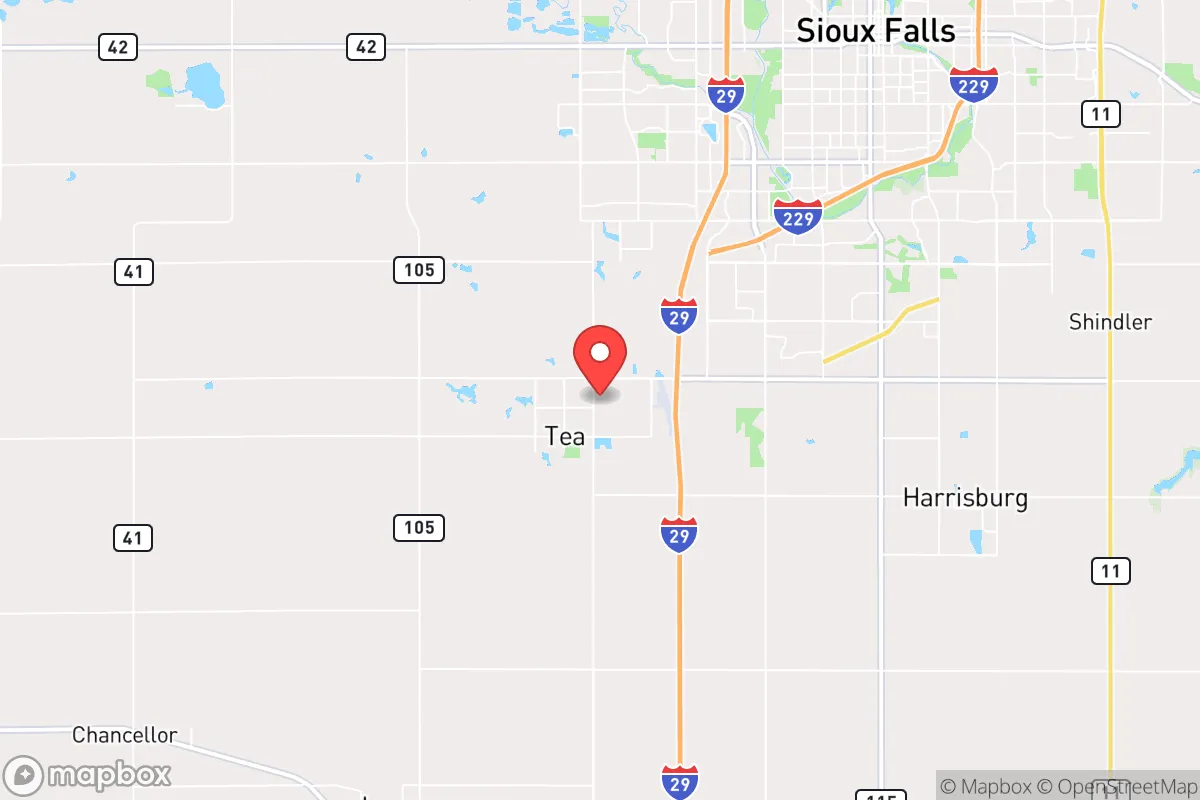
Tea, South Dakota, is a rapidly growing suburban community in Lincoln County that blends small-town atmosphere with the economic gravity of the Sioux Falls metro area. With a cost-of-living index of 101 (exactly at the national average of 100), the city attracts a mix of young families, professionals, and retirees seeking newer housing stock and lower property taxes than nearby Minnehaha County. The population has more than doubled since 2010, reflecting a deliberate shift toward master-planned subdivisions and a commuter-friendly lifestyle anchored by a median home value of $305,300 and a median rent of $1,113.
Cost of living, housing affordability, and how Tea compares to Sioux Falls
Tea’s cost-of-living index of 101 is slightly above the national baseline but remains notably lower than Sioux Falls’ index of 96–98 when factoring in housing. The median home value of $305,300 is roughly 15% higher than the Sioux Falls metro median of $265,000, reflecting Tea’s newer inventory and premium on larger lots. Renters fare better: the median rent of $1,113 is about $100 less than comparable units in Sioux Falls, making Tea a more affordable entry point for renters who still want proximity to urban jobs. Property taxes in Lincoln County run about 1.1% of assessed value, lower than Minnehaha County’s 1.3%, which appeals to homeowners looking to maximize square footage. The average commute of 17.6 minutes is significantly shorter than the national average of 26 minutes, and most residents drive west on 271st Street or south on Highway 11 to reach Sioux Falls in under 20 minutes. This commute advantage is a key driver of Tea’s growth, as it offers a suburban buffer without the 30–40 minute drives common in Harrisburg or Brandon.
Schools, amenities, and what daily life feels like in Tea
Daily life in Tea revolves around the Tea Area School District, which serves roughly 2,400 students across three elementary schools, one middle school, and one high school. The district consistently ranks in the top 10% of South Dakota schools by test scores, and the high school’s 4:1 student-to-teacher ratio (state average 14:1) is a standout draw for families. Amenities are concentrated along Main Avenue and the Tea City Park complex, which includes baseball fields, a splash pad, and walking trails. For groceries and daily errands, residents rely on a local Fareway and a handful of fast-casual restaurants; for major shopping or entertainment, the 15-minute drive to Sioux Falls’ Empire Place or The Empire Mall covers the gap. The city’s recreation department runs youth sports leagues and a summer concert series, but nightlife is essentially nonexistent—most social activity happens in Sioux Falls or at school events. The area’s violent crime rate is 1.2 per 1,000 residents (versus the national 4.0), and property crime is similarly low, reinforcing Tea’s reputation as a safe, quiet bedroom community.
Tea is best suited for families and professionals who prioritize short commutes, good schools, and newer housing over urban density or walkability. Singles and young couples may find the social scene limited, while retirees appreciate the low crime and proximity to Sioux Falls’ medical hubs like Sanford USD Medical Center. The city’s growth trajectory suggests continued demand for single-family homes and rental units, but those seeking historic downtowns or nightlife should look to Sioux Falls proper. For anyone wanting a predictable, family-oriented suburb with a 17-minute commute and a cost of living that doesn’t outpace the national average, Tea delivers a straightforward value proposition.

Crime in Tea, SD
Lower crime rates than 85% of comparable U.S. locations.
Violent CrimeViolent Crime Analysis
Property CrimeProperty Crime Analysis
Crime Analysis
Tea, South Dakota, is a low-crime community relative to national benchmarks, with violent and property crime rates well below the U.S. averages. The city’s violent crime rate of 168.5 per 100,000 residents is roughly half the national rate, while its property crime rate of 782.2 per 100,000 sits about 30% below the U.S. figure. These numbers reflect a generally safe environment, though residents should remain aware of local trends and the broader regional context.
Crime in context
Tea’s crime statistics compare favorably to both South Dakota and national averages. The state’s violent crime rate is approximately 400 per 100,000, meaning Tea’s rate is less than half the state average. Property crime in South Dakota hovers around 1,800 per 100,000, making Tea’s rate of 782.2 per 100,000 significantly lower. This places Tea among the safer small cities in the Sioux Falls metropolitan area, which itself has a moderate crime profile. The city benefits from a relatively low population density and a strong local police presence, factors that contribute to its safety record.
What residents experience
Residents of Tea typically report feeling safe walking their neighborhoods and leaving homes unlocked during the day. The most common property crimes are theft from vehicles and minor vandalism, rather than burglary or arson. Violent incidents are rare, with the 168.5 per 100,000 rate translating to roughly one or two violent crimes per year in a city of about 5,000 people. The local police department emphasizes community engagement and proactive patrols, which helps maintain low crime levels. However, as Tea grows—its population has nearly doubled since 2010—residents should monitor whether crime rates remain stable or begin to rise with increased density.
Neighborhood-level variation
Crime in Tea is not evenly distributed. The newer subdivisions on the eastern side of town, near the intersection of Highway 106 and 476th Avenue, see virtually no violent crime and very low property crime, likely due to newer construction and higher home values. Older areas closer to the railroad tracks and the original downtown core have slightly higher rates of property crime, though still well below state averages. The city’s proximity to Sioux Falls (about 15 miles north) means that some property crime may be linked to transient offenders from the larger metro area. Overall, Tea’s neighborhood-level variation is minimal, and no area is considered high-risk by local standards.
* Values derived from national, state, county, city and local statistics and may differ in a specific area. Last updated: 2026-04-19T08:07:44.000Z
Narrative content on this page is AI-generated and may contain mistakes. Verify any details that matter before acting on them.
ReloMaps may earn a commission from affiliate links at no extra cost to you.

