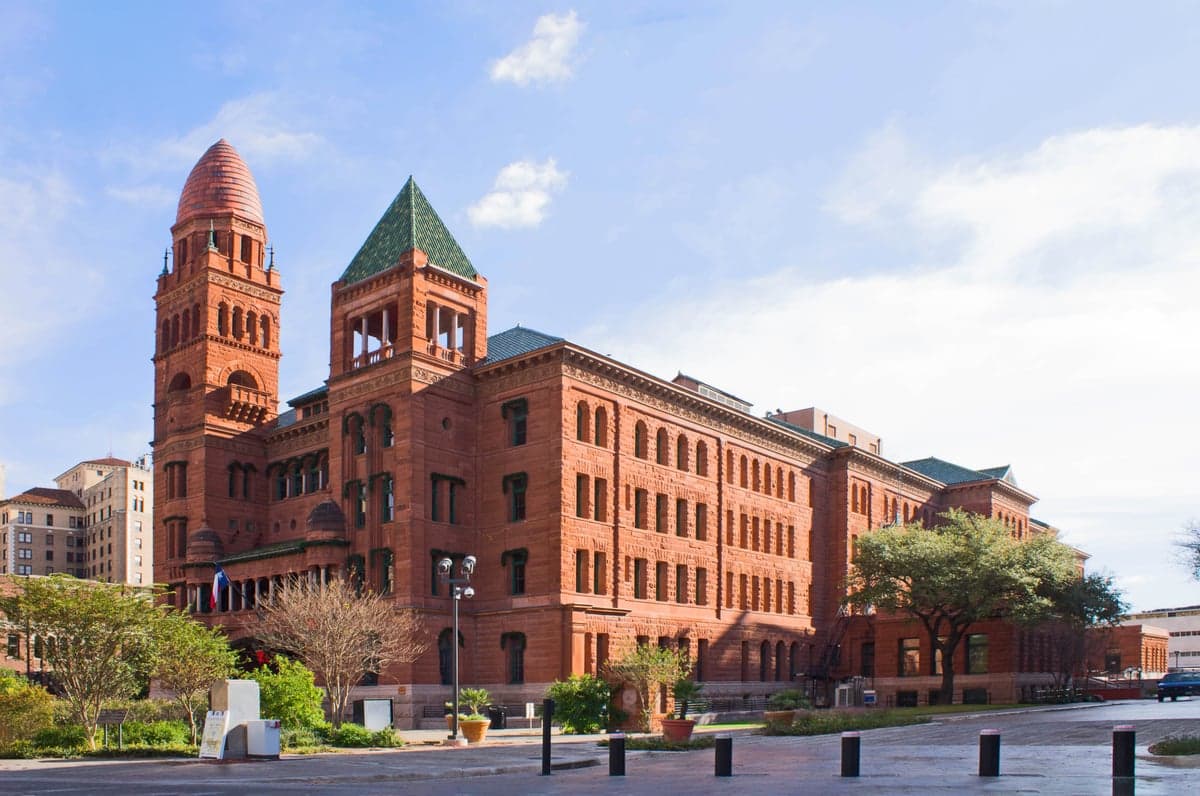
Photo: Wikipedia
Personal Sovereignty in Bexar County
Strong independent fundamentals that actively favor personal liberty and low regulation.
What does Personal Sovereignty tell us?
Personal Sovereignty measures your capacity for self-reliance and independence with minimal government friction. Higher scores mean fewer barriers between you and the way you want to live... but it assumes you have the space you need and good neighbors.
What does this tell us?
Personal Sovereignty measures your capacity for self-reliance and independence with minimal government friction. Higher scores mean fewer barriers between you and the way you want to live... but it assumes you have the space you need and good neighbors.
State Policy
Energy independence: Net exporter (220% of energy produced in-state)
Personal Liberty
Homesteading

Personal Liberty Analysis
For the individual or family who values personal sovereignty above all else, Bexar County presents a complex but ultimately favorable environment compared to the increasingly restrictive corridors of Austin or Dallas. While San Antonio itself is a large, diverse city with a municipal government that occasionally leans progressive, the county’s deep-rooted Texas independence, strong Second Amendment culture, and relatively light regulatory touch outside the urban core make it a strategic choice for those prioritizing autonomy. The key is understanding where within the county the balance of freedom tilts most in your favor—and where you’ll find the most breathing room from government overreach.
Tax burden and regulatory posture in Bexar County
Texas’s lack of a state income tax is a foundational advantage for personal sovereignty, but property taxes in Bexar County are a real consideration. The combined city and county property tax rate in San Antonio hovers around 2.5% to 2.8% of assessed value, which is higher than in more rural Texas counties but still below the effective rates in many blue states. The county’s regulatory posture is generally business-friendly, but the city of San Antonio has enacted ordinances that rankle liberty-minded residents—such as a plastic bag ban (now repealed) and stricter short-term rental rules. Outside the city limits, in unincorporated areas like Helotes or Von Ormy, the regulatory burden drops sharply. These areas lack the city’s zoning overlays and business license requirements, giving property owners more freedom to use their land as they see fit. For those willing to commute, the tax and regulatory advantage of living just outside the San Antonio city limits is substantial.
Self-defense and gun law specifics in Bexar County
Texas’s permitless carry law (effective 2021) applies fully in Bexar County, meaning any law-abiding adult can carry a handgun openly or concealed without a license. This is a bedrock of personal sovereignty here. The county is home to some of the most gun-friendly culture in the state, with major ranges like LoneStar Handgun in San Antonio and Bexar Community Shooting Range in Converse offering training and competition. However, there are nuances: San Antonio’s city council has considered “sensitive places” restrictions that go beyond state law, such as banning firearms in city parks and libraries. These proposals have been met with fierce resistance from groups like the San Antonio Gun Rights Coalition, and as of 2026, most have failed. The real advantage lies in the suburban and rural parts of the county. In Boerne (Kendall County, adjacent to Bexar) and Schertz, local law enforcement is notably supportive of gun rights, and you’ll find fewer “no guns” signs on businesses. For the prepper mindset, the ability to defend your home and family without bureaucratic hurdles is a major reason to choose the western or northern edges of the county over the urban core.
Self-reliance and homesteading viability across Bexar County
Homesteading and off-grid living are possible in Bexar County, but location is everything. The city of San Antonio enforces building codes, requires permits for most structures, and has strict water and sewer hookup requirements that make true off-grid living difficult within city limits. However, the county’s unincorporated areas—particularly in the southern and eastern parts—offer more flexibility. Elmendorf and China Grove are prime examples where you can find 1- to 5-acre lots with minimal zoning restrictions. These areas allow for rainwater collection, solar panel installations, and even small-scale livestock without the city’s approval. The county’s subdivision regulations are less onerous than in Travis or Dallas counties, but you’ll still need to navigate the Texas Commission on Environmental Quality for septic systems. For serious self-reliance, look to Lytle or Somerset in the far southwest, where land prices are lower and county enforcement is lax. The biggest hurdle is water access—many rural parcels lack municipal water, so drilling a well ($5,000–$15,000) is a prerequisite. But for those willing to invest, these areas offer a genuine off-grid foothold within 30 minutes of San Antonio’s resources.
Personal liberties: parental rights, medical autonomy, speech, and property
Bexar County sits in a state that has aggressively protected parental rights in education, with Texas’s 2023 law requiring school districts to notify parents of curriculum changes and allowing them to opt children out of certain instruction. The county’s largest school districts—Northside ISD and North East ISD—have largely complied, though some parents report pushback on specific materials. For those seeking maximum control, homeschool laws in Texas are among the most lenient in the nation: no notification, no testing, no curriculum approval. Medical autonomy is a mixed bag. Texas banned COVID-19 vaccine mandates for private employers and government entities, and the state’s 2024 law prohibits any future vaccine passports. However, the Texas Medical Board still holds significant power, and some San Antonio hospitals have been criticized for enforcing CDC guidelines that limit alternative treatments. On speech and property, Bexar County is generally strong. There are no county-level hate speech ordinances, and property rights are protected by Texas’s strong eminent domain laws (requiring full market value plus relocation costs). The city of San Antonio has a “fair housing” ordinance that some property owners view as overreach, but it primarily affects landlords with multiple units, not single-family homeowners. For the individualist, the county’s legal framework provides a solid foundation, but vigilance is required to prevent municipal creep.
Overall, Bexar County offers a higher degree of personal sovereignty than most urban counties in the United States, but it is not a libertarian paradise. The city of San Antonio will always have a progressive undercurrent that seeks to regulate behavior, from short-term rentals to energy efficiency standards. The strategic move for the sovereignty-minded individual is to locate in the county’s unincorporated areas or small towns like Helotes, Von Ormy, or Elmendorf, where the long arm of city government is absent. Compared to Austin’s aggressive zoning and Dallas’s high property taxes, Bexar County remains a relative haven for those who want to live by their own rules—provided they choose their specific plot of land wisely. The prepper or survivalist will find the gun culture, low regulatory burden outside the city, and strong property rights a solid foundation, but must remain engaged in local politics to prevent the erosion of these freedoms over time.

* Values derived from national, state, county, city and local statistics and may differ in a specific area. Last updated: 2026-05-10T18:10:41.000Z
Narrative content on this page is AI-generated and may contain mistakes. Verify any details that matter before acting on them.
ReloMaps may earn a commission from affiliate links at no extra cost to you.

