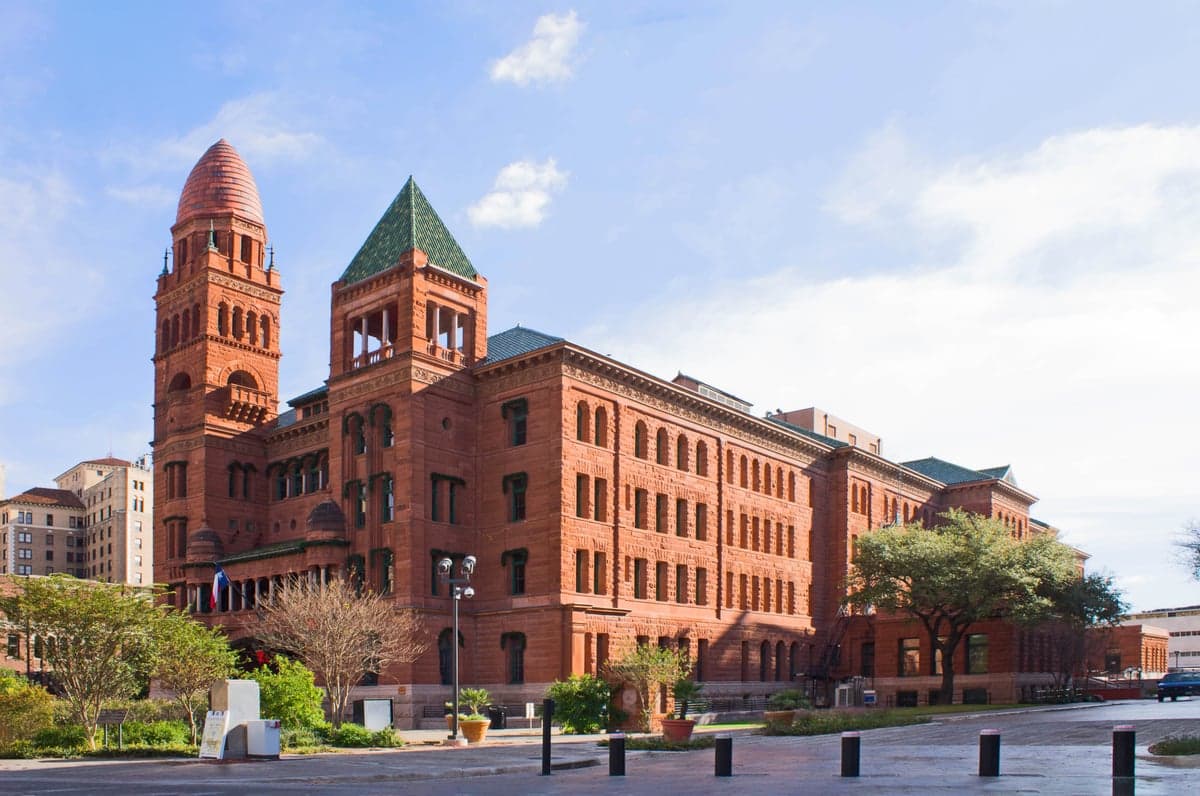
Photo: Wikipedia
Political ClimatePolitical Climate in Bexar County
Showing district-level results — no local-only data available.
Local Political AnalysisPolitical Analysis of Bexar County
Look, I've lived in Bexar County my whole life, and I've watched this place shift from a reliably conservative stronghold to something that feels like a different world. The Cook PVI now sits at D+19, which means Democrats have a 19-point advantage here, while the rest of Texas is R+4. That's a massive 23-point gap between Bexar County and the state as a whole. It didn't happen overnight, but the trend has been accelerating, and it's hard to ignore what that means for folks who value limited government and personal freedoms.
How it compares
The contrast between Bexar County and Texas is stark. While the state leans Republican by 4 points, Bexar County is one of the most reliably Democratic urban counties in the South. But here's the thing—it's not a monolith. If you drive out to Helotes or Fair Oaks Ranch, you'll find neighborhoods that still vote solidly red, with conservative values on display at local city council meetings. Meanwhile, San Antonio proper, especially the inner-city districts like the near East Side and West Side, are deep blue. The swing precincts are in places like Converse and Universal City, where working-class families are getting squeezed by rising property taxes and government mandates. Those folks used to vote Republican, but now they're being pulled left by promises of free stuff—promises that always come with more strings attached.
What this means for residents
For those of us who believe in personal responsibility and limited government, the shift is concerning. The county government has been pushing progressive policies that feel like overreach—think mask mandates that lasted longer than the science justified, and zoning changes that make it harder to run a small business without a dozen permits. Property taxes are climbing because the county keeps expanding services, and there's a growing sense that your voice doesn't matter as much if you're not part of the progressive coalition. School board meetings in districts like North East ISD have become battlegrounds over curriculum and parental rights, and the county's leadership often sides with the teachers' union over parents. It's a far cry from the Bexar County I grew up in, where the biggest fights were over road bonds and water rates.
Looking ahead, I see the divide widening. The county's population is growing fast, driven by transplants from California and the Northeast who bring their big-government ideas with them. The rural parts of the county—places like Von Ormy and Lackland AFB area—still lean conservative, but they're being outvoted by the urban core. If you're a conservative here, you're not powerless, but you have to work harder to protect your freedoms. The best bet is to get involved at the local level—school boards, city councils, and county commissioner races—because that's where the real decisions about your life are made. Otherwise, you'll wake up one day and wonder how your county got so far from the Texas values you remember.

State Political ClimatePolitical Climate in Texas
State Political AnalysisPolitical Environment in the State
Texas remains a solidly Republican state with a Cook PVI of R+4, but the political landscape has shifted noticeably over the past 10-20 years. The dominant coalition is still conservative, anchored by rural and suburban voters who prioritize low taxes, gun rights, and limited government. However, the influx of new residents from blue states, particularly in the Dallas-Fort Worth and Austin metros, has begun to chip away at the GOP’s margins. In 2024, Donald Trump carried Texas by about 9 points, down from 11 points in 2020 and 16 points in 2016. The state is still red, but it’s not as deep red as it used to be, and the trend line is something every conservative considering a move here should watch closely.
Urban vs. rural divide
The political map of Texas is a tale of three distinct regions. The big blue metros—Austin, Dallas, Houston, San Antonio, and El Paso—drive the Democratic vote. Austin’s Travis County is the bluest of the bunch, with Biden winning it by 50 points in 2020. Harris County (Houston) and Dallas County are also reliably blue, though their margins have tightened slightly as suburban precincts shift right. Meanwhile, the rural and exurban areas—places like Lubbock, Amarillo, and the sprawling Hill Country around Fredericksburg—are deeply red. The real battleground is the suburbs. Counties like Collin (north of Dallas), Denton, and Williamson (north of Austin) were once GOP strongholds but have become competitive. Collin County, for example, went from +30 R in 2012 to +10 R in 2024. That’s where the demographic pressure is most visible, and it’s where the next decade’s political future will be decided.
Policy environment
Texas’s policy environment is a dream for conservatives who value limited government. There’s no state income tax, which is a huge draw for families and entrepreneurs. Property taxes are high (around 1.6-2.5% of assessed value depending on the county), but the overall tax burden is still lower than in most blue states. The regulatory posture is business-friendly, with right-to-work laws and minimal red tape. On education, the state has pushed school choice hard—the 2023 Texas Education Savings Account program, though initially limited, is a clear signal that the legislature wants to expand options for parents. Healthcare is a mixed bag: Texas didn’t expand Medicaid, which keeps costs down for the state but leaves many low-income residents uninsured. Election laws tightened after 2020 with Senate Bill 1, which added voter ID requirements and restricted mail-in voting. For a conservative, this is a state that generally respects personal freedom—especially on economic and Second Amendment issues—though the growing urban influence is starting to push for more progressive policies at the local level.
Trajectory & freedom
On the freedom front, Texas has been a mixed bag over the last five years. The good news: the state expanded gun rights significantly with permitless carry (HB 1927) in 2021, allowing law-abiding adults to carry a handgun without a license. Parental rights were strengthened with the 2023 law requiring school districts to notify parents of any changes in a child’s mental or physical health, effectively pushing back against woke school policies. The state also passed a near-total abortion ban (SB 8 in 2021), which remains a major draw for pro-life families. On the concerning side, the state has seen an uptick in government overreach in the name of “public safety.” The 2023 law raising the minimum age for purchasing assault-style rifles from 18 to 21 (SB 14) was a rare restriction on gun rights. And the state’s aggressive use of the Texas Rangers to investigate election fraud has created a climate of suspicion that some see as necessary and others as heavy-handed. Property rights are generally strong, but the rapid growth in cities like Austin has led to zoning fights that can feel like a slow creep of local control.
Civil unrest & political movements
Texas has seen its share of political flashpoints. The 2020 protests in Austin and Dallas over police brutality were large and occasionally violent, with the Austin Police Department facing significant criticism from the left. The state’s response was to pass the “Back the Blue” law (HB 9) in 2021, which increased penalties for assaulting police officers and restricted defunding efforts. Immigration politics are a constant flashpoint. Governor Abbott’s Operation Lone Star, launched in 2021, deployed state troopers and National Guard to the border, and the state has bused thousands of migrants to sanctuary cities like New York and Chicago. This has energized the conservative base but also drawn lawsuits and criticism from the Biden administration. Secession rhetoric—the “Texit” movement—is mostly a fringe talking point, but it flares up whenever the federal government overreaches. Election integrity remains a hot-button issue: the 2020 election in Texas was relatively smooth, but the 2022 primary saw some controversies over mail-in ballot processing in Harris County. For a new resident, the most visible sign of political tension is the constant presence of border security checkpoints in the Rio Grande Valley and the occasional protest in downtown Austin.
Projection
Over the next 5-10 years, Texas is likely to become more purple, but not necessarily blue. The in-migration from California and the Northeast is slowing, and many of those newcomers are actually conservative-leaning or moderate. The key demographic shift is the growth of the Hispanic population, which has historically leaned Democratic but is now splitting more evenly—Trump won about 40% of the Hispanic vote in Texas in 2024, up from 35% in 2020. The suburbs will continue to be the battleground. If Republicans can hold places like Collin and Williamson counties while improving margins in the Rio Grande Valley, the state will stay red. If the urban cores keep growing and the suburbs flip, Texas could become a swing state by 2032. For a conservative moving in now, the practical takeaway is this: you’ll still find a state that respects your values on taxes, guns, and parental rights, but you’ll need to be strategic about where you settle. Stick to the exurbs and smaller cities like Lubbock or Fredericksburg if you want to avoid the progressive drift of the big metros.
Bottom line: Texas is still a great bet for conservatives who want low taxes, strong gun rights, and a culture that values personal responsibility. But the political winds are shifting, and the state’s future depends on whether the GOP can hold the line in the suburbs. If you’re moving here, pick your county carefully—your vote will matter more than ever in the next decade.
* Values derived from national, state, county, city and local statistics and may differ in a specific area. Last updated: 2026-05-10T18:10:41.000Z
Narrative content on this page is AI-generated and may contain mistakes. Verify any details that matter before acting on them.
ReloMaps may earn a commission from affiliate links at no extra cost to you.

