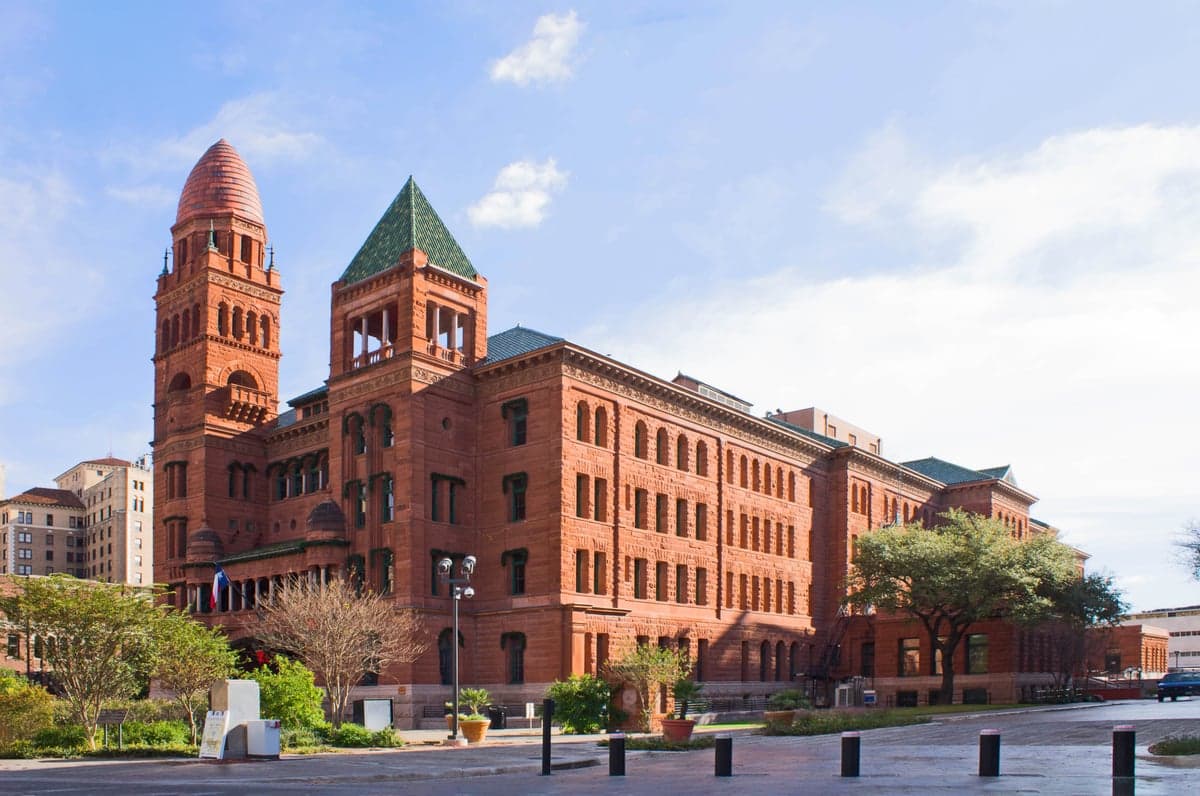
Photo: Wikipedia
Demographics of Bexar County
Affluence Level in Bexar County
A middle-class area roughly in line with national averages across income, home values, education, and employment.
People of Bexar County
Bexar County is home to over 2 million people, a majority-Hispanic population (59.5%) that gives San Antonio and its surrounding communities a distinctly Tejano cultural character, layered atop a foundation of Spanish colonial, German, and Anglo-American settlement. The county’s identity is rooted in its role as a historic gateway — first for Spanish missionaries and soldiers, then for German and Czech farmers, and later for Mexican and Central American immigrants seeking economic opportunity. Today, Bexar County is one of the fastest-growing large counties in Texas, driven by domestic migration from California and the Rust Belt, as well as ongoing international immigration, making it a dynamic, increasingly diverse, and politically pivotal region.
Settlement & growth (pre-1960)
Long before European contact, the area now known as Bexar County was home to the Coahuiltecan peoples, a collection of nomadic hunter-gatherer bands who lived along the San Antonio River. The Payaya, a Coahuiltecan group, had a village called Yanaguana near the river’s headwaters — the site where Spanish explorers would later establish the first permanent settlement. The Apache and Comanche nations also ranged through the region, often in conflict with the Spanish and later with Anglo settlers.
Spanish colonization began in earnest in 1718 with the founding of Mission San Antonio de Valero (the Alamo) and the Presidio San Antonio de Béxar, which together formed the nucleus of what became San Antonio. The Spanish Crown granted land to Canary Islanders (Isleños) in 1731, who established the village of La Villita on the river’s south bank — these families remain a distinct cultural group in modern San Antonio. By the late 1700s, the presidio and missions had attracted a mix of Spanish soldiers, mestizo settlers, and Tlaxcalan Native allies from central Mexico, creating a stratified colonial society centered on the plaza at what is now San Antonio’s Main Plaza.
After Texas independence in 1836 and annexation by the United States in 1845, Anglo-American settlers poured into Bexar County, drawn by cheap land and the promise of cotton agriculture. German immigrants arrived in large numbers during the 1840s and 1850s, establishing farming communities like Boerne (founded 1849 by German freethinkers) and Helotes (settled by German and Polish farmers). The German influence is still visible in the Hill Country architecture, beer culture, and place names of northern Bexar County. Polish immigrants also settled in St. Hedwig (founded 1855), a rural community east of San Antonio that retains Polish Catholic traditions and a small but proud ethnic identity.
The post-Civil War period brought freed African Americans to San Antonio, many of whom settled in the East Side neighborhoods around Denver Heights and Dignowity Hill, building churches, schools, and businesses that became the backbone of the city’s Black community. The Great Migration (1910–1970) brought additional Black families from the Deep South, though San Antonio’s Black population remained smaller than in Houston or Dallas due to the city’s heavily Hispanic labor market. Meanwhile, Mexican immigration surged during the Mexican Revolution (1910–1920), with refugees and laborers settling in the West Side barrios of Laredo and Prospect Hill, creating the dense, Spanish-speaking neighborhoods that define much of San Antonio’s urban core today.
By 1960, Bexar County’s population had reached roughly 687,000, with San Antonio as the dominant city. The economy was anchored by military bases (Fort Sam Houston, Lackland Air Force Base, Brooks Air Force Base), which attracted a steady stream of Anglo and Black service members and their families, as well as a growing Mexican-American middle class employed in civil service and light manufacturing.
Modern era (post-1965)
The 1965 Hart-Cellar Act fundamentally reshaped Bexar County’s demographics by opening immigration from Asia, Africa, and Latin America. The most immediate impact was a surge in Mexican and Central American immigration, which accelerated through the 1970s and 1980s as political instability and economic hardship drove families north. These new arrivals settled overwhelmingly in San Antonio’s West and South sides, as well as in suburban communities like Von Ormy and Elmendorf, where affordable housing and established Spanish-speaking networks eased the transition.
East and Southeast Asian immigration grew more slowly but steadily after 1965. Vietnamese refugees arrived in the late 1970s and 1980s, many sponsored by Catholic churches in San Antonio, and established a small but visible community around the Leon Valley and Castle Hills areas. Filipino immigrants, many recruited as medical professionals, settled near the military bases and in the Alamo Heights and Terrell Hills neighborhoods. Today, East/Southeast Asian communities make up 2.1% of the county’s population, with a concentration in the northern suburbs.
Indian-subcontinent immigration (1.0% of the population) is a more recent phenomenon, driven by the tech and healthcare sectors. Indian professionals and their families have clustered in Stone Oak and Far North Central San Antonio, where good schools and new housing developments have attracted a highly educated, English-proficient population. This group is distinct from the older Asian communities and tends to be more suburban and affluent.
Domestic migration has also reshaped the county since 1965. The Sun Belt boom brought white and Black retirees, military retirees, and job-seekers from the Rust Belt and California, particularly during the 1980s and 1990s. Suburbanization pushed population growth outward from San Antonio’s urban core into Converse, Universal City, and Schertz (the latter two straddling the Guadalupe County line), where master-planned communities and new schools attracted families seeking lower costs and more space. The white population share has declined from roughly 45% in 1980 to 26.7% today, as Hispanic growth and in-migration have outpaced Anglo births and retention.
The future
Bexar County’s population is projected to reach 2.5 million by 2035, driven by continued domestic migration from high-cost states and sustained Hispanic birth rates. The county is not homogenizing; rather, it is becoming more ethnically layered, with distinct enclaves solidifying. The Hispanic majority is growing and deepening its political and cultural influence, while the white population is aging and suburbanizing further north into Comal and Kendall counties. Black and Asian communities are growing slowly but remain small relative to the Hispanic majority.
Immigrant communities are likely to plateau in growth as national immigration policy tightens and as second- and third-generation families assimilate into English-dominant, suburban lifestyles. The Indian and East/Southeast Asian populations will probably continue to grow in the northern suburbs, drawn by tech and healthcare jobs, but will remain a small share of the total. The most significant demographic shift ahead is the continued expansion of the Hispanic middle class into formerly Anglo suburbs like Stone Oak and Alamo Ranch, blurring the old East Side/West Side ethnic boundaries.
For someone moving in now, Bexar County offers a culturally vibrant, majority-minority environment where Spanish is heard as often as English, military and Catholic traditions run deep, and the cost of living remains low relative to coastal metros. The county’s identity is becoming more Hispanic and more suburban, but its historic role as a crossroads — of Native, Spanish, German, Mexican, and Anglo peoples — still shapes the character of its neighborhoods and the daily lives of its residents.

* Values derived from national, state, county, city and local statistics and may differ in a specific area. Last updated: 2026-05-10T18:10:41.000Z
Narrative content on this page is AI-generated and may contain mistakes. Verify any details that matter before acting on them.
ReloMaps may earn a commission from affiliate links at no extra cost to you.

