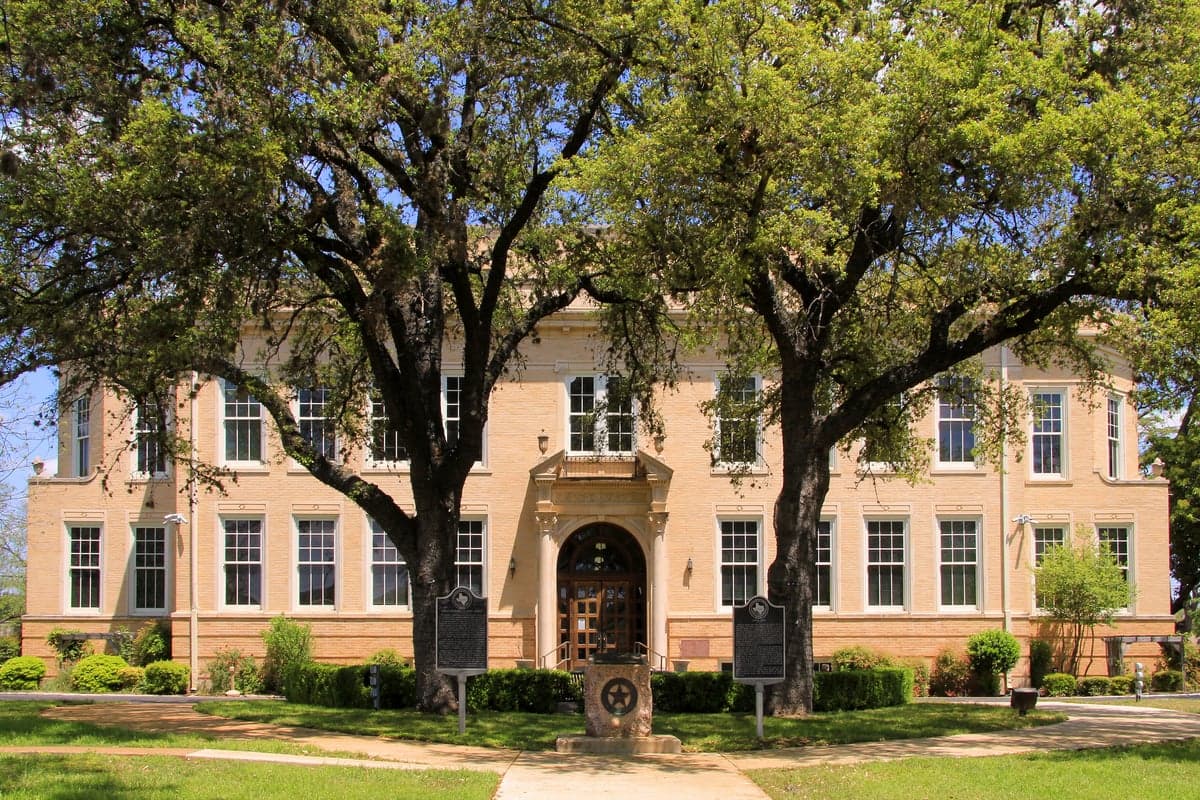
Photo: Wikipedia
Personal Sovereignty in Kerr County
Strong independent fundamentals that actively favor personal liberty and low regulation.
What does Personal Sovereignty tell us?
Personal Sovereignty measures your capacity for self-reliance and independence with minimal government friction. Higher scores mean fewer barriers between you and the way you want to live... but it assumes you have the space you need and good neighbors.
What does this tell us?
Personal Sovereignty measures your capacity for self-reliance and independence with minimal government friction. Higher scores mean fewer barriers between you and the way you want to live... but it assumes you have the space you need and good neighbors.
State Policy
Energy independence: Net exporter (220% of energy produced in-state)
Personal Liberty
Homesteading

Personal Liberty Analysis
Kerr County, Texas, offers a notably high degree of personal sovereignty, particularly for those seeking to minimize government overreach in daily life. The county’s political culture, rooted in deep Texas individualism, creates an environment where self-reliance is not just tolerated but expected. For single individuals and parents evaluating relocation, the area presents a tangible alternative to the increasing regulatory density found in urban centers like Austin or San Antonio, with local governance generally deferring to personal choice on matters of property, defense, and family life.
Tax burden and regulatory posture: how Kerr County compares to Texas norms
Texas has no state income tax, a foundational advantage for personal financial sovereignty, and Kerr County operates within that framework with a relatively light local touch. The county’s total property tax rate hovers around 1.2–1.4% of assessed value, which is competitive even by Texas standards. Cities like Kerrville (the county seat) and Ingram maintain minimal business licensing requirements, and there are no county-level zoning ordinances outside incorporated city limits. This means that in unincorporated areas—such as Center Point or Hunt—a landowner can build a workshop, park an RV, or keep livestock without navigating a thicket of permits. The regulatory posture is distinctly hands-off: the Kerr County Commissioners Court has consistently opposed state-level mandates on local land use and has not adopted the kind of environmental overlay districts common in more progressive Texas counties. For a prepper-minded individual, this translates to fewer bureaucratic hurdles when establishing a self-sufficient property.
Self-defense and gun law specifics: what the Second Sanctuary status means for residents
Kerr County is a certified Second Amendment Sanctuary, a formal resolution passed by the commissioners court that declares local law enforcement will not enforce federal or state gun laws deemed infringements on the right to keep and bear arms. This is not symbolic; it has practical teeth. The county sheriff’s office, under Sheriff Rusty Hierholzer, has publicly stated it will not assist in enforcing red flag orders or federal firearm registration schemes. For residents, this means constitutional carry (permitless carry) is fully respected, and there are no county-level restrictions on magazine capacity, firearm types, or storage requirements. In Kerrville, the local gun culture is visible: multiple gun shops, indoor ranges, and regular competitive shooting events at the Kerr County Shooting Sports Complex. Parents will find that the area’s schools, while following state law on firearm possession on campus, have not adopted the kind of zero-tolerance policies that criminalize minor infractions. The practical effect is that a responsible adult can keep a firearm in a vehicle or home without fear of local prosecution, a significant factor for those prioritizing self-defense autonomy.
Self-reliance and homesteading viability: lot sizes, zoning, and off-grid feasibility
The viability of a self-reliant lifestyle varies across Kerr County’s geography. In the unincorporated areas around Mountain Home and Harper, minimum lot sizes are typically 1–5 acres, with no county-wide ban on rainwater collection, composting toilets, or solar panel installation. Off-grid living is legally feasible: Texas state law (Health and Safety Code 366) allows for on-site wastewater systems with a simple permit, and Kerr County does not require connection to municipal water or sewer in rural zones. In contrast, Kerrville’s city limits impose stricter rules—minimum lot sizes of 6,000–10,000 square feet in residential zones, and a requirement to hook into city water and sewer if available. For those wanting to raise chickens, goats, or a large garden, the rural precincts (especially Precincts 1 and 4) are far more accommodating than the city. The county’s agricultural exemption on property taxes is also generous: landowners with as little as 10 acres in qualified timber or livestock use can see their tax bill drop by 60–80%. This makes homesteading not just a philosophical choice but an economically rational one for those willing to manage the land.
Personal liberties: parental rights, medical autonomy, speech, and property
Kerr County’s culture strongly supports parental rights in education and healthcare. The local school districts—Kerrville ISD, Ingram ISD, and Harper ISD—have not adopted controversial curriculum materials related to gender ideology or critical race theory, and school board meetings are dominated by conservative parents who actively monitor instructional content. Medical autonomy is similarly respected: there are no county-level vaccine mandates, and the Kerr County Health Department does not enforce mask orders or quarantine protocols beyond state minimums. For those concerned about medical privacy, the area has a growing network of direct-primary-care clinics and compounding pharmacies that operate without the bureaucratic overhead of large hospital systems. Free speech is robustly protected; the Kerr County Courthouse lawn is a frequent site for political rallies, and local law enforcement does not enforce noise ordinances or permit requirements for public gatherings in a way that chills expression. Property rights are the bedrock of local governance: the county has no rent control, no short-term rental bans (though Kerrville has a modest registration requirement), and no inclusionary zoning mandates. Eminent domain actions are rare and politically unpopular, with the county typically negotiating voluntary easements for road projects rather than forcing takings.
In the broader context of Texas and the nation, Kerr County stands out as a jurisdiction where personal sovereignty is not merely tolerated but actively defended by local officials. Compared to counties in the Austin metro area (like Travis or Hays), where zoning, gun restrictions, and school board activism have tightened, Kerr County offers a more permissive environment for those who value minimal government interference. For the single individual or parent approaching relocation from a survivalist or prepper mindset, the combination of low taxes, sanctuary status, homestead-friendly rural zoning, and strong property rights makes this one of the more strategically sound choices in the Hill Country. The key is choosing the right precinct—rural Harper or Mountain Home for maximum autonomy, or the outskirts of Kerrville for a balance of services and freedom. Either way, the county’s institutional posture is clear: the individual comes first, and the government’s role is to stay out of the way.

* Values derived from national, state, county, city and local statistics and may differ in a specific area. Last updated: 2026-05-22T14:24:55.000Z
Narrative content on this page is AI-generated and may contain mistakes. Verify any details that matter before acting on them.
ReloMaps may earn a commission from affiliate links at no extra cost to you.

