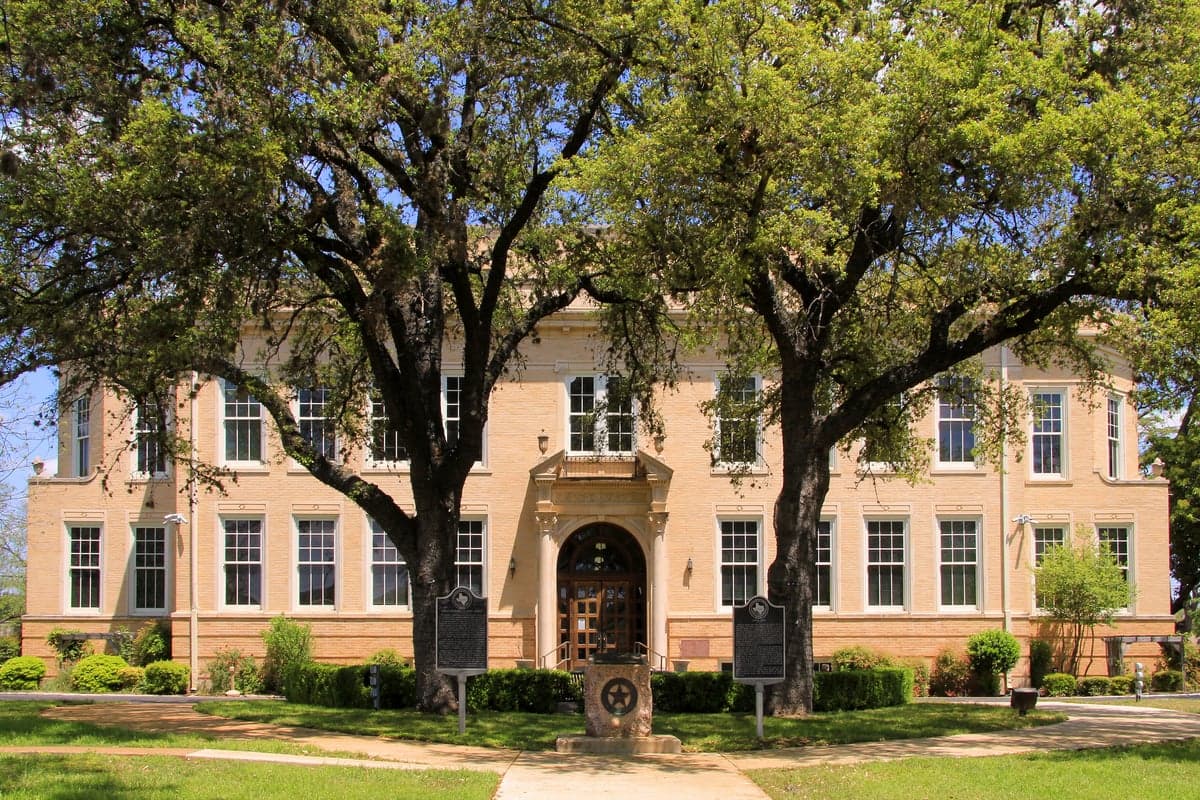
Photo: Wikipedia
Quality of Life in Kerr County
A livable area that tracks near national norms for affordability, walkability, and neighborhood health.
What does Quality of Life tell us?
Quality of Life measures an area by evaluating factors like cost of living, nearby amenities, country club access, airport proximity, socioeconomic signals and neighborhood character. For large states, this is a general average — quality of life can vary dramatically between metro areas, suburbs, and rural communities within the same state.
What does this tell us?
Quality of Life measures an area by evaluating factors like cost of living, nearby amenities, country club access, airport proximity, socioeconomic signals and neighborhood character. For large states, this is a general average — quality of life can vary dramatically between metro areas, suburbs, and rural communities within the same state.
Cost of Living
4% below national average
83%
The Real Cost of Living in Kerr County for 2026
| Tier | Individual | Family (4) |
|---|---|---|
| Survival | $17k | $32k |
| Comfortable | $55k | $81k |
| Luxury | $123k+ | $190k+ |
| Elite (Top 5%) | $152k+ | $235k+ |
Quality-of-Life Analysis
Kerr County, Texas, offers a quality-of-life spectrum that ranges from the walkable, amenity-rich Hill Country hub of Kerrville to the quiet, unincorporated crossroads of Ingram and the sprawling ranchlands near Hunt and Mountain Home. The county’s character shifts noticeably within a 20-minute drive: one side of the county delivers boutique shopping and a regional hospital, while the other offers dark skies, deer crossings, and a pace of life measured by the seasons. This diversity attracts a mix of retirees seeking medical access, remote workers wanting land, and families looking for a lower-cost alternative to Austin or San Antonio.
Largest town(s) & population centers
Kerrville is the county seat and the only incorporated city of significant size, with a population just over 24,000. Daily life here centers on the Guadalupe River corridor, the Kerrville-Schreiner Park, and a downtown that has revitalized around local restaurants, art galleries, and the Cailloux Theater. The city is the region’s medical anchor, home to Peterson Regional Medical Center and a concentration of specialists that draws patients from a multi-county area. Commute times average 20.5 minutes countywide, and in Kerrville itself most errands are within a 10-minute drive. The city also hosts the Kerrville Folk Festival and the Texas Heritage Music Festival, giving it a cultural pulse rare for a town its size. Fredericksburg Road (SH 16) is the primary commercial spine, lined with big-box retailers, car dealerships, and chain restaurants, while the historic district along Water Street and Earl Garrett Street offers a more pedestrian-friendly, locally owned alternative.
Smaller towns & rural pockets
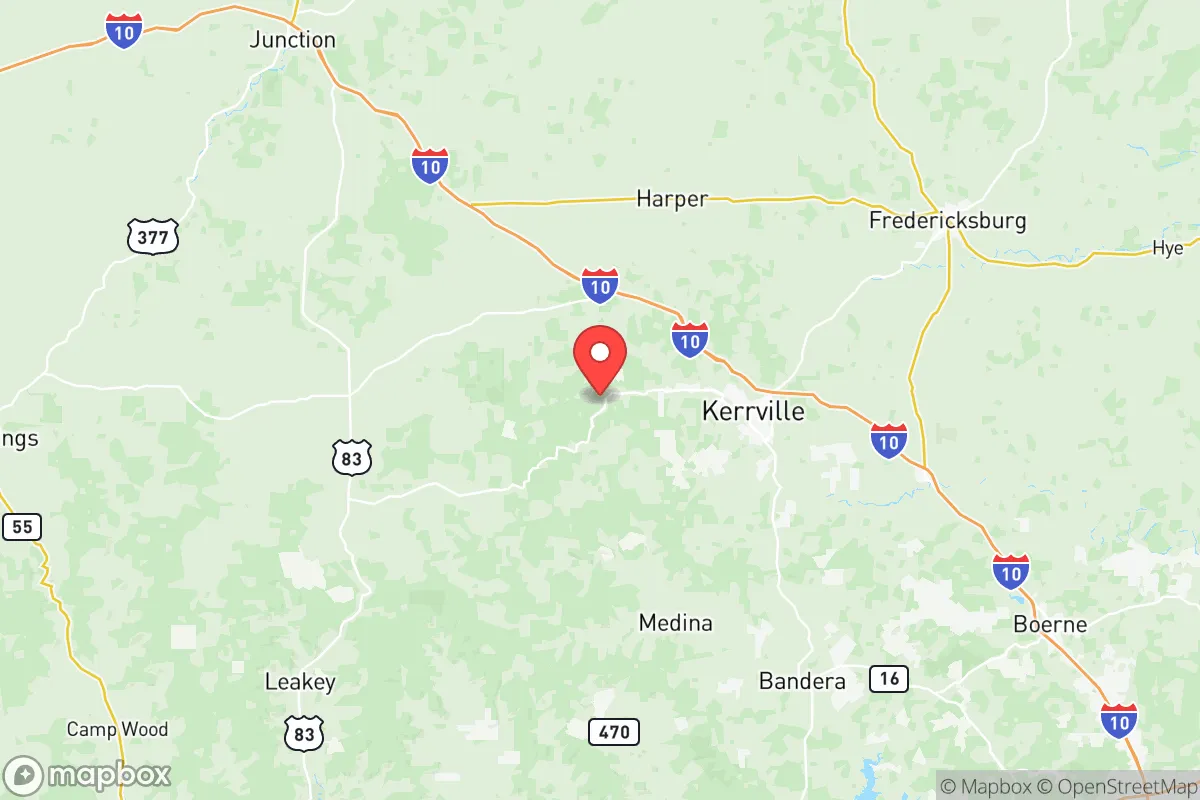
Outside Kerrville, the county’s smaller communities each have a distinct identity. Ingram, just west of Kerrville along the Guadalupe, is an unincorporated community known for the Ingram Dam and the annual Kerr County Fair. It has a handful of cafes, a post office, and a rural feel, but is close enough to Kerrville for daily commuting. Center Point, to the east, is a quiet crossroads with a historic school and a strong volunteer fire department; it is popular with families who want acreage without total isolation. Hunt, located farther west near the Kerr County line, is a tiny community along the North Fork of the Guadalupe, known for low-density riverfront cabins and second homes. Mountain Home, in the far western part of the county, is the most remote settlement, with a population under 100 and no grocery store; residents drive 30–40 minutes to Kerrville for supplies. These areas share a common trait: no municipal water or sewer in many subdivisions, meaning well and septic are standard, and internet access can be limited to fixed wireless or satellite.
Cost & lifestyle range
The county’s overall cost of living index of 96 (below the U.S. average of 100) masks a wide internal spread. In Kerrville proper, the median home value is $285,100 and median rent is $1,079, putting it on par with smaller Texas suburbs but below the state’s major metros. A typical three-bedroom home in a Kerrville subdivision like Tivy Mountain Estates or Riverhill runs $300,000–$400,000, while a newer home in the Singing Hills area near the airport can exceed $500,000. At the low end, older homes in the West Kerrville neighborhood or small rental duplexes near Schreiner University can be found for under $200,000. In the rural communities, land prices vary dramatically: a 5-acre lot in Center Point might sell for $80,000, while a 20-acre tract with river frontage near Hunt can command $500,000+. The lifestyle trade-off is clear: Kerrville offers sidewalks, streetlights, and a grocery store every mile, while rural areas require self-sufficiency—longer drives, private water systems, and a tolerance for wildlife (deer, feral hogs, and the occasional mountain lion). Property taxes in Kerr County average roughly 1.8% of assessed value, slightly above the Texas median, but there is no city tax in unincorporated areas.
Kerr County works best for people who want a genuine Hill Country experience without the premium pricing of Fredericksburg or the sprawl of San Antonio. Retirees with medical needs gravitate to Kerrville for its hospital and walkable downtown. Remote workers and families willing to trade convenience for space find their niche in Ingram or Center Point. And those seeking total seclusion—hunters, ranchers, or off-grid enthusiasts—settle in the far western reaches near Mountain Home. The county’s strength is that it offers all three options within a 30-minute radius, making it one of the more versatile relocation choices in central Texas.

Crime in Kerr County
Crime rates similar to the national median for U.S. locations.
Violent CrimeViolent Crime Analysis
Property CrimeProperty Crime Analysis
Crime Analysis
Kerr County, anchored by the city of Kerrville, presents a mixed safety picture that is notably safer than Texas’s most dangerous urban centers but still carries crime rates above the most secure rural counties in the Hill Country. The county’s violent crime rate of 344.4 incidents per 100,000 residents and property crime rate of 1,791.9 per 100,000 place it in a middle tier—less dangerous than cities like San Antonio or Houston, but riskier than neighboring counties like Gillespie (Fredericksburg) or Kendall (Boerne). The overall safety experience depends heavily on whether you live inside Kerrville’s city limits, in the unincorporated county, or in smaller communities like Ingram, Hunt, or Mountain Home.
Crime in context
Kerr County’s violent crime rate of 344.4 per 100,000 is roughly 15% below the Texas state average of about 405 per 100,000, but still significantly higher than the national rate of approximately 380 per 100,000. Property crime in the county, at 1,791.9 per 100,000, sits just above the national average of 1,954 but well below the Texas average of 2,200. These figures are heavily influenced by Kerrville, the county seat and population center, which accounts for the majority of reported incidents. By contrast, the rural stretches near Hunt and Mountain Home see far fewer reports, though underreporting in remote areas is a known factor. The county’s location along the I-10 corridor, a major drug and human trafficking route between San Antonio and El Paso, contributes to property crimes like vehicle theft and burglary in transit-adjacent areas.
What residents experience
Residents in Kerrville’s downtown and older neighborhoods near the Guadalupe River report higher instances of theft from vehicles and occasional burglaries, while the newer subdivisions on the city’s west side (near the Kerrville-Schreiner Park area) see fewer incidents. The county’s property crime rate is driven largely by larceny-theft (over 1,200 per 100,000), followed by burglary and motor vehicle theft. Violent crime, while less common, is concentrated in specific pockets: aggravated assault accounts for roughly 70% of violent incidents, with robbery and rape making up the remainder. The Kerr County Sheriff’s Office and the Kerrville Police Department maintain a visible presence, but the county’s large geographic size (over 1,100 square miles) means response times in remote areas like Ingram or the western reaches near the Edwards Plateau can exceed 20 minutes. Residents in these areas often rely on neighborhood watch programs and private security measures.
Neighborhood-level variation and judicial context
Safety varies sharply within Kerr County. The city of Kerrville itself has a violent crime rate near 400 per 100,000, while the unincorporated county—including communities like Ingram (population ~1,800) and Hunt (population ~1,200)—reports rates closer to 200 per 100,000. The tiny hamlet of Mountain Home, with fewer than 100 residents, effectively has near-zero violent crime. However, the county’s judicial environment is a concern for those prioritizing public safety. Kerr County is part of the 198th Judicial District, and while local judges and the district attorney have historically taken a tough-on-crime stance, the broader trend in Texas’s more progressive urban centers—such as San Antonio’s Bexar County to the south—has influenced regional parole and sentencing patterns. Readers should be aware that progressive judicial philosophies, which prioritize offender rehabilitation over incarceration, can lead to earlier releases and reduced deterrent effects, potentially increasing recidivism. In Kerr County, this is most visible in property crime: repeat offenders from larger metro areas sometimes cycle through the county along the I-10 corridor, contributing to the elevated larceny and burglary numbers. For the most secure experience, prospective residents should focus on the rural western half of the county or the gated communities near the Kerrville Municipal Airport, where neighborhood cohesion and private patrols provide an additional layer of safety.
* Values derived from national, state, county, city and local statistics and may differ in a specific area. Last updated: 2026-05-22T14:24:55.000Z
Narrative content on this page is AI-generated and may contain mistakes. Verify any details that matter before acting on them.
ReloMaps may earn a commission from affiliate links at no extra cost to you.

