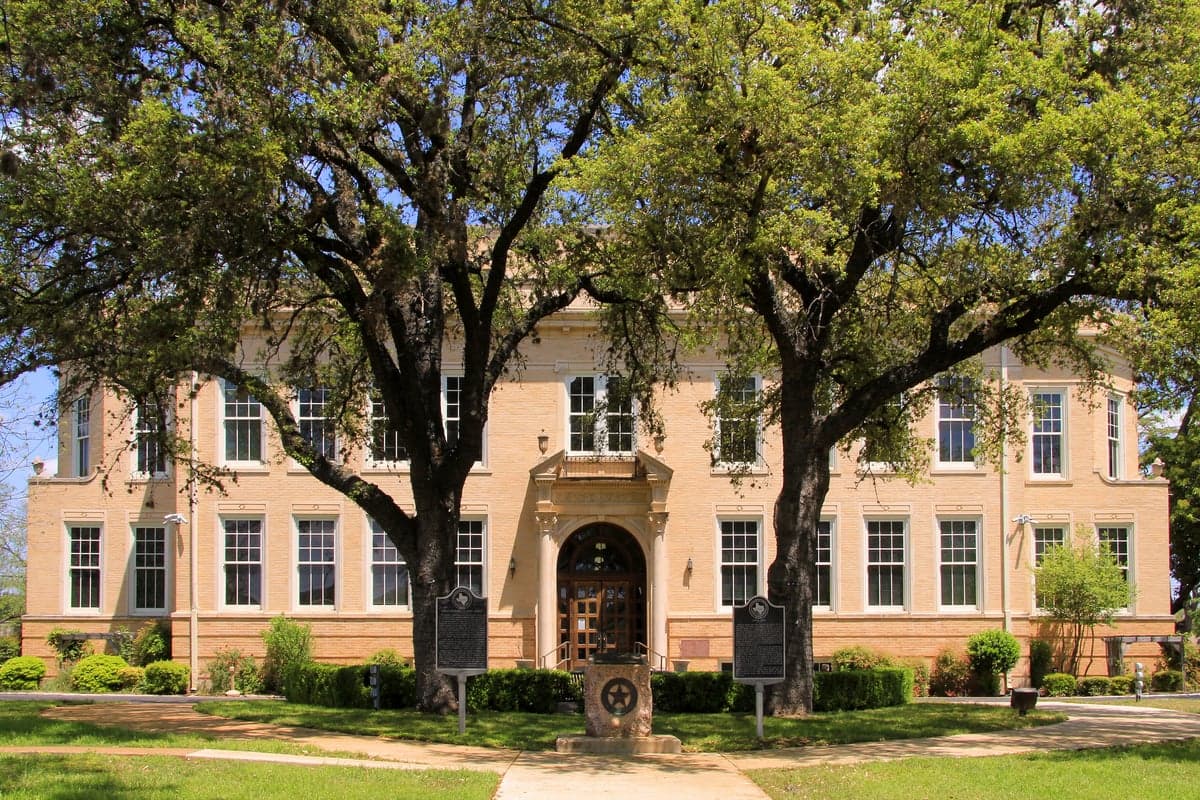
Photo: Wikipedia
Political ClimatePolitical Climate in Kerr County
Showing district-level results — no local-only data available.
Local Political AnalysisPolitical Analysis of Kerr County
Kerr County is about as solidly conservative as they come in Texas, and it’s been that way for as long as anyone can remember. The Cook PVI clocks it at R+11, which is a full seven points redder than the state’s R+4 rating, and that gap isn’t just a number—it shows up in every local election. The county has been trending even more Republican over the last decade, especially as folks from bluer parts of the state move in looking for a place where their values still matter. But don’t let the overall numbers fool you; there are real pockets of variation within the county, and knowing where they are can tell you a lot about what’s happening on the ground.
How it compares
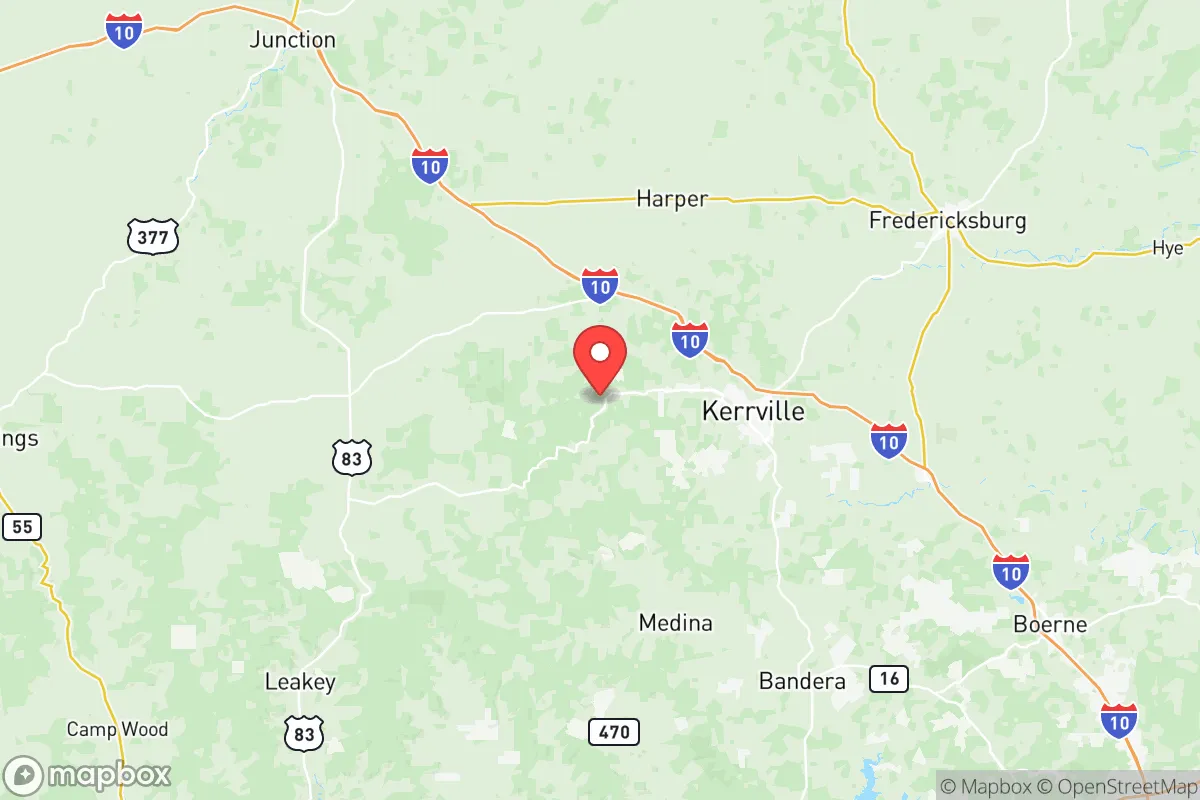
Compared to Texas as a whole, Kerr County is a fortress of traditional values. The state’s R+4 rating already leans Republican, but it’s been drifting left in the major metro areas like Houston, Dallas, and Austin. Kerr County, on the other hand, has held the line and even hardened. The city of Kerrville itself is the county seat and the most moderate area—it’s still reliably red, but you’ll find a few more independent and even a handful of progressive-leaning voters in the historic downtown and near the Schreiner University campus. Head just a few miles out to Ingram or Center Point, and you’re in deep-red territory where the Republican primary is the only election that really matters. The swing precincts are mostly in the unincorporated areas along the Guadalupe River corridor, where a mix of retirees and second-home owners from San Antonio can occasionally tip a local bond election or school board race. But for county-wide offices, there’s no real competition—Republicans haven’t lost a major race here in decades.
What this means for residents
For someone who values personal freedom and limited government, this is still a good place to be—but you have to stay vigilant. The local culture is built on the idea that government should stay out of your business, whether that’s your choice of firearm, how you educate your kids, or how you run your small business. That said, there’s been a slow creep of progressive influence, mostly from newcomers who bring big-city expectations with them. You’ll see it in zoning debates in Kerrville, where some want to impose stricter regulations on short-term rentals and property use. The county commissioners have mostly held the line, but it’s a constant fight. The school board races are where the real battle is happening now, with some pushing for more “equity” initiatives that sound an awful lot like government overreach into the classroom. Longtime residents see this as a red flag—once you let that foot in the door, it’s hard to get it back out.
Cultural and policy distinctions
One thing that sets Kerr County apart from the rest of Texas is its fierce independence from state-level trends. While the state legislature has been passing some good conservative laws on Second Amendment rights and school choice, Kerr County has been ahead of the curve on those issues for years. The county was one of the first in the Hill Country to pass a formal Second Amendment Sanctuary resolution, and the local sheriff has made it clear he won’t enforce any federal overreach on gun rights. On the flip side, you’ll notice a strong strain of libertarian-leaning conservatism here—people don’t just want the government out of their guns, they want it out of their land use, their business, and their lives. That’s a big reason why the county has resisted adopting the kind of strict development codes you see in places like Travis or Bexar County. It’s a double-edged sword, though—that same independence means you’re on your own for some services, and the infrastructure can feel a little rough around the edges. But for most folks here, that’s a trade-off they’re happy to make.

State Political ClimatePolitical Climate in Texas
State Political AnalysisPolitical Environment in the State
Texas has been a reliably Republican state for decades, with a Cook Partisan Voting Index of R+4, meaning it leans about four points more Republican than the national average. The dominant coalition is a mix of suburban conservatives, rural voters, and a growing number of fiscally-minded transplants from blue states, but the last 10-20 years have seen a slow but steady tightening of margins. In 2020, Donald Trump won Texas by 5.6 points, down from 9 points in 2016 and 16 points in 2012, driven largely by explosive growth in the Democratic-leaning metros of Austin, Dallas, Houston, and San Antonio, while the rural and exurban counties held firm or shifted further right.
Urban vs. rural divide
The political map of Texas is a stark checkerboard. The big four metros — Houston, Dallas-Fort Worth, San Antonio, and Austin — are the engine of Democratic growth. Austin, in particular, has become a deep-blue island in Travis County, where Democrats routinely win by 40+ points, fueled by tech transplants and the University of Texas. Harris County (Houston) flipped blue in 2018 and has stayed there, while Dallas and Tarrant counties (Fort Worth) are trending that way. Meanwhile, the rural and small-town spine of Texas — places like Lubbock, Midland, Odessa, Tyler, and Longview — votes Republican by 60-80% margins. The most telling shift is in the exurbs: counties like Collin (north of Dallas) and Comal (north of San Antonio) were once safely red but are now competitive, while deep-red rural counties like Deaf Smith and Bailey in the Panhandle have actually gotten redder. The divide isn't just about geography; it's about lifestyle and economic base — oil, agriculture, and ranching versus tech, healthcare, and education.
Policy environment
Texas has no state income tax, which is a massive draw for conservatives and businesses alike. Property taxes are high (among the top in the nation) to compensate, but the state legislature has passed multiple rounds of compression and appraisal caps to slow the bleeding. The regulatory posture is famously business-friendly: no state-level minimum wage above the federal $7.25, weak unions, and a "right-to-work" law. On education, the state funds public schools through a complex Robin Hood system that redistributes property tax revenue from wealthy districts to poor ones, but school choice and voucher bills have repeatedly failed in the legislature — a sore point for many conservatives. Healthcare is a mixed bag: Texas has the highest uninsured rate in the country because it refused to expand Medicaid under Obamacare, which keeps taxes low but leaves rural hospitals struggling. Election laws have tightened since 2021 with SB 1, which banned 24-hour and drive-through voting, added ID requirements for mail ballots, and empowered partisan poll watchers. For conservatives, this is seen as election integrity; for progressives, it's suppression.
Trajectory & freedom
On the freedom front, Texas has moved in two directions simultaneously. On the positive side for conservatives, the state has expanded gun rights significantly: permitless carry (HB 1927) became law in 2021, allowing any legal gun owner to carry a handgun without a license. Parental rights in education got a boost with the 2023 "Parental Bill of Rights" (HB 900), which requires schools to get parental consent before students can access sexually explicit library materials. Medical autonomy took a hit with the near-total abortion ban (SB 8 and the trigger law) after Dobbs, which conservatives see as protecting life but which has created legal uncertainty for doctors. On the concerning side, property rights have been eroded by the Texas Supreme Court's broad interpretation of eminent domain for pipelines and transmission lines, and the state's heavy-handed use of tax increment financing (TIF) districts can feel like backdoor taxation. The biggest red flag for liberty-minded residents is the growing power of local governments to impose mandates — mask mandates, vaccine requirements, and zoning restrictions — which the state legislature has tried to preempt but with mixed success.
Civil unrest & political movements
Texas has seen its share of political flashpoints. The 2020-2021 period was particularly intense: Austin saw months of protests over police brutality and racial justice, leading to a city council defunding of the police by $150 million, which was later partially restored after a backlash. The "Trump Train" incident on I-35 in 2020, where a Biden-Harris campaign bus was surrounded by a convoy of Trump supporters, became a national symbol of the state's polarized politics. Immigration is the perennial hot button: the state has sued the Biden administration over border policies dozens of times, and Governor Abbott's Operation Lone Star has deployed state troopers and National Guard to the border, busing migrants to sanctuary cities like New York and Chicago. Secession talk flares up periodically — the Texas Nationalist Movement has some grassroots support, but it's fringe. Election integrity remains a live issue: the 2020 election in Texas was relatively smooth, but the 2022 primaries saw scattered reports of voting machine glitches and long lines in Harris County, fueling distrust on both sides.
Projection
Over the next 5-10 years, Texas is likely to become more politically competitive, but not necessarily blue. The in-migration from California, New York, and Illinois is overwhelmingly to the suburbs of Dallas-Fort Worth, Houston, and Austin, and many of those transplants are moderate Republicans or libertarian-leaning independents who want low taxes and light regulation but are socially liberal. This could push the state toward a "purple" equilibrium — think Georgia or North Carolina today — rather than a deep-blue California-style transformation. The rural vote will remain rock-solid red, but its share of the electorate is shrinking as the population grows in the cities and suburbs. The biggest wildcard is the Hispanic vote: Texas Hispanics have historically leaned Democratic but have been trending right, especially in border communities like Laredo and the Rio Grande Valley, where Trump made significant gains in 2020. If that trend continues, Texas could stay red for another decade. If it reverses, the state could flip by 2032.
For a new resident, the bottom line is this: Texas is still a place where your personal freedoms — to carry a gun, to keep your tax dollars, to choose your kids' education — are broadly respected, but you'll need to stay engaged. The political climate is shifting under your feet, and the battles over local control, property taxes, and school curriculum are being fought in county commissioner courts and school board meetings, not just in the state capitol. If you're moving here for freedom, you'll find plenty of it, but you'll also find that freedom requires vigilance. The state is not the libertarian paradise some imagine, but it's closer to that ideal than most of the country — and the fight to keep it that way is ongoing.
* Values derived from national, state, county, city and local statistics and may differ in a specific area. Last updated: 2026-05-22T14:24:55.000Z
Narrative content on this page is AI-generated and may contain mistakes. Verify any details that matter before acting on them.
ReloMaps may earn a commission from affiliate links at no extra cost to you.

