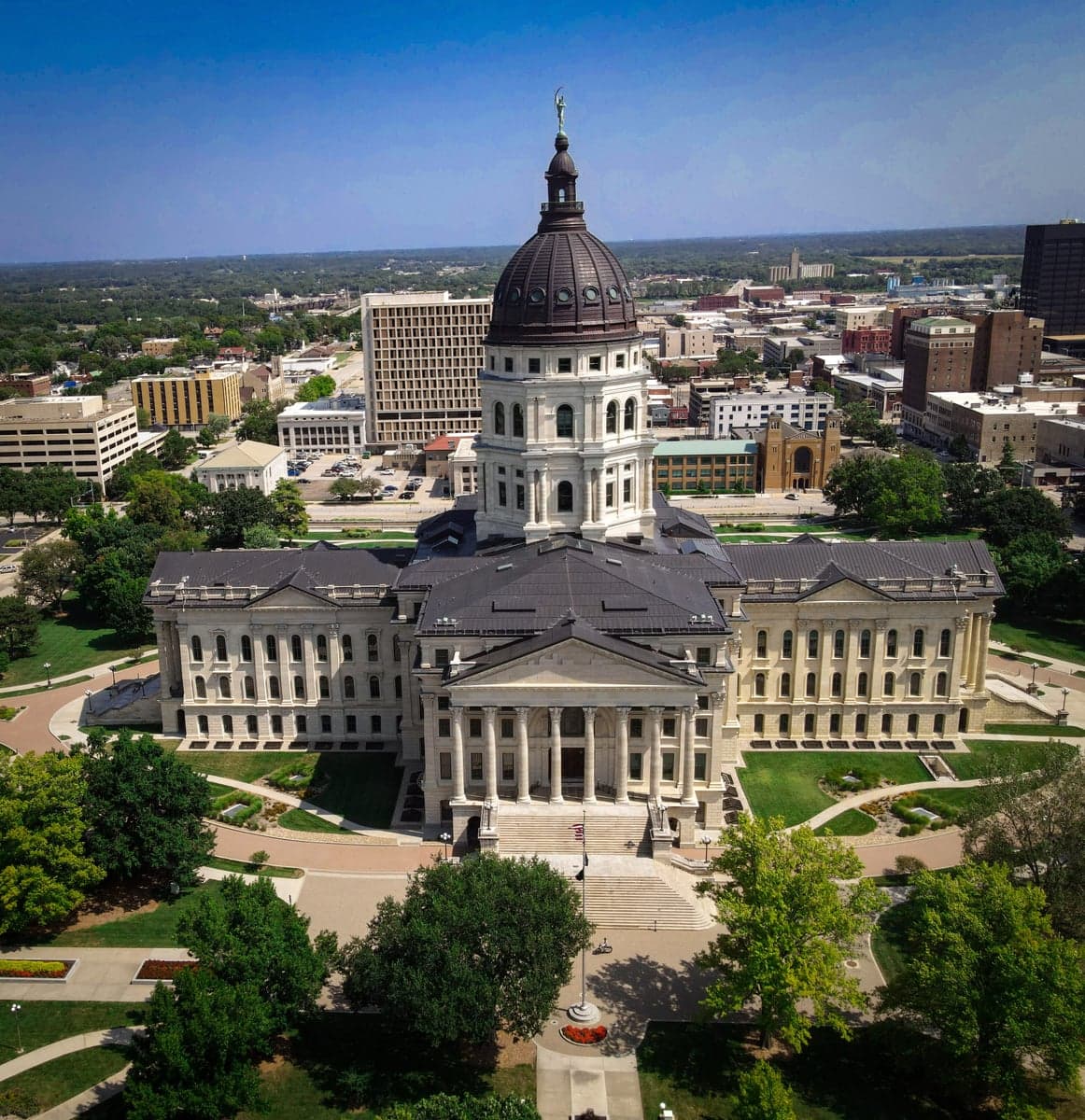
Photo: Wikipedia
Strategic Assessment of Topeka, KS
Meaningful friction. Expect exposure to either population pressure, blast zones, or natural disaster risk. Consider buying a retreat property.
What does the Strategic Assessment tell us?
Our Strategic Assessment grades tactical survivability of an area. Major population centers, military targets, fallout zones, natural disasters, and border exposure all drive risk — lower exposure means a more defensible position in a crisis.
This is heavily inspired by Joel Skousen's Strategic Relocation book. Highly recommended you checkout the book ($)What does this tell us?
Our Strategic Assessment grades tactical survivability of an area. Major population centers, military targets, fallout zones, natural disasters, and border exposure all drive risk — lower exposure means a more defensible position in a crisis.
This is heavily inspired by Joel Skousen's Strategic Relocation book. Highly recommended you checkout the book ($)Strategic Pillars

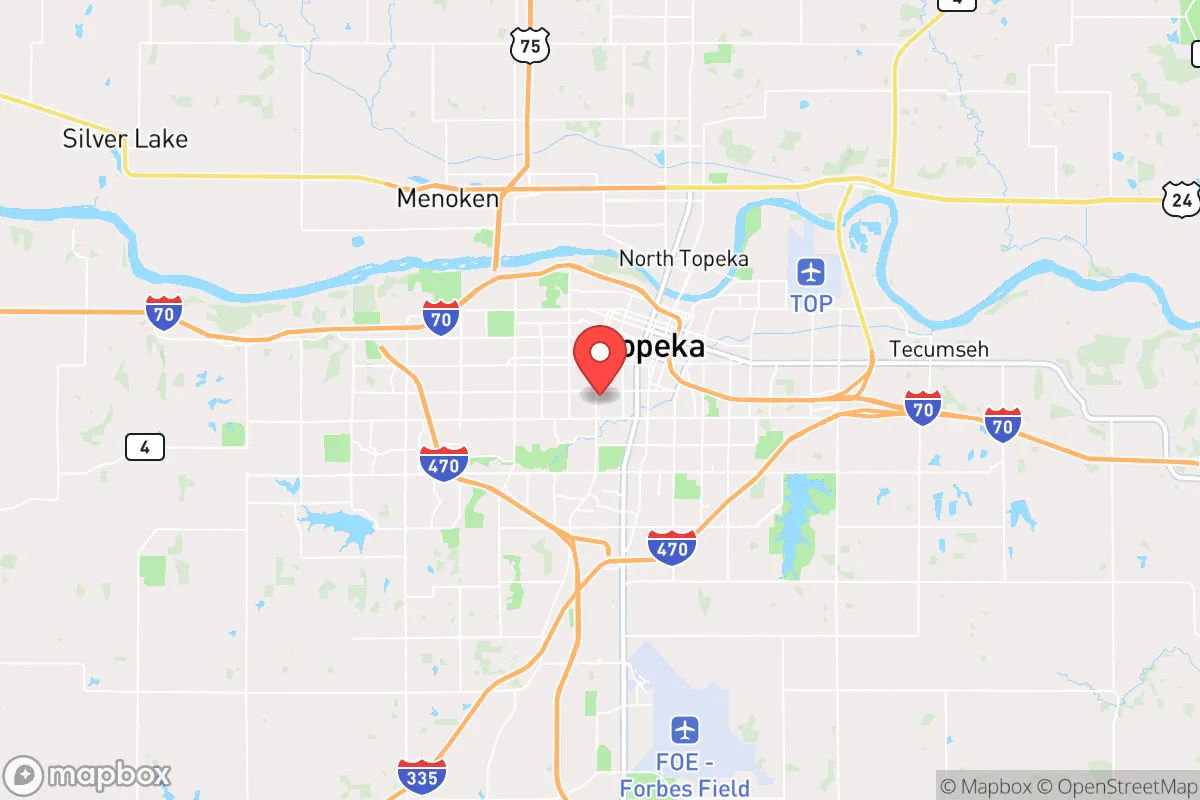
Key Distances
Regional Safe Places
Below is our recommended "safe zones" in Kansas and the surrounding area based on our strategic heuristics. For most people, it's unrealistic to live in a “safe zone” full-time due to work, family or other personal reasons. They tend to be more rural. However, many of these areas are perfect for second homes and retreat properties that double as a vacation home or even a short-term rental.
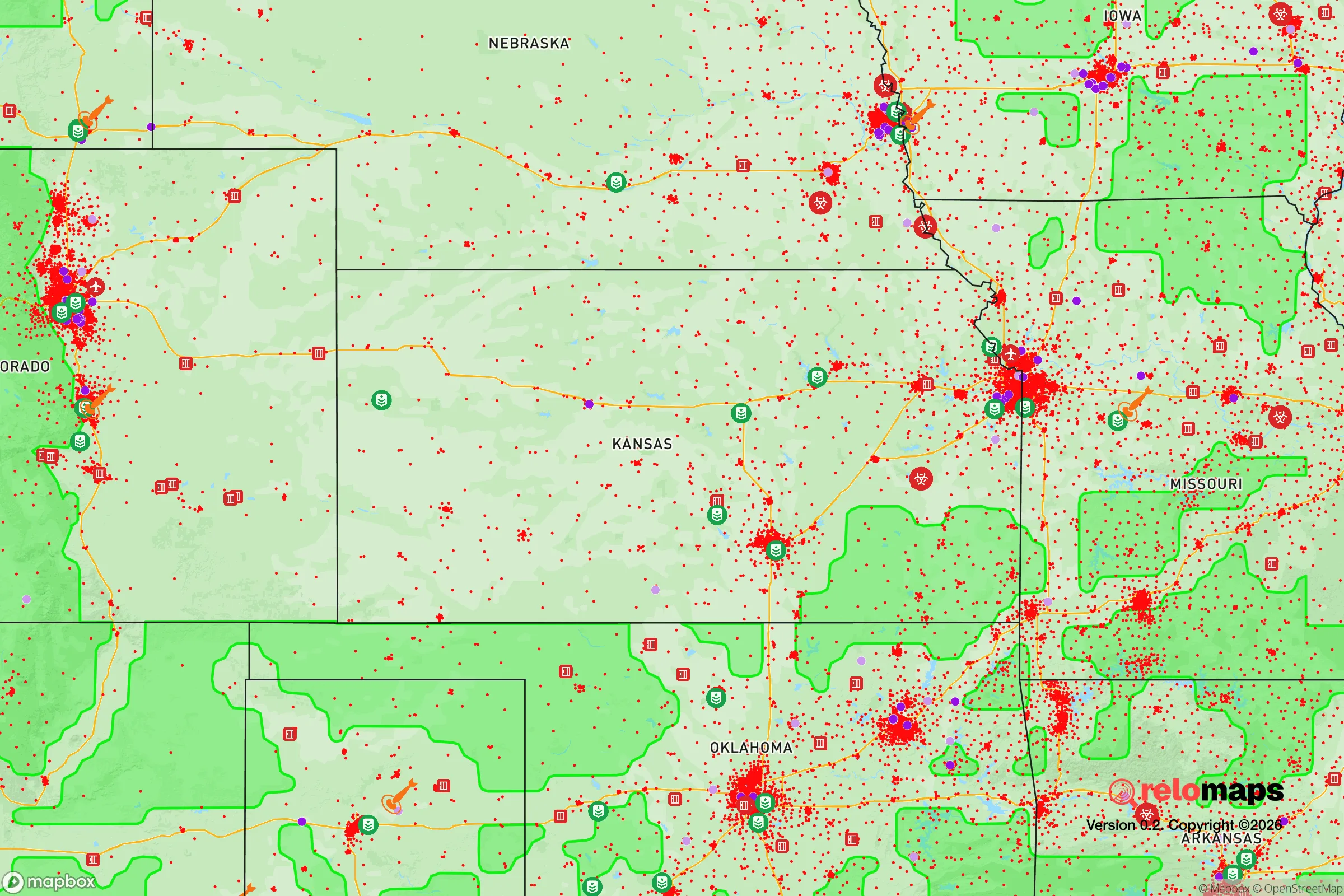
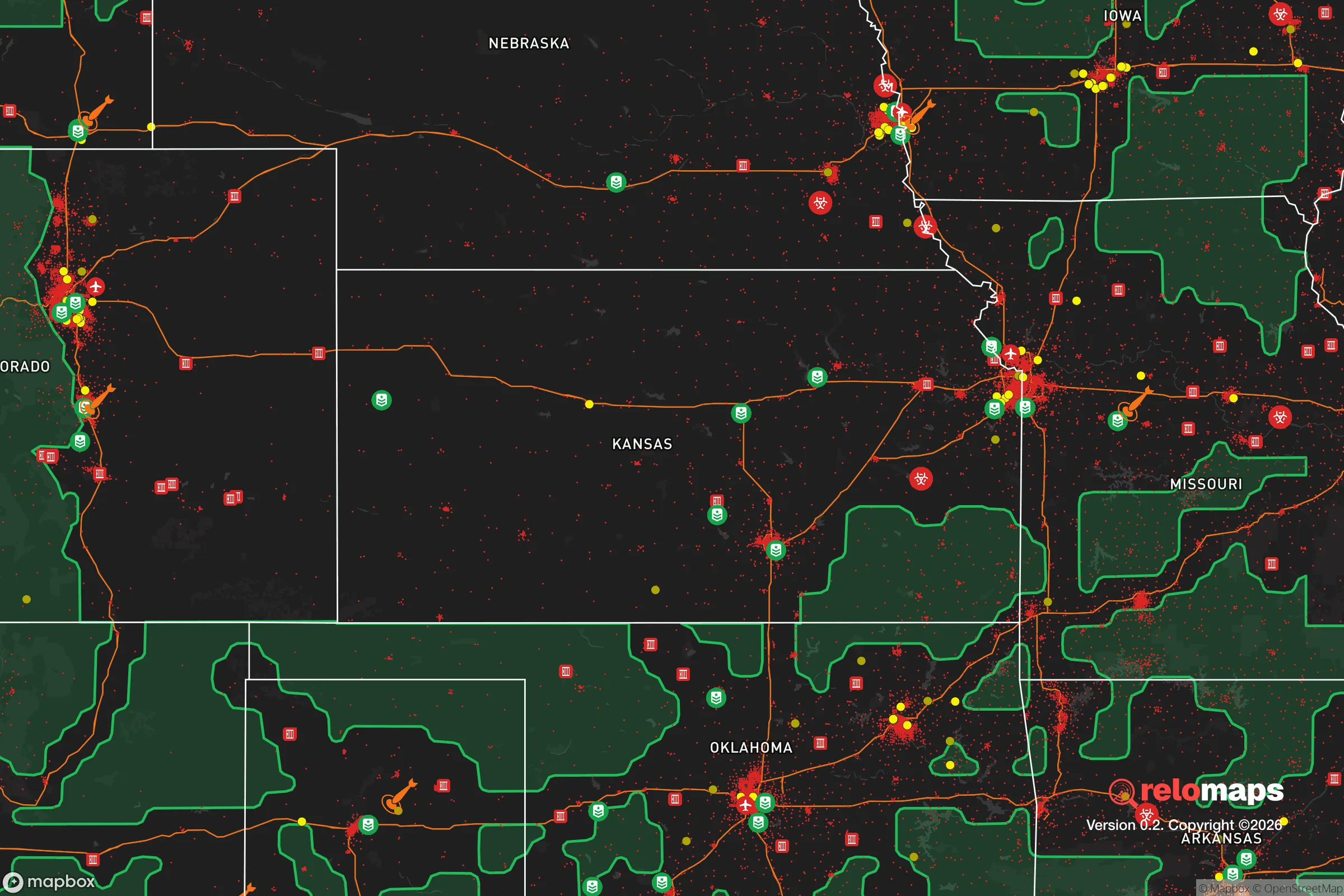


Important Note: For informational purposes only. This does not mean nothing bad ever happens in the green zones. Please use common sense. This is based on public data and modeled with AI. We tried to take a conservative approach but mistakes happen. We update this regularly as new information becomes available.
Solar Generator Recommendations
Backup power matters more here than in safer locations. We've picked three solar generators across budgets and capacity tiers — start with the budget unit if you only need a few essentials, or step up if you want to run a fridge and HVAC for days at a time.

Jackery Portable Power Station Explorer 300
Budget OptionPower on the Go: Weighing only 11 lbs, it's convenient to set up and store with book-sized foldable solar panels

BLUETTI Portable Power Station AC180
Designed for both indoor and outdoor scenarios, AC180 is highly capable as it has a robost capacity and continuous output power.

EF ECOFLOW DELTA Pro Ultra Power Station
Upgraded PickEcoFlow DELTA Pro Ultra is a whole-home energy system designed to grow with your family. Integrated with the Smart Home Panel 2, it scales to meet your evolving energy needs — keeping your home powered, intelligent, and secure through every stage of life.
We earn a commission, at no additional cost to you.
Strategic Assessment Analysis
Topeka, Kansas, sits in a position that is often overlooked by those scanning the map for strategic relocation, but that very obscurity is part of its value. As the state capital, it offers a degree of institutional stability and infrastructure that smaller towns lack, yet it remains far enough from the major population centers of Kansas City, Wichita, and Omaha to avoid the worst of their collapse scenarios. For a relocator thinking in terms of decades, not just the next election cycle, Topeka presents a workable balance of access to resources and insulation from the most likely flashpoints of unrest.
Geographic position and natural advantages for long-term stability
Topeka’s location in the Kansas River Valley gives it reliable access to water, a critical asset that many flyover towns lack. The Kansas River is a perennial water source, and the city sits atop the Ogallala Aquifer’s eastern edge, though that aquifer is under stress further west. The surrounding terrain is rolling hills and farmland, not the flat, exposed plains many imagine. This provides decent natural cover and defensible positions along the river bluffs, especially to the north and west. The climate is continental, with hot summers and cold winters, but it lacks the extreme drought risk of the High Plains or the tornado alley bullseye of central Oklahoma. The growing season is long enough for serious gardening and small-scale agriculture, and the soil quality in the river bottom is excellent. For a prepper, the key advantage is that Topeka is not a primary target for any strategic strike—no major military bases, no nuclear power plants, no major ports or rail hubs that would be first-wave targets. It is a secondary city in a flyover state, which is exactly the kind of place that might function as a regional hub after a major disruption.
Risks, exposures, and proximity to fallout-relevant landmarks
No location is risk-free, and Topeka has its share of exposures that a serious relocator must weigh. The most obvious is the proximity to the Kansas City metropolitan area, roughly 60 miles to the east. In a scenario of civil unrest or supply chain collapse, Kansas City’s 2.5 million people would become a massive liability. Refugees, looters, and resource competition would flow west along I-70, and Topeka sits directly on that corridor. The city itself has a population of about 125,000, which is manageable but not small. The urban core has the typical problems of a mid-sized American city—gang activity, drug trade, and a police force that is underfunded relative to need. The Shawnee County Sheriff’s Office and Topeka Police Department are professional but stretched thin. For a prepper, the defensibility of a specific property within the county is far more important than the city’s average crime stats. The real risk is not a direct attack on Topeka but the secondary effects of a collapse in Kansas City: overwhelmed hospitals, fuel shortages, and a wave of desperate people moving outward. Additionally, the Forbes Field Air National Guard base is just south of the city, which could become a target in a conventional conflict, though it is a minor installation compared to McConnell or Whiteman. The Burlington Northern Santa Fe rail yard in Topeka is a critical logistics node; in a crisis, it could become a chokepoint or a target for sabotage.
Practical resilience for a relocator: food, water, energy, and defensibility
For someone serious about self-sufficiency, Topeka offers a mixed bag. Water is the strongest suit: the Kansas River is a reliable surface source, and the city’s water treatment plant is modern. However, a relocator should not rely on municipal water in a prolonged grid-down scenario. Wells in the surrounding county are viable, with depths typically between 100 and 300 feet, and the water quality is good, though iron content can be high. Food resilience is moderate. The local soil is fertile, and there is a strong tradition of gardening and small farming in the surrounding rural areas. The Shawnee County Farmers Market and local CSAs are active, but the growing season is only about 170 days, so a serious prepper would need a greenhouse or cold frames for year-round production. The area has a decent number of livestock operations—cattle, hogs, and poultry—so protein sources are available if you have the land and the skills. Energy resilience is weaker. The grid is served by Evergy, which has a mixed record on reliability. Winter storms in 2021 and 2022 caused rolling blackouts. Solar is viable, with the region averaging about 4.5 peak sun hours per day, but winter cloud cover can be persistent. Natural gas is the primary heating fuel, and the distribution network is extensive, but a relocator should have a backup wood stove or propane system. Defensibility depends entirely on property choice. The rural areas west and south of the city offer good terrain for a retreat: rolling hills, tree lines, and limited road access. The urban and suburban areas are less defensible, with typical suburban sprawl and limited fields of fire. A relocator should prioritize a property with a good well, a septic system, and at least 10 acres of buffer land, ideally with a creek or pond.
The overall strategic picture for Topeka is one of calculated trade-offs. It is not a survivalist paradise—it is a real city with real problems, and it sits too close to a major metropolitan area to be considered a true bug-out location. But for a relocator who wants to maintain a professional career, access to healthcare, and a semblance of normal life while building a resilient property, it is a strong candidate. The key is to buy land outside the city limits, preferably in Shawnee County or just over the line in Osage or Wabaunsee County, and to treat Topeka as a resource hub rather than a home base. The political climate in Kansas is generally favorable to the conservative prepper mindset: the state has relatively lax gun laws, low property taxes compared to the coasts, and a culture of self-reliance that is still intact. The risks are real—Kansas City’s shadow, the rail yard, the grid fragility—but they are manageable with proper planning. For someone looking to ride out the next decade of instability without going completely off-grid, Topeka deserves a serious look.

* Values derived from national, state, county, city and local statistics and may differ in a specific area. Last updated: 2026-04-29T21:10:22.000Z
Narrative content on this page is AI-generated and may contain mistakes. Verify any details that matter before acting on them.
ReloMaps may earn a commission from affiliate links at no extra cost to you.

