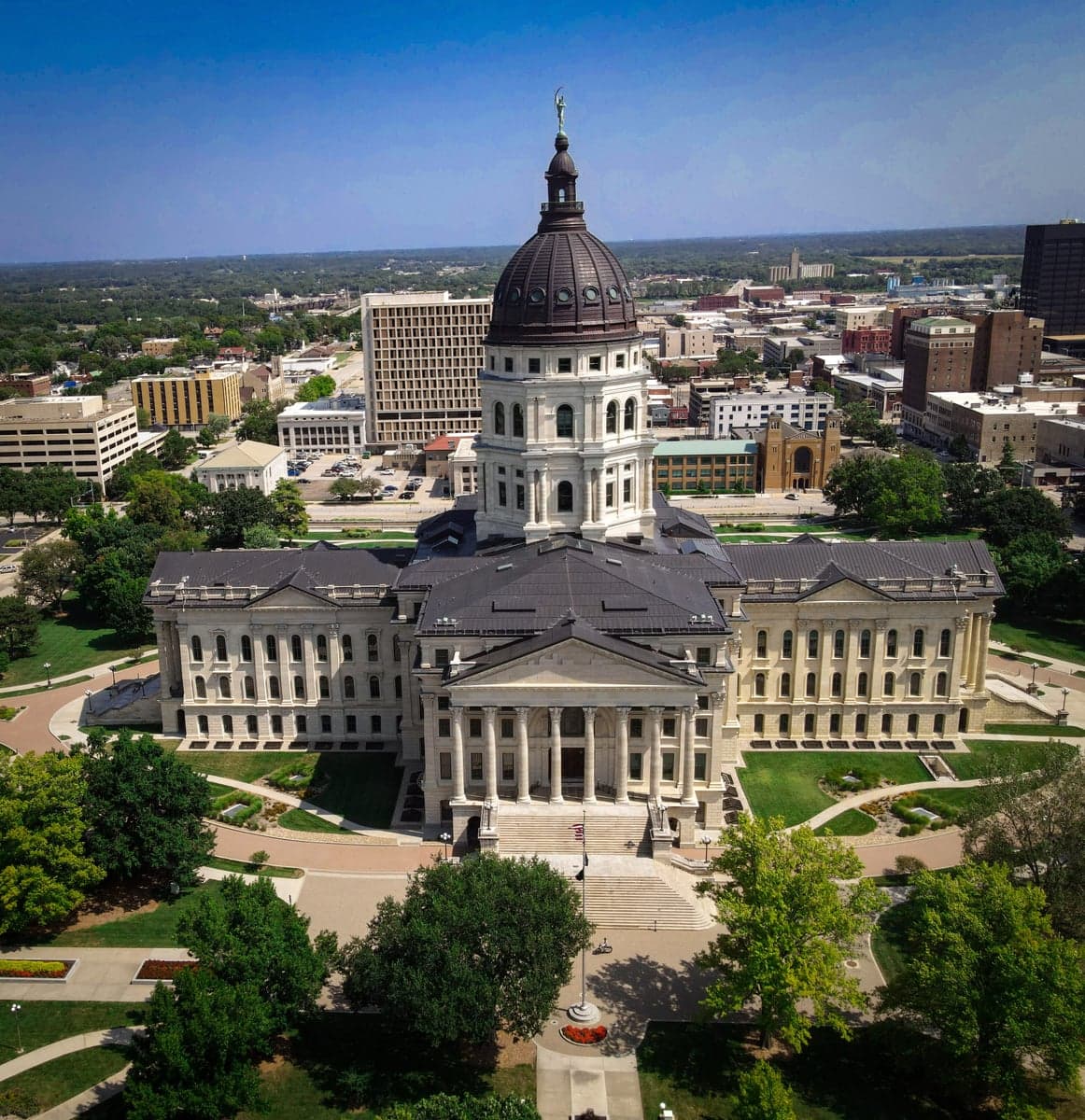
Photo: Wikipedia
Political ClimatePolitical Climate in Topeka, KS
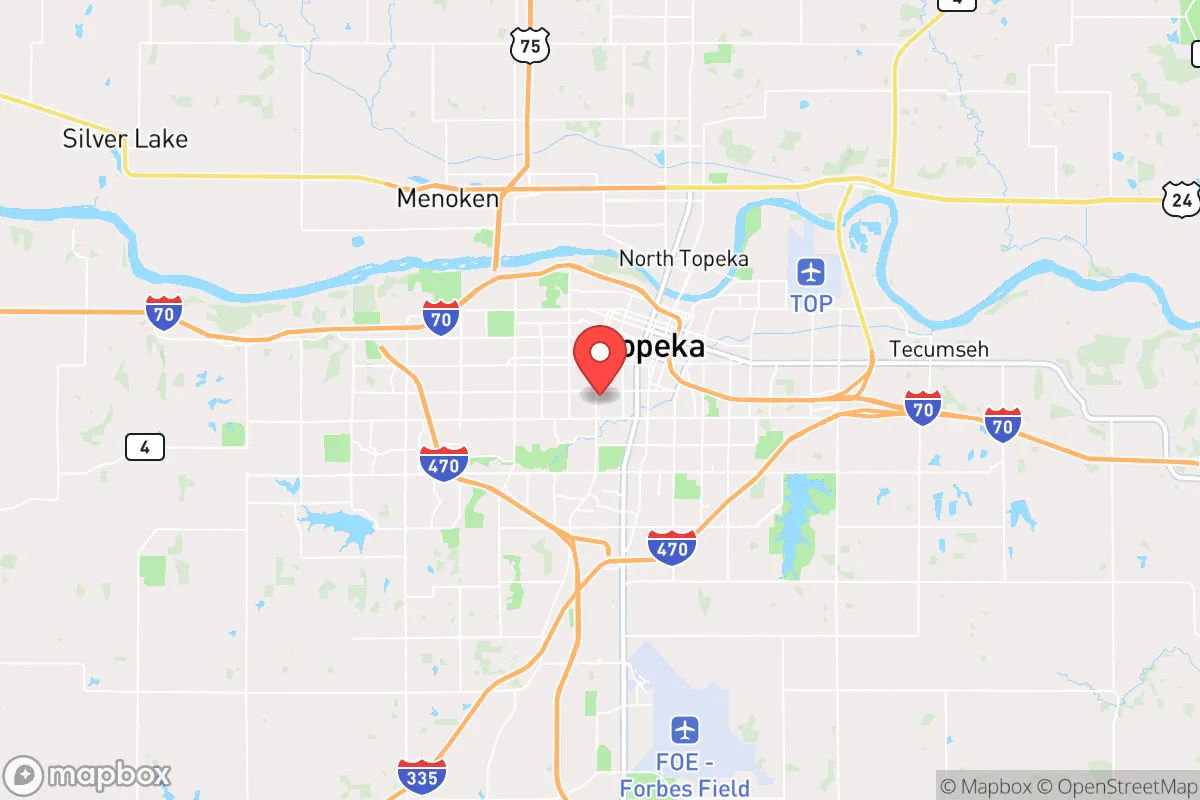
District shown is the primary district for this city’s centroid. Cities may span multiple districts.
Local Political AnalysisPolitical Analysis of Topeka, KS
Topeka’s political climate has long been a conservative anchor in northeast Kansas, but like a lot of places, you can feel the ground shifting under your feet. The Cook PVI of R+10 tells you the district still leans reliably Republican, but that number masks a growing tension between the old-guard, limited-government values that built this town and the progressive push coming out of places like Lawrence, just 25 miles east. If you’ve lived here as long as I have, you remember when “conservative” meant something simpler—lower taxes, less regulation, and a general trust that folks could run their own lives without the state breathing down their necks. That’s still the majority sentiment, but the margins are getting tighter, and the fights are getting louder.
How it compares
Drive 20 minutes west to Silver Lake or Rossville, and you’ll find towns that haven’t budged an inch—solid red, with voters who’ll tell you straight up that government’s job is to stay out of the way. Head east to Lawrence, home of the University of Kansas, and you’re in a blue island where progressive policies on everything from housing mandates to policing are the norm. Topeka sits right in the middle, both geographically and ideologically. The city itself has a more moderate streak than the surrounding Shawnee County farmland, thanks in part to state employees and hospital workers who tend to vote a little more center-left. But the county as a whole still breaks Republican, and the state legislature—which meets right here in Topeka—has been reliably conservative on fiscal issues and Second Amendment rights. The contrast with Lawrence is stark: you can drive 30 minutes and go from a city where the county commission is debating property tax caps to one where they’re debating rent control and defunding the police. That’s the kind of split that makes you appreciate Topeka’s relative stability.
What this means for residents
For the average Topekan, the political climate translates directly into how much the government meddles in your day-to-day. Property taxes here are still a sore spot—they’ve crept up as the city tries to fund infrastructure and schools, and there’s a constant battle at the state level to rein them in. On the plus side, Kansas’s flat income tax and relatively light business regulations mean you’re not getting nickel-and-dimed the way you would in a blue state. The real concern for conservatives is the slow creep of progressive ideas into local governance—things like diversity, equity, and inclusion mandates in city hiring, or zoning changes that prioritize density over single-family neighborhoods. These aren’t full-blown policies yet, but you see them in commission meetings and school board discussions. The worry is that Topeka could follow the path of Lawrence or Kansas City, where government overreach into personal freedoms—from vaccine mandates to speech restrictions—has become the norm. For now, the R+10 lean keeps most of that at bay, but it takes vigilance. If you value your right to make your own choices without a bureaucrat’s approval, you keep an eye on who’s running for city council.
Culturally, Topeka still feels like a place where people wave at neighbors and leave their garage doors open. The policy fights here are less about identity politics and more about practical stuff—roads, taxes, and whether the county should be telling you what you can do with your own property. That said, the long-term trend is concerning. As younger, more progressive transplants move in from the coasts, the political center of gravity is shifting. The state legislature has held the line on things like school choice and gun rights, but local elections are where the real battles are fought. If you’re looking for a place where government stays small and personal liberty is respected, Topeka is still a good bet—but don’t take it for granted. The same forces that turned Lawrence and Johnson County blue are knocking on the door, and it’s up to the folks who remember what limited government looks like to keep it that way.

State Political ClimatePolitical Climate in Kansas
State Political AnalysisPolitical Environment in the State
Kansas has long been a reliably red state in presidential elections, last voting for a Democrat in 1964, but its political landscape is more nuanced than the national map suggests. The state leans Republican by about 15-20 points in most statewide races, though recent cycles have seen a tug-of-war between traditional conservative governance and a more populist, liberty-oriented wing of the GOP. Over the past 20 years, Kansas has shifted from a moderate Republican stronghold—think Bob Dole and Nancy Kassebaum—to a state where the dominant coalition is now defined by cultural conservatism, tax-cutting fervor, and skepticism of federal overreach, though a persistent Democratic base in the eastern cities keeps things competitive at the local level.
Urban vs. rural divide
The political map of Kansas is a textbook case of the urban-rural split. The eastern third of the state, anchored by Kansas City (Wyandotte County) and Lawrence (Douglas County), is the Democratic stronghold. Wyandotte County gave Biden 64% of the vote in 2020, while Douglas County hit 71%—driven by the University of Kansas and a diverse, younger population. Topeka (Shawnee County) and Manhattan (Riley County) are more purple, with Manhattan’s Kansas State University and Fort Riley military base producing a mix of libertarian-leaning students and conservative veterans. The rest of the state—the vast, rural expanse west of I-135—is deeply red. Sedgwick County (Wichita) is the bellwether: it went for Trump by 8 points in 2020, but the city itself is a battleground between moderate Republicans and a growing progressive movement in the downtown core. Johnson County, the affluent Kansas City suburb, has been the key swing area—it voted for Trump by 4 points in 2016 but flipped to Biden by 6 points in 2020, driven by college-educated professionals and a growing Asian-American population in places like Overland Park and Olathe. That suburban shift is the biggest threat to the GOP’s dominance.
Policy environment
Kansas’s policy environment is a mixed bag for conservatives. The state has no income tax on Social Security benefits and a flat state income tax rate of 5.7% (down from a top rate of 6.45% in 2022), but property taxes are high relative to the region, especially in Johnson County. The 2012 “Brownback tax cuts” were a landmark experiment in supply-side economics, slashing income tax rates and eliminating taxes on pass-through business income. The experiment ultimately failed to produce the promised revenue growth, leading to a 2017 legislative override of Brownback’s veto to raise taxes—a bitter lesson in fiscal reality. On education, Kansas has a school choice program (the Tax Credit for Low-Income Students Scholarship Program) that allows tax-credited donations to private school scholarships, but it’s limited compared to states like Florida or Arizona. The state also has a constitutional amendment protecting the right to hunt and fish, and a 2022 “Parental Bill of Rights” (HB 2560) that requires schools to notify parents of any changes to a student’s health or well-being—a win for parental rights. Election laws are solid: voter ID is required, and the state has a 20-day advance voting window. No sanctuary city policies exist; in fact, a 2024 law (SB 169) bans local governments from adopting sanctuary policies and requires cooperation with federal immigration enforcement.
Trajectory & freedom
On the freedom front, Kansas is moving in a positive direction for conservatives, but it’s not a slam dunk. The biggest win was the 2022 “Value Them Both” amendment, which affirmed that the Kansas Constitution does not create a right to abortion—but it was defeated by voters, a shocking blow that showed the state’s libertarian streak on bodily autonomy. Since then, the legislature has passed a 22-week abortion ban and a law requiring parental consent for minors, but no total ban has passed. On gun rights, Kansas is a constitutional carry state (since 2015) and has a “Stand Your Ground” law. The 2024 “Second Amendment Protection Act” (HB 2137) prohibits state enforcement of any future federal gun bans—a clear nullification move. On medical freedom, the state has no vaccine passport mandate and banned COVID-19 vaccine mandates for state employees in 2023. Property rights are strong: the 2021 “Property Tax Relief Act” capped annual valuation increases at 3% for residential property. However, the state’s heavy reliance on property taxes (no state sales tax on groceries, but high local levies) means homeowners in Johnson County are feeling squeezed. The trajectory is toward more personal liberty on guns and medical choice, but the abortion issue remains a live grenade.
Civil unrest & political movements
Kansas has seen less civil unrest than coastal states, but there are flashpoints. The 2020 protests in Kansas City and Lawrence over George Floyd’s death were largely peaceful, but a small riot in Kansas City’s Westport neighborhood led to property damage. The more persistent tension is around immigration. In Garden City and Dodge City, the meatpacking plants have drawn a large Hispanic workforce, and local politics have seen clashes over bilingual education and driver’s license access for undocumented immigrants. The “Kansas Justice Coalition” is a left-wing activist group pushing for criminal justice reform, while the “Kansas Republican Assembly” is a hardline conservative group that has pushed for school board takeovers over critical race theory. Election integrity has been a hot topic: the 2024 “Election Integrity Act” (HB 2052) tightened absentee ballot rules and banned private funding of election offices, which Democrats called voter suppression. No secessionist movements of note, but there is a strong “county supremacy” sentiment in rural areas like Sherman County, where local officials have passed resolutions asserting local control over federal land use.
Projection
Over the next 5-10 years, Kansas is likely to remain red but with a growing suburban-liberal flank. The in-migration pattern is key: people moving to Kansas are mostly coming from California and Colorado, drawn by lower housing costs and a slower pace of life. Many of these newcomers settle in Johnson County and Douglas County, and they tend to be more moderate or even left-leaning on social issues. The state’s rural population continues to shrink, meaning the political center of gravity is shifting eastward. The GOP will likely hold the legislature and governor’s office (the current governor, Laura Kelly, is a moderate Democrat who won in 2018 and 2022 by appealing to suburban women), but the party’s internal fight between establishment and populist wings will intensify. Expect more school choice expansion, a possible income tax cut to 4.5%, and continued battles over abortion access. The biggest wildcard is property tax reform—if the legislature doesn’t address it, suburban homeowners could flip to Democrats. A new resident moving in now should expect a state that is culturally conservative in the countryside, libertarian in the middle, and increasingly progressive in the cities—a place where your rights depend heavily on which county you live in.
For a conservative-leaning individual or family, Kansas offers a strong baseline of personal freedom—constitutional carry, no state income tax on retirement income, and robust parental rights in education. The practical takeaway is to choose your county carefully: Johnson County gives you the best schools and job market but higher taxes and a more liberal social environment; Sedgwick County offers a lower cost of living and a more traditional culture; and the rural counties west of I-135 are the most politically aligned with traditional values but lack economic opportunity. The state is not a libertarian paradise—property taxes are a real burden, and the abortion debate is far from settled—but it remains one of the better bets in the Midwest for someone who values limited government and cultural conservatism. Just don’t expect it to stay exactly the same; the suburbs are changing, and the politics will follow.
* Values derived from national, state, county, city and local statistics and may differ in a specific area. Last updated: 2026-04-29T21:10:22.000Z
Narrative content on this page is AI-generated and may contain mistakes. Verify any details that matter before acting on them.
ReloMaps may earn a commission from affiliate links at no extra cost to you.

