 Popular
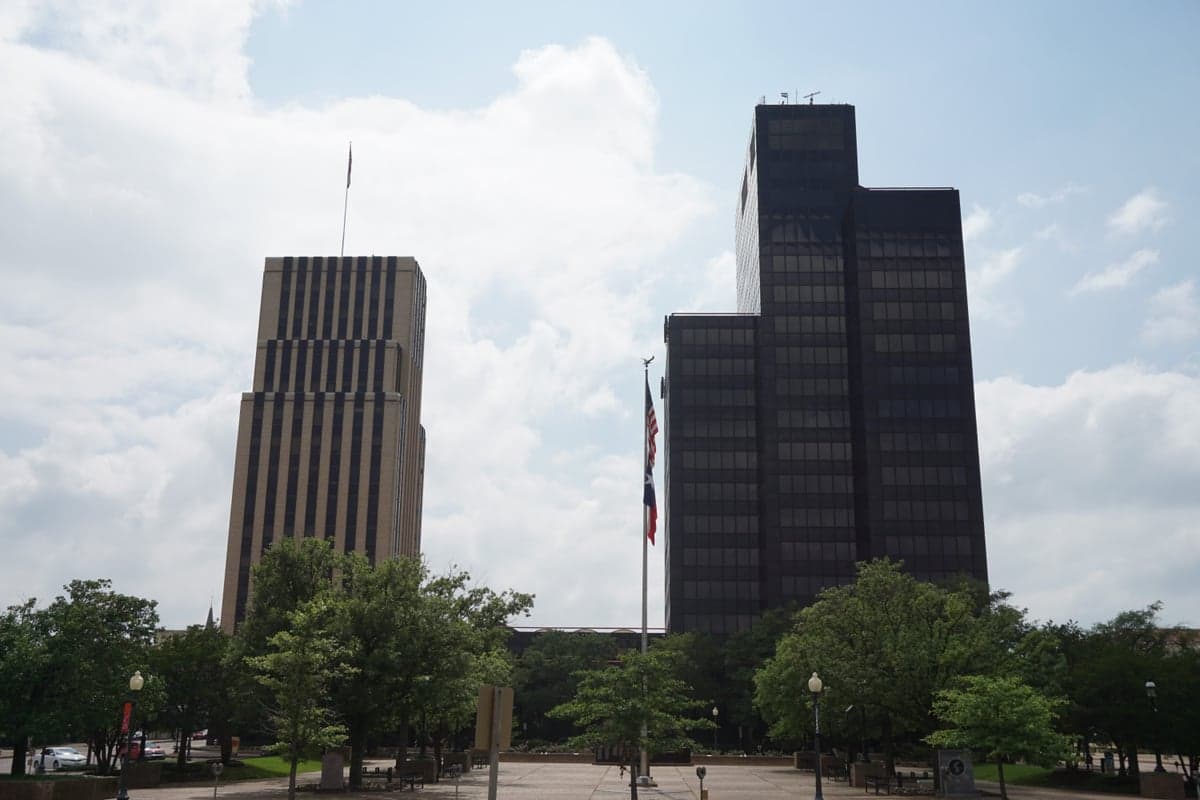
Photo: Wikipedia
Personal Sovereignty in Tyler, TX
Strong independent fundamentals that actively favor personal liberty and low regulation.
What does Personal Sovereignty tell us?
Personal Sovereignty measures your capacity for self-reliance and independence with minimal government friction. Higher scores mean fewer barriers between you and the way you want to live... but it assumes you have the space you need and good neighbors.
What does this tell us?
Personal Sovereignty measures your capacity for self-reliance and independence with minimal government friction. Higher scores mean fewer barriers between you and the way you want to live... but it assumes you have the space you need and good neighbors.
State Policy
Energy independence: Net exporter (220% of energy produced in-state)
Personal Liberty
Homesteading

Personal Liberty Analysis
Tyler, Texas, offers a notably high degree of personal sovereignty compared to much of the United States, particularly for those who prioritize minimal government interference in daily life, self-defense, and family autonomy. While no location is a perfect libertarian enclave, Tyler’s legal and cultural environment leans heavily toward individual responsibility and away from top-down mandates. For the survivalist or prepper mindset, the key question isn't whether the government is absent—it's whether the legal framework gives you the breathing room to live on your own terms without constant friction. In Tyler, the answer is largely yes, especially when stacked against the regulatory climates of the West Coast or Northeast.
Tax burden and regulatory posture: How much of your money and time does the state take?
Texas has no state income tax, which is the single biggest win for personal financial sovereignty. In Tyler, this means every dollar you earn stays in your pocket, not funneled to Austin for programs you may not support. The trade-off is property taxes, which in Smith County average around 1.7% to 2.1% of assessed value—higher than the national median, but you get direct control over that through homestead exemptions and appraisal protests. Sales tax in Tyler is 8.25% (state + local), which is standard for Texas. From a regulatory standpoint, Texas is a "right-to-work" state with minimal business licensing hurdles, and Tyler’s city council has historically resisted adopting the kind of zoning overreach seen in larger metros. There are no county-level income taxes, no state-level property tax, and no onerous environmental regulations that would prevent you from building a workshop, storing supplies, or keeping livestock on your own land—provided you're in the right zoning district. The regulatory posture here is best described as "hands-off until you cause a problem," which aligns well with a prepper’s desire to operate without constant bureaucratic oversight.
Self-defense and gun law specifics: Can you protect your home and family without permission slips?
Texas is a constitutional carry state, meaning you can carry a handgun openly or concealed without a license if you are at least 21 and not prohibited from possessing a firearm. Tyler is in Smith County, where the sheriff’s office and local courts are consistently pro-Second Amendment. There are no local ordinances that restrict magazine capacity, ban specific firearm types, or impose waiting periods beyond state law. The Castle Doctrine is fully codified in Texas Penal Code §9.32, with no duty to retreat in your home, vehicle, or workplace. For the prepper, this is critical: you are legally justified in using deadly force against an intruder who unlawfully enters with force or threatens harm. Stand Your Ground laws extend that protection to any place you are lawfully present. Additionally, Texas law explicitly prohibits the state or local governments from enforcing federal gun laws that contradict state statutes—a layer of legal insulation that matters if federal overreach escalates. The only practical downside is that Tyler is a city, so discharging a firearm within city limits is generally illegal except on a range or in lawful self-defense. For rural property just outside the loop, that restriction vanishes.
Self-reliance and homesteading viability: Lot sizes, zoning, and off-grid feasibility
Within Tyler city limits, standard residential lots range from 0.25 to 0.5 acres in older neighborhoods, with newer subdivisions offering 0.5 to 1 acre. The city’s zoning code allows for backyard chickens (hens only, no roosters) on lots under one acre, and larger lots can accommodate goats or other small livestock with a permit. However, if you want serious homesteading—think a large garden, rainwater catchment, solar panels, and maybe a few pigs—you’ll want to look at the unincorporated areas of Smith County, particularly around the communities of Flint, Whitehouse, or Bullard. There, lot sizes of 2 to 10 acres are common and affordable (prices range from $15,000 to $40,000 per acre as of 2025). Off-grid feasibility is high: Texas has no state-level ban on rainwater harvesting, and Smith County has no county-wide restrictions on solar panels or composting toilets. The main hurdle is the well and septic system—both require permits and inspections, but that’s standard anywhere. The climate is forgiving for year-round gardening (Zone 8b), and the water table is generally high enough that a shallow well can produce potable water. For the prepper, the biggest limitation is that Smith County does enforce building codes in unincorporated areas for new construction, so you can’t just throw up a shack. But you can build a pole barn, a workshop, or a storage shed without a permit if it’s under 200 square feet. The bottom line: true off-grid living is possible within a 20-minute drive of downtown Tyler, but not inside the city limits.
Personal liberties: Parental rights, medical autonomy, speech, and property
Texas has some of the strongest parental rights laws in the country. The Texas Parental Bill of Rights (Texas Family Code §151.001) explicitly affirms that parents have the right to direct the education, medical care, and moral upbringing of their children. In Tyler, this means no school district can mandate vaccines for enrollment without a parental exemption (medical, religious, or philosophical), and the local school boards—Tyler ISD, Whitehouse ISD, and Chapel Hill ISD—have all resisted the kind of CRT or gender ideology curricula that have caused friction elsewhere. Medical autonomy is more mixed: Texas banned COVID-19 vaccine mandates for private employers and government entities, and the state has a strong conscience clause for healthcare workers. However, the Texas Medical Board still holds significant power, and alternative medicine practitioners face licensing hurdles. On speech, Texas is a First Amendment-friendly state, and Tyler has no local ordinances restricting political speech, signage, or assembly. Property rights are robust: Texas has no state-level eminent domain abuse like some states, and Smith County’s appraisal district is generally responsive to homestead exemptions. The biggest threat to property sovereignty here is the aforementioned property tax creep, but Proposition 4 (passed in 2023) capped annual appraisal increases at 10% for homesteads, which provides some predictability. For the prepper, the key takeaway is that you can homeschool without excessive state oversight, you can refuse medical treatments for yourself and your children without fear of state intervention, and you can speak your mind on any topic without worrying about "misinformation" laws that exist in other states.
Overall, Tyler ranks well above the national average for personal sovereignty, particularly when compared to states like California, New York, or Oregon. The combination of no income tax, constitutional carry, strong parental rights, and a permissive regulatory environment for homesteading makes it a viable relocation target for those who value individual freedom over collective mandates. The main trade-offs are property taxes that require active management and the need to live outside city limits for serious off-grid capability. For a single individual or family looking to maximize autonomy while still having access to healthcare, supply chains, and community support, Tyler represents a solid middle ground—not a libertarian utopia, but a place where the government is more likely to leave you alone than to get in your way.

* Values derived from national, state, county, city and local statistics and may differ in a specific area. Last updated: 2026-04-15T15:44:48.000Z
Narrative content on this page is AI-generated and may contain mistakes. Verify any details that matter before acting on them.
ReloMaps may earn a commission from affiliate links at no extra cost to you.

