 Popular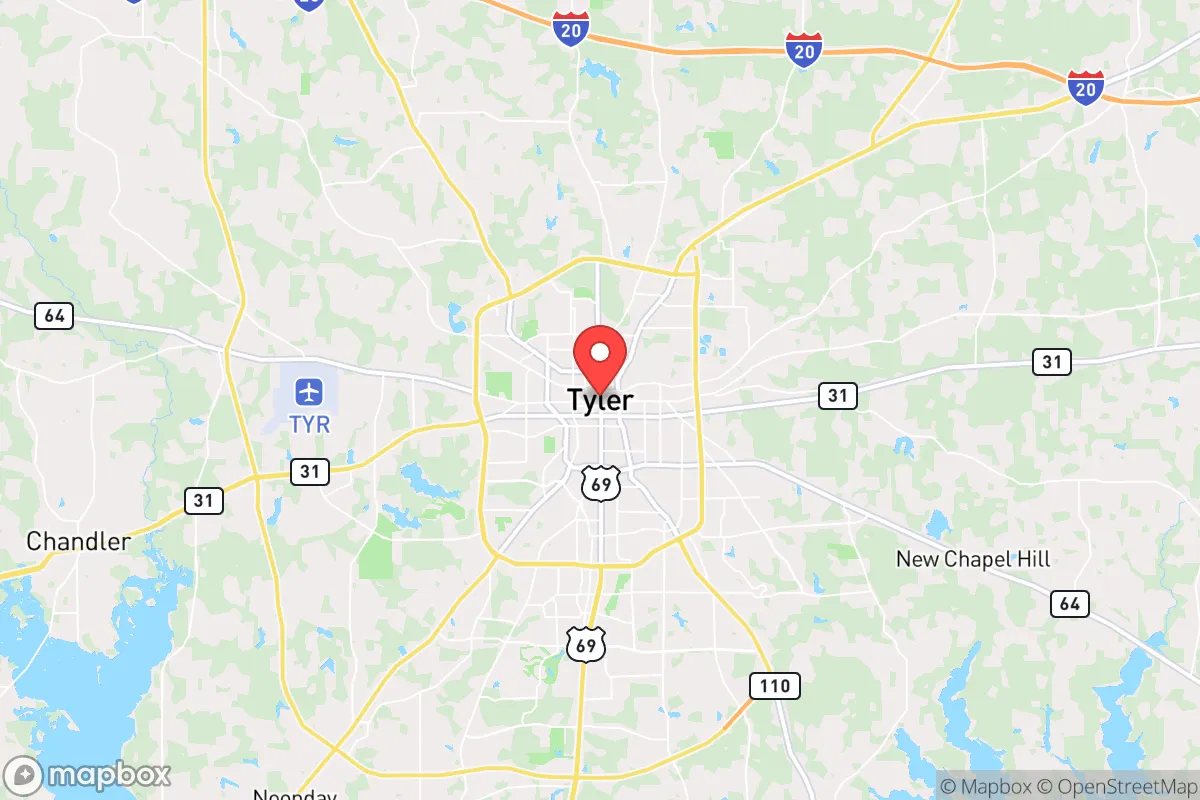
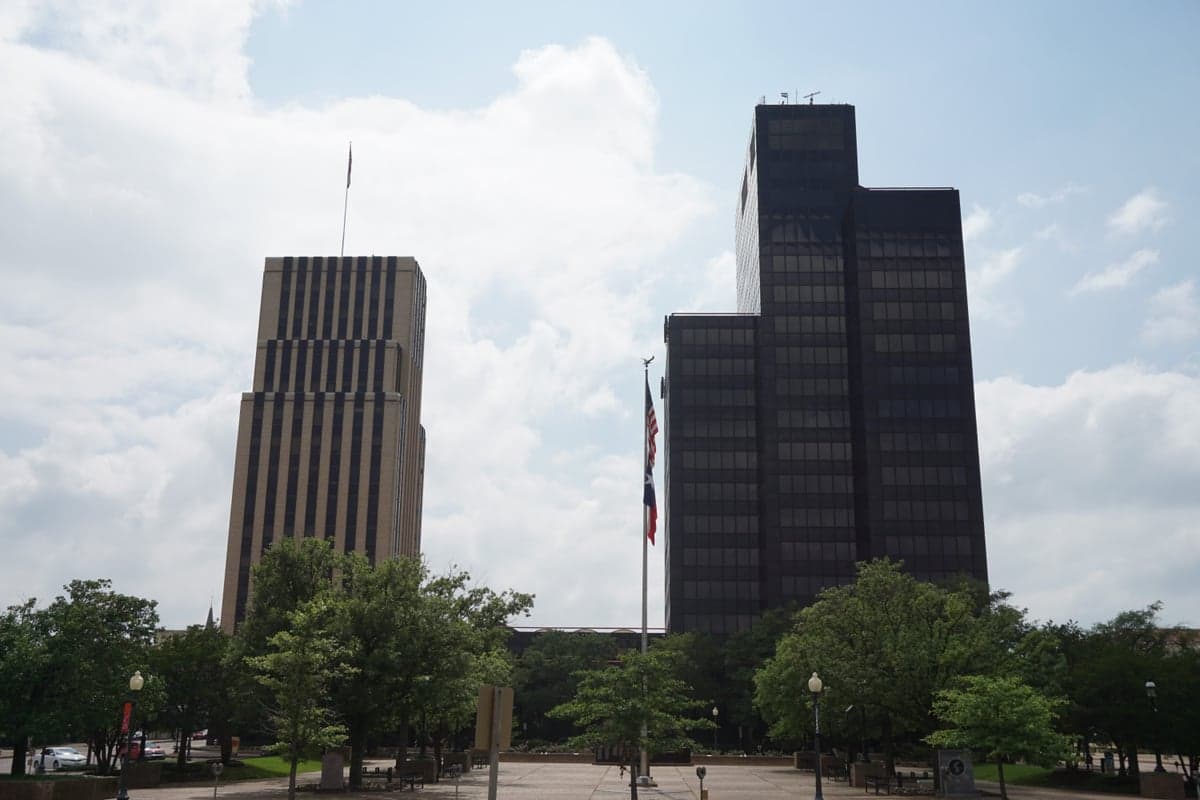
Photo: Wikipedia
Political ClimatePolitical Climate in Tyler, TX
District shown is the primary district for this city’s centroid. Cities may span multiple districts.
Local Political AnalysisPolitical Analysis of Tyler, TX
Tyler, Texas, sits deep in reliably conservative East Texas, and the numbers back that up with a Cook PVI of R+25. That means the area votes about 25 points more Republican than the national average, and it's been that way for as long as most folks around here can remember. But if you've lived here a while, you've noticed the political climate isn't quite as simple as it used to be. The core is still rock-solid red, but you're starting to see some shifts around the edges, especially as more people move in from places like Dallas, Houston, and even California. The old guard is still in charge, but there's a growing undercurrent of folks who want to nudge things in a more progressive direction, and that's got a lot of long-time residents watching closely.
How it compares
To really get a feel for Tyler's politics, you have to look at the towns around it. Drive 30 minutes south to Jacksonville or Rusk, and you're in even deeper red territory — places where the local government barely changes and the culture is as traditional as it gets. Head north to Lindale or Mineola, and it's similar. But the real contrast is with cities like Austin or Dallas, which are a whole different world. Tyler is still a place where you can have a conversation about local politics without it turning into a shouting match, but that's changing. The biggest contrast is with the college towns like Nacogdoches or Commerce, which lean more moderate because of the student populations. Here in Tyler, the University of Texas at Tyler is growing, and with it comes a younger, more diverse crowd that doesn't always see eye-to-eye with the old-timers on things like property rights, school curriculum, or how much government should be involved in your daily life.
What this means for residents
For the average person living in Tyler, the political climate means a few concrete things. First, your personal freedoms are still pretty well protected compared to a lot of places. You don't have to worry about the city telling you what kind of lightbulb to use or how to run your small business. Second, taxes are low and government services are lean, which is a double-edged sword — you get to keep more of your money, but you also have to be okay with roads that aren't always perfect and schools that are funded mostly by local property taxes. The real concern for a lot of us is the creeping influence of progressive ideas. You see it in school board meetings, where there's a push to bring in more "equity" training or to change how history is taught. You see it in city council debates about zoning and development, where some want to impose stricter regulations that feel like they're borrowed from Austin or Portland. The biggest red flag is the potential for government overreach into personal choices, whether that's about health mandates, business operations, or even how you raise your kids. So far, Tyler has held the line, but it takes constant vigilance.
Culturally, Tyler still feels like a place where people wave at each other on the street and church is a big part of life. But there's a growing divide between the old-timers who remember when the town was mostly farms and small shops, and the newcomers who want more bike lanes, more "diversity" events, and more city planning. The policy distinctions are subtle but real. For example, Tyler has resisted adopting a city-wide plastic bag ban, unlike some other Texas cities, and the local government is generally skeptical of any state or federal mandates that would limit local control. The gun culture is strong and respected, and the Second Amendment is taken seriously. The biggest policy fight right now is over growth — how to manage it without losing the character of the place. Some want to keep things small and quiet, while others see opportunity in bringing in more businesses and people. If you're thinking about moving here, just know that the political climate is still overwhelmingly conservative, but it's not a monolith. You'll find plenty of folks who share your values, but you'll also find a growing number who don't, and the battle for the soul of Tyler is just getting started.

State Political ClimatePolitical Climate in Texas
State Political AnalysisPolitical Environment in the State
Texas has been a reliably Republican state for over three decades, with the GOP holding every statewide office and both legislative chambers since the mid-1990s. The dominant coalition is a mix of rural conservatives, suburban moderates, and a growing evangelical base, but the 10-20 year trajectory shows a slow but steady shift toward competitiveness. In 2024, Donald Trump carried Texas by about 9 points, down from 11 points in 2020 and 16 points in 2016, driven largely by explosive growth in the blue-leaning metros of Austin, Dallas, Houston, and San Antonio. The state’s political future is now a tug-of-war between these urban centers and the vast, deeply red rural and exurban areas that still anchor the GOP’s power.
Urban vs. rural divide
The political map of Texas is starkly split. The big four metros—Houston, Dallas-Fort Worth, San Antonio, and Austin—are the engine of Democratic growth. Harris County (Houston) went for Biden by 13 points in 2020, and Dallas County by 16 points. Travis County (Austin) is the bluest in the state, voting over 70% Democratic. Meanwhile, the rural and small-town counties that make up the rest of the state are overwhelmingly Republican. Lubbock and the South Plains, Amarillo in the Panhandle, and Tyler in East Texas routinely vote 70-80% Republican. The suburbs are the battleground: Collin County (north of Dallas) flipped from +32 R in 2012 to +12 R in 2024, while Fort Bend County (southwest of Houston) went from +10 R in 2012 to +5 D in 2024. The political divide isn’t just about geography—it’s about lifestyle, with urbanites favoring transit, density, and progressive social policies, while rural and suburban Texans prioritize property rights, low taxes, and local control.
Policy environment
Texas’s policy environment is a conservative’s dream on paper, but the devil is in the details. There is no state income tax, and property taxes are high but capped at 10% annual growth for homesteads. The regulatory posture is business-friendly, with minimal zoning in many areas and a right-to-work law that keeps unions weak. On education, the state funds schools through a Robin Hood system that redistributes property tax revenue from wealthy districts to poor ones, which frustrates many homeowners. School choice has been a hot-button issue: in 2023, Governor Greg Abbott pushed a universal education savings account (ESA) bill, but it failed in the House due to opposition from rural Republicans who fear it will drain funding from local public schools. Healthcare is a mixed bag—Texas has the highest uninsured rate in the nation, and the state has refused Medicaid expansion under Obamacare. Election laws tightened after 2020 with Senate Bill 1, which banned 24-hour and drive-through voting, added ID requirements for mail ballots, and gave poll watchers more access. For a conservative, the policy environment is generally favorable, but the lack of school choice and high property taxes are real pain points.
Trajectory & freedom
On personal liberty, Texas has been a mixed bag over the last five years. On the plus side, the state enacted constitutional carry (permitless carry of handguns) in 2021, and the Heartbeat Act (SB 8) banned abortion after about six weeks in 2021, with a near-total ban (trigger law) taking effect in 2022 after Dobbs. Parental rights were strengthened with the 2023 law banning gender transition procedures for minors. On the downside, the state has expanded government power in ways that worry liberty-minded folks. The 2021 election integrity law (SB 1) added bureaucratic hurdles for voters, and the 2023 border security law (SB 4) made illegal entry a state crime, which critics say overrides federal authority and could lead to racial profiling. Property rights took a hit with the 2023 law allowing the state to seize land for the border wall, though compensation is required. Medical autonomy is under threat from both sides: the state banned vaccine mandates for private employers in 2023, but also restricted access to abortion and gender-affirming care. Overall, Texas is becoming more free on gun rights and parental control, but less free on immigration enforcement and election administration—a trade-off that many conservatives accept as necessary for security.
Civil unrest & political movements
Texas has seen its share of political flashpoints. The 2020 Black Lives Matter protests in Austin and Houston were large and sometimes violent, leading to property damage and a police funding debate that still simmers. On the right, the “Trump Train” convoy in 2020 that surrounded a Biden campaign bus on I-35 near San Marcos became a national story, and the “Take Our Border Back” convoy in 2024 drew thousands to Eagle Pass. Immigration politics are the most visible flashpoint: the state bused migrants to New York and Chicago, and Governor Abbott’s Operation Lone Star has deployed thousands of National Guard troops to the border. Sanctuary city bans are in place, and the 2023 SB 4 law allows state and local police to arrest suspected illegal entrants. Secession rhetoric is mostly fringe, but the Texas Nationalist Movement has a small but vocal following. Election integrity remains a live issue: the 2020 and 2022 elections saw no widespread fraud, but the 2021 law was a direct response to voter concerns. A new resident will notice the border debate on every news channel and the occasional protest in the capital, but daily life is generally calm.
Projection
Over the next 5-10 years, Texas is likely to become more purple, not redder. In-migration from California, New York, and Illinois is bringing a mix of conservatives fleeing high taxes and liberals seeking jobs, but the net effect is a slight Democratic tilt in the suburbs. The 2030 redistricting cycle will be critical—if Republicans hold the legislature, they can gerrymander to maintain power, but demographic trends favor the growing Hispanic and Asian populations, who lean Democratic. The rural base is shrinking, while the urban and suburban population is booming. Expect the state to remain under GOP control for at least another decade, but the margin will narrow. A new resident moving in now should expect to see more competitive statewide races, more fights over school choice and property taxes, and a continued struggle between local control and state mandates. The freedom trajectory is uncertain: if the GOP holds, expect more parental rights and gun rights, but also more state intervention on immigration and education. If Democrats gain ground, look for Medicaid expansion, higher property taxes, and a rollback of some conservative policies.
For a new resident, the bottom line is this: Texas is still a solidly conservative state with low taxes and a business-friendly climate, but it’s not static. The urban-rural divide is widening, and the political fights are getting louder. If you value gun rights, parental control, and low regulation, you’ll find a lot to like—especially in the suburbs of Fort Worth, Katy, or Frisco. But be prepared for high property taxes, a contentious immigration debate, and a state government that is increasingly willing to use its power to enforce conservative priorities. It’s a good place for a family that wants freedom from income tax and overreach, but you’ll need to stay engaged to keep it that way.
* Values derived from national, state, county, city and local statistics and may differ in a specific area. Last updated: 2026-04-15T15:44:48.000Z
Narrative content on this page is AI-generated and may contain mistakes. Verify any details that matter before acting on them.
ReloMaps may earn a commission from affiliate links at no extra cost to you.

