
Photo: Wikipedia
Quality of Life in University Place, WA
A high quality of life with strong walkability, manageable living costs, healthy neighborhood signals, and solid amenity access.
What does Quality of Life tell us?
Quality of Life blends cost of living, nearby amenities, socioeconomic signals, and neighborhood character. City-level scores represent the whole municipality; individual neighborhoods can differ.
What does this tell us?
Quality of Life blends cost of living, nearby amenities, socioeconomic signals, and neighborhood character. City-level scores represent the whole municipality; individual neighborhoods can differ.
Cost of Living
68% above national average
The Real Cost of Living in University Place, WA for 2026
| Tier | Individual | Family (4) |
|---|---|---|
| Survival | $27k | $50k |
| Comfortable | $112k | $165k |
| Luxury | $166k+ | $257k+ |
| Elite (Top 5%) | $195k+ | $302k+ |
58%
The Area Signal
A metric tracking the socioeconomic signals of the area.
Hobbies
Explore the areaGroceries
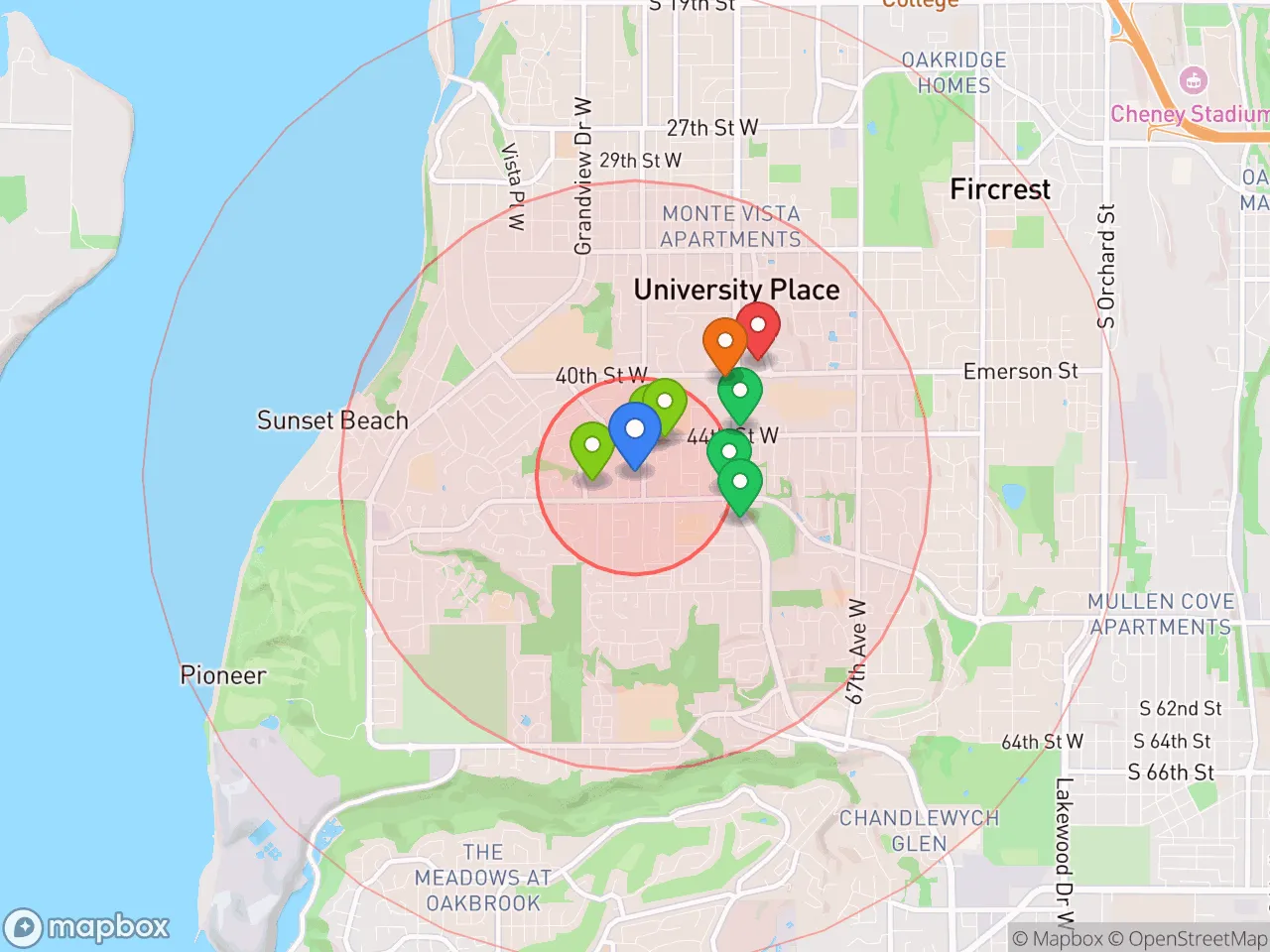
6 within 10 miles
Gas
20 within 10 miles
Hospital
18 within 20 miles
Airport
SEA — Seattle–Tacoma International
Post Office
USPS — University Place, WA
Critical Amenities
Quality-of-Life Analysis
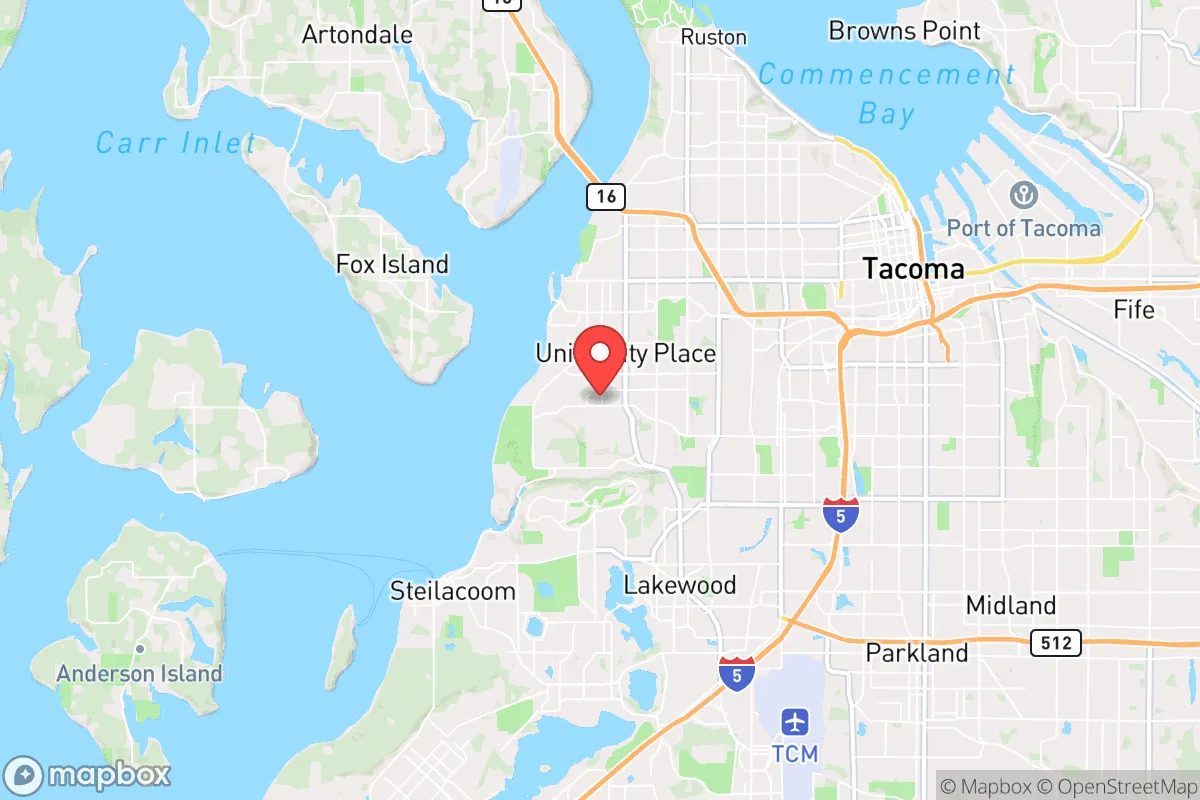
University Place, Washington, is an affluent suburban city of roughly 34,000 residents perched on the bluffs of Puget Sound between Tacoma and Gig Harbor. Its cost of living index of 168 (100 = US average) places it well above the national norm, attracting established professionals, empty-nesters, and families who prioritize high-quality schools, low crime, and waterfront access over urban nightlife or budget housing. The city’s demographic skew is older and wealthier than Pierce County as a whole, with a median household income near $90,000 and a strong concentration of college-educated residents working in healthcare, education, and professional services.
Cost of living, housing prices, and affordability compared to Tacoma and Seattle
University Place’s cost of living is roughly 68% above the national average, driven primarily by housing. The median home value of $578,100 is significantly higher than Tacoma’s median of roughly $470,000 but still well below Seattle’s $850,000+ range. Renters face a median rent of $1,664, which is about $200 more per month than in Tacoma but $500 less than comparable suburban enclaves like Mercer Island. The average commute of 28.3 minutes is shorter than the Seattle metro average of 32 minutes, a practical advantage for workers commuting to Joint Base Lewis-McChord, downtown Tacoma, or the Port of Tacoma. Property taxes in Pierce County run about 1.0% of assessed value, slightly below the Washington state average, but HOA fees are common in newer developments near Chambers Bay. For buyers, the trade-off is clear: you pay a premium over Tacoma for lower crime rates and better schools, but you avoid Seattle’s stratospheric prices and traffic.
What daily life is like for families: schools, parks, and local amenities
Daily life in University Place revolves around the University Place School District, which consistently ranks among the top 10% of Washington districts by test scores and college readiness. Curtis Senior High School, with its International Baccalaureate program, draws families from across the region. The city’s crown jewel is Chambers Bay Golf Course, a public links that hosted the 2015 U.S. Open and now serves as a regional recreation hub with walking trails, a beach, and a playground. The Town Center district along Bridgeport Way offers a mix of chain retailers (Target, Trader Joe’s) and local restaurants, while the nearby Chambers Creek Regional Park provides 930 acres of wetlands, boardwalks, and a dog park. Commuters rely primarily on I-5 and State Route 16, with Sound Transit express buses connecting to Tacoma Dome Station for light rail access to Seattle. The city lacks a true downtown core—most errands require a car—but the trade-off is a quiet, low-crime environment where children can walk to school and neighbors recognize each other at the weekly farmers market.
University Place is best suited for families and professionals who value top-tier public schools, waterfront recreation, and a safe, predictable suburban routine over urban energy or housing bargains. Empty-nesters downsizing from larger Tacoma homes find the city’s walkable medical facilities (MultiCare and CHI Franciscan are minutes away) and senior-focused housing appealing. Young renters or first-time buyers on a typical Pierce County salary will likely find the housing market prohibitive unless they dual-income or commute to higher-paying jobs in Seattle or the tech corridor. For those who can afford the premium, University Place delivers a consistently high quality of life with few surprises—a reliable, well-maintained suburb that earns its reputation as one of Washington’s most desirable mid-sized communities.

Crime in University Place, WA
Generally safer than 74% of comparable U.S. locations.
Violent CrimeViolent Crime Analysis
Property CrimeProperty Crime Analysis
Crime Analysis
University Place, Washington, reports a violent crime rate of 167.5 incidents per 100,000 residents and a property crime rate of 1,470.5 per 100,000, placing it in a moderate safety tier for a suburban city within the Tacoma metropolitan area. While these figures are lower than those of nearby Tacoma, the city’s proximity to a large, progressive metro area introduces systemic risks tied to regional criminal justice policies. Readers should weigh these local statistics against the broader context of Pierce County’s liberal prosecutorial and judicial trends, which can influence recidivism and public safety outcomes.
Crime in context
University Place’s violent crime rate of 167.5 per 100,000 is roughly half the national average of 380 per 100,000, but its property crime rate of 1,470.5 per 100,000 exceeds the national average of 1,954 per 100,000. Compared to Washington state’s overall violent crime rate of 310 per 100,000, University Place appears safer on paper. However, the city sits within Pierce County, where progressive district attorneys and judges have implemented policies such as reduced cash bail, diversion programs for repeat property offenders, and sentencing guidelines that prioritize rehabilitation over incarceration. These approaches, while sympathetic to offenders, can result in more criminals returning to the streets sooner, directly impacting property crime rates and victim justice. Neighboring Tacoma’s 2024 violent crime rate of 1,020 per 100,000 illustrates the spillover effect from a large metro area with similar judicial philosophies.
What residents experience
Residents report property crime—particularly vehicle break-ins, package theft, and burglary—as the most common safety concern, consistent with the city’s elevated property crime rate. Violent incidents are rarer but do occur, often concentrated near commercial corridors like Bridgeport Way West and the Town Center shopping district. The University Place Police Department maintains a community-oriented policing model, but its effectiveness is constrained by county-level policies that limit jail capacity and prioritize citation over arrest for low-level theft. For families and retirees, the practical impact means securing vehicles, installing outdoor cameras, and avoiding leaving valuables visible. The city’s relatively low violent crime rate offers some reassurance, but the regional justice system’s progressive tilt means property crime offenders face minimal consequences, undermining deterrence.
Neighborhood-level variation is modest but notable. Areas west of Bridgeport Way, closer to Chambers Bay and the waterfront, see fewer incidents, while multi-family housing complexes near 27th Street West and the commercial zones report higher property crime volumes. Gated communities and newer developments with private security experience lower rates, but the city’s overall safety profile is shaped more by Pierce County’s judicial environment than by local policing alone. Prospective residents should view University Place as a generally safe suburb with a persistent property crime problem exacerbated by regional progressive policies that prioritize offender leniency over public protection.
* Values derived from national, state, county, city and local statistics and may differ in a specific area. Last updated: 2026-04-21T11:15:54.000Z
Narrative content on this page is AI-generated and may contain mistakes. Verify any details that matter before acting on them.
ReloMaps may earn a commission from affiliate links at no extra cost to you.

