Photo: Wikipedia
Strategic Assessment of University Place, WA
Multiple tactical vulnerabilities. Population density, target proximity, or disaster risk are likely compounding. A retreat property and exit planning is required.
What does the Strategic Assessment tell us?
Our Strategic Assessment grades tactical survivability of an area. Major population centers, military targets, fallout zones, natural disasters, and border exposure all drive risk — lower exposure means a more defensible position in a crisis.
This is heavily inspired by Joel Skousen's Strategic Relocation book. Highly recommended you checkout the book ($)What does this tell us?
Our Strategic Assessment grades tactical survivability of an area. Major population centers, military targets, fallout zones, natural disasters, and border exposure all drive risk — lower exposure means a more defensible position in a crisis.
This is heavily inspired by Joel Skousen's Strategic Relocation book. Highly recommended you checkout the book ($)Strategic Pillars

Key Distances
Regional Safe Places
Below is our recommended "safe zones" in Washington and the surrounding area based on our strategic heuristics. For most people, it's unrealistic to live in a “safe zone” full-time due to work, family or other personal reasons. They tend to be more rural. However, many of these areas are perfect for second homes and retreat properties that double as a vacation home or even a short-term rental.
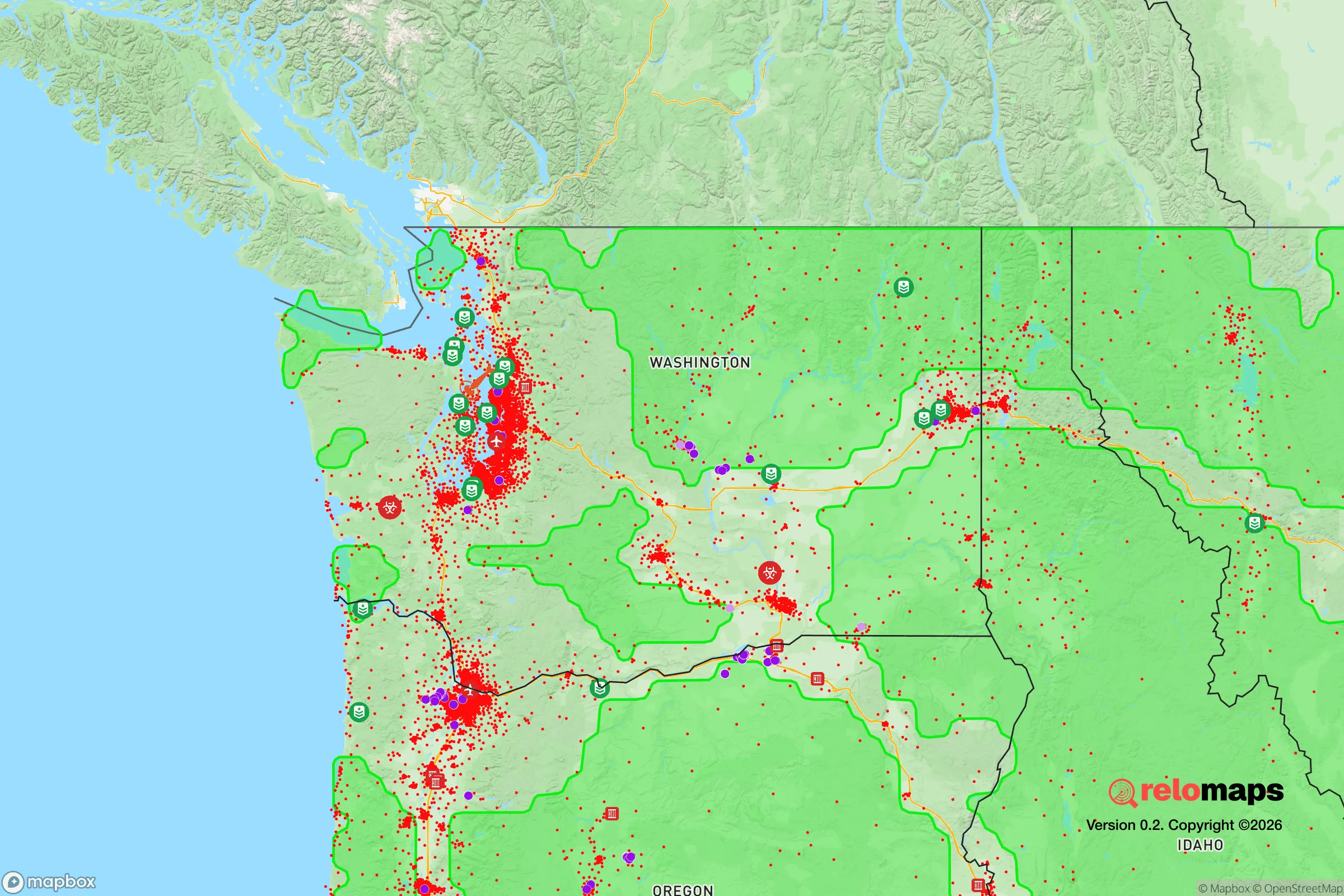
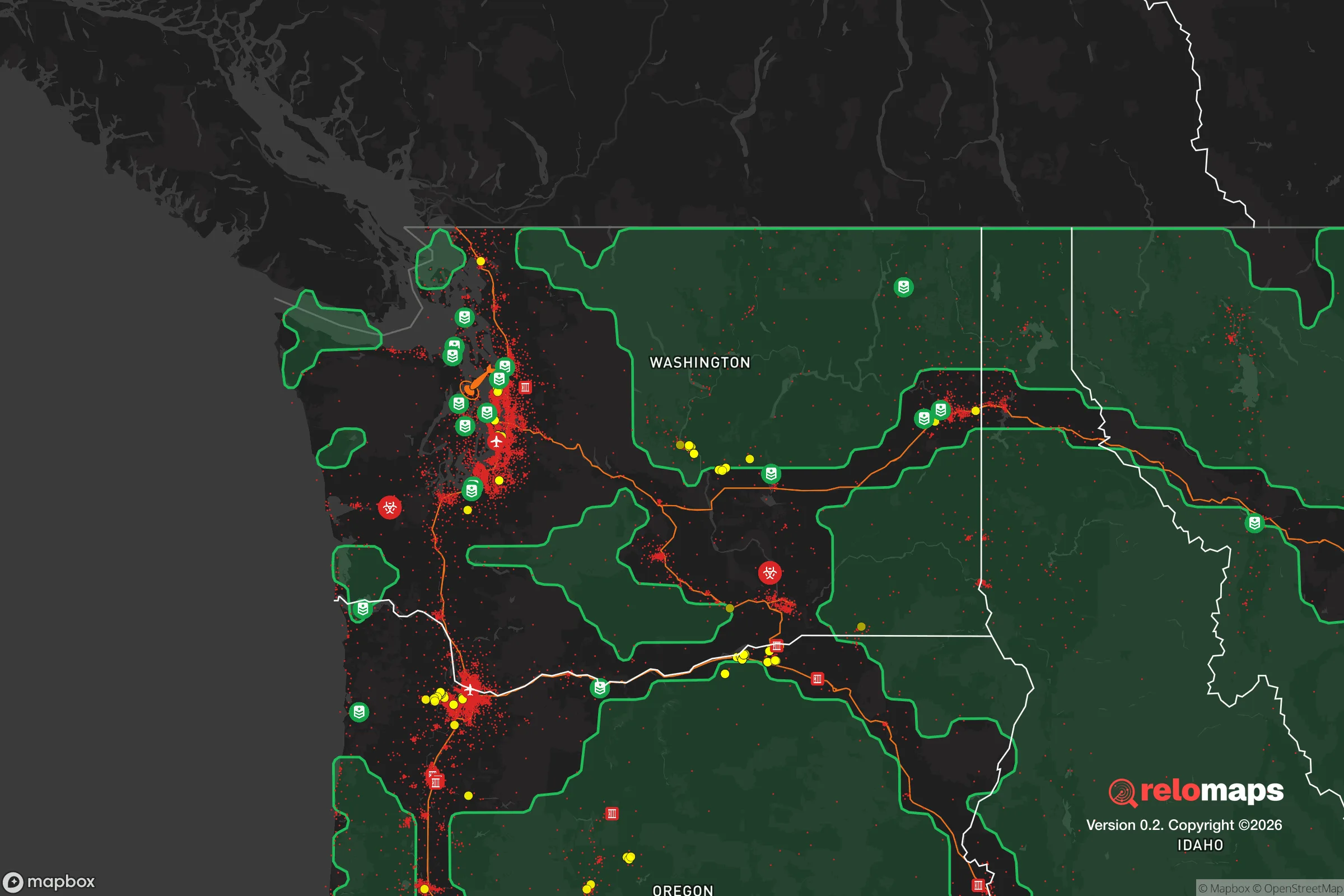


Important Note: For informational purposes only. This does not mean nothing bad ever happens in the green zones. Please use common sense. This is based on public data and modeled with AI. We tried to take a conservative approach but mistakes happen. We update this regularly as new information becomes available.
Solar Generator Recommendations
Backup power matters more here than in safer locations. We've picked three solar generators across budgets and capacity tiers — start with the budget unit if you only need a few essentials, or step up if you want to run a fridge and HVAC for days at a time.

Jackery Portable Power Station Explorer 300
Budget OptionPower on the Go: Weighing only 11 lbs, it's convenient to set up and store with book-sized foldable solar panels

BLUETTI Portable Power Station AC180
Designed for both indoor and outdoor scenarios, AC180 is highly capable as it has a robost capacity and continuous output power.

EF ECOFLOW DELTA Pro Ultra Power Station
Upgraded PickEcoFlow DELTA Pro Ultra is a whole-home energy system designed to grow with your family. Integrated with the Smart Home Panel 2, it scales to meet your evolving energy needs — keeping your home powered, intelligent, and secure through every stage of life.
We earn a commission, at no additional cost to you.
Strategic Assessment Analysis
University Place, Washington, offers a surprisingly resilient position for those prioritizing strategic relocation, blending suburban stability with proximity to critical infrastructure while maintaining enough distance from Seattle’s core vulnerabilities. Nestled on the southern edge of Puget Sound, this city of roughly 34,000 sits within Pierce County, providing a buffer from the densest urban chaos while still offering access to military-grade logistics and maritime escape routes. For a conservative-leaning prepper, the calculus here hinges on balancing natural advantages against the unavoidable risks of being within a major metropolitan region’s shadow.
Geographic position and natural advantages for long-term security
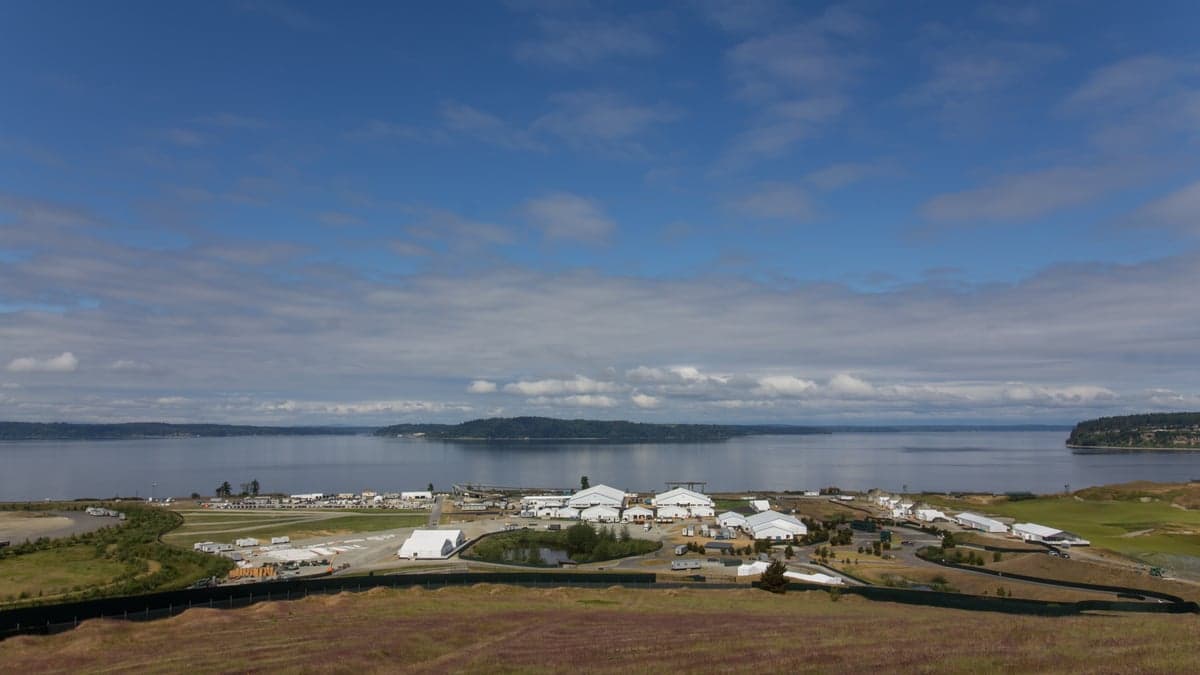
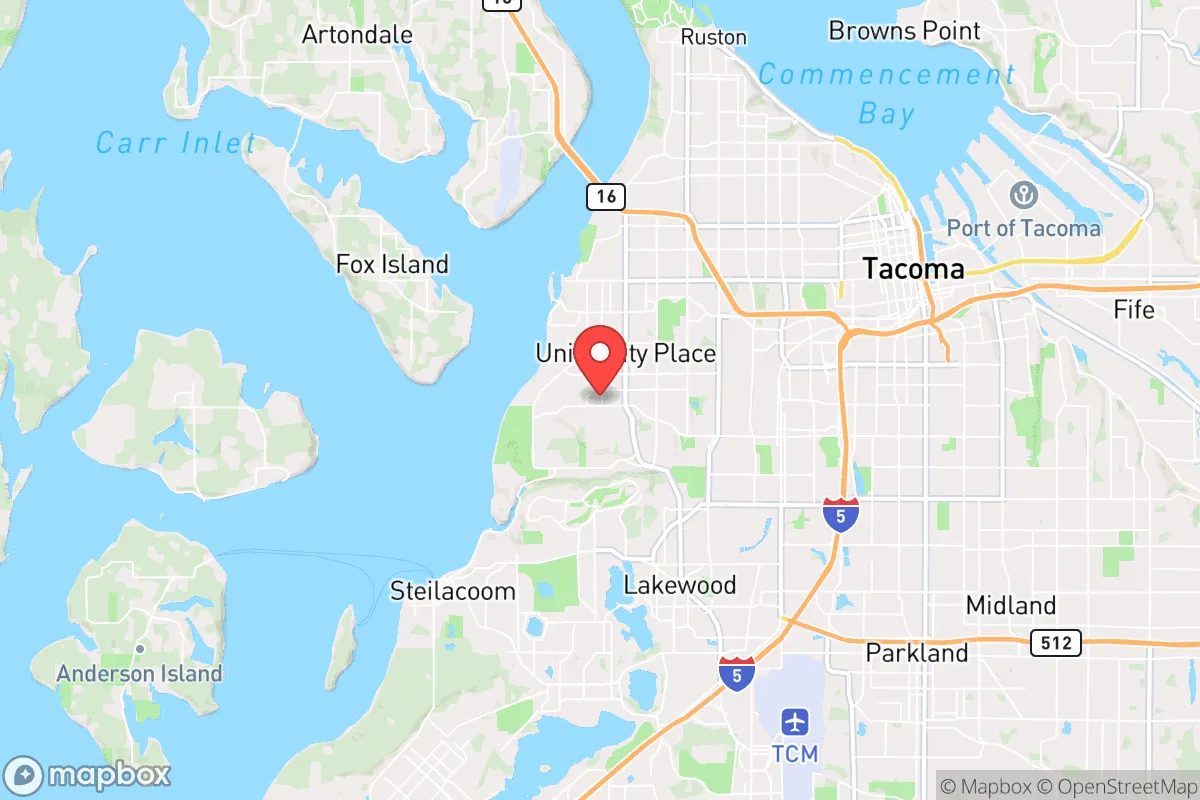
University Place’s location on a bluff overlooking the Narrows of Puget Sound is its first strategic asset. The elevation provides natural defensibility and reduces flood risk from sea-level rise or tsunami scenarios, unlike low-lying Tacoma directly to the east. The city’s position near the Tacoma Narrows Bridge gives you a controlled chokepoint for movement between the Kitsap Peninsula and the mainland—critical if you need to retreat toward the Olympic Peninsula’s more sparsely populated forests. The proximity to Joint Base Lewis-McChord (JBLM), roughly 10 miles south, is a double-edged sword but leans positive: the base ensures a heavy federal presence, which can deter large-scale civil unrest and provides a logistical hub for emergency supplies. The area’s temperate maritime climate means no extreme temperature swings, reducing energy demands for heating or cooling during a grid-down event. Freshwater access is robust, with the Sound itself and nearby Chambers Creek offering potential filtration sources, though you’ll want to secure a well or rainwater catchment on your own property.
Risks, exposures, and proximity to fallout-relevant landmarks
The primary liability is proximity to Tacoma (population 220,000) and Seattle (population 750,000), both of which are high-probability targets for civil unrest, supply chain disruptions, or mass casualty events. University Place is roughly 35 miles from Seattle’s downtown core—close enough that a major earthquake (the Cascadia Subduction Zone is a known threat) or a coordinated attack on the Port of Seattle would send shockwaves through the region. The Port of Tacoma, a major shipping hub for the Pacific Northwest, sits just 5 miles east; a disruption there would immediately strain fuel, food, and medical supplies. The city is also within the fallout zone of the Puget Sound Naval Shipyard in Bremerton (about 15 miles northwest by water), a strategic military asset that could be a target in a conflict with a near-peer adversary. While University Place itself isn’t a primary target, the secondary effects—refugee flows from Tacoma and Seattle, road closures on I-5 and Highway 16, and potential radiation drift from a naval strike—are real concerns. The 2020 civil unrest in Seattle and Portland demonstrated how quickly chaos can spread; University Place’s relative quiet could become a magnet for displaced populations seeking safety.
Practical resilience for a relocator: food, water, energy, and defensibility
For a relocator serious about self-sufficiency, University Place requires deliberate preparation. The city’s suburban layout means most lots are small (quarter-acre or less), limiting space for large-scale gardening or livestock. However, the surrounding Pierce County farmland—especially toward Eatonville and Graham—offers opportunities for a secondary property or cooperative agreements with local farmers. The local food scene is decent: the University Place Farmers Market runs seasonally, and you can stock up on bulk staples from Costco in Tacoma or WinCo in Lakewood, but you’ll want to build a 90-day supply given potential supply chain fragility. Water is the bigger concern: the city draws from the Green River and groundwater wells, but a major earthquake could disrupt the municipal system for weeks. A 1,500-gallon cistern with a hand pump and a Berkey filter setup is non-negotiable here. Energy-wise, the grid is tied to Puget Sound Energy, which has a mixed reliability record during windstorms; solar panels with battery backup (e.g., Tesla Powerwall or a DIY lithium setup) are a smart investment, especially given the region’s long, overcast winters that reduce solar yield. Defensibility is moderate: the bluff geography creates natural chokepoints on roads like Bridgeport Way and 27th Street West, but the city’s dense residential layout means you can’t easily secure a perimeter. A rural retreat property in the Cascade foothills (e.g., near Carbonado or Wilkeson) would complement a University Place home as a bug-out location.
The overall strategic picture for University Place is one of calculated trade-offs. It’s not a remote survivalist haven—you’re still within the blast radius of a major metropolitan collapse. But for a conservative relocator who wants to maintain a professional career or family ties while building resilience, it offers a defensible midpoint. The presence of JBLM, the maritime escape route via Puget Sound, and the relatively stable local governance (Pierce County leans more conservative than King County) make it a viable base of operations. The key is to treat University Place as a forward operating position: invest in off-grid capabilities, establish relationships with like-minded neighbors, and have a clear evacuation plan for the Cascadia event or a societal breakdown. If you’re willing to put in the work on water storage, energy independence, and community networking, this city can serve as a solid anchor in an increasingly uncertain world. Just don’t mistake its suburban calm for true safety—preparation is the only buffer that matters.

* Values derived from national, state, county, city and local statistics and may differ in a specific area. Last updated: 2026-04-21T11:15:54.000Z
Narrative content on this page is AI-generated and may contain mistakes. Verify any details that matter before acting on them.
ReloMaps may earn a commission from affiliate links at no extra cost to you.

