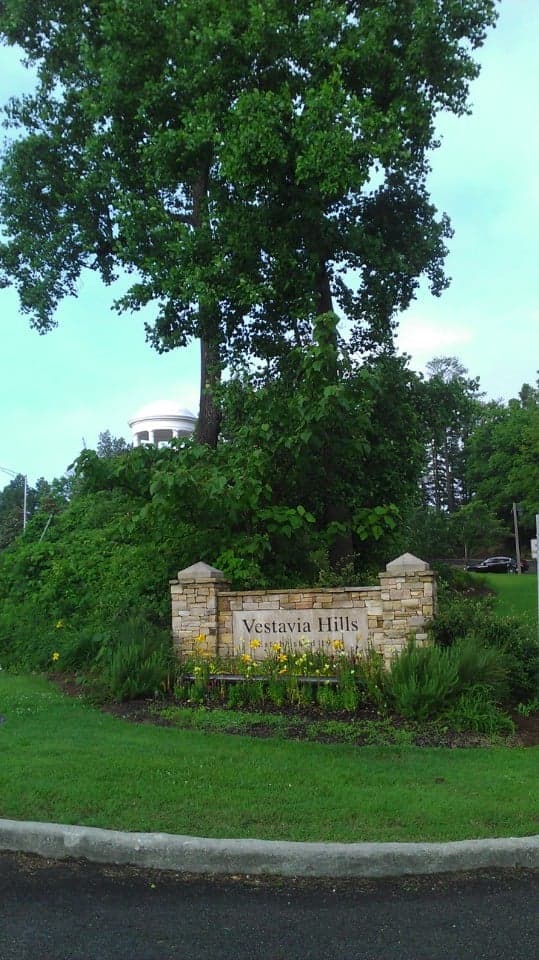
Photo: Wikipedia
Political ClimatePolitical Climate in Vestavia Hills, AL
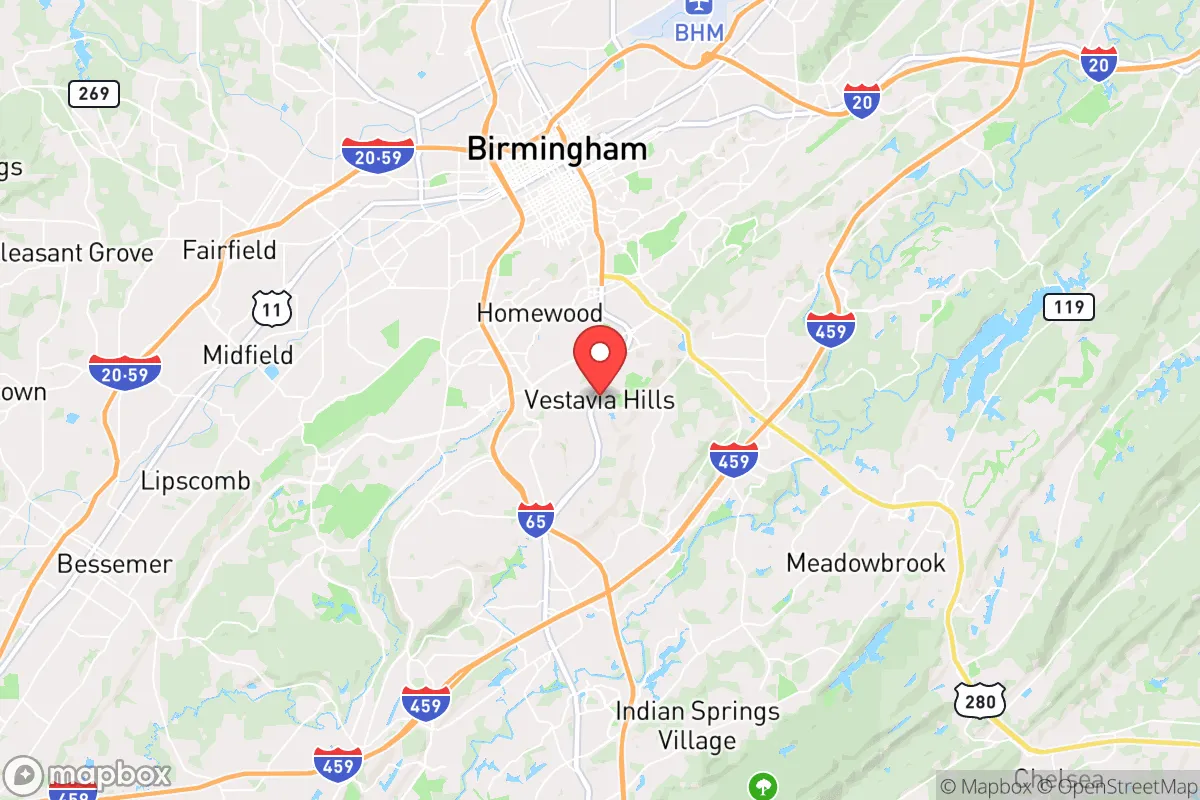
District shown is the primary district for this city’s centroid. Cities may span multiple districts.
Local Political AnalysisPolitical Analysis of Vestavia Hills, AL
Vestavia Hills leans heavily conservative, with a Cook PVI of R+20 that puts it among the most reliably Republican suburbs in the Birmingham metro area. That number isn't just a statistic—it reflects a community where folks have long valued limited government, personal responsibility, and the freedom to live without excessive interference from Montgomery or Washington. The political trajectory here has been steady, but there are undercurrents worth watching, especially as nearby areas like Homewood and Mountain Brook have seen subtle shifts toward more progressive local policies in recent years.
How it compares
Drive ten minutes east to Homewood, and you'll find a noticeably different vibe—more bike lanes, more zoning debates, and a city council that's flirted with progressive housing initiatives. Mountain Brook, just north, has held the line better but still faces pressure from younger transplants who want "urbanist" changes. Vestavia Hills, by contrast, has kept its focus on low taxes, strong police funding, and school autonomy. The contrast is sharpest when you look at Jefferson County politics overall: while Birmingham proper votes reliably blue, Vestavia's precincts routinely deliver 70-80% Republican margins in statewide races. That's not accidental—it's a deliberate choice by residents who remember what happens when government overreaches into personal freedoms, whether it's business mandates or school curriculum battles.
What this means for residents
For families and retirees here, the conservative tilt translates into tangible daily benefits. Property taxes stay reasonable because the city doesn't chase every new federal grant with strings attached. The school system—consistently ranked among Alabama's best—hasn't been dragged into the culture war fights that have consumed districts in more progressive suburbs. You can run a small business without drowning in local red tape, and the police department focuses on public safety rather than social experiments. That said, the long-term concern is demographic drift: as Birmingham's urban core expands outward, some new arrivals bring different ideas about zoning, density, and "equity" initiatives. The 2024 election cycle saw a few local races where candidates pushing moderate-to-left positions got closer than they would have a decade ago. It's not a crisis yet, but it's a signal that staying conservative requires active engagement, not just assumption.
Culturally, Vestavia Hills still feels like old-school Alabama conservatism—church potlucks, Friday night football, and a general distrust of politicians who promise to "fix" things that aren't broken. The city has resisted the kind of symbolic resolutions and performative policies that have crept into some neighboring suburbs. There's a quiet but firm understanding here that the best government is the one that stays out of your wallet, your child's education, and your personal decisions. If that starts to change—if the city council starts eyeing "affordable housing" mandates or "sustainability" committees—you'll hear about it at the grocery store and the HOA meeting. For now, Vestavia Hills remains a place where conservative values aren't just tolerated; they're the baseline expectation. But keeping it that way means paying attention, because the political winds in Jefferson County are shifting, and this community's character isn't guaranteed forever.

State Political ClimatePolitical Climate in Alabama
State Political AnalysisPolitical Environment in the State
Alabama has been a reliably Republican state for over two decades, with a deep-red partisan lean that has only intensified since the 2010 midterms. The state’s dominant coalition is a mix of rural conservatives, evangelical Christians, and a growing number of suburban families fleeing higher-tax states, producing margins like Trump’s +25.4-point win in 2024. Over the last 10-20 years, the shift has been steady: Democrats once held state legislative majorities as late as 2010, but today the GOP holds supermajorities in both chambers, and no Democrat has won a statewide office since 2008. For a conservative-leaning individual or family, this means a political environment that broadly aligns with traditional values, though the state’s internal dynamics are more nuanced than the simple “red state” label suggests.
Urban vs. rural divide
The political map of Alabama is a textbook case of urban-rural polarization. The state’s few blue dots are concentrated in the Black Belt counties—like Montgomery, Selma, and Greene County—where African American voters, who make up over 25% of the state’s electorate, reliably deliver Democratic majorities. Birmingham (Jefferson County) and Mobile are more competitive but still lean Democratic in presidential races, while Huntsville in Madison County has become a fascinating swing area: its high-tech, aerospace-driven economy attracts educated professionals, and it voted for Trump in 2024 but by a narrower margin than the rest of the state. The real engine of Alabama’s conservatism is the vast rural and exurban expanse: counties like DeKalb, Marshall, and Cullman in the north, and Baldwin County on the Gulf Coast, routinely deliver 75-80% Republican votes. Auburn and Tuscaloosa are interesting exceptions—college towns that lean conservative but have pockets of progressive influence from faculty and students. For a new resident, the practical takeaway is that your political experience will vary dramatically depending on whether you settle in a rural county like Blount or a metro like Birmingham.
Policy environment
Alabama’s policy environment is among the most conservative in the nation, with a low-tax, low-regulation posture that appeals to freedom-minded individuals. The state has no state-level property tax (counties handle it, averaging around 0.4% of home value), and the income tax is a flat 5% on most income—though it’s worth noting that groceries are taxed at the full 4% state rate, which hits lower-income families harder. The regulatory climate is business-friendly: Alabama is a right-to-work state with no state-level minimum wage above the federal $7.25, and occupational licensing requirements are relatively light. On education, the state has a robust school choice movement: the Alabama Accountability Act provides tax credits for private school tuition, and in 2024, Governor Kay Ivey signed the CHOOSE Act, creating Education Savings Accounts (ESAs) worth up to $7,000 per child for families leaving failing public schools. Healthcare policy is limited—Alabama did not expand Medicaid under the ACA, and the state’s certificate-of-need laws still restrict new hospital construction, though there’s growing legislative pressure to repeal them. Election laws are tight: voter ID is required, early voting is limited (absentee only with an excuse), and the state recently purged inactive voter rolls. For a conservative, this is a state that generally respects local control and limits government overreach, though the grocery tax and CON laws are persistent frustrations.
Trajectory & freedom
Alabama’s trajectory over the last five years has been toward more personal freedom in several key areas, which is encouraging for those wary of government overreach. On gun rights, the state enacted constitutional carry in 2022 (HB 272), allowing permitless carry of handguns for anyone 21 or older—a clear expansion of Second Amendment liberty. Parental rights got a boost with the 2022 “Don’t Say Gay” style law (HB 322), which restricts classroom instruction on sexual orientation and gender identity in K-5, and the 2024 CHOOSE Act, which gives parents direct control over education funding. Medical autonomy is mixed: the state banned nearly all abortions in 2019 (triggered by Dobbs), which aligns with conservative values, but it also maintains strict certificate-of-need laws that limit healthcare competition. Property rights are strong—Alabama is a “Dillon’s Rule” state, meaning local governments have only powers explicitly granted by the state, which reins in zoning overreach. On taxation, the 2023 tax reform package cut the state’s grocery tax from 4% to 3% (phased down to 2% by 2025) and expanded the standard deduction. The concerning trend for conservatives is the slow creep of federal influence: Alabama’s reliance on federal funding (about 40% of the state budget) creates vulnerability to Washington mandates, particularly in Medicaid and education. But overall, the state is moving in a freedom-friendly direction, especially compared to neighbors like Georgia or Tennessee.
Civil unrest & political movements
Alabama has seen relatively little civil unrest compared to national trends, but there are visible flashpoints. The most prominent recent movement is the “Stop the Steal” activism around the 2020 election, which remains active in rural counties—Baldwin County, for example, saw large rallies questioning election integrity, and the state legislature passed a 2021 law (SB 1) banning curbside voting and limiting absentee ballot drop boxes. On the left, the Black Lives Matter protests in 2020 were concentrated in Birmingham and Montgomery, with some property damage but no sustained unrest. Immigration politics are relatively quiet—Alabama’s foreign-born population is only about 4%, and the state’s 2011 HB 56 (one of the strictest anti-immigration laws in the country) has been largely gutted by courts, but local enforcement remains aggressive in places like Cullman and Albertville. There’s a small but vocal secessionist/nullification movement, mostly online, but it has no real political power. The most visible political movement today is the school choice coalition, which has successfully pushed ESAs and charter school expansion—a grassroots effort that crosses racial and party lines. For a new resident, the political climate is stable but not sleepy: you’ll see Trump flags in rural areas and “Choose Love” signs in college towns, but actual conflict is rare.
Projection
Over the next 5-10 years, Alabama is likely to become more conservative, not less, driven by two demographic trends. First, in-migration from blue states—particularly to Huntsville and Baldwin County—is bringing families who are fleeing high taxes and progressive policies, and they tend to vote Republican once settled. Second, the state’s rural population is aging but remains politically active, while the Black Belt’s population is declining due to out-migration, reducing Democratic strongholds. The GOP supermajority in the legislature is unlikely to be threatened, and further expansions of school choice, gun rights, and tax cuts are probable. The wild card is the federal courts: Alabama’s congressional map was redrawn in 2023 to create a second majority-Black district (AL-02), which could flip a House seat to Democrat, but this won’t affect state-level politics. The biggest risk for conservatives is complacency: if the state’s leadership becomes too focused on cultural battles and neglects infrastructure (roads, broadband, healthcare access in rural areas), it could alienate the very families moving in. But for now, the trajectory is solidly red, and a family moving to Fairhope or Madison can expect the political climate to remain friendly to traditional values for the foreseeable future.
For a new resident, the bottom line is this: Alabama offers a political environment where your rights to keep and bear arms, direct your children’s education, and keep more of your earnings are broadly protected. The state is not without its frustrations—the grocery tax, limited healthcare competition, and occasional federal overreach are real concerns—but the overall direction is toward greater freedom. If you’re looking for a place where local control still matters and the government is more likely to stay out of your life than in it, Alabama is a solid bet. Just be prepared for the humidity and the fact that your county commission might matter more than the governor.
* Values derived from national, state, county, city and local statistics and may differ in a specific area. Last updated: 2026-04-19T19:12:36.000Z
Narrative content on this page is AI-generated and may contain mistakes. Verify any details that matter before acting on them.
ReloMaps may earn a commission from affiliate links at no extra cost to you.

