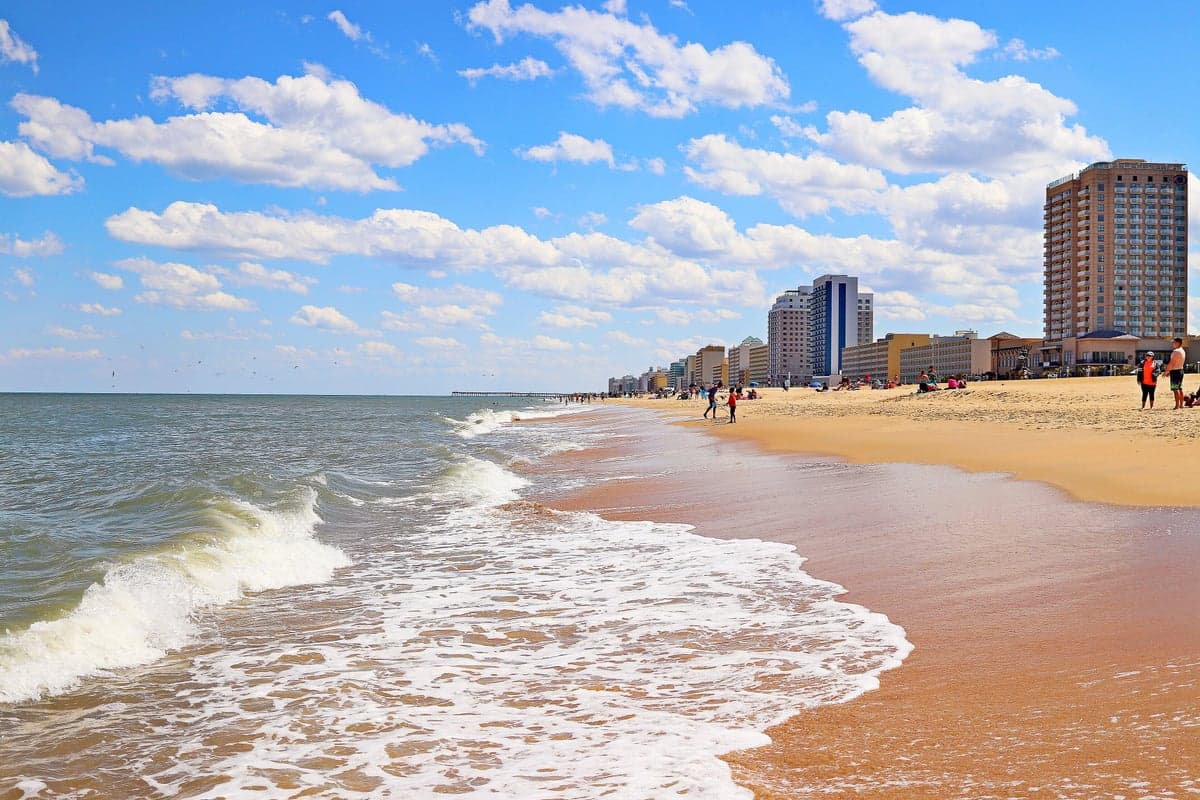
Photo: Wikipedia
Personal Sovereignty in Virginia Beach, VA
Viable for self-reliance. Generally workable, though some barriers may limit total independence.
What does Personal Sovereignty tell us?
Personal Sovereignty measures your capacity for self-reliance and independence with minimal government friction. Higher scores mean fewer barriers between you and the way you want to live... but it assumes you have the space you need and good neighbors.
What does this tell us?
Personal Sovereignty measures your capacity for self-reliance and independence with minimal government friction. Higher scores mean fewer barriers between you and the way you want to live... but it assumes you have the space you need and good neighbors.
State Policy
Energy independence: Importer (20% of energy produced in-state)
Personal Liberty
Homesteading

Personal Liberty Analysis
Virginia Beach offers a mixed bag for those prioritizing personal sovereignty, where Virginia’s relatively light state-level regulatory framework clashes with the practical realities of a dense, coastal city governed by a Democratic-leaning municipal machine. For the survivalist or prepper, the city’s proximity to military infrastructure and the Atlantic provides strategic depth, but the local political climate—marked by aggressive zoning enforcement and a growing police presence—demands a clear-eyed assessment of where autonomy ends and government overreach begins. The key takeaway: Virginia Beach is a viable base for those willing to navigate its bureaucratic hurdles, but it is not a libertarian haven; you must actively carve out your sphere of independence.
Tax burden and regulatory posture: how much the state and city take
Virginia’s tax structure is moderate by national standards, but the city’s add-ons chip away at self-reliance. The state income tax is a flat 5.75% on all income over $17,000, which is higher than neighboring North Carolina’s 4.75% but lower than Maryland’s progressive rates. Property taxes in Virginia Beach are assessed at a rate of $1.05 per $100 of assessed value (2025 rate), which is reasonable for a coastal city, but the city’s real estate assessments have climbed over 20% since 2020, meaning your tax bill rises even if your lifestyle doesn’t. Sales tax is 6% (5.3% state, 0.7% local), with no special exemptions for preparedness supplies like bulk food or generators. The regulatory posture is where the friction shows: Virginia Beach enforces a strict stormwater management ordinance that can require permits for any significant land alteration, including digging a root cellar or installing a rainwater catchment system over 1,000 gallons. The city also mandates business licenses for any home-based enterprise, even if you’re just selling eggs from backyard chickens—a nuisance for the self-reliant. Compared to rural Virginia counties like Pittsylvania or Halifax, where county officials rarely inspect anything, Virginia Beach’s bureaucracy is a constant low-grade irritant.
Self-defense and gun law specifics: what you can and cannot do
Virginia is a “shall-issue” state for concealed carry permits, and Virginia Beach does not impose additional local restrictions beyond state law—a win for personal defense. You can open carry without a permit, though in practice, doing so in the city’s tourist-heavy areas like the Oceanfront will attract police attention. The state preempts local gun ordinances, so the city council cannot ban firearms in parks or public buildings (though federal buildings and schools remain off-limits). Magazine capacity is capped at 12 rounds for long guns and 10 for handguns under a 2020 state law, which is a significant limitation for a survivalist who prefers standard-capacity AR-15 magazines. There is no state-level “stand your ground” law; Virginia follows the “duty to retreat” doctrine in public spaces, meaning you must attempt to avoid a confrontation before using deadly force unless you are in your home or vehicle. This legal nuance is critical: if you defend yourself on your own property, you’re on solid ground, but a confrontation on the sidewalk could land you in court. The city’s police department is well-funded and responsive, with an average response time of under 10 minutes for priority calls, but the legal environment means you should carry liability insurance if you carry a firearm daily.
Self-reliance and homesteading viability: lot sizes, zoning, and off-grid feasibility
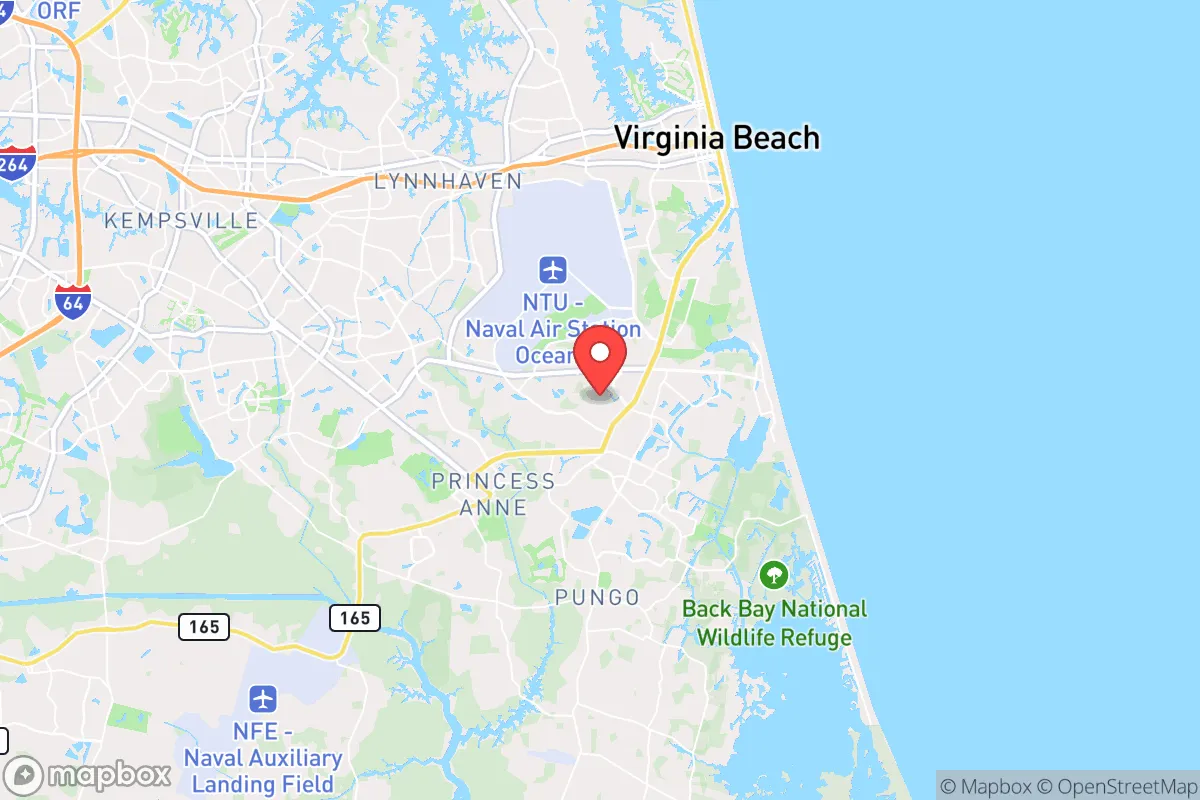
Virginia Beach is a sprawling city of 497 square miles, but the vast majority of residential land is zoned for suburban subdivisions with lot sizes of 0.25 to 0.5 acres. For a serious homesteader, this is a dealbreaker: the minimum lot size for agricultural zoning (A-1) is 10 acres, and such parcels are rare and expensive (often $100,000+ per acre near the city limits). The city does allow backyard chickens (up to 4 hens, no roosters) and beekeeping with a permit, but livestock like goats or pigs are prohibited on lots under 3 acres. Off-grid feasibility is nearly impossible within city limits: Virginia Beach requires connection to municipal water and sewer for any habitable structure, and solar panels must be grid-tied with net metering approval from Dominion Energy. Rainwater collection is legal but limited to 1,000 gallons of storage without a permit, and composting toilets are not allowed as primary sanitation. The practical workaround is to buy land in the rural southern end of the city, near the North Carolina border, where zoning is looser and lots of 2-5 acres are available for $30,000-$50,000 per acre. Even there, you’ll face the city’s building code, which mandates minimum square footage (600 sq ft for a dwelling) and prohibits shipping containers or tiny houses as primary residences. For a prepper, the best strategy is to treat Virginia Beach as a “hub” for supplies and income, with a separate rural property in an adjacent county like Suffolk or Isle of Wight for actual homesteading.
Personal liberties: parental rights, medical autonomy, speech, and property
Virginia’s legal framework for personal liberties is a patchwork that favors the state in several key areas. Parental rights are strong on paper—Virginia law recognizes parents’ authority to direct their children’s education and medical care—but the city’s school board has implemented policies that erode this. In 2024, Virginia Beach Public Schools adopted a policy allowing students to use preferred names and pronouns without parental notification, a clear overreach for conservative parents. Medical autonomy is constrained: Virginia has a broad vaccine mandate for school attendance (including COVID-19 shots for K-12 students, though exemptions exist for religious and medical reasons), and the state’s “Right to Try” law for experimental treatments is limited to terminally ill patients. There is no state-level medical freedom law protecting your right to refuse treatment or use alternative therapies; the Virginia Board of Medicine aggressively prosecutes doctors who prescribe off-label treatments. Free speech is protected under the First Amendment, but the city has a history of restricting public assembly near military bases and during large events like the Neptune Festival. Property rights are the brightest spot: Virginia is a “Dillon’s Rule” state, meaning local governments only have powers explicitly granted by the state, so the city cannot easily impose rent control or seizure of property without due process. However, the city’s aggressive code enforcement—fining homeowners for tall grass, unregistered vehicles, or “unsightly” structures—is a constant reminder that your property is subject to municipal aesthetics.
Overall, Virginia Beach offers a moderate level of personal sovereignty compared to deep-blue cities like Arlington or Richmond, but it falls short of the autonomy found in rural Virginia or states like Texas or New Hampshire. The tax burden is manageable, the gun laws are workable with a permit, and property rights are reasonably protected, but the city’s zoning, building codes, and school policies are clear signs of government overreach into daily life. For a survivalist or prepper, the calculus is simple: Virginia Beach is a good place to earn a living and access military-grade supplies, but you will need a secondary location—or a willingness to fight the city council—to truly live on your own terms. If you value low taxes, minimal regulation, and the freedom to build a self-sufficient life, look further west or south; if you need coastal access and a job market tied to the Navy, this city can work, but only if you stay vigilant and organized.

* Values derived from national, state, county, city and local statistics and may differ in a specific area. Last updated: 2026-04-24T01:53:40.000Z
Narrative content on this page is AI-generated and may contain mistakes. Verify any details that matter before acting on them.
ReloMaps may earn a commission from affiliate links at no extra cost to you.

