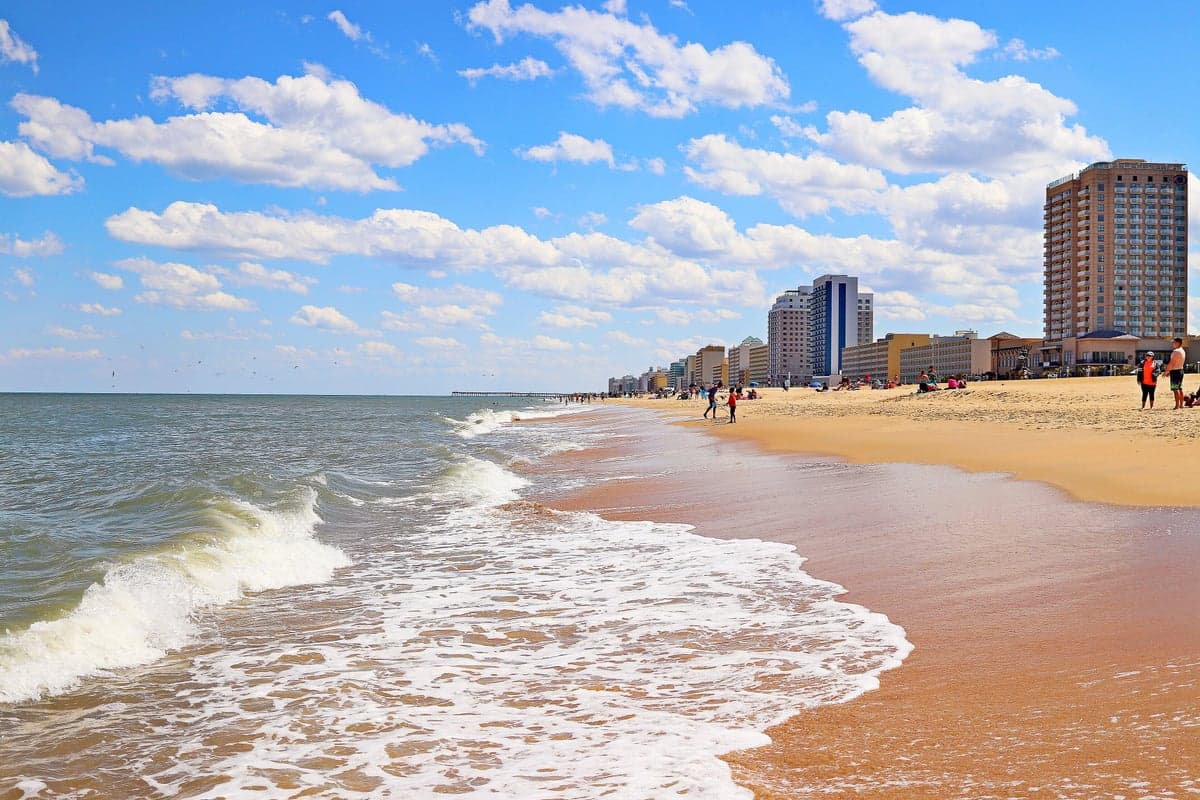
Photo: Wikipedia
Political ClimatePolitical Climate in Virginia Beach, VA
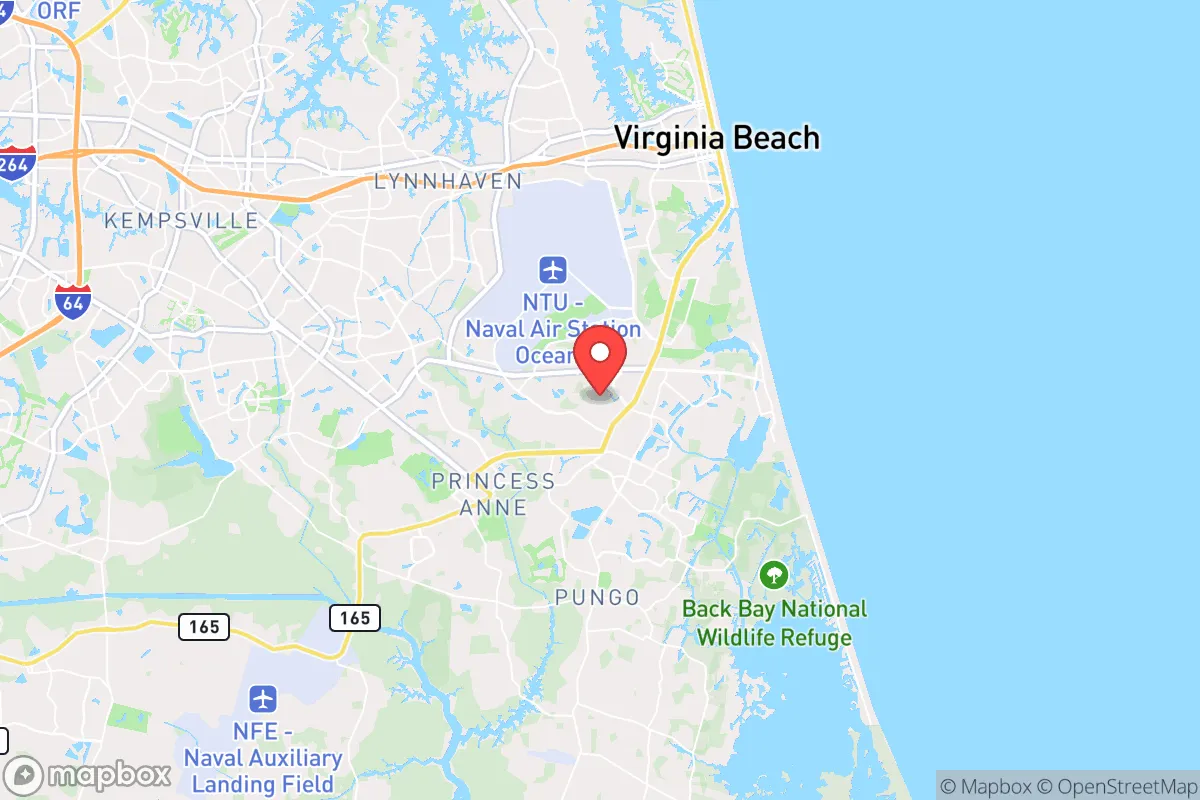
District shown is the primary district for this city’s centroid. Cities may span multiple districts.
Local Political AnalysisPolitical Analysis of Virginia Beach, VA
Virginia Beach has long been the conservative anchor of Hampton Roads, but if you’ve lived here as long as I have, you’ve watched that foundation get chipped away. The city’s Cook PVI of EVEN tells the story: we’re a true toss-up now, a far cry from the reliably red stronghold we were in the 90s and early 2000s. The 2024 presidential race saw the city split almost down the middle, with the northern, more transient neighborhoods near the Oceanfront and Town Center trending left, while the rural southern half—Pungo, Blackwater, Creeds—still votes like the old Virginia Beach. The real shift started around 2016, when the military retiree base began to be outnumbered by younger professionals moving in from Northern Virginia and out-of-state, bringing a more progressive, coastal-elite mindset that clashes with the traditional, liberty-minded culture we grew up with.
How it compares
Drive 20 minutes west to Chesapeake, and you’ll feel the difference immediately—it’s still solidly Republican, with a PVI of R+8 and a county-style government that keeps taxes lower and regulations looser. Head south across the North Carolina line into Currituck County, and you’re in deep-red territory where the Second Amendment is still a given, not a debate. The contrast is starkest with Norfolk, just across the water, which is D+18 and openly progressive—San Francisco East, some of us call it. Virginia Beach is caught in the middle, trying to balance the demands of a growing tourist economy with the values of the families who actually live here year-round. The city council has been a battleground: we’ve seen fights over short-term rental restrictions, mask mandates in schools, and zoning changes that feel like they’re designed to dilute the suburban character that made people move here in the first place.
What this means for residents
For those of us who value personal freedom and limited government, the trend is worrying. The city’s recent push for higher density development—think apartment complexes replacing single-family homes along the Princess Anne Road corridor—feels like a backdoor way to change the voting demographics. Property taxes have crept up faster than inflation, and the school board has become a political football, with progressive members pushing for curriculum changes that many parents find intrusive. On the other hand, the military presence at Oceana Naval Air Station and Dam Neck still exerts a conservative influence, and the powerful real estate industry tends to favor pro-business, low-regulation policies. For now, the balance holds, but every election cycle brings more anxiety. If you’re considering a move here, pay close attention to the local races—the city council and school board elections matter more than the presidential vote for your day-to-day life.
Culturally, Virginia Beach still has a strong libertarian streak—people generally want to be left alone to live their lives, hunt on their land, and run their businesses without a dozen permits. But the recent push for a citywide noise ordinance and stricter beach rules (like banning tents and limiting cooler sizes) feels like government overreach to many of us who remember when the Oceanfront was a place for families, not a regulated theme park. The long-term trajectory depends on whether the southern half of the city can hold the line against the urbanization creeping north. If you value a place where your voice still counts and the government stays out of your backyard, Virginia Beach is worth a hard look—but keep one eye on the ballot box.

State Political ClimatePolitical Climate in Virginia
State Political AnalysisPolitical Environment in the State
Virginia has shifted from a reliably purple swing state to a solidly blue one over the past 15 years, driven largely by explosive growth in the Washington D.C. suburbs. The Democratic coalition now dominates statewide elections, with Republicans holding only scattered rural and exurban strongholds. For a conservative considering relocation, the state’s trajectory is unmistakable: what was once a competitive battleground is now a one-party-controlled state where progressive policies are enacted with little resistance.
Urban vs. rural divide
The political map of Virginia is a tale of two worlds. The entire state’s partisan lean is dictated by the northern Virginia suburbs of Arlington, Alexandria, and Fairfax County, which together cast nearly a third of all votes and deliver margins of 60-70% for Democrats. These areas are filled with federal employees, defense contractors, and tech workers who have made the region a Democratic stronghold. Richmond and Norfolk are also deep blue, with the capital city’s growing progressive activist class and the military-heavy Hampton Roads area trending leftward. Meanwhile, the rural south and southwest—places like Roanoke, Lynchburg, and the Shenandoah Valley—vote Republican by wide margins, but their populations are shrinking. The key shift happened in the exurbs: Loudoun County, once a conservative bastion, flipped blue in the 2010s and now votes Democratic by double digits. Prince William County followed suit. Even Virginia Beach, historically a military swing area, has moved left. The rural-urban divide is stark, but the urban centers are growing faster, making the state’s overall lean increasingly blue.
Policy environment
Virginia’s policy environment reflects its Democratic control. The state income tax is a flat 5.75%, which is moderate but not low, and property taxes are set at the local level—often high in the D.C. suburbs. Sales tax is 5.3% statewide, with local add-ons. The regulatory posture is business-friendly on paper, but the real burden comes from state mandates on energy, labor, and land use. Education policy is a flashpoint: Virginia has adopted the controversial “Model Policies” on transgender students, which require schools to affirm gender identity without parental notification—a major concern for conservative parents. The state also expanded Medicaid under the Affordable Care Act in 2018, and healthcare costs remain high. Election laws have been loosened: no-excuse absentee voting, same-day registration, and drop boxes are now permanent. The state also eliminated the death penalty in 2021. For conservatives, the policy environment is increasingly hostile to traditional values and fiscal restraint.
Trajectory & freedom
Virginia is becoming less free by nearly every measure conservatives care about. The most glaring example is gun rights: after the 2019 Democratic sweep, the legislature passed a suite of restrictions including universal background checks, a one-handgun-per-month limit, a “red flag” law, and a ban on assault weapons for those under 21. The state also banned firearms in certain public spaces. On parental rights, the 2020 “Model Policies” effectively removed parents from decisions about their child’s gender identity at school, and the state has resisted efforts to restore transparency. Medical autonomy took a hit with strict vaccine mandates for healthcare workers and state employees during the pandemic, which were enforced longer than in many other states. Property rights are under pressure from aggressive zoning changes in blue counties that force higher density housing. On the positive side, Virginia did pass a right-to-work law that remains on the books, and the state has no personal property tax on vehicles (though localities tax cars). But the overall trajectory is toward more government control, not less.
Civil unrest & political movements
Virginia has been a national flashpoint for political conflict. The 2017 Unite the Right rally in Charlottesville put the state on the map for violent protest, and the aftermath led to a statewide crackdown on public assembly and speech. In 2020, Richmond saw weeks of protests and riots over the Robert E. Lee statue, which was eventually removed by the state. The “Second Amendment Sanctuary” movement swept through rural counties in 2019-2020, with over 100 localities passing resolutions opposing new gun laws—but these have no legal force. Immigration politics are tense: Prince William County and Fairfax County have declared themselves “sanctuary” jurisdictions, limiting cooperation with ICE. Election integrity remains a hot-button issue: the 2020 election saw widespread use of drop boxes and mail-in ballots, and the state’s voter rolls have been criticized for lack of maintenance. A new resident will notice the stark cultural divide between the D.C. suburbs and the rest of the state, with the former feeling like an extension of the federal bureaucracy and the latter clinging to traditional Southern values.
Projection
Over the next 5-10 years, Virginia will continue its leftward drift. In-migration is overwhelmingly from blue states—New York, New Jersey, and California—and these newcomers settle in the already-blue suburbs, reinforcing the trend. The rural population will continue to decline, and the state’s electoral map will become even more lopsided. Expect further gun restrictions, possibly including a full assault weapons ban. Parental rights battles will intensify, with the state likely to codify the current “Model Policies” into law. Tax increases are probable, especially as the state’s pension obligations grow. The only potential brake is a Republican governor in 2025, but even then, the legislature is likely to remain Democratic. For a conservative moving in now, the realistic expectation is that Virginia will be a blue state for the foreseeable future, with pockets of red resistance in the countryside.
Bottom line for a new resident: If you’re a conservative, Virginia is a state where you will be politically outnumbered and where your values will be increasingly marginalized by state law. The D.C. suburbs are a progressive enclave, the cities are solidly blue, and the rural areas are losing influence. You can find like-minded communities in Lynchburg, Roanoke, or the Shenandoah Valley, but you’ll be fighting a losing battle at the state level. If you value low taxes, gun rights, parental control, and limited government, Virginia is not the safe bet it once was. Look instead to states with a stronger conservative majority and a track record of protecting individual freedoms.
* Values derived from national, state, county, city and local statistics and may differ in a specific area. Last updated: 2026-04-24T01:53:40.000Z
Narrative content on this page is AI-generated and may contain mistakes. Verify any details that matter before acting on them.
ReloMaps may earn a commission from affiliate links at no extra cost to you.

