
Photo: Wikipedia
Quality of Life in Virginia Beach, VA
A high quality of life with strong walkability, manageable living costs, healthy neighborhood signals, and solid amenity access.
What does Quality of Life tell us?
Quality of Life blends cost of living, nearby amenities, socioeconomic signals, and neighborhood character. City-level scores represent the whole municipality; individual neighborhoods can differ.
What does this tell us?
Quality of Life blends cost of living, nearby amenities, socioeconomic signals, and neighborhood character. City-level scores represent the whole municipality; individual neighborhoods can differ.
Cost of Living
37% above national average
The Real Cost of Living in Virginia Beach, VA for 2026
| Tier | Individual | Family (4) |
|---|---|---|
| Survival | $26k | $49k |
| Comfortable | $71k | $105k |
| Luxury | $155k+ | $240k+ |
| Elite (Top 5%) | $182k+ | $282k+ |
87%
The Area Signal
A metric tracking the socioeconomic signals of the area.
Hobbies
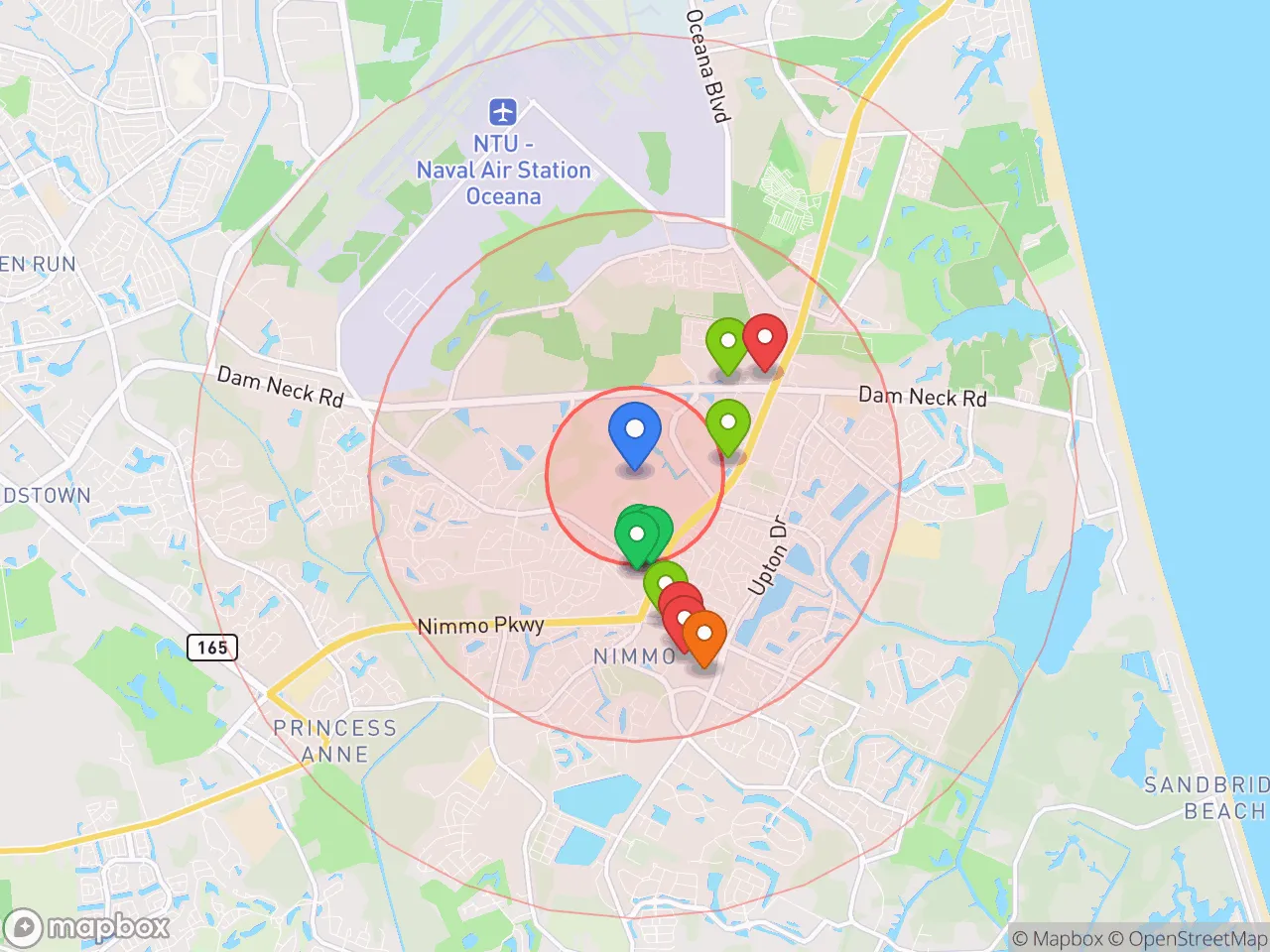
Explore the areaGroceries
7 within 10 miles
Gas
20 within 10 miles
Hospital
12 within 20 miles
Airport
DCA — Ronald Reagan Washington National
Post Office
USPS — Virginia Beach, VA
Critical Amenities
Quality-of-Life Analysis
Virginia Beach presents a quality of life defined by coastal affluence and a stable, family-oriented population, with a cost of living index of 137 (37% above the U.S. average) that reflects its desirability as a mid-Atlantic hub. The city attracts a mix of active-duty military personnel, defense contractors, young professionals in the tourism and healthcare sectors, and retirees drawn to the beach lifestyle. Median household incomes in the region, buoyed by the presence of Naval Air Station Oceana and Joint Expeditionary Base Little Creek, generally keep pace with the elevated costs, creating a community where financial comfort is common but not universal.
Cost of living and housing affordability compared to Norfolk and Chesapeake
Housing is the primary driver of Virginia Beach's above-average cost of living. The median home value sits at $366,300, significantly higher than neighboring Norfolk ($245,000) and slightly above Chesapeake ($340,000). Median rent of $1,649 places the city in a competitive bracket, roughly $200 more per month than comparable rentals in Norfolk. While this premium buys direct access to the Atlantic coastline and the resort district, buyers and renters should note that property taxes in Virginia Beach (a real estate tax rate of $0.99 per $100 of assessed value) are lower than Chesapeake's $1.05 rate, partially offsetting the higher purchase price. The average commute of 23.2 minutes is notably shorter than the national average of 27 minutes, a practical advantage for workers commuting to the Norfolk Naval Shipyard or downtown Norfolk offices, as traffic on I-264 and I-64 can spike during summer tourist season.
What daily life is like for families and professionals
Daily life in Virginia Beach revolves around a strong public school system—Virginia Beach City Public Schools consistently ranks among the top in the state, with schools like First Colonial High and Ocean Lakes High earning Blue Ribbon distinctions. The city's 3,000-acre park system, including First Landing State Park and the Back Bay National Wildlife Refuge, provides residents with immediate access to hiking, kayaking, and birding, while the 35-mile boardwalk and resort area anchor a robust tourism economy that employs roughly 15% of the local workforce. For professionals, the largest employers are the U.S. military (over 40,000 active-duty personnel), Sentara Healthcare, and the city government itself, creating a stable job market that rarely experiences the boom-and-bust cycles of purely tourism-dependent coastal towns. The rhythm of the year shifts noticeably between the crowded summer months (May–September) and the quieter off-season, when locals reclaim the beaches and restaurant reservations become easier to secure.
Virginia Beach is best suited for families seeking top-rated schools and a safe, outdoor-oriented lifestyle, as well as military personnel and defense-sector workers who value the short commute to base. Retirees will appreciate the mild winters and walkable oceanfront neighborhoods, while young professionals may find the social scene less dynamic than downtown Norfolk's, though the city's breweries and the ViBe Creative District offer growing cultural options. Those who prioritize affordability above all else should look inland to Chesapeake or Suffolk, but for residents who can absorb the housing premium, Virginia Beach delivers a rare combination of coastal recreation, strong public services, and stable employment that few mid-Atlantic cities can match.

Crime in Virginia Beach, VA
Generally safer than 70% of comparable U.S. locations.
Violent CrimeViolent Crime Analysis
Property CrimeProperty Crime Analysis
Crime Analysis
Virginia Beach maintains a violent crime rate of 90.4 incidents per 100,000 residents, which is roughly one-third the national average and significantly lower than many comparably sized East Coast metro areas. Property crime, at 1,425.9 per 100,000, sits below the national median but above the Virginia state average, reflecting the city's dual character as both a dense tourist destination and a sprawling suburban community. The overall safety picture is favorable for a city of its size, though residents and visitors should be aware of specific risks tied to seasonal crowds and certain neighborhoods.
Crime in context
Virginia Beach's violent crime rate is 70% lower than the national average of 380 per 100,000, placing it among the safest large cities in the United States for violent offenses. Property crime, however, runs about 10% higher than the Virginia state average, driven largely by larceny and vehicle break-ins in tourist-heavy areas like the Oceanfront and the Resort District. The city's status as a major military and defense hub—home to Naval Air Station Oceana and Joint Expeditionary Base Little Creek—contributes to a stable, employed population that helps keep overall crime suppressed. However, like many large metro areas, Virginia Beach is not immune to the broader effects of progressive criminal justice policies in the surrounding region. Norfolk and Portsmouth, neighboring cities with more liberal district attorneys, have seen rising recidivism and softer sentencing for property crimes, which can spill over into Virginia Beach's retail and residential corridors.
What residents experience
For daily life, the most common safety concern for Virginia Beach residents is property crime, particularly theft from vehicles and package theft, rather than violent confrontation. The city's police department maintains a visible presence in high-traffic zones, and response times in suburban areas like Great Neck and Kempsville are generally under 10 minutes. Violent crime is highly concentrated: over 60% of reported robberies and aggravated assaults occur within a two-mile radius of the Oceanfront, especially during the summer tourism season. Residents in inland neighborhoods such as Salem Lakes and London Bridge report far lower incident rates, with violent crime nearly negligible. The broader metro area's progressive judicial trends are a legitimate concern for long-term safety outlook; Norfolk's commonwealth's attorney has implemented diversion programs that critics argue reduce accountability for repeat offenders, and some of those individuals cross city lines into Virginia Beach. For families and retirees, the practical risk remains low, but the trend warrants monitoring.
Neighborhood-level variation is pronounced. The northwest quadrant (near the Chesapeake border) and the southern suburbs (around Sandbridge) consistently report the lowest crime rates, while the central tourist corridor and areas adjacent to Norfolk's border see elevated property crime. Gated communities and military housing enclaves have near-zero violent crime. Prospective residents should prioritize neighborhoods with strong homeowners' associations and limited public access points to mitigate the property crime risk that defines the city's safety profile.
* Values derived from national, state, county, city and local statistics and may differ in a specific area. Last updated: 2026-04-24T01:53:40.000Z
Narrative content on this page is AI-generated and may contain mistakes. Verify any details that matter before acting on them.
ReloMaps may earn a commission from affiliate links at no extra cost to you.

