Photo: Wikipedia
Demographics of Virginia Beach, VA
Affluence Level in Virginia Beach, VA
A middle-class area roughly in line with national averages across income, home values, education, and employment.
People of Virginia Beach, VA
The people of Virginia Beach today form a population of 457,066 that is notably more diverse than its coastal Virginia peers, yet remains majority-white at 59.4% with a distinctly military and family-oriented character. The city is denser than most of Hampton Roads outside Norfolk, with a population spread across distinct neighborhoods that trace their origins to different waves of settlement. What sets Virginia Beach apart is its combination of a large Black community (18.3%), a growing Hispanic population (8.9%), and a significant East/Southeast Asian presence (6.0%)—all layered atop a historically white, Protestant, and Navy-connected core.
How the city was settled and grew
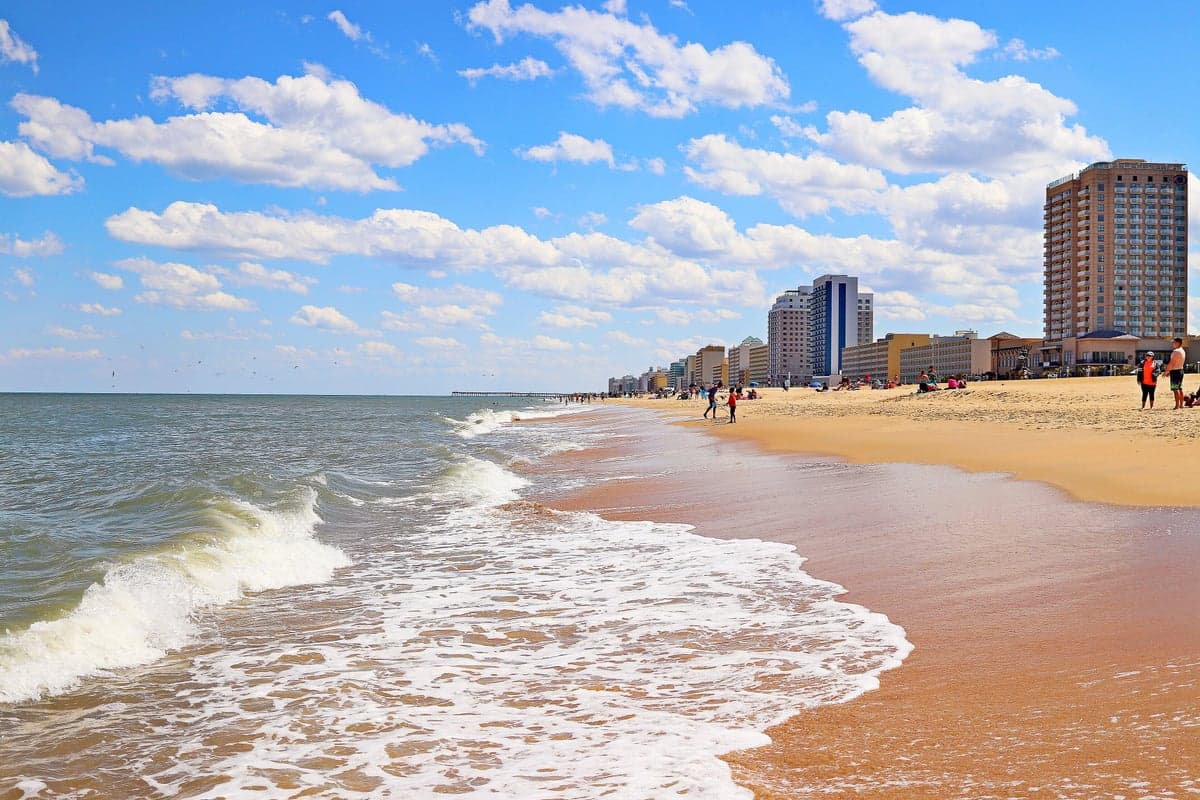
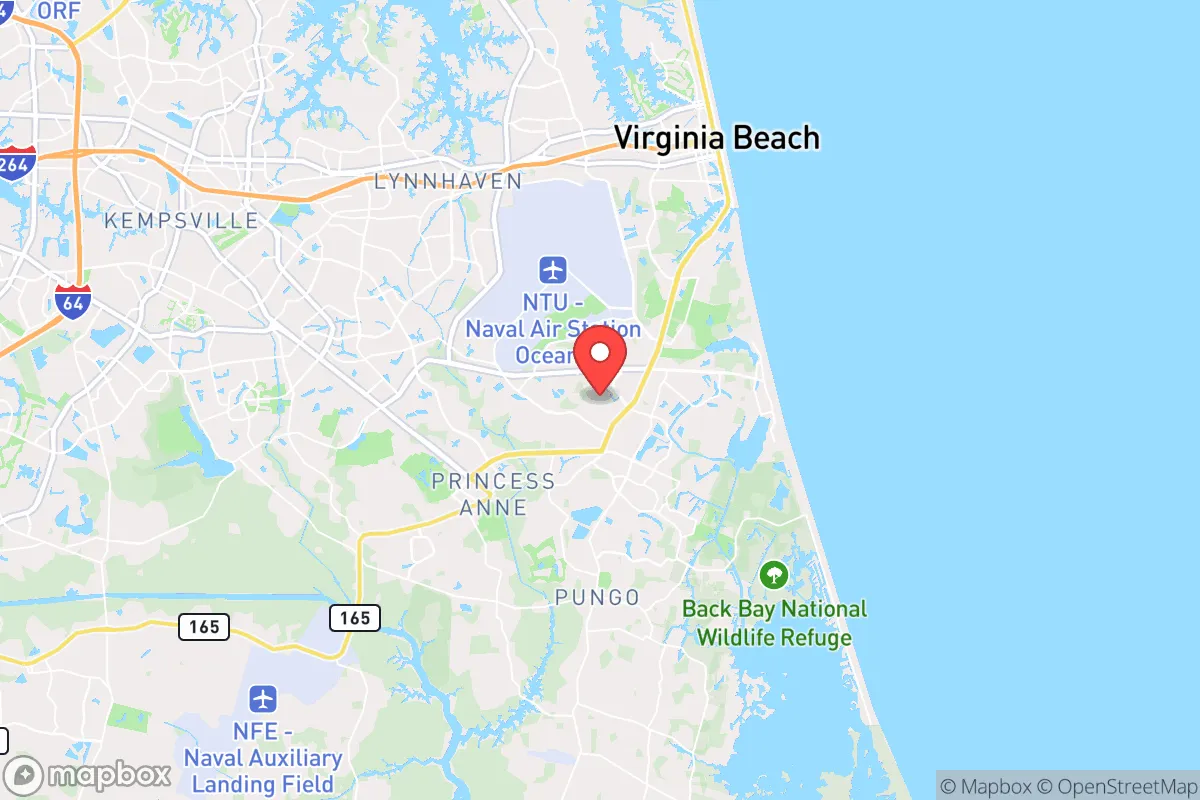
Virginia Beach was not a colonial city. Its original population clustered around the Princess Anne County seat, now the Pungo area, where English-descended farmers worked tobacco and timber on land grants dating to the 1600s. The first major demographic shift came in the late 19th century with the arrival of the railroad and the development of Oceanfront as a resort destination. Wealthy families from Richmond and Norfolk built summer cottages along the Atlantic shore, establishing a seasonal white population that would later become year-round. The real growth driver was World War II and the Cold War. The establishment of Naval Air Station Oceana in 1943 and nearby Little Creek Naval Base drew thousands of military personnel and their families—overwhelmingly white, from across the United States—into new subdivisions like Kempsville and Great Neck. These areas filled with young couples and children, giving Virginia Beach its enduring reputation as a family-first, suburban city. By 1960, the population had exploded to over 80,000, nearly all white and native-born.
Modern era (post-1965)
The 1965 Hart-Cellar Act had a modest but visible effect on Virginia Beach compared to Northern Virginia. The foreign-born population today is just 3.2%, far below the national average. The most notable post-1965 change was the growth of the Black population, which rose from under 5% in 1970 to 18.3% today. This was driven by two forces: the expansion of the Navy and defense sector, which recruited Black officers and enlisted personnel from across the country, and the spillover of Norfolk's historically Black neighborhoods into southern Virginia Beach. The Bayside and Green Run areas became the primary destinations for Black families, with Bayside emerging as a stable, middle-class Black enclave. The Hispanic population, now 8.9%, began growing in the 1990s, concentrated in Rosemont and parts of Kempsville, drawn by construction and service jobs tied to the military and tourism economy. East/Southeast Asian communities (6.0%)—primarily Filipino, Vietnamese, and Korean—arrived through military sponsorship and family reunification, settling near Oceana and Little Creek in neighborhoods like Ocean Park and Chick's Beach. The Indian subcontinent population remains small at 1.0%, mostly professionals in healthcare and engineering, scattered rather than concentrated.
The future
The population of Virginia Beach is aging slowly, with a median age of 35.7, and the city is not experiencing the rapid diversification seen in Richmond or Northern Virginia. The white share has declined from 70% in 2000 to 59.4% today, but the foreign-born share has barely budged, suggesting that diversification is coming primarily from domestic migration of Black and Hispanic families rather than new immigration. The Hispanic population is growing fastest, projected to reach 12-14% by 2035, with Rosemont and Kempsville becoming increasingly bilingual. The Black population appears stable, with younger Black families moving to Bayside and Green Run rather than dispersing. The East/Southeast Asian population is plateauing, as military ties weaken and younger generations move to larger job markets. The city is not tribalizing into starkly separate enclaves—most neighborhoods remain mixed—but Pungo and the Oceanfront remain overwhelmingly white, while Bayside is majority Black and Rosemont is approaching majority Hispanic. The next decade will likely see continued slow growth, with the city becoming more Hispanic and slightly less white, but remaining far less diverse than the national average.
For someone moving to Virginia Beach now, the city offers a stable, family-oriented environment where military culture still sets the tone. The population is not undergoing rapid change, but it is becoming more Hispanic and retaining a strong Black middle class. New arrivals will find a city where neighborhoods have distinct identities but are not segregated by law or intense social pressure—a place where the biggest demographic story is the slow, steady growth of the Hispanic community and the persistence of a white, Navy-connected majority.

* Values derived from national, state, county, city and local statistics and may differ in a specific area. Last updated: 2026-04-24T01:53:40.000Z
Narrative content on this page is AI-generated and may contain mistakes. Verify any details that matter before acting on them.
ReloMaps may earn a commission from affiliate links at no extra cost to you.

