
Photo by Matt Hardison on Unsplash
Personal Sovereignty in Portsmouth City County
Viable for self-reliance. Generally workable, though some barriers may limit total independence.
What does Personal Sovereignty tell us?
Personal Sovereignty measures your capacity for self-reliance and independence with minimal government friction. Higher scores mean fewer barriers between you and the way you want to live... but it assumes you have the space you need and good neighbors.
What does this tell us?
Personal Sovereignty measures your capacity for self-reliance and independence with minimal government friction. Higher scores mean fewer barriers between you and the way you want to live... but it assumes you have the space you need and good neighbors.
State Policy
Energy independence: Importer (20% of energy produced in-state)
Personal Liberty
Homesteading

Personal Liberty Analysis
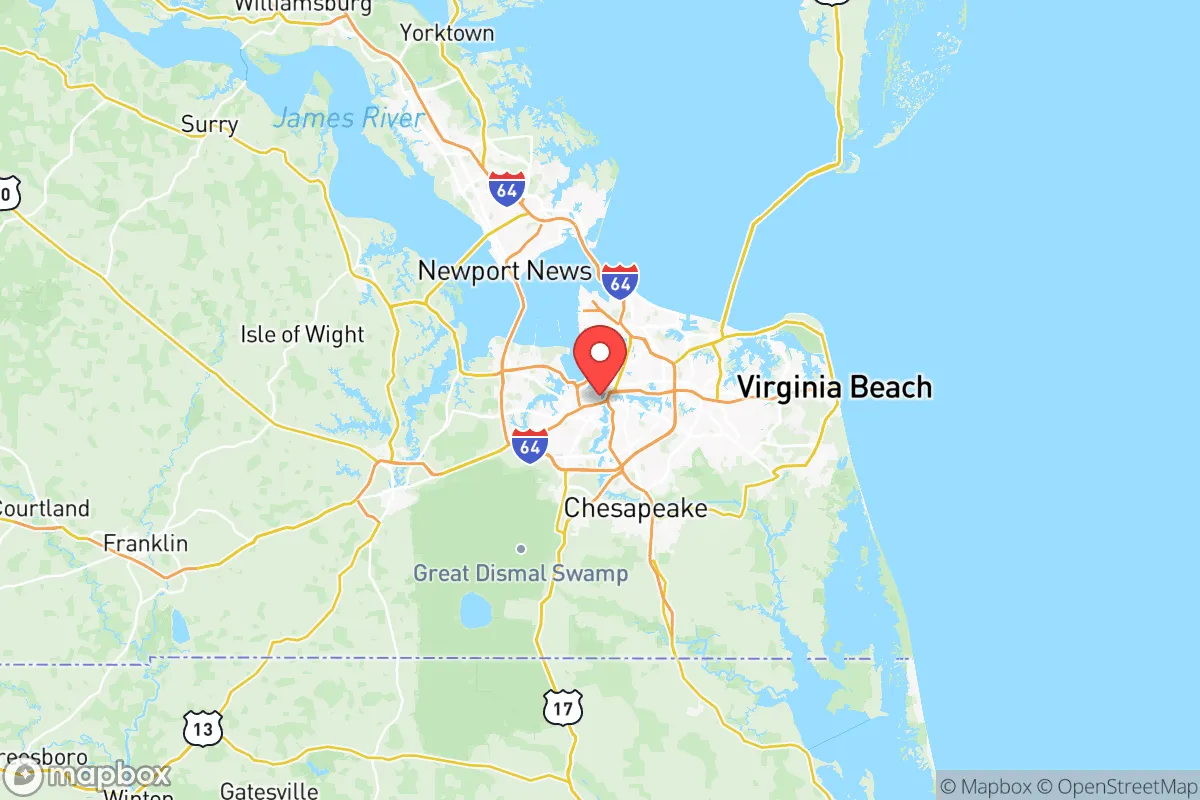
Portsmouth City County, Virginia, presents a constrained environment for personal sovereignty compared to more rural parts of the state, with its dense urban character and strong municipal governance limiting the autonomy that many freedom-oriented relocators seek. As an independent city with no county-level government, Portsmouth operates under a city manager-council system that centralizes decision-making on zoning, taxation, and public safety, leaving residents with fewer avenues for local self-governance than in Virginia's counties. The city's 2024 population of roughly 97,000 is packed into 47 square miles, creating a regulatory posture that prioritizes order and uniformity over individual discretion. For a single individual or family prioritizing self-reliance, the trade-offs here are significant: lower land costs than neighboring Norfolk or Virginia Beach, but a heavier hand in daily life from the city code and police department.
Tax burden and regulatory posture in Portsmouth City County
Portsmouth's tax burden is moderate by Hampton Roads standards but high relative to Virginia's more rural counties, with a real estate tax rate of $1.27 per $100 of assessed value as of 2025, slightly above Norfolk's $1.25 and well above Isle of Wight County's $0.85. The city also levies a personal property tax on vehicles at $4.00 per $100, a common practice in Virginia that hits residents hard on multiple vehicles. Business and occupational license taxes apply to most home-based enterprises, and the city's zoning code is strict: residential districts like Olde Towne and Cradock prohibit many home occupations without a conditional use permit, and the city actively enforces noise, parking, and property maintenance ordinances. The regulatory posture is best described as moderately interventionist — Portsmouth is not a "light-touch" jurisdiction. For example, short-term rentals like Airbnb are heavily regulated, requiring a special permit and annual inspection, and the city's building code department is known for thorough plan reviews. In contrast, the Churchland and Western Branch neighborhoods, which border Suffolk, have slightly more relaxed enforcement on accessory structures and home businesses, but the city-wide code remains uniform. The lack of a county-level buffer means residents cannot escape to a more permissive township; the city council sets all rules.
Self-defense and gun law specifics in Portsmouth
Virginia's firearm laws apply uniformly across the state, but Portsmouth's local enforcement and culture create a distinct environment for self-defense. The city is a Second Amendment Sanctuary locality, having passed a resolution in 2020 affirming its opposition to unconstitutional firearm restrictions, though this is largely symbolic. State law permits open carry without a permit for anyone 18 or older who can legally possess a firearm, and concealed carry requires a permit issued by the circuit court after a background check and training course. Portsmouth's police department, however, is known for proactive enforcement of state laws against carrying in prohibited places like schools, courthouses, and government buildings, and the city's high violent crime rate — roughly 600 violent crimes per 100,000 residents in 2024, well above the national average — means that self-defense is a practical concern, not a theoretical one. The city's gun culture is less visible than in rural Virginia; there are no major gun shows within city limits, and the closest large retailers for firearms are in Chesapeake or Suffolk. For residents in neighborhoods like Prentis Park or Brighton, where property crime is elevated, a concealed carry permit is a common-sense step, but the city's dense layout means that discharging a firearm for self-defense outside the home carries legal scrutiny. Stand-your-ground laws apply statewide, but Portsmouth's prosecutors have a reputation for charging defensive gun uses aggressively, so legal counsel is advisable.
Self-reliance and homesteading viability in Portsmouth
Homesteading and off-grid living are extremely limited within Portsmouth City County due to its urban density and zoning restrictions. The minimum lot size in most residential zones is 5,000 to 7,500 square feet, with no agricultural zoning districts; the city's comprehensive plan designates nearly all land for suburban or urban residential use. Raising livestock is prohibited in all residential zones except for limited backyard chickens — up to four hens, no roosters, with a permit and setback requirements. Beekeeping is allowed with registration, but the city's code bans any structure that could be considered a "farm building" in residential areas. Off-grid utilities are effectively impossible: the city requires connection to municipal water and sewer for all habitable structures, and solar panels are permitted only as roof-mounted systems on primary dwellings, with no allowance for standalone solar arrays or wind turbines. The neighborhoods of Churchland and Western Branch offer slightly larger lots — some exceeding half an acre — but still fall under the same zoning code. For genuine self-reliance, relocators must look to surrounding counties like Isle of Wight or Southampton, where 5-acre minimums and agricultural zoning allow for gardens, livestock, and even limited off-grid infrastructure. Within Portsmouth, the best a freedom-oriented family can do is a large backyard garden in Olde Towne or Cradock, but the city's tree canopy and shade limit solar viability.
Personal liberties in Portsmouth: parental rights, medical autonomy, and property
Virginia's state-level laws provide a baseline for personal liberties, but Portsmouth's local ordinances and school board policies shape the daily experience. Parental rights in education are a contentious issue: the Portsmouth Public Schools board has maintained policies on library materials and curriculum that some parents view as insufficiently transparent, though the state's 2023 law requiring parental notification for sexually explicit content is followed. The city's school system serves roughly 14,000 students, and parents in neighborhoods like Churchland and Western Branch often advocate for more control over curriculum, but the board's majority has been resistant to opt-out expansions. Medical autonomy is governed by state law: Virginia allows medical marijuana with a doctor's certification, but recreational use remains illegal, and Portsmouth's police enforce possession laws actively. Vaccine mandates are not enforced at the city level, but private employers and healthcare systems in the area may require them. Property rights are constrained by the city's historic district overlay in Olde Towne, where the Architectural Review Board must approve exterior changes to homes, including paint colors and window replacements. Outside historic districts, property modifications are subject to standard building permits, but the city's code enforcement is active, with fines for overgrown lots and unregistered vehicles. Speech and assembly are protected under the First Amendment, but the city requires permits for demonstrations on public property, and the police department has a history of enforcing these rules strictly.
Overall, personal sovereignty in Portsmouth City County is moderately constrained compared to Virginia's more rural and county-governed areas. The city's tax burden, strict zoning, and active code enforcement create an environment where individual autonomy is secondary to municipal order. For a freedom-oriented relocator, the trade-off is access to Hampton Roads' job market and amenities in exchange for limited self-reliance. The neighborhoods of Churchland and Western Branch offer slightly more breathing room, but the city's uniform code means no escape from the regulatory framework. For those who prioritize personal sovereignty above all, the surrounding counties of Isle of Wight, Southampton, or even Surry provide far greater latitude for homesteading, lower taxes, and less intrusive governance. Portsmouth is a viable option for those who value urban convenience and are willing to accept moderate constraints on their autonomy, but it is not a destination for the self-reliant individualist.

* Values derived from national, state, county, city and local statistics and may differ in a specific area. Last updated: 2026-07-29T07:22:06.000Z
Narrative content on this page is AI-generated and may contain mistakes. Verify any details that matter before acting on them.
ReloMaps may earn a commission from affiliate links at no extra cost to you.

