
Photo by Matt Hardison on Unsplash
Quality of Life in Portsmouth City County
A livable area that tracks near national norms for affordability, walkability, and neighborhood health.
What does Quality of Life tell us?
Quality of Life measures an area by evaluating factors like cost of living, nearby amenities, country club access, airport proximity, socioeconomic signals and neighborhood character. For large states, this is a general average — quality of life can vary dramatically between metro areas, suburbs, and rural communities within the same state.
What does this tell us?
Quality of Life measures an area by evaluating factors like cost of living, nearby amenities, country club access, airport proximity, socioeconomic signals and neighborhood character. For large states, this is a general average — quality of life can vary dramatically between metro areas, suburbs, and rural communities within the same state.
Cost of Living
2% below national average
90%
The Real Cost of Living in Portsmouth City County for 2026
| Tier | Individual | Family (4) |
|---|---|---|
| Survival | $20k | $38k |
| Comfortable | $45k | $66k |
| Luxury | $104k+ | $161k+ |
| Elite (Top 5%) | $122k+ | $189k+ |
Quality-of-Life Analysis
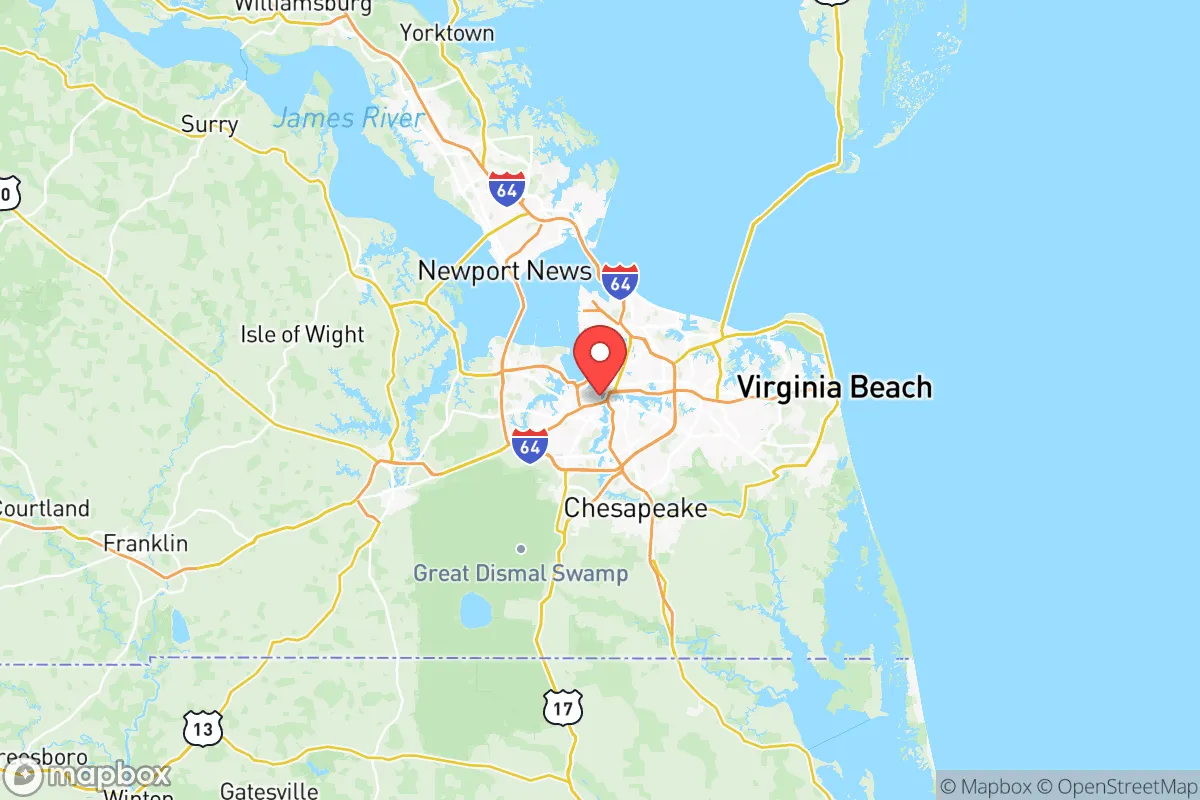
Portsmouth City County, Virginia, is a unique independent city that functions as a county-equivalent, offering a surprisingly broad spectrum of living environments despite its compact 47 square miles. The county draws a diverse mix of residents: military families and defense contractors are attracted to the areas near Naval Support Activity Hampton Roads and the Norfolk Naval Shipyard, while long-time locals and commuters favor the quieter, more affordable neighborhoods and the few remaining rural pockets that contrast sharply with the urban core of downtown Portsmouth.
Largest town(s) & population centers
The dominant population center is the city of Portsmouth itself, a historic port city of roughly 95,000 residents. Daily life here is centered on the Olde Towne historic district, a walkable waterfront area with 18th- and 19th-century architecture, boutique shops, and the Portsmouth Naval Shipyard Museum. The downtown core is a hub for city government, the Portsmouth General District Court, and the Tidewater Community College campus. Just west of downtown, the Churchland area is a major commercial and residential corridor, anchored by the Churchland Shopping Center and the Maryview Medical Center. The Cradock neighborhood, a planned historic district built for shipyard workers in 1918, offers a distinct, tree-lined community feel with its own elementary school and a strong sense of local identity. The average commute of 23 minutes is notably shorter than the regional average, largely because many residents work at the shipyard or at Naval Medical Center Portsmouth, both within the city limits.
Smaller towns & rural pockets
While Portsmouth is entirely an independent city, it contains several distinct unincorporated communities that feel like small towns. The Hodges Ferry area, along the Western Branch of the Elizabeth River, is a quiet residential enclave with a mix of older ranch homes and newer subdivisions, offering a semi-rural atmosphere with direct water access. The Deep Creek area, near the southern border with Chesapeake, is a sprawling, low-density neighborhood with large lots, horse properties, and the Deep Creek Lock Park, a remnant of the Intracoastal Waterway. The Bower's Hill community, at the city's western edge, is a sparsely populated crossroads with a few churches and a volunteer fire station, representing the most rural character within the city limits. These areas lack the grid street patterns and dense development of central Portsmouth, providing a lifestyle more akin to a rural county.
Cost & lifestyle range
The cost of living index of 98 (2% below the national average) masks a wide internal spread. At the lower end, the median home value of $229,400 and median rent of $1,266 are most accessible in the older neighborhoods of central Portsmouth, such as the Brighton and Prentis Park areas, where fixer-upper homes and modest apartments are common. At the higher end, the Churchland and Hodges Ferry areas command significantly higher prices, with waterfront homes on the Elizabeth River often exceeding $400,000. The lifestyle range is equally broad: a resident in Olde Towne can walk to restaurants, the Portsmouth Art & Cultural Center, and the Elizabeth River Ferry to Norfolk, while a resident in Deep Creek may need to drive 15 minutes to the nearest grocery store. The city's tax structure is uniform, with a real estate tax rate of $1.25 per $100 of assessed value, but the trade-off is access to city services like the Portsmouth Public Library system and the Portsmouth Parks and Recreation department, which maintains over 30 parks including the 104-acre Hoffler Creek Wildlife Preserve.
This county is best suited for those who value a compact, historic urban core with immediate access to the region's largest military and industrial employers, but who also want the option of a quieter, more spacious home on a larger lot without leaving the city limits. Families and retirees who prioritize a short commute to the shipyard or medical center, and who appreciate the character of historic neighborhoods like Cradock and Olde Towne, will find Portsmouth a practical and affordable alternative to the higher costs of Virginia Beach or Norfolk. Those seeking a true rural lifestyle with acreage and privacy should look to the Deep Creek and Bower's Hill fringes, while those wanting a walkable, urban experience will gravitate to the downtown core. The city's independent status means residents get a single, unified government and school system, but also face the trade-off of limited annexation potential and a tax base that is heavily dependent on the shipyard's fortunes.

Crime in Portsmouth City County
Generally safer than 60% of comparable U.S. locations.
Violent CrimeViolent Crime Analysis
Property CrimeProperty Crime Analysis
Crime Analysis
Portsmouth City County, Virginia, reports a violent crime rate of 209.3 per 100,000 residents and a property crime rate of 1,392 per 100,000, placing it in a challenging position relative to both state and national averages. While not the most dangerous jurisdiction in the Hampton Roads region, the city's crime statistics reflect systemic issues that potential residents should weigh carefully, particularly when comparing to safer neighboring communities like Suffolk or Chesapeake. The overall safety picture is mixed, with certain neighborhoods and time periods presenting significantly higher risk than others.
Crime in context
Portsmouth's violent crime rate of 209.3 per 100,000 is roughly 40% higher than the national average of approximately 150 per 100,000 and significantly above the Virginia state average of about 180 per 100,000. Property crime at 1,392 per 100,000 exceeds the national rate of roughly 1,200 per 100,000 and is notably higher than in nearby cities like Suffolk (approximately 1,100 per 100,000) and Chesapeake (approximately 1,050 per 100,000). These figures place Portsmouth in a tier with Norfolk and Hampton, both of which also struggle with elevated crime rates compared to the state's safer jurisdictions. The city's proximity to the larger Norfolk-Newport News metropolitan area, combined with a progressive local judiciary and district attorney's office that has emphasized diversion programs and reduced incarceration for non-violent offenses, contributes to a perception that enforcement is less aggressive than in more conservative neighboring counties. This ideological approach, while well-intentioned, has been linked to higher recidivism rates and a sense among residents that property crime in particular is not taken seriously enough.
What residents experience
Daily life for Portsmouth residents involves navigating a city where property crime is the most common threat, with vehicle break-ins, package theft, and residential burglaries occurring frequently in areas like the Downtown/Olde Towne district and along the High Street corridor. Violent crime, while less common, is concentrated in specific neighborhoods: Cradock, Prentis Park, and the Churchland area report higher rates of aggravated assault and robbery, often tied to drug activity and gang disputes. Residents in these areas describe a heightened sense of vigilance, particularly after dark, and many avoid walking alone in certain blocks. In contrast, neighborhoods like Western Branch and parts of Hodges Ferry experience significantly lower crime rates, closer to the safer averages seen in Suffolk or Chesapeake. The disparity is stark: a resident in Western Branch may feel as safe as someone in a suburban Virginia Beach community, while a resident in Cradock faces risks comparable to parts of Norfolk. The city's police department has struggled with staffing shortages, leading to slower response times in higher-crime areas, which further erodes trust in the justice system.
Neighborhood-level variation is pronounced in Portsmouth, with the safest areas concentrated in the western and southern portions of the city. Western Branch, centered around the intersection of I-664 and Route 17, consistently reports violent crime rates below 100 per 100,000, making it comparable to Suffolk's safer subdivisions. The Hodges Ferry area, near the border with Chesapeake, also maintains lower property crime rates, though still above the national average. Conversely, the Downtown/Olde Towne historic district sees elevated property crime due to its density and tourist traffic, while Cradock and Prentis Park experience the highest violent crime rates in the city. Prospective residents should prioritize the western neighborhoods and carefully research block-level data, as even within safer areas, proximity to high-crime corridors can affect safety. The city's progressive judicial policies, including reduced sentences for repeat property offenders and a focus on restorative justice, have not meaningfully reduced crime rates and may contribute to a sense among residents that the system prioritizes offender rehabilitation over public safety.
* Values derived from national, state, county, city and local statistics and may differ in a specific area. Last updated: 2026-07-29T07:22:06.000Z
Narrative content on this page is AI-generated and may contain mistakes. Verify any details that matter before acting on them.
ReloMaps may earn a commission from affiliate links at no extra cost to you.

