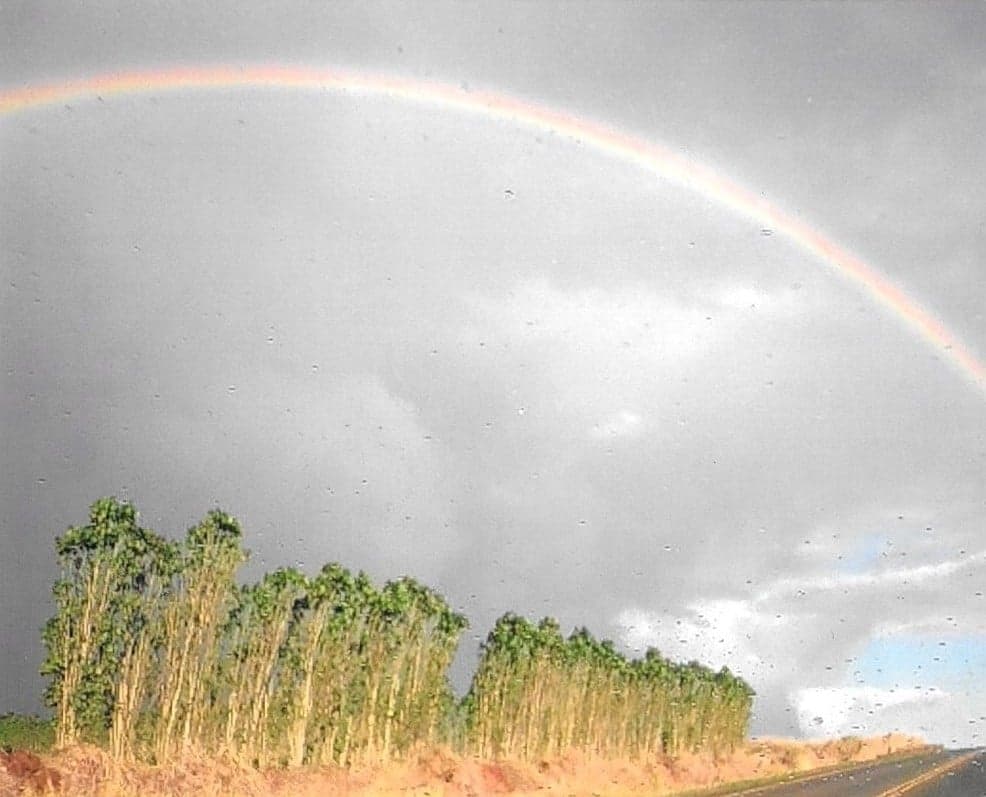
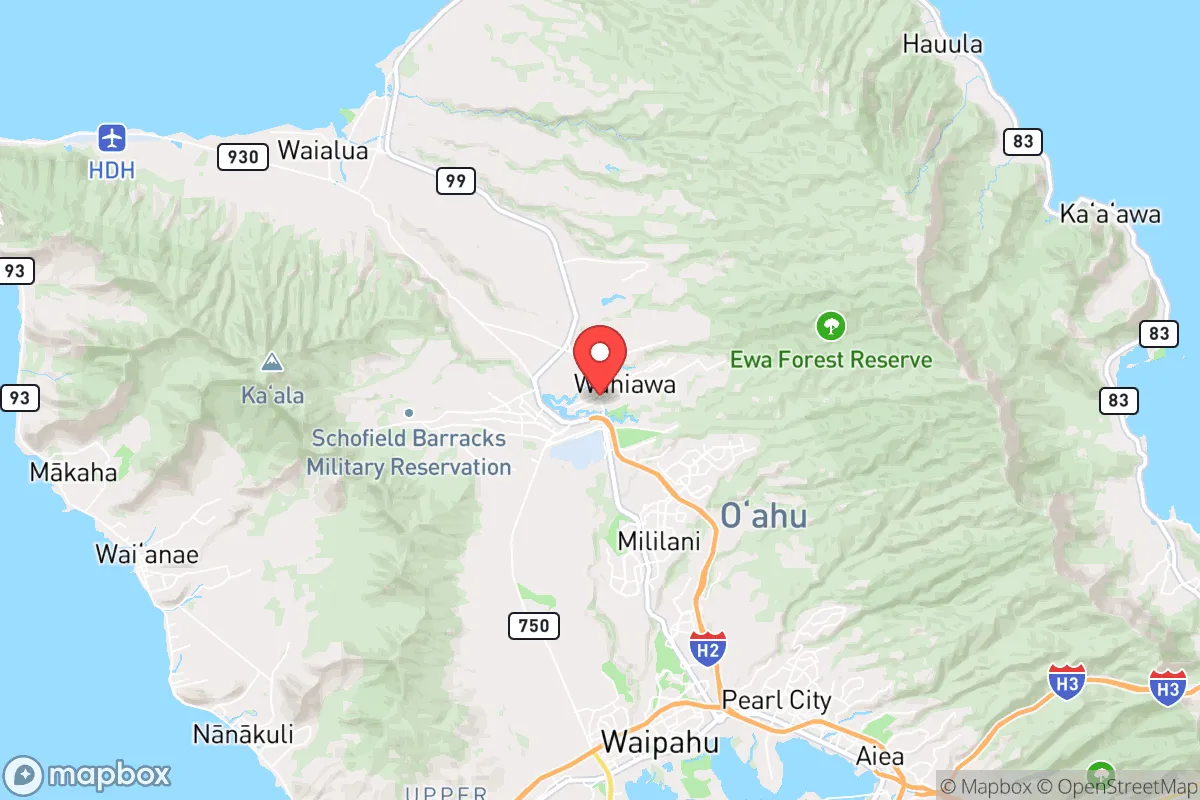
Photo: Wikipedia
Personal Sovereignty in Wahiawa, HI
Moderate friction. Expect trade-offs in some aspect of personal liberty and independence.
What does Personal Sovereignty tell us?
Personal Sovereignty measures your capacity for self-reliance and independence with minimal government friction. Higher scores mean fewer barriers between you and the way you want to live... but it assumes you have the space you need and good neighbors.
What does this tell us?
Personal Sovereignty measures your capacity for self-reliance and independence with minimal government friction. Higher scores mean fewer barriers between you and the way you want to live... but it assumes you have the space you need and good neighbors.
State Policy
Energy independence: Importer (2% of energy produced in-state)
Personal Liberty
Homesteading

Personal Liberty Analysis
Wahiawa, Hawaii, presents a complex and often contradictory environment for personal sovereignty, where the island's natural beauty and tight-knit community are offset by a state government that consistently ranks among the most restrictive in the nation for individual autonomy. For the survivalist or prepper, this central Oahu town offers a unique blend of strategic positioning—away from the tourist corridors of Waikiki and the urban density of Honolulu—but the trade-offs are severe. The state's heavy regulatory hand, high tax burden, and deep restrictions on self-defense and property rights mean that true self-reliance is a constant uphill battle, not a default state. This analysis breaks down the specific areas where Wahiawa residents face the most significant challenges to their personal freedoms, from the tax code to the gun laws, and assesses whether the area's advantages can outweigh its systemic constraints.
Tax burden and regulatory posture for residents and property owners
Hawaii's tax climate is among the most aggressive in the country, and Wahiawa residents are fully exposed to it. The state imposes a general excise tax (GET) of 4% on most goods and services, which effectively functions as a hidden sales tax that applies to nearly every transaction, including groceries and rent—a burden that compounds for anyone trying to stockpile supplies or run a home-based business. Property taxes in Wahiawa are relatively moderate compared to mainland states, with effective rates around 0.35% of assessed value, but the state's income tax brackets are steep, topping out at 11% for high earners, and there is no local income tax relief. The regulatory posture is equally suffocating: building permits, land use changes, and even minor home improvements require county approval that can take months, and the state's strict land use laws (the Hawaii State Land Use Commission) heavily restrict what you can do with your property. For a prepper looking to build a root cellar, install a backup generator, or add a rainwater catchment system, expect to navigate a maze of permits and environmental reviews that discourage self-sufficiency. The state's mandatory health insurance requirement and high energy costs (electricity rates are roughly double the national average) further erode disposable income and self-reliance capacity.
Self-defense and gun law specifics in a restrictive state
Hawaii is one of the most hostile states in the union for gun owners, and Wahiawa offers no refuge from this reality. The state operates under a "may issue" concealed carry system, which after the 2024 Bruen-related legal challenges has seen some loosening, but in practice, the Honolulu Police Department (which covers Wahiawa) remains deeply resistant to issuing permits. As of early 2026, obtaining a concealed carry license requires a demonstrated "exceptional case" beyond general self-defense, and the process involves a lengthy background check, a firearms safety course, and a $10 application fee—but the real barrier is the subjective discretion of the police chief. Open carry is effectively banned, and all firearms must be registered with the county, with a 14-day waiting period for handgun purchases. Magazine capacity is limited to 10 rounds, and so-called "assault weapons" (defined broadly) are prohibited. For the survivalist, this means your ability to defend your home or property is legally constrained: you can own a handgun or shotgun for home defense, but carrying a firearm off your property for personal protection is nearly impossible without risking a felony. The state also has a red flag law that allows for temporary firearm seizure without a criminal conviction, a tool that can be abused in disputes. If self-defense is a priority, Wahiawa is a legally dangerous place to be.
Self-reliance and homesteading viability: lot sizes, zoning, and off-grid feasibility
Wahiawa's residential landscape is a mix of older single-family homes on modest lots, typically ranging from 5,000 to 10,000 square feet, with some larger agricultural parcels on the outskirts near the Schofield Barracks military base. Zoning is predominantly R-5 (residential) and R-7.5, which prohibits most agricultural activities beyond ornamental gardening—raising chickens, goats, or pigs for meat or eggs is generally not allowed without a special permit, and the county strictly enforces noise and nuisance ordinances. Off-grid living is legally challenging: Hawaii law requires homes to be connected to the electrical grid unless you obtain a costly and rare "off-grid" exemption, and rainwater catchment systems are permitted but must meet strict health department standards for potable water. The cost of solar panels and battery storage is high (though federal tax credits help), and the island's reliance on imported fuel means backup generators are a necessity, not a luxury. For a prepper, the best bet is to look for a property zoned "Ag" (agricultural) on the outskirts of Wahiawa, where lot sizes are 1-5 acres and some livestock is allowed, but these parcels are rare and expensive (often $500,000+ for raw land). The reality is that Wahiawa is a suburban bedroom community, not a homesteading haven—self-reliance here means stockpiling supplies and maintaining a low profile, not living off the land.
Personal liberties: parental rights, medical autonomy, speech, and property
Hawaii's state government has a strong progressive tilt that directly impacts personal liberties valued by conservative-leaning residents. Parental rights are under consistent pressure: the state mandates comprehensive sex education in public schools (including LGBTQ+ content) with no opt-out for parents, and the Department of Education has broad authority over curriculum and health services, including mental health screenings, without parental consent in some cases. Medical autonomy is similarly constrained—Hawaii has a state-run health insurance exchange and mandates coverage for abortion and gender transition procedures, and the state's vaccine mandates for school attendance (including COVID-19 boosters for certain ages) remain in place as of 2026. Free speech is protected under the First Amendment, but the state's strict anti-harassment and hate speech laws can be used to chill political expression, particularly around controversial topics like immigration or gender ideology. Property rights are the weakest link: the state's eminent domain authority is broad, and the Land Use Commission can rezone land with minimal public input, as seen in recent developments near the Wahiawa town center. For a parent or individual who values the right to raise their children without state interference, make their own medical decisions, or speak freely on contentious issues, Wahiawa—and Hawaii as a whole—is a jurisdiction where those freedoms are constantly contested.
In the broader context of U.S. personal sovereignty, Wahiawa ranks near the bottom for a relocation destination if your priority is maximum autonomy. The combination of a high tax burden, near-total restrictions on firearms for self-defense, limited homesteading potential, and a state government that actively curtails parental and medical freedoms creates an environment where self-reliance is possible only through constant vigilance and legal navigation. Compared to states like Texas, Montana, or New Hampshire, where property rights, gun laws, and tax structures are far more permissive, Wahiawa offers a trade-off: a stable, close-knit community with a lower crime rate than Honolulu, but at the cost of accepting a government that sees itself as the primary arbiter of your safety, health, and property. For a survivalist or prepper, this is not a place to build a fortress or a homestead—it is a place to live quietly, keep your head down, and hope the state's overreach doesn't reach your doorstep. If you are willing to accept those constraints, the island's natural resources and community bonds can provide a unique form of resilience; if not, look elsewhere.

* Values derived from national, state, county, city and local statistics and may differ in a specific area. Last updated: 2026-04-24T13:20:22.000Z
Narrative content on this page is AI-generated and may contain mistakes. Verify any details that matter before acting on them.
ReloMaps may earn a commission from affiliate links at no extra cost to you.

