Photo: Wikipedia
Political ClimatePolitical Climate in Wahiawa, HI
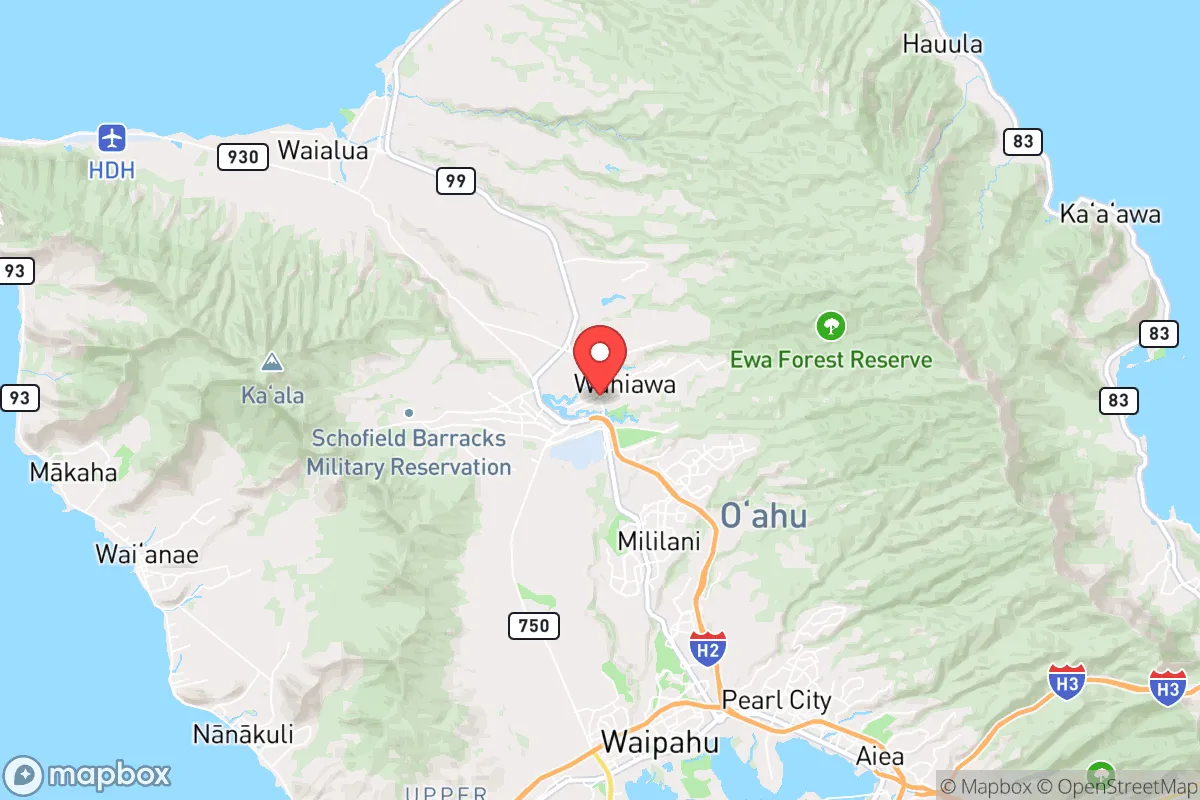
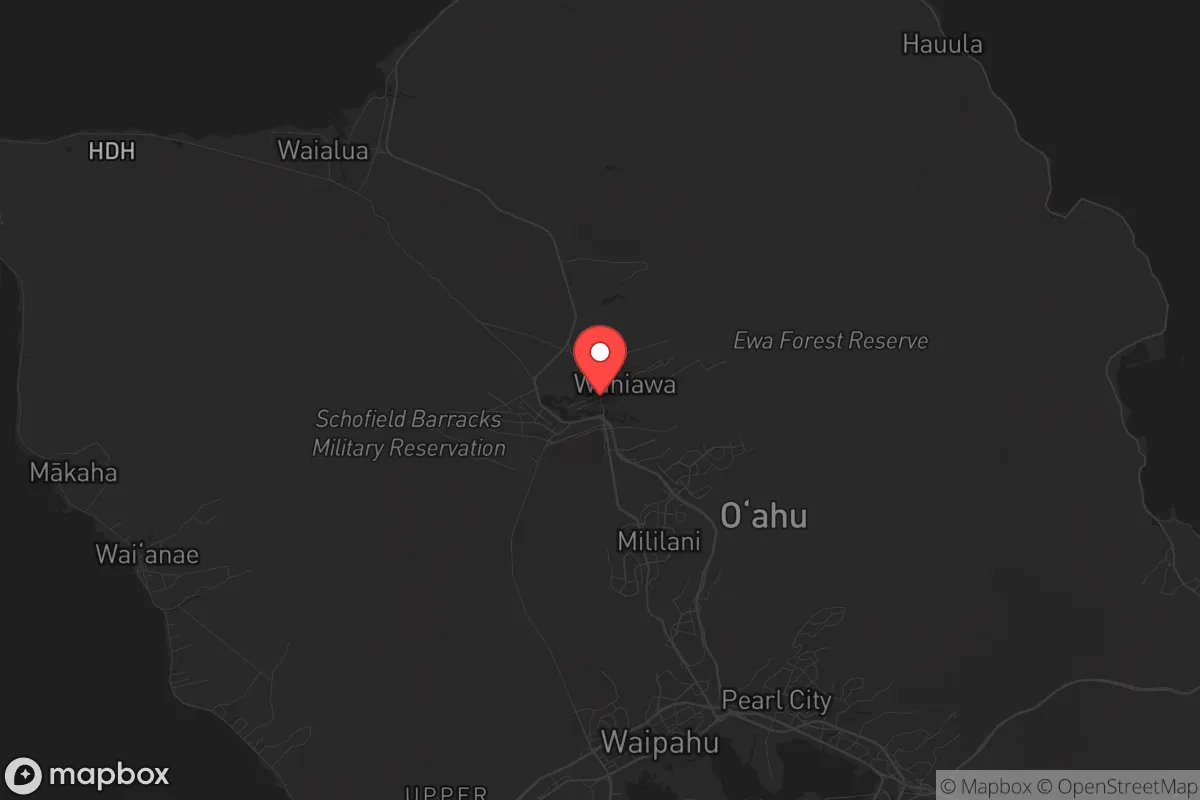
District shown is the primary district for this city’s centroid. Cities may span multiple districts.
Local Political AnalysisPolitical Analysis of Wahiawa, HI
Wahiawa sits in a politically unique pocket of Oahu, and if you've lived here as long as I have, you've watched it shift from a quiet, middle-of-the-road community into something that leans hard blue. The Cook PVI clocks it at D+12, which means Democrats hold a solid 12-point advantage over the national average in presidential elections. That number doesn't tell the whole story, though. Wahiawa used to be a place where folks kept their politics to themselves and voted on local issues—roads, schools, water rates. Now, you see more yard signs for progressive candidates, more talk about state-level mandates, and a growing sense that Honolulu's politics are creeping into our daily lives. The trajectory is clear: the area is moving further left, and fast.
How it compares
Drive 15 minutes north to Haleiwa, and you'll find a similar D+12 vibe—maybe even a little more laid-back liberal, with a heavy focus on environmental activism and local food sovereignty. Head south toward Mililani, and it's a different animal. Mililani is more purple, with a mix of military families and tech workers who lean moderate. Out west, in places like Kapolei or Ewa Beach, you get a more conservative streak—more veterans, more folks who work in construction or hospitality and just want the government to stay out of their business. Wahiawa sits right in the middle geographically, but politically, it's been pulled toward the Honolulu orbit. That's concerning if you value personal freedoms, because the city council and state legislature keep passing laws that touch everything from short-term rentals to pesticide use on your own property.
What this means for residents
For the average Wahiawa resident, the political climate translates into more regulations and less local control. The state has been aggressive on housing mandates, rent control proposals, and environmental rules that sound good on paper but hit your wallet hard. Want to build a small ohana unit on your lot for your kid? Good luck navigating the permitting maze. The county and state have layered on so many requirements that even simple projects get bogged down. And the push for higher minimum wages and paid leave mandates? It sounds nice, but small businesses in Wahiawa—the plate lunch spots, the mom-and-pop shops—are already struggling to keep up. The progressive agenda here isn't just about voting; it's about how much of your life the government feels entitled to manage.
One thing that hasn't changed much is the military influence. Schofield Barracks and Wheeler Army Airfield are right next door, so you've got a steady population of active-duty families and veterans who tend to vote more conservatively. They're a quiet counterweight, but they're outnumbered by the transplants and younger locals who've embraced the progressive wave. If you're looking for a place where your Second Amendment rights are respected or where property taxes stay low, Wahiawa is becoming less friendly by the year. The cultural shift is real: what was once a no-nonsense plantation town is now a testing ground for policies that prioritize collective goals over individual choice. Keep an eye on the next few election cycles—if the D+12 number holds or widens, expect even more top-down control from Honolulu.

State Political ClimatePolitical Climate in Hawaii
State Political AnalysisPolitical Environment in the State
Hawaii has been a one-party Democratic stronghold for decades, with Democrats holding supermajorities in both legislative chambers and every statewide office since 1962. The state’s political culture is deeply collectivist, prioritizing government-led solutions over individual autonomy, and the trajectory over the past 20 years has been a steady march toward greater state control—higher taxes, stricter regulations, and an expanding welfare state. While the state’s natural beauty and aloha spirit are real, the political climate is increasingly hostile to conservative values, with Honolulu and the urban core of Oahu driving the leftward tilt, while the neighbor islands offer pockets of more independent, if not conservative, sentiment.
Urban vs. rural divide
The political map of Hawaii is starkly divided between the densely populated island of Oahu and the rest of the state. Honolulu and its suburbs—like Waipahu, Pearl City, and Kaneohe—are the engine of Democratic dominance, routinely delivering 70-80% of the vote for Democratic candidates. The city’s reliance on government employment (the state is the largest employer), unionized tourism workers, and a large Asian-American electorate that leans culturally progressive on economic issues keeps it solidly blue. In contrast, the neighbor islands—Hawaii Island (the Big Island), Maui, and Kauai—are more politically mixed. Rural areas like Puna on the Big Island and Hana on Maui have libertarian-leaning pockets, often driven by off-grid homesteaders and farmers who resent government overreach. However, even these areas are not reliably conservative; they swing between Democrats and independents, with Republicans rarely breaking 40% in any county. The only place where Republicans can compete is in the more affluent, gated communities of Kailua on Oahu’s windward side and parts of Waimea on the Big Island, but these are small enclaves, not game-changers.
Policy environment
Hawaii’s policy environment is a textbook example of progressive governance. The state has the highest combined state and local tax burden in the nation, with a general excise tax (GET) of 4% that applies to nearly all goods and services—including business-to-business transactions—and a progressive income tax that tops out at 11% for high earners. Property taxes are relatively low, but the state’s strict land-use laws and rent control measures make housing prohibitively expensive. Education policy is heavily centralized; the state has a single, statewide school district, meaning local control is virtually nonexistent. Act 51, passed in 2004, mandated that all public schools adopt a “standards-based” curriculum aligned with progressive social goals, and recent pushes for ethnic studies and critical race theory have been embraced by the Department of Education. Healthcare is dominated by the state’s Prepaid Health Care Act, which requires employers to provide health insurance—a mandate that drives up costs for small businesses. Election laws are among the most restrictive in the nation for ballot access; Hawaii has no voter ID law, but it also has no straight-ticket voting and requires party registration for primaries, which effectively locks out independents. The state’s sanctuary policy, Act 2 (2019), prohibits state and local law enforcement from cooperating with federal immigration authorities, making it a safe haven for illegal immigrants.
Trajectory & freedom
Hawaii is becoming less free by nearly every measure. The state’s gun laws are among the strictest in the country, with a 14-day waiting period, a ban on “assault weapons” (defined broadly), and a requirement that all firearm sales go through a licensed dealer—no private transfers. In 2022, the legislature passed Act 207, which expanded the state’s “red flag” law to allow family members and law enforcement to petition for temporary firearm seizure without a criminal conviction. On parental rights, Act 49 (2023) mandated that all public schools adopt LGBTQ+ inclusive curricula, including instruction on gender identity and sexual orientation from kindergarten onward, with no opt-out for parents. Medical autonomy has been curtailed by the state’s strict vaccine mandates; Hawaii was one of the first states to require COVID-19 vaccines for all public school students and state employees, and it has not rolled back these mandates. Property rights are severely limited by the state’s Land Use Commission, which zones nearly all land into urban, rural, or agricultural districts, making it nearly impossible to build or develop without years of bureaucratic approval. The state’s Office of Planning and Sustainable Development has proposed a “managed retreat” from coastal areas, which could force homeowners to relocate at their own expense.
Civil unrest & political movements
Hawaii has a history of organized protest, but it is overwhelmingly left-leaning. The Mauna Kea protests (2014-2019) against the Thirty Meter Telescope were a rare instance of Native Hawaiian sovereignty activists and environmentalists uniting against a government-backed project, but the movement was anti-development, not pro-freedom. More recently, the 2020 Black Lives Matter protests in Honolulu drew thousands, and the state’s Democratic establishment has embraced defunding the police rhetoric, though actual budgets have not been cut. On the right, the Hawaii Republican Party is nearly nonexistent; it has not won a statewide election since 2002, and its base is limited to a few thousand donors. The Hawaii Libertarian Party has a small but active presence, particularly on the Big Island, where they advocate for property rights and lower taxes. Immigration politics are muted because the state’s geography limits illegal entry, but the sanctuary law has been a flashpoint for conservative activists who argue it encourages a shadow economy. Election integrity controversies are minimal, as Hawaii’s all-mail voting system (implemented in 2020) has not produced major fraud allegations, though critics note that the lack of voter ID makes the system vulnerable. The most visible flashpoint for a new resident would be the constant presence of homeless encampments in Honolulu’s Waikiki and Kakaako neighborhoods, which the city has struggled to clear due to court rulings that protect the right to camp on public property.
Projection
Over the next 5-10 years, Hawaii will likely become more progressive and less free. Demographic trends favor the left: the state’s population is aging, but the younger cohort that remains is heavily influenced by the University of Hawaii system and the tourism industry, both of which push progressive values. In-migration is dominated by retirees from California and the Pacific Northwest, who bring their blue-state voting habits with them. The state’s housing crisis will continue to drive out middle-class families and small business owners, leaving a population that is either wealthy enough to absorb high taxes or poor enough to depend on government assistance. The legislature is expected to pass a wealth tax on high-income earners and a carbon tax on all fuel imports, further squeezing the economy. Gun rights will continue to erode; a proposed “assault weapons” buyback and ammunition registry are likely to pass in the next session. Parental rights will face new challenges as the state pushes for mandatory “gender-affirming care” for minors without parental consent. A new resident moving in now should expect to find a state where the government controls nearly every aspect of daily life, from what you can build on your land to what your children are taught in school.
Bottom line for a new resident: If you value individual liberty, low taxes, and local control, Hawaii is a difficult place to live. The state’s natural beauty is unmatched, but the political climate is one of expanding government power and shrinking personal freedom. You will pay more in taxes, face more regulations, and have less say in your children’s education than in most other states. For conservatives, the neighbor islands offer some respite, but the overall trajectory is clear: Hawaii is doubling down on progressive governance, and it’s not turning back.
* Values derived from national, state, county, city and local statistics and may differ in a specific area. Last updated: 2026-04-24T13:20:22.000Z
Narrative content on this page is AI-generated and may contain mistakes. Verify any details that matter before acting on them.
ReloMaps may earn a commission from affiliate links at no extra cost to you.

